
This article was updated in June 19, 2026 with new products and information by Mark S. Taylor
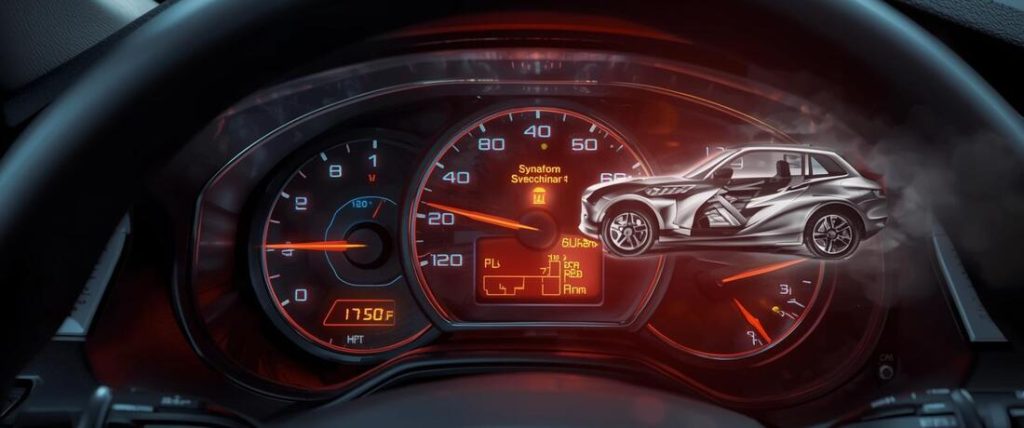
You press down on the accelerator pedal to merge into highway traffic, but your vehicle completely ignores your foot’s input. A second later, the engine violently surges, the dashboard flashes “Reduced Engine Power,” and the car drops into a restricted safety state known as “Limp Mode.”
These are the classic, high-stress symptoms of a failing Accelerator Pedal Position (APP) Sensor. In modern automotive engineering, the mechanical throttle cable connected directly to the engine is dead. It has been replaced by electronic “Drive-by-Wire” throttle control systems. When the electronic sensor at your feet fails, your vehicle loses its primary communication link, making it highly unpredictable and unsafe to operate.
As an ASE-Certified Master Technician, I know how terrifying it is when a vehicle refuses to listen to your throttle inputs. In this technical diagnostic guide, we will break down how the APP sensor operates, the 8 most definitive symptoms of failure, diagnostic OBD2 trouble codes, and actual workshop replacement costs.
Contents
- 1 What Is an Accelerator Pedal Position (APP) Sensor?
- 2 8 Critical Symptoms of a Bad APP Sensor
- 2.1 1. Intermittent Throttle Lag and Delayed Acceleration
- 2.2 2. Sudden Vehicle Lurching, Jerking, or Engine Surging
- 2.3 3. Immediate Engagement of “Limp Mode” (Reduced Engine Power)
- 2.4 4. Rough Erratic Idling and Unexplained Engine Stalling
- 2.5 5. Rough, Inconsistent Automatic Transmission Shifting
- 2.6 6. Unexplained Drop in Fuel Economy
- 2.7 7. Acceleration “Hits a Wall” at a Specific Speed
- 2.8 8. Illumination of the Dashboard Check Engine Light
- 3 Common Diagnostic Trouble Codes (DTCs) Explained
- 4 How to Test and Isolate a Bad APP Sensor at Home
- 5 Replacement Cost Breakdown (2026 US Metrics)
- 6 The Step-by-Step DIY Replacement Procedure
- 7 FAQ: Bad Accelerator Pedal Position Sensor
- 7.1 Q: Can I manually clean a bad APP sensor with contact spray to save money?
- 7.2 Q: Is it safe to drive my car short-term with an active P2135 correlation code?
- 7.3 Q: What are the symptoms of a bad accelerator pedal position sensor?
- 7.4 Q: What does the accelerator pedal position sensor do?
- 7.5 Q: How long does an accelerator pedal position sensor last?
- 8 The Verdict: Do Not Ignore the Warnings
What Is an Accelerator Pedal Position (APP) Sensor?
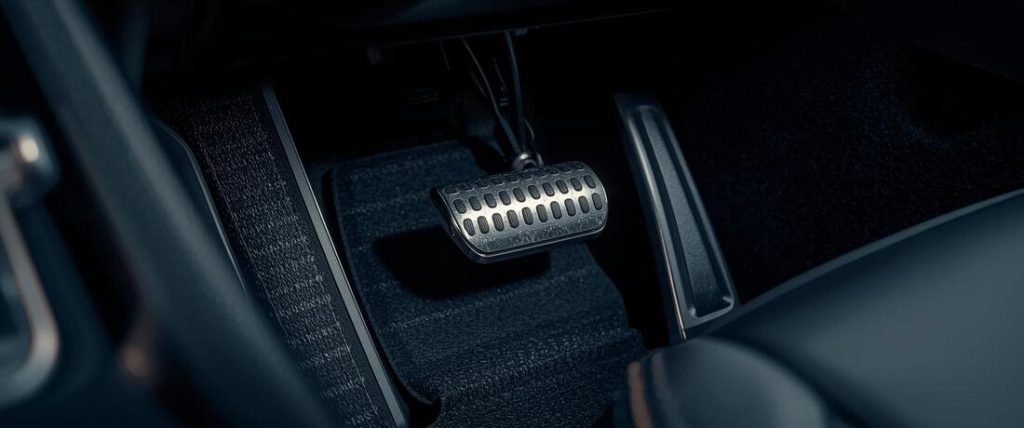
The APP sensor is a high-precision potentiometer or Hall-effect electronic device mounted directly onto the bracket of your gas pedal assembly. Its sole responsibility is to translate the physical depth of your foot press into a precise electrical voltage signal.
The sensor relays this structural data directly to the Engine Control Module (ECM). For maximum safety and redundancy, almost all modern APP sensors house two separate internal sensor circuits running simultaneously on a shared 5-volt reference loop.
- Sensor 1 typically reads from $0.5\text{V}$ (idle) to $4.5\text{V}$ (wide-open throttle).
- Sensor 2 operates at exactly half that scale ($0.25\text{V}$ to $2.25\text{V}$).
The ECM constantly cross-checks these two independent signals. If the voltage readings deviate from each other by even a fraction of a volt due to worn internal tracks, the computer instantly assumes an electronic fault has occurred and cuts power to protect the vehicle’s passengers.
APP Sensor vs. Throttle Position Sensor (TPS): The Teamwork
It is highly common for DIYers to confuse the APP Sensor with the TPS (Throttle Position Sensor). While their electronic configurations are identical, their operational coordinates are completely opposite:
- The APP Sensor is located under the driver’s dashboard and reads what your foot is asking the car to do.
- The TPS is bolted directly onto the engine’s aluminum throttle body and reads what the mechanical throttle plate is actually doing.

8 Critical Symptoms of a Bad APP Sensor
1. Intermittent Throttle Lag and Delayed Acceleration
The early stages of APP sensor failure manifest as a micro-second delay between pressing the physical pedal and actual engine acceleration. As the internal conductive graphite wipers inside the sensor develop worn blind spots, the ECM temporarily loses the signal tracking, resulting in a lazy, bogged-down response curve.
2. Sudden Vehicle Lurching, Jerking, or Engine Surging
When the electrical resistance tracks inside the sensor wear thin, they create intermittent voltage spikes. The ECM misinterprets these micro-spikes as a sudden demand for full speed, causing the vehicle to abruptly jerk, lurch forward, or surge in engine RPM without any extra physical foot pressure.
3. Immediate Engagement of “Limp Mode” (Reduced Engine Power)
This is the most definitive safety response. The exact millisecond the ECM catches a signal mismatch between the two internal sensor tracks, it triggers a hard safety protocol. The dashboard will display “Reduced Engine Power” or “Service StabiliTrak,” locking your maximum vehicle speed strictly between 35 and 45 mph so you can safely limp off the interstate.
4. Rough Erratic Idling and Unexplained Engine Stalling
If the sensor fails to drop back to its baseline idle voltage threshold ($0.5\text{V}$) when you lift your foot off the pedal, the ECM becomes confused. It will inject improper air-fuel ratios into the combustion chamber, causing your idle RPM to bounce erratically between 500 and 1,200 RPM, frequently culminating in the engine stalling out at complete stops.
5. Rough, Inconsistent Automatic Transmission Shifting
Your vehicle’s transmission control module (TCM) calculates shift points based on engine load data provided directly by the APP sensor. If the sensor transmits a corrupted, noisy signal, the transmission will execute incredibly harsh, delayed gear shifts, or feel like it is slipping out of gear entirely on hills.
6. Unexplained Drop in Fuel Economy
When the APP sensor sends inconsistent voltage inputs, the ECM struggles to maintain the ideal stoichiometric 14.7:1 air-to-fuel ratio. The computer defaults to a rich safety map, dumping excess gasoline into the cylinders. This lowers your fuel economy by up to 15% and can cause a heavy fuel smell near the exhaust.
7. Acceleration “Hits a Wall” at a Specific Speed
In unique failure modes, the sensor’s internal resistance tracks short-circuit halfway through their physical sweep. The car will accelerate completely normally up to a specific limit—such as 50 mph—but pressing the pedal any further results in zero engine response, effectively locking your top speed.
8. Illumination of the Dashboard Check Engine Light
The onboard computer will instantly illuminate the Check Engine Light (CEL) the moment the sensor’s 5-volt reference loop falls out of factory electrical tolerances.

Common Diagnostic Trouble Codes (DTCs) Explained
When diagnosing an APP sensor failure, an OBD2 scan tool will typically surface one of these four specific codes:
- P2135 / P2138 (Throttle/Pedal Position Sensor Voltage Correlation): The absolute most common codes. This confirms that the ECM has detected a severe voltage mismatch between Circuit A and Circuit B inside the sensor housing.
- P0120 (Throttle/Pedal Position Sensor Circuit A Malfunction): Points directly to a total circuit breakdown, open ground, or broken wiring connection on the primary sensor loop.
- P2122 / P2127 (APP Sensor Circuit Low Input): Indicates that the signal voltage returning to the ECM has dropped below the minimum factory threshold ($0.25\text{V}$), usually caused by a severed wire harness or heavy connector corrosion.
How to Test and Isolate a Bad APP Sensor at Home
You can accurately test this drive-by-wire circuit in your driveway using a basic $20 digital multimeter:
Step 1: Access the Electrical Connector
Locate the plastic sensor module bolted to the top of your gas pedal arm. Disconnect the wire harness plug and inspect the copper pins for green corrosion or moisture entry. Spray with electronic cleaner if needed.
Step 2: Test the 5-Volt Reference Loop
Turn the vehicle’s ignition key to the “ON” position without cranking the engine. Set your multimeter to DC Volts (20V scale). Touch the black probe to a bare chassis ground metal and backprobe the harness power wire. The meter must read a clean, flat 4.9V to 5.1V. A lower reading confirms a broken wire harness or an ECM failure, not a bad sensor.
Step 3: Run the Linear Sweep Test (Advanced)
Reconnect the harness. Backprobe the primary signal wire with your red multimeter probe. With the pedal at rest, the meter should read roughly 0.5V. Slowly, smoothly depress the gas pedal all the way to the floorboard with your hand.
- The Diagnostic Rule: The voltage must rise smoothly and linearly without jumping or dropping. If the digits suddenly flash “OL” (Open Loop) or drop to zero at any point during the sweep, the sensor’s internal graphite tracks are dead and the unit must be replaced.

Replacement Cost Breakdown (2026 US Metrics)
On 85% of modern consumer vehicles, the APP sensor is permanently riveted or molded directly into the plastic gas pedal assembly. This means you must replace the entire physical pedal mechanism as a single unified component.
| Vehicle Classification | Average Assembly Parts Cost | Average Shop Labor Cost | Total Estimated Bill |
| Standard Domestic (Ford/GM/Chrysler) | $60 – $120 | $50 – $120 (1 Hour Job) | $110 – $240 |
| Imported Japanese (Toyota/Honda/Nissan) | $80 – $150 | $60 – $150 | $140 – $300 |
| Premium European (BMW/Mercedes/Audi) | $150 – $280 | $120 – $250 | $270 – $530 |
The Step-by-Step DIY Replacement Procedure
Replacing an APP pedal assembly is a straightforward 30-minute DIY task that requires basic hand tools:
1. Disconnect the 12V Battery Terminal: 2 min.
Loosen the 10mm nut on your negative (-) black battery terminal and pull the cable off the post. This cuts all raw power to the ECM, preventing any accidental short circuits or software glitches while swapping modules.
2. Unplug the Electrical Harness Lock: 5 min.
Slide beneath the driver’s dashboard. Locate the red or grey plastic sliding lock tab on top of the pedal assembly plug. Slide the lock back, press the release tab firmly, and gently wiggle the wire harness plug free.
3. Unbolt the Pedal Assembly Chassis Screws: 10 min.
Use a socket set (usually 10mm or 12mm nuts) to unbolt the 2 or 3 steel retaining fasteners securing the plastic pedal base to the firewall bulkhead. Lift the entire old pedal assembly out of the footwell.
4. Install the New Assembly and Reconnect: 5 min.
Bolt the brand-new replacement pedal assembly onto the firewall studs. Tighten the nuts firmly to factory snugness. Replug the electrical harness until you hear a sharp mechanical snap, and push the plastic lock tab back down.
5. Execute the Throttle Relearn Protocol: 5 min.
Reconnect the battery. Before starting the engine, turn the key to “ON” for 60 seconds without touching the pedal, then turn it “OFF” for 10 seconds. This allows the ECM to map the new sensor’s minimum and maximum idle voltage boundaries safely.
FAQ: Bad Accelerator Pedal Position Sensor
Q: Can I manually clean a bad APP sensor with contact spray to save money?
A: No. Modern APP sensors are factory laser-sealed units to prevent dirt and ambient moisture from fouling the electronics. There is no physical entry port to spray cleaners inside without permanently cracking open the structural plastic casing and destroying the internal spring loops.
Q: Is it safe to drive my car short-term with an active P2135 correlation code?
A: Absolute no. While Limp Mode will technically allow you to creep to a nearby shoulder or repair garage, driving a car with an unstable throttle correlation is highly dangerous. The sensor can fail completely mid-turn, leaving you stranded across oncoming traffic without any mechanical forward momentum.
Q: What are the symptoms of a bad accelerator pedal position sensor?
A: A bad gas pedal sensor has signs. The check engine light may turn on. The car can lag or feel slow. It might go into limp mode. The car can also idle rough.
Q: What does the accelerator pedal position sensor do?
A: The gas pedal sensor tells the car’s brain one thing. It tells it how far down you press the gas. The brain then sets the engine’s speed and power.
Q: How long does an accelerator pedal position sensor last?
A: A gas pedal sensor can last a long time. It has no set life span. It can fail fast. This is due to a power or harm flaw.
The Verdict: Do Not Ignore the Warnings
If your vehicle is hesitating under acceleration, stumbling at idle, or dropping into an emergency “Reduced Engine Power” loop, your drive-by-wire system is actively failing. Grab a digital multimeter and execute the linear sweep check. Replacing a broken pedal assembly at home takes under 30 minutes, costs less than $150 in parts, and instantly guarantees your safety on the open highway.
(Want to ensure your vehicle’s alternative engine sensors, ignition blocks, and transmission computer networks are operating with absolute mechanical precision? Read our master workshop guide on How to Read Check Engine Light Codes Without a Scanner or check out The Car Buzz Official Testing and Editorial Integrity Guidelines Page).