
This article was updated in January 1, 2026 with new products and information by Mark S. Taylor
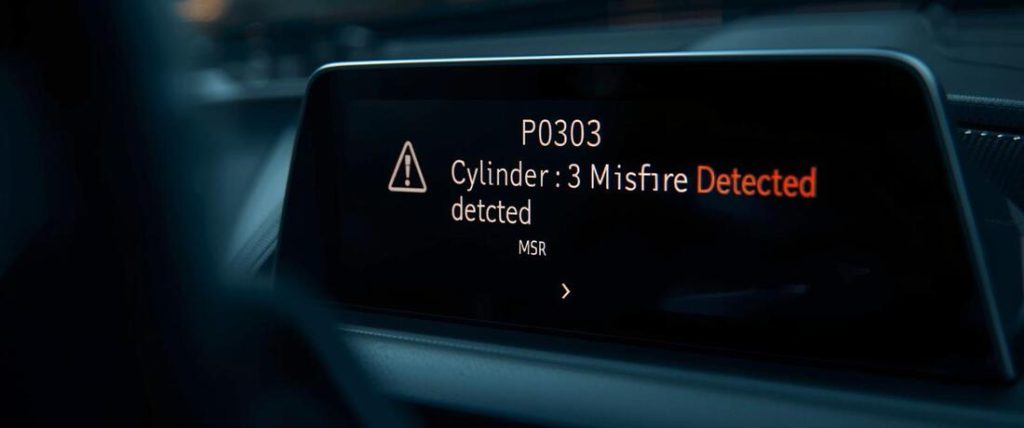
The P0303 code means cylinder number 3 in your engine is not firing properly, which causes shaking and power loss.
Is your check engine light on and your car shaking? A rough running engine is scary. It often means you have a misfire. The specific code for this is P0303: Cylinder 3 Misfire Detected. As mechanics, we see this code all the time. It usually points to a simple part like a spark plug or ignition coil. In this guide, you will learn why this happens, how to find the problem, and how to fix it cheaply. Acting fast is key. If you wait, you can ruin expensive parts like your catalytic converter. Let’s get your car running smooth again.
Contents
- 1 What Does P0303 Code Mean?
- 2 Symptoms of Cylinder 3 Misfire (P0303)
- 3 Common Causes of P0303 Code
- 4 How to Diagnose P0303 Code
- 5 Where Is Cylinder 3 Located?
- 6 How to Fix P0303 Code
- 7 Can You Drive With P0303 Code?
- 8 Preventing P0303 Code
- 9 Related Codes & What They Mean
- 10 Frequently Asked Questions (FAQ)
- 11 Bottom Line: Don’t Ignore P0303
What Does P0303 Code Mean?
Quick Answer: The engine computer detects that cylinder 3 is not burning fuel correctly.
Definition: “Cylinder 3 Misfire Detected”
Your engine has multiple cylinders. Each one must fire at the exact right time. When the computer (ECM) sees that cylinder 3 failed to fire, it sets the P0303 code. This is a generic OBD-II code. That means it applies to all cars, from Fords to Toyotas.
How It Detects the Problem
The computer uses a sensor on the crankshaft. It measures how fast the engine spins. If cylinder 3 misfires, the crankshaft slows down for a split second. The sensor sees this tiny drop in speed. If it happens enough times, the check engine light turns on. It is part of the P030X family of codes. P0301 is for cylinder 1, P0302 is for cylinder 2, and so on. This is different from a P0300 code, which means the misfire is jumping around randomly.
Symptoms of Cylinder 3 Misfire (P0303)
Quick Answer: The most obvious signs are a flashing engine light, a shaking car, and a smell of raw gas.
You will feel a misfire before you see the code. Here are the most common signs:
- Check Engine Light: It may stay on solid. If it flashes, pull over. That means the misfire is severe.
- Rough Idle: The car shakes when you stop at a red light.
- Loss of Power: The car feels weak. It struggles to speed up.
- Hesitation: The engine stumbles when you press the gas pedal.
- Poor Gas Mileage: You lose 2 to 5 miles per gallon.
- Gas Smell: Unburned fuel exits the tailpipe.
- Stalling: The engine might die when the car is idling.
Common Causes of P0303 Code
Quick Answer: A bad spark plug or a failed ignition coil causes this code 90% of the time.
1. Worn or Fouled Spark Plug (Most Common)
Spark plugs ignite the fuel. Over time, the metal tip wears down. Carbon or oil can also coat the tip. This makes the spark too weak to light the fuel.
- Symptoms: The engine runs rough when cold or wet.
- Fix: Replace the spark plug. It is cheap and easy.
2. Faulty Ignition Coil
The coil turns battery power into a high-voltage spark. Heat and age can crack the coil. This stops the spark from reaching the plug.
- Symptoms: The car jerks when you accelerate hard.
- Fix: Swap the coil with a new one.
3. Clogged or Failing Fuel Injector
The injector sprays fuel into the cylinder. If it gets clogged with dirt, the cylinder runs “lean” (not enough gas).
- Symptoms: The car is hard to start.
- Fix: Try a fuel cleaner first. If that fails, replace the injector.
4. Low Compression
The cylinder must be sealed tight to work. Worn rings or a bad valve let air escape. This is a serious mechanical failure.
- Symptoms: Blue smoke comes from the exhaust.
- Fix: This requires major engine repair.
5. Vacuum Leak
A cracked hose can let extra air into the engine. This messes up the fuel mix. It usually affects a specific cylinder if the leak is near the intake runner.
- Symptoms: You hear a hissing sound under the hood.
- Fix: Find the cracked hose and replace it.
6. Wiring or Connector Issues
Mice might chew wires. Or, corrosion can turn pins green. This stops the signal to the coil or injector.
- Symptoms: The problem comes and goes.
- Fix: Repair the broken wire or plug.
7. Bad Catalytic Converter (Less Common)
A clogged converter creates backpressure. The engine cannot push exhaust out. This can cause misfires, but usually on all cylinders.
- Symptoms: The exhaust smells like rotten eggs.
- Fix: Replace the converter. This is expensive.
How to Diagnose P0303 Code
Quick Answer: Swap the ignition coil from cylinder 3 to another cylinder to see if the code moves.
Step 1 – Scan for Codes
Plug in an OBD-II scanner. You can buy one for $25. Read the codes. Do you see P0303? Check for other codes too. Write them down. Clear the codes and drive the car. See if the light comes back.
Step 2 – Visual Inspection
Open the hood. Look at the engine. Find cylinder 3. Check the wires going to the coil. Are they tight? Look for oil leaks. Oil can leak into the spark plug tube and cause a short.
Step 3 – Component Swap Test
This is the best trick.
- Take the ignition coil off cylinder 3.
- Take the coil off cylinder 2 (or any other one).
- Swap them. Put the cylinder 3 coil on cylinder 2.
- Clear the codes. Drive the car.
- Result: If the code changes to P0302, the coil is bad. If the code stays P0303, the coil is fine. You can do the same test with the spark plug.
Step 4 – Compression Test
If the swap test didn’t work, check the engine health. You need a compression tester tool. Remove all spark plugs. Screw the tester into cylinder 3. Crank the engine.
- Normal: 125 to 160 PSI.
- Bad: Below 100 PSI. If cylinder 3 is low, you have internal engine damage.
Step 5 – Fuel Injector Test
Get a mechanic’s stethoscope. Or use a long screwdriver. Put the metal tip on the injector. Put your ear to the handle. Listen while the engine runs. You should hear a steady clicking sound. No click means the injector is dead.
Where Is Cylinder 3 Located?
Quick Answer: On most 4-cylinder engines, it is the third one from the front; check your manual to be sure.
Finding cylinder 3 depends on your engine type.
- Inline 4-Cylinder: These are easy. Cylinder 1 is usually at the front of the engine (near the belts). Count back: 1, 2, 3, 4. So, cylinder 3 is the third one back.
- V6 or V8 Engines: These have two banks. One side is Bank 1. The other is Bank 2. Cylinder 3 is on one of these sides. It varies by car maker. For example, on a Ford, cylinders 1-2-3-4 might be on the passenger side. On a GM, they might alternate.
- Tip: Search online for “GM LS cylinder diagram.” This is the safest way.
How to Fix P0303 Code
Quick Answer: Start by changing the spark plug and coil on cylinder 3; this fixes most cars cheaply.
DIY Fixes (Easy to Moderate)
You can do these in your driveway.
- Replace Spark Plug: Costs $10. Takes 20 minutes. You need a socket set.
- Replace Ignition Coil: Costs $50 to $100. Takes 10 minutes. Usually held by one bolt.
- Fix Vacuum Leaks: Costs $5 for a new hose.
- Fuel Additive: Pour a bottle of injector cleaner in the gas tank. It costs $15. It helps clean a dirty tip.
Professional Repairs (Moderate to Difficult)
Leave these to the pros.
- Fuel Injector Replacement: You have to remove the fuel rail. Gas can spill. It is risky. Cost: $300+.
- Compression Repair: This means taking the engine apart. It fixes valves or pistons. Cost: $1,000+.
- Wiring Repair: Tracing electrical shorts is hard. Cost: $200+.
Total Cost Estimates
- Spark Plug Only: $60 to $130 (at a shop).
- Ignition Coil: $125 to $350.
- Fuel Injector: $250 to $800.
- Internal Engine: $1,000 to $4,000.
Can You Drive With P0303 Code?
Quick Answer: Do not drive long distances; unburned fuel will destroy your catalytic converter quickly.
Short-Term (Emergency)
You can drive home or to a shop. Drive gently. Do not accelerate hard. The car will feel jerky.
Risks
The biggest risk is your catalytic converter. This part cleans your exhaust. If raw gas from the misfire hits it, the converter overheats. It can melt inside. A new converter costs $1,000 or more. That is a costly mistake.
When to Stop Immediately
- Flashing Light: If the check engine light blinks, pull over. This means the cat is melting right now.
- Smell: A strong rotten egg or gas smell is bad.
- Overheating: If the temp gauge goes up, stop.
Preventing P0303 Code
Quick Answer: Change your spark plugs on time and use good gas to keep the system clean.
- Change Plugs: Follow the manual. Usually every 30,000 to 100,000 miles.
- Use Good Gas: Buy “Top Tier” gas. It has cleaners in it.
- Replace Coils: If one coil fails, the others are likely old too. Replace them all at 100,000 miles.
- Fix Oil Leaks: If your valve cover leaks oil, fix it. Oil ruins spark plugs and coils.
- Injector Cleaner: Use a bottle once a year. It keeps nozzles spraying well.
Related Codes & What They Mean
Quick Answer: You often see P0300 or P0420 pop up alongside a P0303 code.
- P0300: Random Misfire. The computer is confused. It sees misfires everywhere.
- P0301 – P0312: These point to other specific cylinders. P0301 is cylinder 1.
- P0420: Catalyst Efficiency Low. This means the converter might be dead. It often appears after you ignore a misfire for too long.
- Multiple Codes: If you see codes for the fuel pump or sensors, check those first. They can cause the misfire.
Frequently Asked Questions (FAQ)
How do you fix a cylinder 3 misfire?
Start by swapping the ignition coil with another cylinder. If the code moves, replace the coil. If not, replace the spark plug.
How much does it cost to fix a cylinder 3 misfire?
If you do it yourself, a plug costs $10. A coil costs $50. At a shop, expect to pay $150 to $300 for these simple fixes.
Can you drive with a misfire in cylinder 3?
Only for a short trip to the mechanic. Driving for days will ruin your catalytic converter and worsen gas mileage.
What can fix a cylinder misfire?
New spark plugs, ignition coils, or fuel injectors are the most common fixes. Fixing vacuum leaks also helps.
Can I fix P0303 myself?
Yes. Changing a spark plug or coil is very easy on most 4-cylinder cars. You just need basic tools.
Bottom Line: Don’t Ignore P0303
Quick Answer: A cylinder 3 misfire is usually a cheap fix, but ignoring it creates an expensive mess.
The P0303 code is your car’s way of asking for help. In most cases, it is just a worn-out spark plug or a bad coil. You can often fix it yourself for under $100. But time matters. Every mile you drive with a shaking engine hurts the expensive catalytic converter. Diagnose it today. Swap the coils. Check the plugs. Get your smooth ride back and save your money.
For more help with engine trouble, check out our guide on engine stalling causes to keep your car reliable.
Quick Summary
- Code Meaning: Cylinder 3 is not burning fuel.
- Main Causes: Bad spark plug, dead coil, or dirty injector.
- Best Test: Swap the coil to another cylinder. See if the code moves.
- Cost: DIY costs $50-$100. Shops charge $150-$350.
- Risk: Driving with it ruins the catalytic converter.
- Action: Stop driving hard. Fix it within 100 miles.