
This article was updated in January 4, 2026 with new products and information by Mark S. Taylor
If your car won’t start with a new battery, the most common causes are loose or dirty terminal connections, a bad starter motor, or a failing alternator.
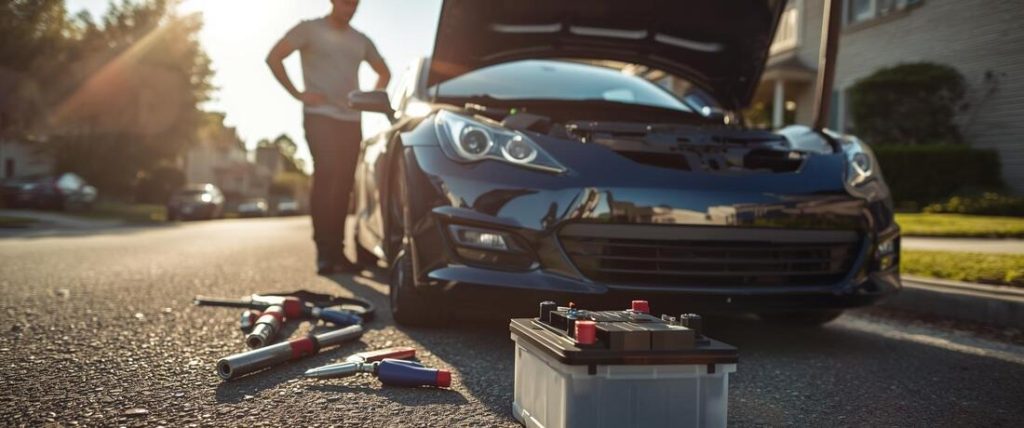
You just bought a brand new battery. You hauled it home and installed it. You turn the key, expecting a roar. Instead, you hear nothing. Silence. This is incredibly frustrating. But don’t call a tow truck yet. A new battery but car still won’t start is a very common issue. It is rarely a serious engine problem. Usually, it is a simple connection error. In this guide, I will walk you through the top 10 causes. I will show you how to fix them fast. You will save money and get back on the road today.
Contents
What Sound Does Your Car Make?
Quick Answer: The noise your car makes when you turn the key tells you exactly where to look for the problem.
No Sound At All
If you turn the key and hear absolute silence, you likely have no power flow.
- Likely Cause: Loose cables, dirty terminals, or a blown main fuse.
- Quick Fix: Pop the hood. Wiggle the battery clamps. If they move, tighten them.
Single Click
You hear one loud “clunk” or click, but the engine won’t spin.
- Likely Cause: A bad starter motor or a weak connection.
- Quick Fix: Check the fat red cable on the starter. Give the starter motor a light tap with a hammer.
Rapid Clicking
You hear a fast “chatter” noise (click-click-click-click).
- Likely Cause: Low voltage reaching the starter.
- Quick Fix: Clean the battery posts. Make sure the ground wire to the frame is tight.
Engine Cranks But Won’t Start
The engine spins fast (ruh-ruh-ruh), but it won’t fire up.
- Likely Cause: Fuel issue, spark issue, or anti-theft lock.
- Quick Fix: Check your gas gauge. Reset the car alarm system.
#1 Cause: Loose or Corroded Battery Connections
Quick Answer: Dirty or loose clamps prevent power from leaving the battery, making even a new battery act dead.
What Happens
This is the most common reason for a new battery but car still won’t start. A new battery has plenty of power. But if the clamps are loose, that power cannot get to the starter. Even a tiny layer of invisible corrosion blocks electricity.
How to Check
Open the hood. Look at the battery terminals.
- Do you see white or green powder? That is corrosion.
- Grab the cable clamp. Try to twist it by hand.
- Does it move? It is too loose.
Fix It Yourself (5 minutes)
You can fix this with basic tools.
- Turn off the car. Take the keys out.
- Loosen the nut on the negative (-) black cable. Remove it.
- Loosen and remove the positive (+) red cable.
- Scrub the battery posts and the inside of the clamps. Use a wire brush.
- Reconnect the Red (+) cable first. Tighten it until it won’t move.
- Reconnect the Black (-) cable last. Tighten it down.
- Try to start the car.
#2 Cause: Bad Ground Connection
Quick Answer: A loose negative cable where it connects to the car frame cuts the electrical circuit.
What Happens
Electricity needs a full circle to work. It leaves the positive side and must return to the negative side. The negative black cable attaches to the car’s metal body or engine block. If that end is rusty or loose, the power has nowhere to go.
Symptoms
- The lights might work, but the starter won’t turn.
- The power cuts out intermittently.
- The car starts sometimes, but not always.
How to Fix
Follow the black negative cable away from the battery. Find where it bolts to the metal car frame.
- Use a wrench to remove that bolt.
- Sand the metal surface until it shines.
- Sand the metal ring on the cable.
- Bolt it back on tightly.
#3 Cause: Wrong Polarity Installation
Quick Answer: Installing the cables backward (Red to Negative) blows fuses and can damage the car’s computer.
What Happens
Car batteries have a Positive (+) post and a Negative (-) post. They are not the same size. If you force the Red cable onto the Negative post, you reverse the flow of power. This causes a massive spark. It usually blows the main fusible link instantly.
How to Check
Look at the battery.
- Is the Red cable on the post marked (+)?
- Is the Black cable on the post marked (-)?
- The (+) post is usually slightly larger.
If Installed Backwards
Stop immediately. Do not try to start the car.
- Disconnect the cables right away.
- You likely blew a main fuse. You will need to check the fuse box.
- If you smell burning plastic, call a pro. This can fry the car’s computer.
#4 Cause: Bad Alternator (Not Charging)
Quick Answer: If the alternator is dead, your car runs off battery power alone until it dies.
What Happens
The battery starts the car. The alternator keeps it running. If your old battery died, maybe the alternator killed it. If the alternator is bad, it won’t charge your new battery either.
Symptoms
- The car starts with a jump but dies when you remove the cables.
- Headlights get dim when you stop at a light.
- The red battery light stays on while driving.
How to Test
You need a simple multimeter.
- Start the car (jump it if you must).
- Put the meter probes on the battery posts.
- It should read 13.5 to 14.5 volts.
- If it reads below 13 volts, the alternator is bad. For more details, check our guide on symptoms of a bad alternator.
#5 Cause: Faulty Starter Motor
Quick Answer: A worn-out starter motor can mimic a dead battery by clicking once but failing to spin the engine.
What Happens
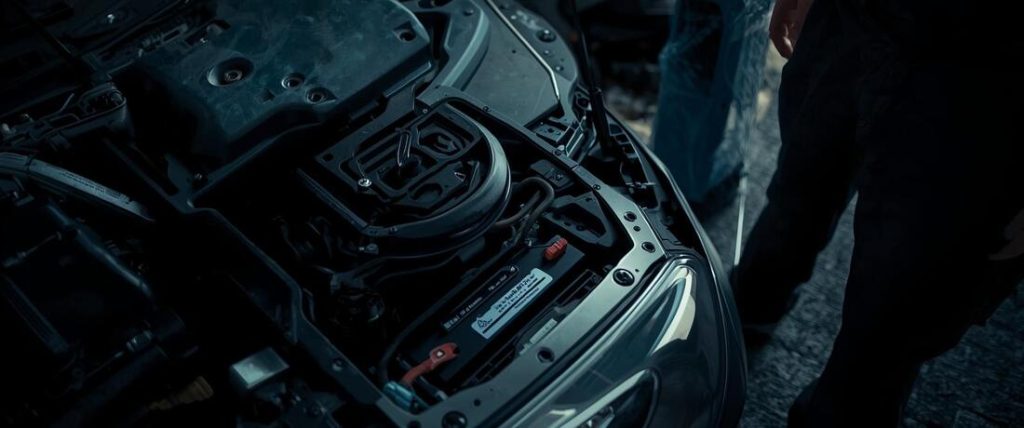
The starter is a heavy electric motor. It spins the engine to get it going. Inside, parts wear out. Sometimes, a starter gets “dead spots.” It might work one day and fail the next. A new battery cannot fix a broken motor.
Symptoms
- One loud click.
- You hear a grinding noise.
- The starter spins (whirring) but the engine sits still.
- Smoke comes from the starter area.
Quick Test
Locate the starter motor on the engine. Have a friend sit in the car.
- Tap the metal body of the starter with a wrench or hammer. Do not hit it too hard.
- Have your friend turn the key while you tap.
- If it starts, the starter is bad and needs replacing.
#6 Cause: Blown Fuses or Bad Relay
Quick Answer: A simple $2 fuse can cut power to the starter system, making the car act dead.
What Happens
Fuses protect your car’s wires. If there was a spark when you changed the battery, a fuse might have popped. There is also a “Starter Relay.” This is a switch that sends power to the starter. If it sticks, nothing happens.
How to Check
- Find the fuse box under the hood.
- Look at the diagram on the lid. Find “Starter” or “Ignition.”
- Pull the fuse out. Look at the wire inside. Is it broken?
- Find the relay. It looks like a black plastic cube.
- Swap it with another relay of the same size (like the horn relay).
- Try to start the car. If it works, buy a new relay. See our article on how to check car fuses for a visual guide.
#7 Cause: Anti-Theft System Activated
Quick Answer: Disconnecting the battery can reset the security system, causing it to lock the ignition.
What Happens
Modern cars have alarms. When you cut power to change the battery, the car might think it is being stolen. It activates the “immobilizer.” This cuts fuel or power to the starter.
Symptoms
- The car has plenty of power. Lights work. Radio works.
- When you turn the key, nothing happens.
- A security light flashes on the dashboard (often a red dot or key icon).
How to Reset (Try These)
- Door Lock Method: Step out. Close all doors. Use the key fob to lock and unlock the doors 3 times.
- Key On Method: Put the key in the ignition. Turn it to “ON” (don’t start). Wait 10 minutes until the security light stops blinking. Turn off, then start.
- Battery Reset: Disconnect the negative battery cable again. Wait 15 minutes. Reconnect it.
#8 Cause: Defective New Battery
Quick Answer: Sometimes a “new” battery has been sitting on the shelf for months and has no charge.
What Happens
It is rare, but it happens. You might have bought a “dud.” Or, the battery was sitting on the shelf for a year and lost its charge. It might not have enough power to crank the engine.
How to Test
Use your multimeter again.
- Make sure the car is off.
- Touch the probes to the battery posts.
- A good battery reads 12.6 volts.
- If it reads 12.0 volts or less, it is dead.
- Take it back to the store. They will test it and give you a new one for free.
#9 Cause: Fuel System Problems
Quick Answer: If the engine cranks fast but won’t start, you likely have a fuel issue, not a battery issue.
What Happens
If the new battery makes the engine spin fast (ruh-ruh-ruh), the battery is doing its job. The problem is that the engine isn’t firing. It needs spark, air, and fuel.
Symptoms
- The engine cranks strongly.
- It never “catches” or starts running.
- You do not smell gas.
Quick Checks
- Gas Level: Is the tank actually empty? The gauge might be wrong.
- Fuel Pump: Turn the key to “ON.” Listen near the back seat. You should hear a 2-second hum. That is the pump priming. No hum means a bad pump or fuse.
- Check out bad fuel pump symptoms if you suspect this issue.
#10 Cause: Ignition Switch or Key Fob Issues
Quick Answer: A worn-out ignition switch or a dead key fob battery prevents the “start” signal from sending.
What Happens
The ignition switch is behind the key slot. It sends the signal to the starter. If it wears out, turning the key does nothing. Also, on push-button cars, a dead key fob battery means the car won’t recognize you.
Symptoms
- Push Button: You press the button, but the dash says “Key Not Detected.”
- Key Turn: The key feels loose or sticky. The dash lights don’t come on when you turn it.
Quick Fixes
- Key Fob: Hold the fob directly against the start button. Push the button with the fob itself. Replace the fob battery (usually a CR2032).
- Ignition: Try to wiggle the shifter in Park while turning the key.
Step-by-Step Diagnostic Guide
Quick Answer: Follow this simple order to find the problem without wasting money.
Step 1: Check Physical Battery (2 minutes)
Open the hood. Grab the cables. Are they tight? Can you twist them? If yes, tighten them. This fixes 70% of problems.
Step 2: Test Battery Voltage (5 minutes)
Use a meter. Is it above 12.4 volts? If not, charge it or return it.
Step 3: Check for Blown Fuses (10 minutes)
Look at the starter fuse and relay. Swap the relay with the horn relay to test it.
Step 4: Test Starter Operation (5 minutes)
Tap the starter with a hammer while a friend turns the key. If it starts, replace the starter.
Step 5: Check Alternator (If Starts with Jump)
If you can jump-start it, check the voltage while running. It needs to be 13.5+ volts.
Step 6: Reset Anti-Theft (15 minutes)
If the security light is flashing, perform the reset procedure (Key On for 10 mins).
When to Call a Mechanic (Don’t DIY)
Quick Answer: Call a pro if you smell burning, see smoke, or can’t identify the electrical fault.
Call Immediately If:
- You smell burning plastic or see smoke.
- You installed the battery backward (sparks flew).
- You hear a loud grinding sound metal-on-metal.
- None of the car’s lights work at all.
Professional Diagnosis Needed:
If you have checked the connections, fuses, and battery voltage, and it still won’t click, you may have a wiring break. A mechanic can trace the wires. The diagnostic fee is usually $80 to $150.
Cost Breakdown for Common Fixes
Quick Answer: Most fixes are free or cheap DIY jobs; major parts like starters cost $200+.
| Issue | DIY Cost | Mechanic Cost | Time to Fix |
| Clean Terminals | $0 – $10 | $20 – $50 | 10 mins |
| Replace Fuse | $1 – $5 | $20 – $40 | 5 mins |
| New Ground Cable | $15 – $30 | $50 – $100 | 20 mins |
| Starter Motor | $80 – $200 | $200 – $500 | 1-2 hours |
| Alternator | $150 – $400 | $300 – $800 | 1-3 hours |
| Fuel Pump | $100 – $300 | $400 – $800 | 2-4 hours |
| Key Fob Battery | $3 – $5 | $10 – $30 | 2 mins |
Preventing This Problem
Quick Answer: Clean your terminals regularly and always test a new battery before leaving the store.
When Installing New Battery
- Clean First: Always wire-brush the inside of the cable clamps before putting them on a new battery.
- Tighten: Use a wrench. Hand-tight is not enough.
- Protect: Spray red terminal protector on the posts to stop future corrosion.
Regular Maintenance
- Test Yearly: Auto parts stores test batteries for free. Do this before winter.
- Drive: Don’t let the car sit for weeks. Drive it to keep the battery charged.
FAQ About New Battery Car Will Not Start
Why wont my car start after installing a new battery?
The most common reason is that the battery cables are not tight enough or are dirty. Even a new battery cannot work if the connection is bad.
How to tell if it’s a bad starter or alternator?
A bad starter makes a single click and won’t spin the engine. A bad alternator lets the car start (with a jump) but the car dies soon after because the battery drains.
Why would a brand new battery not work?
It might be “Dead on Arrival” (DOA) if it sat on the shelf too long. Or, your car may have a fuse blown during installation.
Can a blown fuse cause a car not to start?
Yes. If the starter fuse, ignition fuse, or main fusible link blows, no power will get to the engine.
Why does my car only click with new battery?
Rapid clicking usually means a loose connection or low voltage. A single loud click usually means a bad starter motor.
Bottom Line: Check Connections First
Quick Answer: Before buying more parts, take the cables off, clean them, and tighten them again.
If you have a new battery but car still won’t start, do not panic. The battery is likely fine.
- 70% of the time, the issue is a loose clamp.
- 20% of the time, it is a starter or fuse.
- 10% of the time, it is the battery itself.
Your Action Plan:
- Wiggle the cables. If they move, tighten them.
- Clean the posts until they shine.
- Check the starter fuse.
- Tap the starter motor.
Most drivers fix this in 10 minutes for $0. Get your tools and check those clamps!
Quick Summary
- Silence means check connections.
- Clicking means check starter or voltage.
- Cranking means check fuel.
- Tighten your battery cables first.
- Test the new battery voltage.
- Reset the alarm system if lights flash.