
This article was updated in January 20, 2026 with new products and information by Mark S. Taylor
When is the last time you checked your transmission fluid? Most drivers check their oil but forget the fluid that shifts their gears. This is a big mistake. Low fluid is the number one cause of transmission failure. It can turn a $10 bottle of fluid into a $4,000 repair bill. Checking it takes only five minutes. In this guide, I will show you exactly how to do it safely for any car, read the dipstick correctly, and spot trouble before it starts.
Contents
- 1 Before You Start: What You Need to Know
- 2 How to Check Automatic Transmission Fluid Level (With Dipstick)
- 3 How to Add Transmission Fluid (If Low)
- 4 Special Procedures for Different Transmission Types
- 5 Checking Sealed Transmissions (No Dipstick)
- 6 Troubleshooting Common Issues
- 7 Understanding Transmission Fluid Level Marks
- 8 How Often to Check Transmission Fluid
- 9 FAQ About How to Check Transmission Fluid Level
- 9.1 Do you check transmission fluid with the car running?
- 9.2 What is the correct way to check transmission fluid level?
- 9.3 Do you check transmission fluid when it’s hot or when it’s cold?
- 9.4 How do I tell if transmission fluid is low?
- 9.5 How much transmission fluid do I add if it’s low?
- 9.6 Bottom Line: Checking Transmission Fluid Is Easy and Essential
Before You Start: What You Need to Know
You need a running car, a flat spot to park, and a clean white cloth.
Tools and Materials Needed
- White Paper Towel: This helps you see the fluid color best.
- Funnel: You need a long, skinny one if you have to add fluid.
- Flashlight: To see into the dark engine bay.
- Gloves: Keeps your hands clean and safe from hot parts.
- Parking Brake: Essential for safety.
Safety Precautions
Engine will be running—keep hands clear of moving belts and fans. Transmission fluid gets very hot. It can burn you.
- Park on a level surface.
- Set your parking brake firmly.
- Never wear loose clothing that could get caught in a fan belt.
- Stop: If you need to add fluid, turn the engine off first to be safe.
When to Check Transmission Fluid
Check your fluid once a month or if you feel the car slip between gears.
- Best Time: After a short 10-minute drive. The fluid needs to be warm.
- Bad Time: Right after a long highway trip (too hot) or when the car is cold (inaccurate).
- Symptoms: Check immediately if you hear grinding or feel a delay when you shift into Drive.

How to Check Automatic Transmission Fluid Level (With Dipstick)
For most cars, you check the fluid with the engine running and the gear in Park.
Step 1: Prepare the Vehicle (5-10 minutes)
Start your car and drive it for about 10 minutes.
- Why: Fluid expands when it is warm. Cold fluid gives a wrong reading.
- Park: Stop on flat ground. Keep the engine running.
- Shift: Move the gear selector through all gears (P, R, N, D) and back to Park. This fills the internal valves.
Step 2: Locate the Transmission Dipstick
Open the hood and look near the back of the engine.
- Color: Look for a red or yellow handle.
- Label: It often says “TRANS” or has a gear symbol.
- Note: It is usually lower down than the oil dipstick. If you cannot find one, you might have a “sealed” transmission (see below).
Step 3: Remove and Inspect the Dipstick
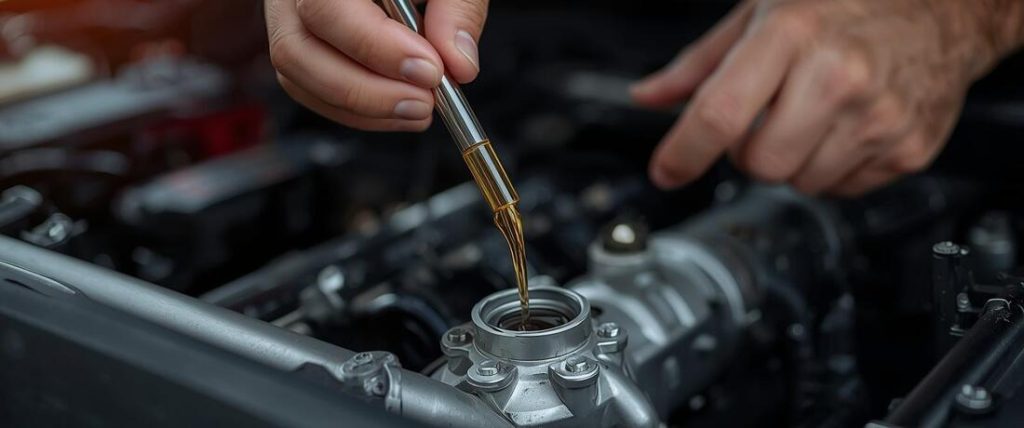
Pull the stick out and look at the fluid before you wipe it.
- Color: It should be bright red or pink. Dark brown is bad.
- Smell: It should smell sweet or oily. A burnt toast smell means damage.
- Feel: Rub a drop between your fingers. It should be smooth. If it feels gritty, your transmission is wearing out.
Step 4: Wipe Dipstick Clean and Reinsert
Use your white towel to wipe the stick dry.
- Insert: Push the stick all the way back into the tube.
- Seat it: Make sure the cap clicks or seals fully.
- Wait: Count to three to let the fluid settle.
Step 5: Remove Dipstick and Read Fluid Level
Pull the stick out again and hold it flat.
- Read: Look for the wet line.
- Marks: You will see “HOT” and “COLD” lines.
- Goal: Since your engine is warm, the fluid should be in the “HOT” crosshatch area.
Step 6: Recheck for Accuracy
Wipe it and check one more time.
- Verify: It is easy to get a bad reading if the stick hits the side of the tube.
- Result: If both readings match, you are done.
- Too Low? If it is below the “ADD” mark, you need fluid.
- Too High? If it is over the “FULL” mark, a mechanic should drain some out. Overfilling causes foam and leaks.
How to Add Transmission Fluid (If Low)
Only add a small amount at a time—it is easy to overfill.
Determine How Much to Add
Look at the space between the “ADD” and “FULL” marks.
- Gap: That space usually equals just one pint (half a quart).
- Rule: Never dump in a whole quart at once.
Use Correct Fluid Type
Using the wrong fluid can ruin your transmission in miles.
- Check: Read your owner’s manual.
- Types: Ford uses Mercon. GM uses Dexron. Honda and Toyota have their own special fluids.
- Warning: Never use “Universal” fluid unless it lists your exact car on the bottle.
Adding Fluid Procedure
- Put your long funnel into the dipstick tube.
- Pour in half a pint of fluid.
- Wait two minutes for it to drain down.
- Check the level again.
- Repeat until it hits the “FULL” line.
Special Procedures for Different Transmission Types
Not all cars are checked the same way—Hondas and Manuals are different.
Manual Transmission Fluid Check
Manual cars rarely have a dipstick.
- Lift: You must jack up the car.
- Plug: Find the “fill plug” on the side of the gearbox.
- Check: Remove the plug. Stick your pinky finger inside. You should feel fluid right at the edge of the hole.
CVT (Continuously Variable Transmission) Fluid Check
Many CVTs are sealed, but some have dipsticks.
- Fluid: CVTs require special CVT fluid. Do not use standard automatic fluid.
- Sensitivity: These transmissions are very sensitive to fluid level. If in doubt, visit a pro.
Honda/Acura Exception: Check with Engine OFF
If you own a Honda, do not leave the engine running.
- The Rule: Warm the car up, park it, and turn the engine OFF.
- Time: Check the stick within 60 to 90 seconds of shutting it down.
- Why: Honda transmissions read high when running. Checking them like a Ford or Chevy will give you a wrong reading.
Checking Sealed Transmissions (No Dipstick)
“Sealed” just means there is no dipstick, not that the fluid lasts forever.
Why Newer Vehicles Have Sealed Transmissions
Car makers want to stop people from adding the wrong fluid. They also claim the fluid is “Lifetime,” but mechanics disagree. Fluid wears out after 100,000 miles.
How to Tell If Your Transmission Is Sealed
- There is no dipstick under the hood.
- The manual does not show a check procedure.
- There is no fill cap visible.
Checking Fluid Level in Sealed Transmission
This is hard to do at home.
- The Pro Way: Mechanics lift the car level. They use a scan tool to watch the fluid temp. They open a “spill plug” underneath. If fluid drips out, it is full.
- Recommendation: Have a shop check this every 50,000 miles.
Troubleshooting Common Issues
If the stick reads dry, do not drive the car.
Can’t Find the Dipstick
- Check your manual first.
- Look on the driver’s side near the firewall.
- It might be a sealed unit.
Dipstick Reading Inconsistent
- Fluid might be smearing on the tube.
- Fix: Check it three times. Use the lowest reading you see.
- Tip: Check it in the morning (cold) to see where the level sits, then compare it to the “COLD” marks.
Fluid Looks Dirty or Smells Burnt
- Brown: This is normal for older fluid. Plan a service soon.
- Black: This means the fluid is burnt. You may have internal damage.
- Foam: You likely overfilled it, or the wrong fluid was used.
Added Fluid But Level Still Shows Low
- You might have a big leak.
- Check under the car for puddles.
- See our guide on fluid leaks to spot the source.
Understanding Transmission Fluid Level Marks
Trust the HOT marks, not the COLD ones.
Dipstick Marking Variations
- Crosshatch: The safe zone is the textured area.
- Two Dots: The level must be between the dots.
- Min/Max: Keep it near Max, but not over.
Temperature and Fluid Level Relationship
Fluid expands a lot.
- Cold: It will show low on the stick.
- Hot: It rises to the correct mark.
- Risk: If you fill it to the “HOT” line when the car is cold, it will overflow when it heats up.
How Often to Check Transmission Fluid
Make this part of your monthly routine.
Recommended Inspection Schedule
- Dipstick Cars: Check it once a month when you get gas.
- Sealed Cars: Ask your mechanic to inspect it every oil change.
- High Mileage: If over 100,000 miles, check it every two weeks.
Signs You Should Check Fluid Immediately
- You see red drops on your driveway.
- The transmission whines when you drive.
- The engine revs up, but the car moves slowly.
- Check out our transmission problems guide for more signs.
Transmission Fluid Service Costs
A DIY check is free; a new transmission is not.
| Service | DIY Cost | Shop Cost | Time |
| Check Level | Free | Free – $20 | 5 min |
| Top Off | $10 (Fluid) | $40 | 10 min |
| Drain & Fill | $50 | $150 – $250 | 1 hour |
| Flush | N/A | $200 – $350 | 1.5 hours |
Tip: A drain and fill is safer than a flush for old cars.
FAQ About How to Check Transmission Fluid Level
Do you check transmission fluid with the car running?
Yes, keep the engine running for most cars. The pump must work to give a true reading. If the car is off, the transmission fluid level looks too high. Check your manual first, as some Honda cars are different.
What is the correct way to check transmission fluid level?
Park on flat ground and warm up the car. Keep the engine on. Pull the dipstick and wipe it clean. Put it back in and check the level. Ideally, the fluid sits at the top “HOT” mark.
Do you check transmission fluid when it’s hot or when it’s cold?
It is best to check transmission fluid when it is hot. Drive for ten minutes first. Hot fluid expands to the correct line. Cold fluid reads low. Only use cold marks for a rough guess.
How do I tell if transmission fluid is low?
Look at the dipstick. If the oil is below the add line, it is low. You may also feel the gears slip or jerk. A loud whine or a red leak under the car is also a sure sign of low fluid.
How much transmission fluid do I add if it’s low?
Add a little bit at a time. Start with half a pint. Wait a few minutes for it to drain down. Check the stick again. Do not fill it too much, or the fluid will foam and leak out.
Bottom Line: Checking Transmission Fluid Is Easy and Essential
Checking your fluid takes five minutes and can save your car.
- The Routine: Warm it up, park level, keep it running (unless it’s a Honda).
- The Reading: Wipe the stick clean and read it twice.
- The Fluid: Bright red is good. Black is bad.
- The Risk: Low fluid kills transmissions fast.
- The Fix: If it is low, add the right fluid carefully. Do not overfill.
Take care of your transmission, and it will take care of you for miles to come.
How To Check Automatic Transmission Fluid
This video is excellent because it visually demonstrates the dipstick check process, explains the “Honda Exception” clearly, and shows what to do if you have a sealed transmission without a dipstick.