
This article was updated in July 15, 2026 with new products and information by Mark S. Taylor
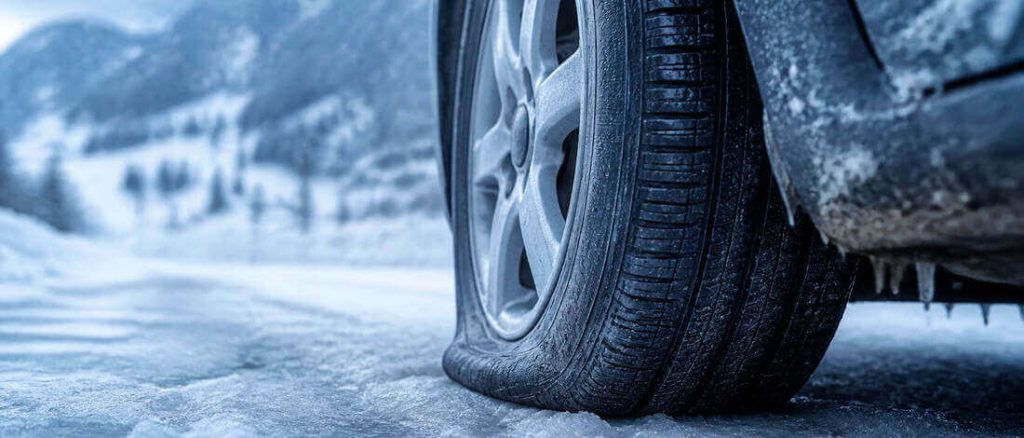
Your TPMS (Tire Pressure Monitoring System) dashboard light illuminates on the first genuinely freezing morning of the season, or you eyeball your front tire and notice it looks distinctly flatter than it did back in October. Before you panic and assume you have a puncture, know the physical rule: tires lose approximately 1 PSI for every 10°F drop in ambient temperature.
This is not a rough estimate—it is absolute, non-negotiable physics. Specifically, Gay-Lussac’s Law, which dictates the direct mathematical relationship between pressure and temperature for any gas confined within a sealed, rigid container (which is exactly what your tire assembly is).
A sudden 40°F overnight temperature drop from a mild autumn afternoon to a harsh cold snap will pull exactly 4 PSI out of all four tires simultaneously and evenly. This is expected seasonal behavior. However, knowing when this drop crosses the line from “normal physics” into a dangerous hidden leak is what every driver needs to understand to stay safe on winter roads.
Contents
- 1 Normal Seasonal Drop vs An Active Wheel Leak
- 2 Placard PSI vs Sidewall Max: Don’t Inflate to the Wrong Number!
- 3 Understanding the TPMS Trigger Thresholds
- 4 Real-World Diagnostic Case Studies
- 5 US Automotive Tire Repair Cost Matrix
- 6 Cold-Weather Tire Maintenance & Prevention Protocols
- 7 FAQs About Tires Losing Pressure in Cold Weather
- 7.1 Does nitrogen really make a difference in cold-weather tire pressure?
- 7.2 Is it safe to keep driving with the TPMS light on in cold weather?
- 7.3 Does parking in a garage prevent cold-weather pressure loss?
- 7.4 What PSI should I use in extreme cold, below 0°F?
- 7.5 How often should I check tire pressure during winter?
- 8 The Bottom Line
Normal Seasonal Drop vs An Active Wheel Leak
To stop guessing and instantly isolate a genuine cold-weather leak, execute this simple mathematical formula before driving:
- Take the ambient temperature from the last time you checked/adjusted your tires (e.g., $65^\circ\text{F}$).
- Subtract today’s actual cold outdoor temperature (e.g., $35^\circ\text{F}$), yielding a 30-degree delta.
- Divide that temperature delta by 10 (giving you a value of 3).
- This means you should expect exactly a 3 PSI loss from your last baseline. If your tires sat at 34 PSI in autumn, they should read precisely 31 PSI today.
Deciphering the Results:
- The Physics Verdict: If all four of your tires have dropped evenly by roughly 3 PSI, your wheels are healthy. Simply inflate them back up to your vehicle’s factory specifications.
- The Leak Verdict: If three of your tires read 31 PSI but the driver’s side front sits at 24 PSI, or if your overall pressure has plummeted by 8 to 10 PSI on a mild temperature swing, you have an active leak. Cold weather makes rubber valve stems stiff and brittle, shrinking metal bead seals and exposing slow, microscopic leaks that warm summer driving easily masked.
Placard PSI vs Sidewall Max: Don’t Inflate to the Wrong Number!
This is a critical, highly common safety mistake that trips up millions of drivers.
- The Sidewall Max: The high-pressure number molded directly into the tire’s outer rubber sidewall (e.g., 50 PSI) is the tire’s absolute maximum structural load capacity. Never inflate your tires to this number.
- The Door Placard: Your vehicle’s optimal operating pressure is printed on a bright yellow and white safety sticker located inside the driver’s side door jamb (or fuel door). This number is engineered explicitly for your vehicle’s curb weight, suspension damping, and tracking control.
What “Cold Tire Pressure” Actually Means: Always measure and fill your tires when they are cold—meaning the vehicle has sat parked for at least three hours, or has been driven less than one mile. Rolling friction rapidly heats up the internal air, temporarily spiking your pressure reading by 3 to 5 PSI. If you adjust your tires when they are warm, they will become severely underinflated once they cool down overnight.
Understanding the TPMS Trigger Thresholds
Under federal guidelines mandated by the TREAD Act, your vehicle’s TPMS is legally required to illuminate a warning light once any tire drops 25% below the vehicle’s recommended door placard pressure.
On a standard sedan with a door placard rating of 35 PSI, your warning light will stay dark through minor drops, only snapping on the exact microsecond a tire crosses the 26 PSI safety threshold.
The warning light will typically auto-extinguish once you add proper air and drive the vehicle continuously above 15 mph for a few minutes, allowing the active rolling sensors to transmit a fresh, pressurized data packet back to the central module.
Real-World Diagnostic Case Studies
Case 1: The Brittle Camry Valve Stem
A Toyota Camry was towed into my shop bay with the owner convinced her tire had spontaneously suffered a blowout overnight due to a freezing cold snap. The front-left tire sat at a flat 18 PSI while the other three remained at a stable 32 PSI. Physics does not select one single wheel to drain while leaving the others pristine. Upon inspection, we found a tiny hairline crack in the rubber valve stem. In summer, the warm rubber remained flexible enough to seal itself shut; once the cold hit, the rubber turned stiff and brittle, opening up a steady leak pathway.
Case 2: The Corroded Aluminum Bead Leak
An older pickup truck with cast aluminum wheels came into our shop for two consecutive winters with a persistent TPMS light that no other shop could resolve. The tires were brand new and had no punctures. We submerged the wheel assembly in a water tank and spotted microscopic bubbles escaping from the rim bead. Road salt exposure had caused light surface oxidation (corrosion) on the aluminum wheel bead. The cold weather caused the alloy wheel to contract slightly, opening up a slow, seasonal leak. We dismounted the tire, wire-wheeled the rim corrosion flat, applied bead sealer, and the leak was permanently resolved.
US Automotive Tire Repair Cost Matrix
| Tire Service / Diagnostic Item | Average Parts Cost | Professional Shop Labor | Total Real-World Shop Bill |
| Driveway Air Check & Inflation | $0 (Free Air) | N/A (Driveway Time) | $0 – $5 |
| Rubber Snap-In Valve Stem Replacement | $5 – $15 | 0.2 – 0.3 Hours | $20 – $45 |
| TPMS-Integrated Metal Valve Stem Kit | $30 – $60 | 0.3 – 0.5 Hours | $60 – $110 |
| Complete New TPMS Sensor Replacement | $50 – $120 | 0.3 – 0.5 Hours (Re-learn Included) | $90 – $180 |
| Alloy Wheel Corrosion Bead Reseal | $15 – $30 (Bead Sealant) | 0.5 – 0.8 Hours | $70 – $130 |
| Professional Pure Nitrogen Fill Service | N/A | Flat Rate (All 4 Tires) | $20 – $40 |

Cold-Weather Tire Maintenance & Prevention Protocols
To keep your tires performing safely with maximum tread contact through the freezing winter months, build these three habits:
1. Execute Monthly Manual Pressure Checks: 1 min.
Never rely solely on your dashboard light. Check your tire pressure manually once a month throughout the entire winter season. Temperatures fluctuate constantly, and a tire that was perfectly fine in November can drop below safe thresholds by January due to cumulative seasonal air contraction.
2. Incorporate a 2-PSI Winter Buffer: 1 min.
If you know a severe arctic cold front is heading your way overnight, inflate your tires to 2 to 3 PSI above your door placard spec. This minor buffer prevents the overnight temperature drop from pulling your tires below their recommended threshold by morning, keeping your TPMS light off.
3. Inspect Rubber Valve Stems for Dry-Rot: 2 min.
Once a season, remove your valve caps and gently flex the rubber valve stems side-to-side with your thumb. Look closely at the base of the stem where it meets the metal wheel—if you spot any microscopic dry-rot cracks or hear a faint hissing sound when flexed, replace the stems immediately before they snap.
FAQs About Tires Losing Pressure in Cold Weather
Does nitrogen really make a difference in cold-weather tire pressure?
Yes, modestly. Nitrogen permeates through tire rubber more slowly than standard air and carries less moisture, which reduces the size of pressure swings from temperature changes, though it doesn’t eliminate the basic physics of cold-weather pressure drop entirely.
Is it safe to keep driving with the TPMS light on in cold weather?
For a short distance to a gas station to add air, yes. Driving extensively on a significantly underinflated tire risks uneven wear, reduced handling, and in severe cases sidewall damage or blowout, so treat the light as something to address that same day, not something to ignore for weeks.
Does parking in a garage prevent cold-weather pressure loss?
It reduces it somewhat since garage temperatures don’t swing as low as outdoor overnight temperatures, but it doesn’t eliminate the effect entirely unless the garage is heated to a stable temperature close to what the tire was originally filled at.
What PSI should I use in extreme cold, below 0°F?
Still use your vehicle’s placard PSI as the target — the recommendation doesn’t change with temperature, you just need to check and refill more frequently since the pressure swing itself is larger in extreme cold. Never intentionally overinflate beyond placard spec to compensate for expected cold-weather loss.
How often should I check tire pressure during winter?
At minimum once a month, and ideally after any significant temperature swing of 20°F or more from when you last checked, since that’s roughly the threshold where the expected drop becomes large enough to matter for handling and tire wear.
The Bottom Line
Do the math before you assume your tires are punctured: 1 PSI of loss for every 10°F drop is normal, expected, and free to fix with a basic air pump. If all four tires have dropped evenly, simply inflate them back to your driver’s door placard spec. If one tire is losing air significantly faster than the others, you have a mechanical leak that the cold is simply exposing, and a quick valve stem or bead seal inspection should be your first line of defense.
Powertrain Monitoring & Calibration: If your tire pressure adjustments are complete but your dashboard continues to present active Tire Pressure Monitoring System (TPMS) errors or unexpected engine performance faults during cold weather starts, check our comprehensive workshop guide on How to Read Check Engine Light Codes Without a Scannerto clear historical codes. For alternative tracking faults or isolating fueling imbalances under the hood, read our in-depth diagnostic analysis on Why an Engine Runs Rich.