
This article was updated in December 12, 2025 with new products and information by Mark S. Taylor
Vibration when accelerating? That clunking noise isn’t normal – it’s likely your center support bearing failing. Your vehicle’s driveshaft center support bearing is a critical component that keeps the driveshaft stable and reduces vibration. I’ve replaced dozens of these bearings on various vehicle models. This guide will walk you through diagnosing symptoms, understanding costs, and completing a driveshaft center support bearing replacement. Let’s get your car running smoothly again without that annoying vibration.
Contents
What Is a Driveshaft Center Support Bearing?
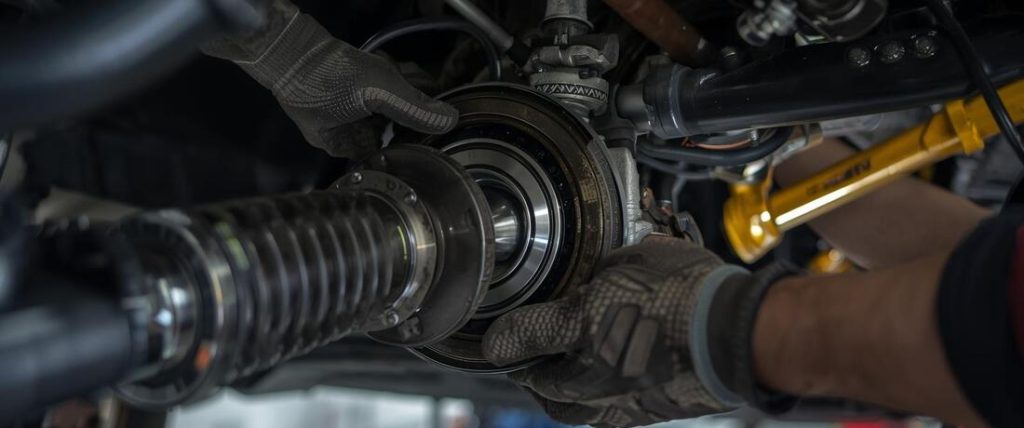
A driveshaft center support bearing holds the middle of your driveshaft in place and prevents it from vibrating excessively. This component is essential for vehicles with two-piece driveshafts, which are common in trucks, SUVs, and some rear-wheel-drive cars.
Purpose and Function
The center support bearing acts like a bridge pier for your driveshaft. It supports the shaft’s midpoint and carries its weight. The bearing itself allows the driveshaft to spin freely. Around the bearing is a rubber cushion that absorbs vibration. When this bearing fails, you’ll feel shaking throughout your vehicle, especially when accelerating.
Location in Your Vehicle
You’ll find the center support bearing underneath your vehicle, midway along the driveshaft. It’s mounted to the vehicle’s frame or crossmember with a bracket. On most vehicles, it’s located roughly between the front seats and the rear axle. To see it, you’ll need to safely lift your vehicle and look underneath.
5 Critical Symptoms of a Failing Center Support Bearing
A failing center support bearing will give you clear warning signs before complete failure. Recognizing these symptoms early can prevent more expensive damage to your drivetrain.
Vibration when accelerating from a stop – This is the most common symptom. You’ll feel a shaking sensation through the seats and floorboard when you press the gas pedal from a standstill. The vibration may lessen at higher speeds but will return during acceleration.
Clunking noise during gear shifts – When you shift between drive and reverse, or between gears, you might hear a metallic clunk. This sound indicates excessive play in the bearing assembly.
Squealing or whining at highway speeds – As the bearing wears out, it can create a high-pitched noise that increases with vehicle speed. This sound comes from the bearing’s internal components failing.
Visible rubber deterioration or sagging – If you inspect under your vehicle, you might see the rubber around the bearing cracked, torn, or sagging. This visible damage means the bearing has lost its ability to absorb vibration.
Excessive play when shaking the driveshaft – With the vehicle safely lifted, you can grab the driveshaft near the center bearing and try to move it. More than a slight amount of play indicates a worn bearing.
Replacement Cost: DIY vs. Professional
Replacing a driveshaft center support bearing costs significantly less if you do it yourself, but requires specialized tools and mechanical knowledge. Professional replacement ensures the job is done correctly but comes at a higher price.
Parts Cost Breakdown
The cost of the bearing itself varies based on quality and brand:
| Bearing Type | Price Range |
|---|---|
| OEM bearings | $100-$200 |
| Premium aftermarket | $80-$150 |
| Budget aftermarket | $50-$100 |
| Hardware and supplies | $10-$30 |
OEM bearings offer the best fitment and longevity but cost more. Premium aftermarket options from brands like Timken or National provide good quality at a lower price. Budget options work for short-term fixes but may not last as long.
Professional Installation Costs
If you take your vehicle to a shop, expect these costs:
- Labor: 2-3 hours at $100-$150/hour = $200-$450
- Parts markup: Typically 20-30% over retail
- Total shop cost: $300-$600
The exact cost depends on your vehicle make and model. Some vehicles require more disassembly, increasing labor time. Luxury and European vehicles often cost more due to specialized parts and procedures.
When to DIY vs. Hire a Pro
Consider these factors when deciding between DIY and professional installation:
DIY is feasible if:
- You have mechanical experience
- You own or can borrow the necessary tools
- You have a safe workspace to lift your vehicle
- You’re comfortable working under your vehicle
Professional installation is recommended if:
- You lack specialized tools like a bearing press
- You’re not confident in your mechanical skills
- Your vehicle requires significant disassembly
- You want the peace of mind of a professional warranty
Essential Tools and Materials
Having the right tools makes a driveshaft center support bearing replacement much easier and safer. Without proper tools, you risk damaging your vehicle or injuring yourself.
Required Tools
These basic tools are essential for the job:
- Floor jack and jack stands (NEVER work under a vehicle supported only by a jack)
- Socket set and wrenches (metric and standard, depending on your vehicle)
- Marking pen or chalk (CRITICAL for alignment)
- Rubber mallet
- Penetrating oil (for rusted bolts)
- Safety glasses and gloves
The marking pen is perhaps the most important tool on this list. If you don’t mark the alignment before disassembly, you’ll likely have permanent vibration after reassembly.
Specialized Equipment
These specialized tools make the job much easier:
- Bearing puller or hydraulic press (essential for removing the old bearing)
- Torque wrench (critical for proper reassembly)
- Large vise (helpful for holding the driveshaft during bearing work)
- Driveshaft alignment tool (helpful but not essential)
If you don’t own a bearing press, many auto parts stores offer tool rental programs. Alternatively, a machine shop can press the bearing for a small fee ($40-$80).
Replacement Parts
Before starting the job, gather these parts:
- New center support bearing assembly (match your vehicle’s specifications)
- Mounting hardware (new bolts are recommended)
- Grease (if not pre-greased)
- Locking compound (for thread locker)
Always compare the new bearing with the old one to ensure they match. Some vehicles have multiple bearing options depending on engine size or drivetrain configuration.
Step-by-Step Replacement Guide
Replacing a driveshaft center support bearing requires attention to detail and proper safety procedures. Follow these steps carefully to ensure a successful repair.
Step 1 – Safety Preparation
Safety must come first when working under a vehicle. Park on a level surface and engage the parking brake. Place wheel chocks behind the rear wheels. Lift the vehicle with a floor jack and support it securely on jack stands. Never work under a vehicle supported only by a jack. Disconnect the battery if required by your vehicle’s service manual. Put on safety glasses and gloves before beginning work.
Step 2 – Mark Driveshaft Alignment (CRITICAL!)
Proper driveshaft alignment is essential to prevent vibration after reassembly. Use a paint marker or chalk to make clear alignment marks on both halves of the driveshaft before disassembly. Mark the relationship between the front yoke, the center bearing, and the rear yoke. These marks must line up exactly during reassembly. If you reassemble the driveshaft incorrectly, you’ll experience permanent vibration that can only be fixed by disassembling and realigning everything.
Step 3 – Remove the Driveshaft
Start by removing the bolts that connect the driveshaft to the differential yoke. Support the driveshaft as you remove these bolts to prevent it from falling. Then, disconnect the driveshaft from the transmission or transfer case. Some vehicles have a center support bracket that must be unbolted from the frame or crossmember. Carefully lower the driveshaft assembly, being mindful of its weight and balance. Two-piece driveshafts can be separated at the center bearing for easier removal.
Step 4 – Remove the Old Bearing
Removing the old bearing often requires a bearing puller or press. If you’re using a puller, attach it securely and apply steady pressure to avoid damaging the driveshaft. For pressed bearings, a hydraulic press makes the job much easier. If you don’t have access to a press, many machine shops will remove the bearing for a small fee ($40-$80). Be careful not to damage the driveshaft during this process, as replacement driveshafts are expensive.
Step 5 – Install the New Bearing
Clean the driveshaft thoroughly before installing the new bearing. Apply a thin layer of grease to the bearing seat if recommended by the manufacturer. Use a press to install the new bearing evenly and straight. Never hammer directly on the bearing, as this can damage the internal components. If using a hammer and block, apply force only to the inner race. Ensure the bearing is fully seated and properly aligned before proceeding.
Step 6 – Reinstall and Align
Reinstall the driveshaft in the reverse order of removal. Align your paint marks exactly as they were before disassembly. This step is critical for preventing vibration. Torque all fasteners to the manufacturer’s specifications using a torque wrench. Overtightening can damage components, while undertightening can lead to loosening and failure. If your vehicle has a center support bracket, ensure it’s properly aligned and tightened.
Step 7 – Test Drive and Final Check
Before taking a test drive, start the vehicle and let it idle in park. Listen for any unusual noises. Then, with the vehicle still on jack stands (if safe), put it in drive and let the wheels spin slowly (if possible). Listen for any abnormal sounds. Lower the vehicle and take a short test drive, paying attention to vibration at various speeds. If everything feels normal, the replacement was successful. If you notice vibration, the driveshaft may need to be professionally balanced.
OEM vs. Aftermarket Bearings
Choosing between OEM and aftermarket bearings affects both cost and longevity. Understanding the differences helps you make the right choice for your vehicle and budget.
Quality Comparison
| Bearing Type | Quality Level | Typical Price | Best For |
|---|---|---|---|
| OEM | Highest | $100-$200 | Long-term reliability |
| Premium Aftermarket | High | $80-$150 | Balance of cost and quality |
| Budget Aftermarket | Moderate | $50-$100 | Short-term fixes or budget builds |
OEM options (Spicer, ACDelco, Genuine) offer the best fitment and longevity. These bearings are made to the exact specifications of your vehicle’s manufacturer. They typically come with a warranty and provide the most reliable performance.
Premium aftermarket (Timken, National) provide excellent quality at a lower price than OEM. These brands often manufacture bearings for OEMs but sell them under their own name at a lower cost. They’re a great choice for most vehicle owners.
Budget options (Dorman, ECCPP) work for short-term fixes or when budget is the primary concern. These bearings may not last as long as OEM or premium options but can get you back on the road for less money upfront.
Longevity Expectations
The lifespan of a center support bearing depends on quality, driving conditions, and installation:
- OEM bearings: Typically last 100,000-150,000 miles
- Premium aftermarket: 80,000-120,000 miles
- Budget aftermarket: 50,000-80,000 miles
Warranty coverage also varies:
- OEM: Usually 1-3 years or 12,000-36,000 miles
- Premium aftermarket: 1-2 years or unlimited miles
- Budget aftermarket: 90 days to 1 year
For daily drivers, investing in a quality bearing often saves money in the long run by reducing the frequency of replacement.
Related Repairs to Consider
When replacing your center support bearing, it’s wise to inspect and potentially replace other related components. This approach saves time and prevents future issues.
U-joint replacement (recommended while driveshaft is out)
Universal joints (U-joints) connect the sections of your driveshaft and allow it to flex as the suspension moves. Like center support bearings, U-joints wear out over time. Since you already have the driveshaft removed, replacing the U-joints now saves significant labor later. Signs of worn U-joints include clunking noises when shifting, vibration at certain speeds, and rust around the joint caps. For more information on U-joint replacement, check out our guide on driveshaft U-joint maintenance.
Transmission output seal inspection
The transmission output seal prevents fluid from leaking where the driveshaft connects to the transmission. With the driveshaft removed, you can easily inspect this seal for leaks or damage. If you notice any transmission fluid leakage, replacing the seal now is much easier than when the driveshaft is installed. A failing seal can lead to low transmission fluid levels, which can cause expensive transmission damage.
Driveshaft balancing check
After replacing the center support bearing, some vehicles may require driveshaft balancing. If you still experience vibration after the replacement, a professional balancing service may be necessary. Most auto repair shops offer this service for $50-$100. A properly balanced driveshaft ensures smooth operation and prevents premature wear on other drivetrain components.
FAQ: Driveshaft Center Support Bearing Replacement
1. How much does it cost to replace a center support bearing?
Replacing a center support bearing costs $50-$150 for parts. Professional installation adds $200-$450. Total cost is $300-$600 for most cars. Prices vary by vehicle type and bearing quality.
2. How do I know if my drive shaft center support bearing is bad?
Signs of a bad center support bearing include shaking when accelerating, clunking noises during gear shifts, and visible rubber damage. You might also hear squealing at highway speeds.
3. How much does it cost to replace a driveshaft bearing?
Driveshaft center support bearing replacement costs $50-$150 for parts. With professional labor, expect $300-$600 total. DIY saves money but requires special tools like a bearing press.
4. How much does it cost to replace a tail shaft center bearing?
A tail shaft center bearing replacement costs the same as a center support bearing. Parts run $50-$150. With labor, plan for $300-$600 at a repair shop for most vehicles.
5. Should I replace U-joints at the same time?
Yes, replace U-joints when changing the center support bearing. Since the driveshaft is already removed, it saves time and prevents future repairs. U-joints wear out at similar rates.
Bottom Line: Should You DIY This Repair?
A driveshaft center support bearing replacement is a medium-difficulty DIY job that can save you significant money if you have the right tools and mechanical experience. The most critical aspect of this repair is maintaining proper driveshaft alignment during reassembly. If you don’t mark the alignment correctly before disassembly, you’ll likely experience permanent vibration that can only be fixed by repeating the entire process.
For those without specialized tools like a bearing press, using a machine shop for the pressing portion ($40-$80) is a cost-effective compromise. This approach saves you from buying expensive tools while still allowing you to complete most of the work yourself.
If you’re not confident in your mechanical skills or don’t have a safe workspace to lift your vehicle, professional installation is worth the extra cost. A properly installed center support bearing ensures smooth operation and prevents damage to other drivetrain components.
Never skip the alignment marking step – it’s the most critical part of this repair. Taking the time to do this job correctly will save you from headaches and additional repairs down the road.
Quick Summary
- A driveshaft center support bearing holds the middle of your driveshaft and reduces vibration
- Common symptoms include vibration when accelerating, clunking noises, and visible rubber damage
- DIY replacement costs $50-$150 for parts, while professional installation costs $300-$600
- Critical tools include a bearing puller or press, marking pen, and torque wrench
- Proper alignment marking before disassembly is essential to prevent vibration after reassembly
- OEM bearings offer the best longevity, while premium aftermarket provides good value
- Consider replacing U-joints while the driveshaft is removed to save on future labor