
This article was updated in December 21, 2025 with new products and information by Mark S. Taylor
Noticed oil under your car? You’re not alone. An axle seal leak might seem small, but it can cause big problems. In this guide, I’ll share what I’ve learned from fixing countless leaks. You’ll know exactly how dangerous it is, what to look for, and when to get help. Let’s get you back on the road safely.
Contents
Is an Axle Seal Leak Dangerous?
Yes, an axle seal leak is moderately dangerous. It won’t leave you stranded right away. But it can cause serious damage if you ignore it. You can drive for a few days to weeks if you check your fluid often. If you wait too long, you could face $2,000-$5,000 in repairs. How bad it is depends on how much fluid leaks and how you drive.
Think of it like a slow tire leak. At first, it’s no big deal. But if you don’t fix it, you’ll eventually have a blowout. I once had a customer who ignored a small leak for a month. He ended up needing a whole new transmission. Don’t let that happen to you.

What Is an Axle Seal? (And Why It Leaks)
An axle seal is a small rubber part that keeps fluid inside your transmission or differential.
Function of the Axle Seal
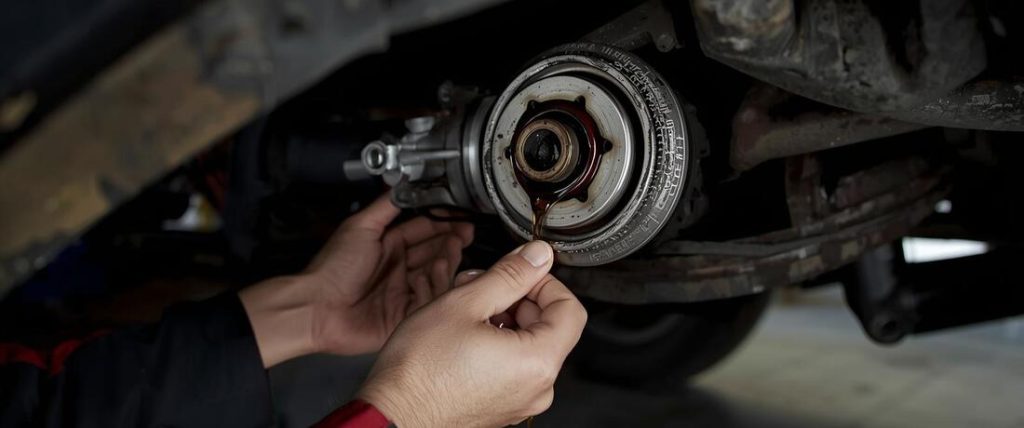
It seals the spot where the axle shaft enters the housing. This stops transmission fluid or gear oil from leaking out. It also blocks dirt and water.
A good seal lets the axle spin freely without losing lubrication.
Front vs. Rear Axle Seals (Key Differences)
Front seals often leak transmission fluid (red or pink) in FWD or AWD cars. Rear seals leak thicker gear oil (brown or black) in RWD trucks or SUVs.
Front leaks affect transmission more directly. Rear leaks can hit brakes faster.
Axle Seal vs. CV Boot (Don’t Confuse Them)
Many mix these up. A CV boot covers the CV joint and holds grease—if torn, you see black grease fling.
An axle seal holds transmission fluid—if bad, you see red fluid puddles. Different leaks mean different fixes.
5 Critical Symptoms of a Leaking Axle Seal
Look for these five signs. They tell you when your axle seal is leaking. Spot them early and save money.
First, check for fluid puddles under your car. Look especially after parking overnight. These puddles show up near your wheels or under the middle of your car.
Second, look for wet or oily spots on your wheels or tires. You might see this before puddles form. It’s often the first visible sign.
Third, notice any burning smells while driving. This happens when fluid drips onto hot parts. The smell gets stronger as you drive.
Fourth, pay attention if your transmission slips. Or if it’s hard to shift gears. This means fluid is getting low.
Fifth, listen for grinding or whining noises. These come from near your wheels or differential. They mean parts aren’t getting enough oil.
Danger Severity Scale: How Serious Is Your Leak?
Your leak falls into one of four levels. Know which one you have. It tells you how fast to act.
Low Severity (Minor Seepage): You see a small damp spot. No puddles form. You can drive 1-2 weeks. But get it fixed soon.
Moderate Severity (Active Leak): You see puddles after parking. Fluid is on your tire. You can drive a few days to a week. But limit your driving.
High Severity (Significant Leak): Large puddles form quickly. Fluid drips steadily. Drive only to the repair shop. Don’t go anywhere else.
Urgent (Critical Failure): Your transmission slips. You hear grinding noises. Your brakes have oil on them. Do not drive. Have your car towed.
| Severity | What You See | Safe to Drive | What to Do |
|---|---|---|---|
| Low | Small damp spot | 1-2 weeks | Schedule repair soon |
| Moderate | Puddles, fluid on tire | Few days to 1 week | Fix within days |
| High | Large puddles, drips | To shop only | Fix now |
| Urgent | Slipping, grinding, brake issues | No driving | Tow to shop |
What Damage Can a Leaking Axle Seal Cause?
A small leak can cause big problems if you ignore it. Here’s what can happen.
Bearing failure: Bearings need oil to work. Without it, they get hot and wear out. Then your axle might wobble. In bad cases, your wheel could fail. This takes weeks to months to happen.
Transmission or differential damage: Low fluid makes these parts overheat. Gears wear out without oil. Your transmission might slip or make noise. Fixing this costs $2,000-$5,000+. That’s much more than fixing the seal.
Brake contamination: Oil on brakes is dangerous. Your brakes won’t grip well. This makes it hard to stop. Oil-soaked brakes often need replacing. This puts you and others at risk.
Wheel hub damage: Fluid leaks into the hub area. It ruins wheel bearings. It can rust metal parts. Then you need a new hub assembly. This costs more than just the seal.
Safety hazards: Fluid on the road makes it slippery for others. Oil near hot parts can start a fire. You might smell burning in your car. Your car might fail an emissions test.
How Long Can You Drive with a Leaking Axle Seal?
You can drive with a minor leak for 1-2 weeks. Check your fluid every day. With a moderate leak, you have a few days to a week. Don’t drive far. With a severe leak, go only to the shop. With a critical leak, don’t drive at all.
How long you can drive depends on several things. The size of the leak matters most. Bigger leaks mean less time. How you drive matters too. Highway driving makes fluid leak faster. City driving is easier on the leak.
Check your fluid level daily if you must drive. Top it off as needed. Watch for bigger puddles. Listen for new noises. Test your brakes to make sure they work well.
Your car type also matters. Front-wheel drive cars often have simpler setups. Leaks might get worse slowly. Big trucks with AWD can lose fluid fast. Their seals are bigger and face more pressure.
Here’s a quick guide:
- Minor leak: 1-2 weeks max. Check fluid daily.
- Moderate leak: Few days to 1 week. Drive less.
- Severe leak: Drive only to the shop.
- Critical leak: Don’t drive. Tow it.
Remember, these are maximum times. Fix it sooner to avoid more damage.
Axle Seal Leak Repair Costs (2026 Estimates)
Fixing an axle seal leak usually costs $200-$600. Parts are $40-$120 of that. Labor makes up the rest. Most shops charge 1-3 hours of work. Rates are $80-$150 per hour.
The seal itself costs $10-$40. You’ll also need a gasket or sealant ($10-$20). And new fluid ($20-$60). That’s the parts total.
Labor costs vary. A simple front seal in a small car might take 1-2 hours. A rear seal in a big truck could take 3 hours or more. More work means higher cost.
If you’re good with cars, you can fix it yourself. Parts only cost $40-$120. But this isn’t an easy job. It takes skill and the right tools.
If the leak caused damage, costs go up fast. New bearings add $150-$400. Brake service costs $100-$300. Transmission repairs can be $2,000-$5,000+. That’s why fixing the leak early saves money.
| Repair Type | Parts Cost | Labor Cost | Total Cost |
|---|---|---|---|
| DIY Repair | $40-$120 | $0 | $40-$120 |
| Shop Repair (Average) | $40-$120 | $80-$450 | $200-$600 |
| Shop Repair (Complex) | $40-$120 | $300-$680 | $400-$800 |
| With Bearing Damage | $190-$520 | $230-$850 | $350-$1,370 |
| With Brake Damage | $140-$420 | $180-$750 | $300-$900 |
| With Transmission Damage | $2,040-$5,120 | $2,080-$5,450 | $2,000-$5,000+ |
Can You Fix an Axle Seal Leak Yourself?
Yes, you can fix it yourself if you have some car skills. This job is medium to hard. It takes 2-4 hours. You’ll need jacks, wrenches, a seal puller, and a torque wrench.
The basic steps are:
- Lift and secure the car
- Take off the wheel and brake parts
- Disconnect the axle
- Remove the old seal
- Clean the seal area
- Put in the new seal
- Put everything back together
- Add new fluid
DIY makes sense if you have experience and tools. You’ll save $150-$450 in labor. But sometimes it’s better to call a pro.
Hire a mechanic if you don’t have the right tools or skills. Or if your car is hard to work on. A pro can also spot other problems you might miss. This could save you money later.
Before you start, watch videos for your specific car. The process changes a lot between different vehicles. What works for a small car might not work for a big truck.
Temporary Measures (If You Can’t Repair Immediately)
If you can’t fix the leak right away, take these steps. They’ll help you get by for a short time.
First, check and top off your fluid every day. This is the most important step. It keeps your car safe to drive.
Avoid highways when you can. High speeds make fluid leak faster. Drive only when you must. Keep trips short.
Put cardboard under your car when it’s parked. This shows you how fast the leak is growing. If the spots get bigger quickly, the leak is getting worse.
Clean any oil off your wheels and brakes. Oil on brakes makes them work poorly. Use brake cleaner to wash it off. This keeps you safe.
Get your car fixed as soon as you can. Even if you have to wait for parts or money. The longer you wait, the more damage can happen.
Don’t ignore bad signs. Like new noises, slipping gears, or weak brakes. These mean the leak is causing real damage. Stop driving if you notice these.
Remember, these are temporary fixes only. They’re not a long-term solution. You still need to fix the leak soon.
How to Prevent Axle Seal Leaks
Preventing leaks is easier than fixing them. Follow these tips to keep your seals in good shape.
Stick to your car’s maintenance schedule. This includes fluid changes and seal checks. Your car’s manual tells you when to do these. Find your car’s maintenance schedule here.
Always use the right fluid for your car. Keep it at the right level. Too much fluid can cause pressure that ruins seals. Too little fluid causes overheating. Both are bad for seals.
When you get axle work done, ask to replace the seals. Even if they’re not leaking yet. The extra cost is small. It’s much cheaper than paying to access the same area later.
Check your seals during regular maintenance. Look for cracks, wear, or small leaks. Finding problems early saves money.
Keep your differential breather clear. A clogged breather builds up pressure. This forces fluid past seals. It’s a simple check that prevents big problems.
Drive your car regularly. Don’t let it sit for months. Seals can dry out and crack when a car sits. Then they leak when you start driving again.
Avoid harsh driving. Sudden starts, sharp turns, and off-roading stress seals. Gentle driving helps them last longer.
Axle Seal Leak vs. Other Similar Problems
Other leaks can look like an axle seal leak. Here’s how to tell them apart.
A CV Boot Leak involves grease, not oil. You’ll see thick, black grease near the wheel. You might hear a clicking sound when you turn. This is different from an axle seal leak.
A Wheel Cylinder Leak involves brake fluid. It’s clear or light yellow. It’s very thin. This leak is inside the brake drum. Your brake pedal might feel soft. This is a safety issue. Fix it right away.
A Differential Cover Leak comes from the gasket on the differential. It’s in the center of the differential housing. This leak is often easier and cheaper to fix. You don’t need to remove the axle.
| Leak Type | Fluid Looks Like | Where It Is | Key Signs |
|---|---|---|---|
| Axle Seal | Red/brown fluid or dark oil | Where axle meets transmission/differential | Puddles under car, burning smell, slipping gears |
| CV Boot | Thick black grease | At wheel end of axle | Clicking when turning, grease on wheel |
| Wheel Cylinder | Clear/yellow brake fluid | Inside brake drum | Soft brake pedal, brake warning light |
| Differential Cover | Same as axle seal | Center of differential | Puddles under car center, no axle entry point |
If you’re not sure what’s leaking, ask a mechanic. They can quickly find the source and tell you what to do.
FAQ: Common Questions About Axle Seal Leaks
Can I drive with a leaky axle seal?
You can drive with a small leak for a short time. Check your fluid every day. You might have 1-2 weeks. But don’t drive with a big leak. It can ruin your transmission. If your gears slip or you hear grinding, stop driving. Have your car towed.
Is it worth fixing an axle seal leak?
Yes, it’s worth fixing. The repair costs $200-$600. If you wait, you might need a new transmission. That costs $2,000-$5,000+. It’s also safer to fix it. Oil on brakes can cause accidents. And fluid on the road is dangerous for others.
How long can you drive with a leaking wheel seal?
With a small leak, you can drive 1-2 weeks max. Check fluid daily. A medium leak gives you a few days to a week. Drive less. With a bad leak, go only to the shop. With a critical leak, don’t drive. Tow it. How long you have depends on the leak size and how you drive.
How much does it cost to repair a axle seal leak?
The average cost is $200-$600. Parts are $40-$120. Labor is $80-$450. If you do it yourself, you pay just for parts. If the leak caused damage, costs go up. Bearings add $150-$400. Brakes add $100-$300. Transmission work can be $2,000-$5,000+.
Is axle seal replacement covered by warranty?
It might be. If your car is still under warranty, it could cover this. Powertrain warranties often cover seals. But not if the leak is from an accident or misuse. Check your warranty details. Extended warranties might cover it too. But policies vary.
Bottom Line: Don’t Ignore an Axle Seal Leak
An axle seal leak is moderately dangerous. You can drive for a short time if you watch your fluid. But fix it soon to avoid big problems. The math is simple: $200-$600 now versus $2,000-$5,000+ later. Fixing it early saves money and keeps you safe.
Your next steps are clear. Figure out how bad your leak is. Check your fluid every day if you drive. Get it fixed within the right time frame. The longer you wait, the more it costs.
I’ve seen too many customers wait too long. They end up paying much more than they needed to. Don’t be that person. Fix the leak and drive with peace of mind.
Quick Summary
- An axle seal leak is moderately dangerous but not an emergency if caught early
- Look for fluid puddles, wet wheels, burning smells, slipping gears, or strange noises
- Leaks range from minor (driveable 1-2 weeks) to critical (don’t drive)
- Repairs cost $200-$600 on average, much less than transmission damage
- Check fluid daily if you must drive, and fix the leak as soon as possible
- DIY is possible with good skills and tools, but pros can do it faster
- Prevent leaks by following maintenance schedules and using the right fluids