
This article was updated in January 23, 2026 with new products and information by Mark S. Taylor
Your exhaust system has six main parts working together to remove harmful gases and keep your engine running efficiently. The parts of an exhaust system are crucial for your safety and car health. I have spent years fixing exhausts, and I know how confusing they can look. In this guide, I will break down every part from the engine to the tailpipe. You will learn what each piece does and how much it costs to fix. Let’s get under the car and take a look.
Contents
What Does an Exhaust System Do?
The exhaust system cleans gas, cuts noise, and helps the engine breathe.
It has a big job. It moves hot, dirty air away from the engine to the back of the car.
Three Main Functions
It protects you, the car, and the neighbors.
- Removes Toxic Gases: It takes away carbon monoxide. This gas is deadly. It also cleans up smog-causing fumes.
- Reduces Engine Noise: Without a muffler, your car would sound like a tractor.
- Optimizes Performance: The engine needs to push air out fast. Good flow adds power.
Diagram: Parts of an Exhaust System
The system runs from the engine block all the way to the rear bumper.
Imagine a long metal snake under your car. Here is the order of the parts:
- Front: Exhaust Manifold (Engine)
- Middle: Catalytic Converter & O2 Sensors
- Rear: Resonator, Muffler, & Tailpipe
The 6 Main Parts of an Exhaust System
These parts work in a specific order to clean and quiet the exhaust.
Here is the breakdown of each component.
1. Exhaust Manifold (or Header)
The manifold is the first stop for hot gas leaving the engine.
It bolts right to the engine block. It has a tough job. It handles the most heat.
- What It Does: It grabs gas from all the cylinders. It funnels them into one pipe.
- Materials: Most cars use cast iron. It is heavy but strong. Fast cars use stainless steel tubes called “headers.”
- Signs of Problems: You might hear a ticking sound when the engine is cold. If it cracks, exhaust fumes can smell bad under the hood.
- Lifespan: 10 to 15 years. Heat stress can crack it.
- Replacement Cost: $200–$1,000+.
2. Catalytic Converter
This device scrubs the dirty gas to make it safer for the air.
It is the most expensive part of the system. It sits between the engine and the muffler.
- What It Does: It turns bad fumes into safe ones. It changes carbon monoxide into carbon dioxide.
- How It Works: Inside, there is a honeycomb rock. It has rare metals like platinum. These metals react with the gas to clean it.
- Signs of Problems: A “Check Engine” light is common. You might smell rotten eggs. If you are buying a used car, always check this part. See our guide on Should I Buy a New or Used Car for more pre-purchase tips.
- Lifespan: 70,000 to 100,000 miles.
- Replacement Cost: $400–$2,500+.
3. Oxygen Sensors (O2 Sensors)
These small sensors tell the car computer how to mix fuel.
They look like spark plugs screwed into the pipe. Most cars have at least two.
- What They Do: They sniff the exhaust. They check for oxygen. The computer uses this data to adjust the gas usage.
- Two Types: The “Upstream” sensor is before the converter. The “Downstream” sensor is after it.
- Signs of Problems: Your gas mileage will drop. The engine might run rough.
- Lifespan: 50,000 to 100,000 miles.
- Replacement Cost: $50–$300 per sensor.
4. Exhaust Pipes
Metal tubes connect all the main parts together.
They route the dangerous gas to the back of the car. This keeps fumes out of the cabin.
- What They Do: They act like plumbing for the car.
- Common Pipe Types: A “Y-Pipe” merges two pipes into one. An “X-Pipe” crosses them for better flow.
- Signs of Problems: Loud noise is the main sign. Rust holes are common in snowy places.
- Lifespan: 5 to 10 years. Rust is the enemy.
- Replacement Cost: $100–$500.
5. Resonator
The resonator cancels out annoying drone noises.
It looks like a small muffler. Not every car has one.
- What It Does: It tunes the sound. It stops the car from humming loudly on the highway.
- How It Works: It echoes sound waves to cancel out specific tones.
- Signs of Problems: A buzz or rattle inside the pipe. The car sounds a bit louder.
- Lifespan: 5 to 10 years.
- Replacement Cost: $100–$400.
6. Muffler
The muffler quiets the loud boom of the engine.
This is the big box near the back. It is full of baffles and tubes.
- What It Does: It forces sound waves to hit each other. This kills the noise.
- How It Works: Sound bounces around inside chambers. This lowers the volume.
- Signs of Problems: A deep roar while driving. You might see rust or a loose part dragging.
- Lifespan: 5 to 7 years.
- Replacement Cost: $100–$400.
7. Tailpipe
The tailpipe is the final exit for the exhaust gas.
It sticks out past the rear bumper. It sends gas away from the car.
- What It Does: It protects the rear of the car from heat and soot.
- Signs of Problems: Rust or a bent tip from backing into a curb.
- Lifespan: 5 to 10 years.
- Replacement Cost: $50–$200.
Supporting Exhaust System Components
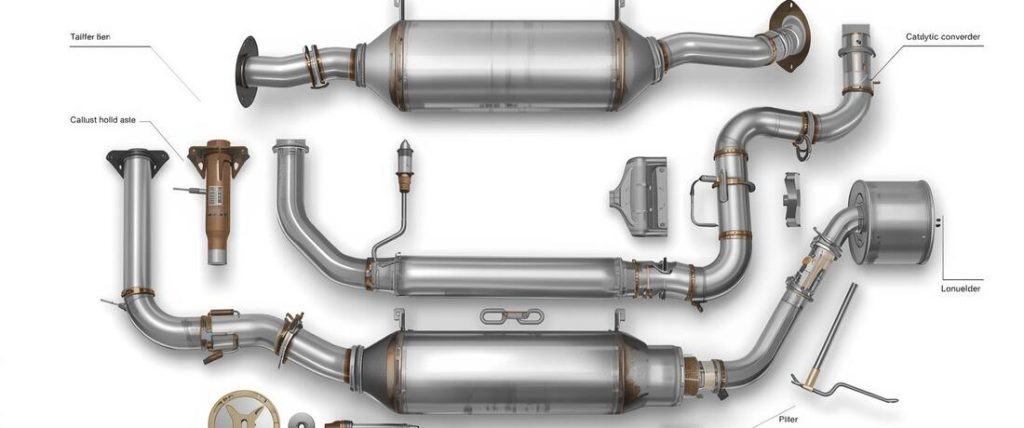
Small parts hold the system up and keep it sealed.
Exhaust Hangers
Rubber loops hold the pipes in place. These flexible mounts stop the pipe from rattling. They let the system shake without breaking. Over time, the rubber dries and cracks.
Gaskets and Flanges
Seals prevent gas from leaking at the joints. Every connection has a gasket. It acts like a washer. If it fails, you get a loud leak.
Flex Pipes
Mesh tubes absorb engine movement. The engine twists when you accelerate. The flex pipe stretches so the hard pipes do not snap.
Heat Shields
Metal plates stop the car floor from getting hot. The exhaust gets very hot. Shields reflect the heat. If they rust loose, they make a tinny rattle.
How Exhaust System Parts Work Together
It is a team effort to clean and quiet the engine.
The Complete Exhaust Flow Path
Gas travels a long way in a short time.
- Burn: Fuel burns in the engine.
- Collect: The manifold grabs the smoke.
- Clean: The converter burns off the smog.
- Sense: Sensors check the work.
- Quiet: The resonator and muffler kill the noise.
- Exit: The tailpipe sends it away.
Why System Balance Matters
The parts must match the engine size. If the pipes are too small, the engine chokes. If they are too big, the gas moves too slow. Good flow gives you the best power and gas mileage.
Common Exhaust System Problems
Rust and leaks are the biggest issues you will face.
Exhaust Leaks
A leak sounds like a loud tick or hiss. If a gasket fails, gas escapes early. This is loud and smelly. It can also let fumes into the car.
Rust and Corrosion
Salt and water eat the metal pipes. If you live near the ocean or in snow, rust happens fast. It eats holes in the muffler.
Catalytic Converter Failure
A bad converter triggers the check engine light. This is serious. The car will lose power. It is like trying to run while breathing through a straw. Just like an Airbag Light warns of safety risks, this light warns of pollution risks.
Broken Hangers or Mounts
A broken hanger lets the exhaust drag on the road. You will hear a clunk when you hit a bump. Fix this fast before the pipe breaks.
Exhaust System Maintenance Tips
A little care keeps the system quiet and safe.
Regular Inspections
Look under the car when you change the oil. Check for rust. Shake the tailpipe gently. It should not bang against the car.
Protect Against Rust
Wash the salt off in the winter. Spray water under the car. This washes away road salt. You can also paint pipes with high-heat paint.
Address Problems Early
Fix small leaks before they grow. A $20 gasket is cheaper than a $500 pipe. Do not wait.
Use Quality Parts
Cheap parts rust fast. Spend a bit more for good steel. It lasts years longer.
OEM vs. Aftermarket Exhaust Parts
You have choices when buying replacement parts.
OEM (Original Equipment Manufacturer)
These parts come from the car dealer.
- Pros: They fit perfectly. They last a long time.
- Cons: They cost the most.
Aftermarket Performance
These are for sound and power.
- Pros: They sound cool. They flow better.
- Cons: They might be too loud. Some are not legal.
Aftermarket OEM-Replacement
These are cheaper copies of the original.
- Pros: Good price. They work fine for most cars.
- Cons: The fit might be tight.
Exhaust System Materials Explained
The type of metal changes the price and life of the part.
Mild Steel
The budget choice. It is cheap but rusts fast. Expect 2 to 5 years of life.
Aluminized Steel
A step up from mild steel. It has an aluminum coat. This stops rust for a while. It lasts 5 to 8 years.
Stainless Steel (304 Grade)
The best money can buy. It almost never rusts. It stays shiny. It lasts over 15 years.
Stainless Steel (409 Grade)
Good value for the price. It gets surface rust but does not rot through. It lasts 8 to 12 years.
FAQ About Parts of an Exhaust System
What are the components of an exhaust system?
The main parts are the manifold, converter, and muffler. It also has pipes, sensors, and a tailpipe. They connect in a line.
What consists of a full exhaust system?
A full system starts at the engine block. It ends at the tailpipe tip. It includes all sensors, hangers, and gaskets in between.
What is the pipe between the catalytic converter and muffler called?
This is often called the mid-pipe or intermediate pipe. It connects the clean side of the converter to the muffler.
What part of the exhaust system makes it loud?
The engine makes the noise. The muffler quiets it down. If the muffler has a hole, the car gets loud.
How long does an exhaust system last?
Factory systems last about 5 to 10 years. In dry areas, they last longer. In snowy areas with salt, they rust faster.
Bottom Line: Understanding Your Exhaust System
Your exhaust system has six core parts working together: the manifold, catalytic converter, oxygen sensors, pipes, resonator (optional), muffler, and tailpipe. Each part plays a vital role in emissions control, noise reduction, and engine performance.
Regular maintenance and early problem detection save money and prevent breakdowns. Watch for warning signs like loud noises, Check Engine Lights, and visible rust. Most exhaust parts last 5-10 years, but climate and driving conditions affect lifespan.
When replacing parts, choose quality materials like stainless steel for longevity. Always use emissions-compliant parts to avoid legal issues and failed inspections. Taking care of your exhaust system protects your health, your vehicle, and the environment.
Quick Summary
- The Manifold: Collects gas from the engine.
- The Converter: Cleans the toxic fumes.
- The Muffler: Mutes the loud engine noise.
- The Enemy: Rust is the top killer of exhaust parts.
- The Fix: Use stainless steel parts for long life.