
This article was updated in January 13, 2026 with new products and information by Mark S. Taylor
A tiny switch can cause big problems. A bad brake light switch can stop your car from starting. It can also trap you in Park. This switch is more than just a light. It tells your car’s computer you are braking. At TheCarBuzz, we see this issue often. It is cheap to fix but vital for safety. We will show you the signs. You will learn how to test it. Let’s fix it fast.
Contents
What Does a Brake Light Switch Do?
The switch tells your car when you press the brake pedal. It sits right above the pedal. When you push the pedal, the switch clicks. This turns on your brake lights. It also sends a signal to the main computer. This signal is very important.
Many systems rely on this signal. Your cruise control needs it. The transmission needs it to shift out of Park. Push-button start cars need it to start the engine. It is a small part with a big job. It gets pressed thousands of times. Eventually, it wears out.
10 Common Signs of a Bad Brake Light Switch
1. Brake Lights Stay On All the Time
Your lights should only be on when you press the pedal. If they stay on, the switch is stuck. It is stuck in the “closed” position. This will drain your battery. Your car might not start in the morning. It also confuses drivers behind you. Replace the switch quickly to save your battery.
2. Brake Lights Don’t Work At All
This is very dangerous for you and others. If the lights do not work, people cannot see you stopping. The switch might be stuck “open.” Or the fuse blew. This is illegal in all states. You could get a ticket. You could also cause a crash. Fix this before you drive again.
3. Brake Lights Work Intermittently (Flickering)
Flickering lights mean a weak connection. The switch might have corroded contacts. The wires might be loose. The lights turn on and off by themselves. This tells other drivers the wrong thing. They might think you are stopping when you are not. Check the wiring and the switch.
4. Can’t Shift Out of Park
The shifter uses the brake signal to unlock. Most cars have a safety feature. It is called a shift interlock. You must press the brake to shift out of Park. If the switch is bad, the car does not know you are braking. The shifter stays locked. You are stuck. This is a very common sign of failure.
5. Cruise Control Won’t Work or Cancels Randomly
Cruise control turns off when you touch the brakes. The switch tells the computer to cancel it. If the switch fails, the system gets confused. It might not set at all. Or it might shut off for no reason. Check the switch before you blame the cruise module.
6. Car Won’t Start (Push-Button Start Vehicles)
Push-button cars need the brake signal to start. You must press the brake to start the engine. If the switch is bad, the car thinks your foot is off the pedal. The start button does nothing. This can leave you stranded. It is an annoying but common problem.
7. ABS Warning Light Comes On
The ABS light means there is a brake system issue. The switch talks to the ABS module. It tells the computer when you are braking. A bad signal can trigger the warning light. It could also be low brake fluid. You should scan the car for codes to be sure.
8. Traction Control or Stability Control Warnings
These systems help you stay safe on the road. They use the brakes to control the car. They need to know when you are braking manually. A bad switch sends bad data. This can turn on the traction control light. It is common on newer cars with lots of computers.
9. Check Engine Light Illuminates
The computer can detect a circuit problem. It might turn on the Check Engine Light. You might see codes like P0504 or P0579. These refer to the brake switch circuit. Use an OBD2 scanner to check. This confirms the switch is the culprit.
10. Tire Pressure Monitoring System (TPMS) Warning
This is a rare but possible symptom. Some cars link many systems together. A bad brake signal can confuse the body control module. It might trigger a TPMS warning on the dash. It is seen most often in some Mazda cars. It shows how connected modern cars are.
What Causes a Brake Light Switch to Fail?
The most common cause is simple wear and tear. You press the pedal thousands of times. The internal contacts wear down. Eventually, they stop making contact.
Corrosion and Moisture The switch is near the floor. Water can get in. Snow from your shoes melts. Salt from the road gets on it. This rusts the electrical parts. Use good floor mats to keep the area dry.
Broken or Missing Brake Pedal Stopper This is a small rubber bumper. It is on the pedal arm. It pushes against the switch. If it falls off, the switch has nothing to press against. The lights stay on. This part costs just a few dollars. Always check this first.
Misalignment If the switch moves, it won’t work right. This happens after repairs. If someone kicked it by accident, it might move. It needs to be lined up perfectly.
Electrical Issues A blown fuse can stop the lights. Damaged wires are also a cause. Corroded terminals stop the flow of power. Always check the fuse box before buying parts.
How to Test a Brake Light Switch (DIY Methods)
Quick Visual Test
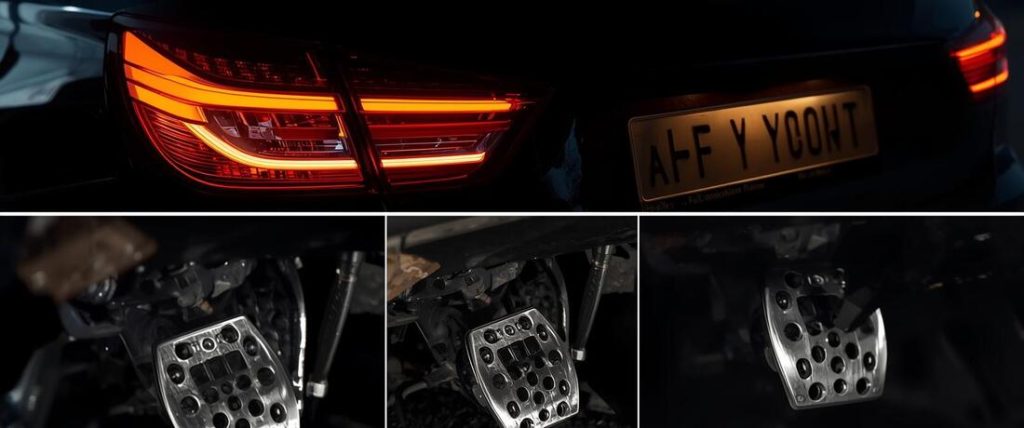
You need a friend to help with this test. Have them stand behind the car. Turn the key to “On.” Press the brake pedal. Ask them if the lights work. Release the pedal. Do the lights turn off?
If they stay on, the switch is stuck. If they do not come on, the switch might be dead. This is the easiest way to check.
Check Brake Pedal Stopper First
Look at the pedal arm with a flashlight. Do you see a small rubber stopper? If it is missing or broken, that is the problem. The switch is likely fine. You just need a new stopper. This saves you money.
Test With Multimeter (Continuity Test)
A multimeter tells you if electricity flows. Set the tool to continuity mode. Unplug the switch. Press the button on the switch. Touch the probes to the terminals.
It should beep or show a reading. Release the button. The beep should stop. If it does not change, the switch is broken.
Test Voltage at Switch
This checks if the car sends power to the switch. Turn the key to “On.” Plug the switch back in. Stick a pin into the wire connected to the switch. Touch the red probe to the pin. Touch the black to a metal ground.
You should see 12 volts. If you see zero, the problem is the wiring or fuse. It is not the switch.
Professional Scan Tool Diagnosis
A scanner reads the car’s computer. It can see the data stream. You can watch the brake switch status. It will say “On” or “Off.” Press the pedal. Watch the screen. If it does not change, the switch is bad.
Brake Light Switch Replacement Cost
| Type | Parts Cost | Labor Cost | Total |
|---|---|---|---|
| Economy Cars | $15 – $35 | $25 – $50 | $40 – $85 |
| Mid-Range Cars | $20 – $45 | $50 – $80 | $70 – $125 |
| Luxury Cars | $40 – $70 | $100 – $150 | $140 – $220 |
Note: Prices vary by location and shop.
DIY Cost You can save a lot of money doing it yourself. The part costs $15 to $50. It takes about 15 minutes. You only need basic tools.
How to Replace a Brake Light Switch (DIY Guide)
Tools Needed
- Socket wrench or adjustable wrench.
- Flashlight.
- Replacement switch.
Step-by-Step Replacement
- Safety: Disconnect the negative battery cable.
- Locate: Look above the brake pedal.
- Remove: Unplug the wire connector. Twist the switch to remove it. Or remove the clip holding it.
- Check: Look at the rubber stopper on the pedal. Replace it if it looks worn.
- Install: Put the new switch in. Hand-tighten it. Do not force it.
- Adjust: Some switches twist to adjust the gap. Check your manual for specs.
- Connect: Plug the wire back in.
- Test: Reconnect the battery. Press the pedal. Check the lights.
If you need help understanding dashboard warnings, read our guide on ABS light problems.
Can You Drive With a Bad Brake Light Switch?
It is not safe if your brake lights do not work. Other drivers will not know you are stopping. You could get hit from behind. It is also illegal. You will get a ticket. Do not drive until the lights work.
Short Distance If the lights work, but the cruise control fails, you can drive. Only drive a short distance. Go straight to the repair shop. If you are stuck in Park, you cannot drive at all. You will need a tow truck or a mobile mechanic.
Brake Light Switch vs Brake Light Bulb: How to Tell the Difference
A bad bulb usually affects just one light. If one light is out, check the bulb first. Remove it. Look at the glass. Is the filament broken? If yes, buy a new bulb.
A bad switch affects all lights. If none of the brake lights work, check the fuse. Then check the switch. Also, look for other symptoms. If you cannot shift out of Park, it is likely the switch. Bulbs do not affect the transmission.
Preventing Brake Light Switch Problems
Keep your footwell clean and dry. Water kills electrical parts. Use rubber floor mats. If they get wet, take them out to dry.
Check the stopper. Look at the rubber pad on the pedal once a year. If it looks cracked, replace it. It costs very little. This prevents the switch from breaking.
Test your lights. Walk around your car once a month. Press the brake pedal. Check all the lights. This catches problems early.
FAQ About Signs of a Bad Brake Light Switch
How to check a faulty brake light switch?
Press the pedal and see if the lights work. If they stay on or do not come on, the switch is likely bad. You can also use a multimeter to test for continuity.
How do you know if you need a brake light switch?
Your brake lights might act strange. You might get stuck in Park. Your cruise control might stop working. These are all signs of a bad switch.
How can you tell if a light switch is bad?
The most obvious sign is the lights. They may stay on all the time. They might flicker. Or they might not turn on at all.
How to tell if a brake sensor is bad?
A scan tool can help. It will show error codes like P0504. Also, look at the dashboard lights. An ABS or Traction light can signal a problem.
What are P0504 and P0579 codes?
These are error codes for the brake system. P0504 means the switch signal is stuck or irrational. P0579 means the circuit has a high input problem.
The Bottom Line
The brake light switch is a small but vital part. It costs about $30 to replace. It controls your lights, shifter, and cruise control. The most common sign is lights that stick on. Or lights that do not work at all. Always check the cheap rubber stopper first. Testing it is easy. You can do it at home with a friend. Replacing it takes just a few minutes. Do not ignore the signs. Bad brake lights are dangerous. Fix it today to stay safe on the road.
Quick Summary
- Check lights: If they stay on or won’t work, suspect the switch.
- Other signs: Stuck in Park or cruise control failure points to the switch.
- Check stopper: Look at the rubber bumper on the pedal first.
- Test it: Use a friend to watch the lights or a multimeter.
- DIY fix: It is a cheap and quick repair to do yourself.
- Safety: Do not drive if your brake lights do not work.
- Cost: Parts are cheap ($15-$50). Labor adds to the cost at a shop.