
This article was updated in December 26, 2025 with new products and information by Mark S. Taylor
Noticing a milky substance in your coolant or seeing your temperature gauge creep into the red? These could be signs of a failing oil cooler. The most common symptoms of a bad oil cooler are oil and coolant mixing, visible leaks, engine overheating, and a drop in oil pressure. Ignoring these signs can lead to severe engine damage. As a car expert, I’ve seen how a small leak can turn into a huge repair bill. This guide will walk you through every warning sign, how to diagnose the problem yourself, repair costs, and critical steps to prevent it from happening again. Let’s protect your engine.
Contents
What Does an Oil Cooler Do? (And Why It Matters)
Your engine oil cooler does a simple but vital job. It helps keep your engine oil at the right temperature. This is important because oil protects your engine. Some coolers use air to cool the oil. Others use engine coolant. Both types help stop your oil from getting too hot and breaking down.

The 8 Critical Symptoms of a Bad Oil Cooler
A bad oil cooler will give you clear warnings. You just need to know what to look for. Here are the eight most common signs that your oil cooler is failing.
1. Oil and Coolant Mixing (The “Chocolate Milk” Sign)
This is the biggest and most clear sign of a bad oil cooler. You will see the two fluids mix where they should not. This creates a sludgy mess that can harm your engine.
- How to check for oil in coolant: Look in your coolant reservoir. If the fluid looks like a chocolate milkshake or mayonnaise, oil has mixed in. This is a very bad sign.
- How to check for coolant in oil: Pull your oil dipstick. If the oil looks milky, foamy, or light brown, coolant is getting in. This is even more dangerous for your engine.
2. Engine is Overheating
Your engine will run hot if the oil cooler fails. The cooler helps manage heat. When it doesn’t work, your engine can’t cool itself well. You might see the temperature gauge go higher than normal. This can be caused by other issues too. But if you see this with other symptoms, suspect the oil cooler.
3. Visible Oil or Coolant Leaks
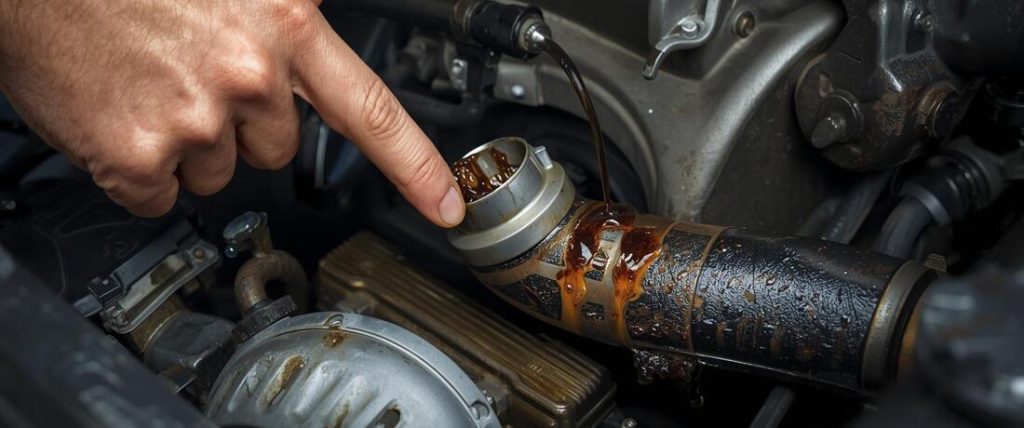
A failing oil cooler often leaks. You might see puddles under your car. Look for fresh oil or coolant spots on the ground. Check the area around the oil cooler. It is often near the oil filter. Leaks usually come from a bad gasket or seal. A small leak can turn into a big one fast.
4. Low Oil Pressure Warning Light
A warning light on your dash is a serious clue. A low oil pressure light means oil is not flowing well. A leak inside the cooler can cause this. Your engine needs oil pressure to run safely. Do not ignore this light. It can lead to major engine damage if you keep driving. If you see this light, check your oil level right away.
5. Black or Oily Exhaust Smoke
What your car’s exhaust tells you a lot. Black or oily smoke means oil is burning in the engine. This can happen if the oil cooler leak is bad. Oil can get into places it should not be and then burn. This is different from white smoke (coolant) or blue-gray smoke (worn engine parts). If you see oily smoke, check your oil cooler.
6. Loss of Engine Performance
Your car might not drive as well. A bad oil cooler can make your engine lose power. You may feel slow acceleration. The engine might idle roughly or feel weak. This happens because the engine is not getting proper lubrication or cooling. It is struggling to run right.
7. Strange Engine Noises
Listen to your engine. New noises can be a sign of trouble. A bad oil cooler can cause ticking or knocking sounds. This noise comes from engine parts that are not well-oiled. The oil is either leaking out or mixed with coolant. It can’t protect the metal parts inside your engine. These sounds mean you should stop driving and check the problem.
8. Swollen Radiator or Hoses
This is a less common but very serious sign. A failed oil cooler can put too much pressure in the cooling system. This pressure can make your radiator or hoses swell up. They might look bloated or distorted. This is a dangerous situation. Swollen hoses can burst and cause a sudden loss of coolant.
How to Diagnose a Bad Oil Cooler in 5 Steps
You can do some simple checks yourself. This can help you confirm the problem before you see a mechanic. Always check these things when the engine is cool to stay safe.
Step 1: Check Your Oil Dipstick
Pull the dipstick and wipe it clean. Put it back in and pull it out again. Look at the oil. It should be a clear amber or dark brown color. If it looks milky or foamy, you likely have a problem.
Step 2: Inspect the Coolant Reservoir
Look at the plastic coolant tank. The coolant should be bright green, orange, or pink. If it looks thick, brown, or oily, your oil cooler may be leaking.
Step 3: Look for External Leaks
Park on a clean surface. Let the car sit for a few hours. Look for any fresh drips or puddles. Then, look under the hood. Check the oil cooler and lines for any wetness or drips.
Step 4: Monitor Gauges While Driving
Pay attention to your temp and oil pressure gauges. Do they go into the red? Do they act strange? Note what you were doing when it happened. This info helps your mechanic.
Step 5: When to Get a Professional Pressure Test
If you see any of these signs, it’s time for a pro. A mechanic can do a pressure test. They will test the oil side and the coolant side. This test shows for sure if the cooler is leaking.
Is It Safe to Drive with a Bad Oil Cooler?
No, it is not safe to drive with a bad oil cooler. The risk of ruining your engine is very high. A short drive to a nearby mechanic might be okay. But you should not drive the car normally.
The Short-Term Risk
Driving even a little can be risky. The engine could overheat suddenly. You could lose all oil pressure. This can cause the engine to seize up. It is not worth the risk.
The Long-Term Damage
If you keep driving, you will cause major damage. Coolant in the oil ruins engine bearings. Oil in the coolant clogs the radiator. This can lead to a full engine replacement. A new engine can cost thousands of dollars.
When to Stop Driving Immediately
Stop driving and turn off the engine if you see:
- The temperature gauge in the red.
- The low oil pressure light on.
- Heavy black or blue smoke from the exhaust.
- Loud knocking or ticking noises.
- Very milky oil or coolant.
Oil Cooler Replacement Cost (Parts & Labor)
Fixing a bad oil cooler costs money. But it is much less than a new engine. The cost depends on your car and who does the work.
| Cost Type | Estimated Range | Notes |
|---|---|---|
| Parts | $150 – $600 | Includes the cooler, gaskets, and new fluids. |
| Labor | $200 – $900 | Depends on how hard the cooler is to reach. Time is 2-6 hours. |
| Total Cost | $350 – $1,500 | This is a typical range for most common cars. Trucks can cost more. |
A simple replacement on an easy-to-reach cooler is cheaper. Some coolers are in hard-to-reach spots. This makes the labor cost go up. Always get a quote first.
What Causes Oil Coolers to Fail?
Oil coolers can fail for many reasons. Most of the time, it is just due to age and use. Here are the common causes:
- Age and Wear: Parts just get old and wear out over time.
- Corrosion: Rust can eat away at the metal, causing tiny holes.
- Clogged Passages: Dirt or old coolant can block the cooler.
- Failed Gaskets: The seals can get hard and crack, causing leaks.
- Heat Stress: High heat can make the metal crack or warp.
Good maintenance can help your oil cooler last longer. Using the right coolant and changing it on time is key.
FAQ About Symptoms of a Bad Oil Cooler
How do I know if the oil cooler is bad?
The clearest sign is oil and coolant mixing. This makes the coolant look milky or the oil look foamy. You may also see leaks, engine overheating, or a low oil pressure light.
How to tell if it’s a head gasket or oil cooler?
Both can mix fluids. But an oil cooler leak often shows external oil leaks first. A head gasket leak might also cause white exhaust smoke and rough running. A pressure test can tell for sure.
How do I know if I need an oil cooler?
Most cars have an oil cooler from the factory. You do not need to add one. If your car overheats when towing or in hot weather, an auxiliary cooler might help. But this is for performance needs, not a fix.
What happens when an oil cooler fails but not overheating?
The engine might still overheat eventually. But the first sign is often fluid mixing. This is very bad. Coolant in the oil will ruin engine bearings fast. Even without overheating, the damage is happening.
Can I replace an oil cooler myself?
If you are good with car repairs, you might. It involves draining oil and coolant. You need to remove the old cooler and install a new one with a fresh gasket. It can be a difficult job on some cars.
The Bottom Line: Don’t Wait to Fix a Bad Oil Cooler
A failing oil cooler is a serious issue. It needs fast action to save your engine. The cost of early diagnosis and repair is small. It is tiny compared to the cost of a new engine. If you see any of these symptoms, check your fluids. Then, book an appointment with a trusted mechanic. Do not wait.
Quick Summary
- The top sign of a bad oil cooler is oil and coolant mixing.
- Look for milky coolant or foamy oil on the dipstick.
- Other key signs are engine overheating, visible leaks, and warning lights.
- Driving with a bad oil cooler can ruin your engine.
- Replacement costs usually range from $350 to $1,500.
- A professional pressure test confirms the problem.
- Act fast at the first sign of trouble to avoid huge repair bills.