
This article was updated in January 5, 2026 with new products and information by Mark S. Taylor
Do you hear a grinding noise when you press the clutch? It is a scary sound. It often means you have a bad throwout bearing. This small part is vital for your manual transmission. We know how stressful car repairs can be. We have seen this problem many times. In this guide, we will show you the exact symptoms to look for. We will also cover the repair costs and how to fix it. Let’s find out what is wrong with your car.
Contents
What Is a Throwout Bearing?
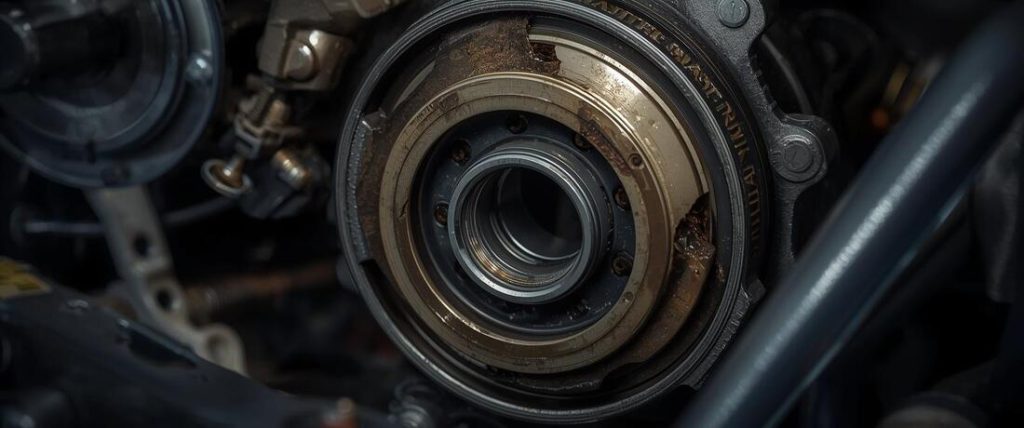
The throwout bearing is a small part. It lives inside your manual transmission. It is also called a clutch release bearing. When you push the clutch pedal, this bearing moves. It presses against the pressure plate. This action disconnects the engine from the wheels. It allows you to shift gears smoothly.
The bearing sits between the clutch fork and the pressure plate. It is a sealed unit. It has grease inside. You cannot add more grease to it. It spins fast every time you push the pedal. Over time, this spinning wears it out. When it wears out, it makes noise.
7 Common Symptoms of a Bad Throwout Bearing
A bad bearing makes specific sounds. It also changes how the pedal feels. Watch for these seven signs. Catching them early can save you money.
#1: Grinding Noise When Pressing Clutch
This is the most common sign. You hear a metal-on-metal grind. It happens when you push the pedal down. The noise gets louder as the bearing gets worse. When you let the pedal up, the noise might stop. This means the bearing is worn out. The metal parts are rubbing together without lubrication.
#2: Squealing or Whining Sound
Listen for a high-pitched squeal. It sounds like a belt squeak. But the sound comes from the transmission area. It happens when you press the clutch pedal. This means the surface of the bearing is wearing down. The noise might be worse on cold mornings. Cold weather makes the metal shrink and the grease thicker.
#3: Rattling or Chirping Noise
Sometimes the noise is a rattle or chirp. This can happen with the pedal down or up. It depends on how the bearing fails. A rattle often means the bearing is loose. A chirp can mean it is not aligned right. The sound might speed up as the engine revs. This is a clear sign of a problem.
#4: Stiff or Hard Clutch Pedal
Does the pedal feel hard to push? A bad bearing can cause resistance. The pedal might feel stiff or heavy. It takes more foot pressure to push it down. This happens because the bearing is not moving smoothly. It is sticking or binding. This can make your leg tired while driving in traffic.
#5: Vibration in Clutch Pedal
You might feel a shake or pulse. It happens when you press the pedal down. The vibration travels through the pedal to your foot. This means the bearing cannot align properly. It is wobbling instead of spinning straight. It might feel like a grinding sensation in your foot. This usually gets worse over time.
#6: Difficulty Shifting Gears
Is it hard to put the car in gear? You might hear a grind when you shift. This happens because the clutch is not fully disengaging. The bearing is not pushing the pressure plate enough. This is common in first gear or reverse. It feels like the clutch is slipping. You might have to force the gear stick.
#7: Clutch Chatter
Does the car jerk when you let the pedal out? This is called clutch chatter. The car lurches forward when you start. It feels like a grabbing or shuddering. This can be a bad bearing. It can also mean the pressure plate is bad. It makes it very hard to drive smoothly. You might stall the car at stop lights.
When Does the Noise Occur? (Important Diagnostic)
The timing of the noise is important. It tells you exactly which part is bad. Listen closely to when the sound starts.
Noise When Clutch Pressed (Pedal Down): This is the classic sign of a bad throwout bearing. The bearing spins when you push the pedal. If it is bad, it will make noise under load. The contact with the pressure plate creates the sound.
Noise When Clutch Released (Pedal Up): This usually means a different problem. It is likely the pilot bearing. It could also be a loose throwout bearing. Or it might be a worn clutch fork. A throwout bearing usually gets quiet when the pedal is up.
Noise All the Time: If you hear noise all the time, you have multiple issues. It could be the input shaft bearing. It might be the pressure plate fingers. This needs a professional diagnosis. It is a serious transmission issue.
What Causes Throwout Bearings to Fail?
Bearings wear out over time. But some things make them fail faster.
- Normal wear: Most bearings last 100,000 to 150,000 miles.
- Riding the clutch: Keeping your foot on the pedal wears it out.
- Poor quality parts: Cheap aftermarket bearings do not last long.
- Improper installation: If it is not aligned right, it will fail.
- Contamination: An oil leak can ruin the grease inside.
- Aggressive driving: Fast starts burn the bearing quickly.
- Age: The grease inside dries out after many years.
- Defects: Rare, but sometimes new parts are broken.
How to Diagnose a Bad Throwout Bearing
You can test this at home. You do not need fancy tools. Just use your ears and your foot.
Step 1: Start Engine in Neutral Start the car. Let it idle. Do not touch the pedals. Listen for any noises. Note if you hear grinding or squealing.
Step 2: Press Clutch Pedal Slowly Push the pedal down slowly. Listen for a change in sound. Note exactly when the noise starts. Does the grinding start halfway down?
Step 3: Hold Clutch Pedal Down Keep the pedal on the floor. Does the noise continue? Does it get louder? Then lift the pedal. Does the noise stop?
Step 4: Shift Through Gears Try to shift into every gear. Note if it is hard to shift. Listen for grinding when you move the stick.
Step 5: Test in Different Temperatures Try this when the car is cold. Then try it when the engine is hot. Some bearings only make noise when cold.
What You Need:
- A quiet place to listen.
- An assistant can help. One person listens while the other presses the pedal.
- A mechanic’s stethoscope helps ($15-$30). Be very careful with moving parts.
Can You Drive With a Bad Throwout Bearing?
Short Answer: Yes, but it is not recommended.
Short-Term (1-2 weeks): You can drive if it just makes a noise. The risk is low at first. Try not to use the clutch too much. Do not ride the clutch. Drive gently. Avoid hills if you can.
Risks of Driving: The bearing can seize up completely. It can get stuck. This can damage the pressure plate. It can ruin the flywheel. It might break the clutch fork. If this happens, your car will not move at all. You will be stranded.
When to Stop Driving Immediately:
- The grinding is very loud.
- You cannot shift gears.
- The clutch pedal is stuck down.
- You smell burning plastic.
- You lose all clutch function.
Cost Impact: Fixing just the bearing now costs less. If you wait, you will ruin more parts. The bill could double or triple.
Throwout Bearing Replacement Cost
Why is it so expensive? The part is small. But the labor is huge. The mechanic must remove the transmission.
Parts:
- Throwout bearing alone: $30 to $100.
- Clutch kit (recommended): $200 to $600.
- Flywheel resurfacing: $100 to $200.
- Hardware and bolts: $20 to $50.
Labor:
- Transmission removal takes 4 to 8 hours.
- Labor rates are $80 to $150 per hour.
- Total labor cost: $320 to $1,200.
Total Cost:
- Budget repair: $400 to $800.
- Standard replacement: $800 to $1,500.
- Premium/Performance clutch: $1,200 to $2,500.
- With flywheel replacement: Add $300 to $800.
Why So Expensive: The transmission is very heavy. It is hard to reach. The mechanic has to take it apart. Since they are already there, they replace the whole clutch. This makes financial sense.
Should You Replace Just the Bearing?
This is a big question. Should you buy just the small part? No, usually not.
Replace Entire Clutch Kit When:
- Your car has over 75,000 miles.
- The clutch disc shows wear.
- You are already paying for the labor.
- You want to avoid doing the job again soon.
What’s Included in Clutch Kit:
- Clutch disc.
- Pressure plate.
- Throwout bearing.
- Pilot bearing.
- Alignment tool.
Why Mechanics Recommend Full Kit: The labor cost is the same. Whether they do one part or all parts, it takes the same time. The clutch disc and pressure plate likely wear out together. Doing it all at once saves money later. It prevents you from paying for labor twice in six months.
Replace Bearing Alone When:
- You installed a new clutch recently (under 20,000 miles).
- The bearing was defective.
- Your budget is extremely tight.
- A mechanic confirms the rest of the clutch is perfect.
DIY Replacement vs Professional
DIY Difficulty: Very Difficult.
This is not a job for beginners. You must remove the transmission. You need a transmission jack. You need to be very strong and careful. It can take 6 to 10 hours even for experts. If you do it wrong, you can hurt yourself or the car.
Tools Needed:
- Floor jack and strong jack stands.
- Transmission jack (rent one for $20-$40/day).
- Full socket set.
- Torque wrench.
- Clutch alignment tool.
- Pry bars and screwdrivers.
When to DIY:
- You are an experienced mechanic.
- You have a garage and a lift.
- You have all the tools.
- You want to save $400-$800 in labor.
When to Hire Professional:
- You have never dropped a transmission.
- You do not have the right tools.
- You want a warranty on the work.
- You value your time and safety.
Preventing Throwout Bearing Failure
You can make your bearing last longer. It comes down to good habits.
Good Driving Habits:
- Do not rest your foot on the clutch pedal. This is called “riding the clutch.” It keeps the bearing spinning.
- Take your foot off the pedal completely between shifts.
- Do not hold the clutch at red lights. Put the car in neutral.
- Do not slip the clutch excessively on hills.
Maintenance:
- Use good quality clutch fluid if you have a hydraulic clutch.
- Bleed the hydraulic system as scheduled.
- Check for oil leaks near the transmission bell housing.
- Replace the clutch when it starts to slip.
What Helps Bearings Last:
- Smooth, deliberate shifts.
- Avoid aggressive launches.
- Use the parking brake on hills, not the clutch.
Expected Lifespan:
- Normal driving: 100,000 to 150,000 miles.
- Aggressive driving: 50,000 to 80,000 miles.
- Quality bearing vs. cheap: 30-50% difference in life.
For more tips on keeping your car running smooth, check out our car maintenance guide.
Throwout Bearing vs Other Clutch Issues
Throwout bearings make noise when you press the pedal; Pilot bearings make noise when the pedal is fully down; Input shafts make noise when the pedal is up.
| Part | Noise Trigger | Repair Cost |
| Throwout Bearing | Pedal Pressed Down | High (Labor) |
| Pilot Bearing | Pedal Fully Down | High (Labor) |
| Input Shaft | Pedal Released (Neutral) | Very High (Rebuild) |
| Master Cylinder | Spongy Pedal (No Noise) | Low ($200) |
FAQ About Symptoms of a Bad Throwout Bearing
What happens when the throwout bearing goes bad?
You will hear a grinding or squealing noise when you press the clutch. The pedal might feel stiff or vibrate. If you ignore it, the bearing can seize and damage the clutch.
How do I tell if I need a new throwout bearing?
The easiest way is to listen. Push the clutch pedal down. If you hear a grinding noise that stops when you let the pedal up, the bearing is likely bad. A stiff pedal is also a sign.
What are the 5 symptoms of a bad clutch?
The five main symptoms are slipping RPMs, a sticking pedal, a burning smell, difficulty shifting, and strange noises like squealing or grinding.
How much does it cost to repair a throw out bearing?
The total cost is usually between $800 and $1,500. This includes the labor to remove the transmission. Replacing just the bearing is cheaper in parts, but the labor is high.
Can a bad throwout bearing damage the transmission?
Yes, it can. If the bearing breaks apart, the pieces can damage the transmission input shaft. A seized bearing can also break the clutch fork, which is inside the transmission bell housing.
Bottom Line: Don’t Ignore Clutch Noises
A bad throwout bearing is common on high-mileage cars. It is a wear item. It will eventually fail.
The Verdict:
- The main symptom is noise when you press the clutch.
- You can drive it for a short time, but do not wait too long.
- The repair is expensive because of the labor involved.
- Always replace the full clutch kit while the transmission is out.
Key Takeaways:
- Noise when pressed = throwout bearing.
- Noise when released = pilot bearing.
- Total cost to fix: $800-$1,500.
- Prevention: Stop riding the clutch! Use neutral at lights.
- Lifespan: 100,000 miles is typical.
Action Steps:
- Test your car. Listen for the noise in a quiet spot.
- Get an itemized quote. Ask for the price of the full clutch kit vs. just the bearing.
- Consider a reputable mechanic. This is a big job.
- If you have the skills and tools, DIY can save you cash. Just be careful.
- Fix it before you get stranded.
Quick Summary
- Listen Carefully: Grinding noise when the pedal is down means a bad bearing.
- Check the Pedal: A stiff or vibrating pedal is also a warning sign.
- Act Fast: Driving too long with a bad bearing can damage the flywheel.
- Costly Labor: The repair is expensive because the transmission must be removed.
- Do the Whole Job: Mechanics recommend replacing the whole clutch kit, not just the bearing.
- Prevent Wear: Don’t rest your foot on the clutch pedal while driving.
- Get Help: This is a hard DIY job. A professional is often the best choice.