
This article was updated in January 6, 2026 with new products and information by Mark S. Taylor
A brake fluid leak is very dangerous. It can stop your car from braking. Your brakes use fluid to push the pads against the rotors. If fluid leaks out, you lose the pressure needed to stop. You might see puddles or feel a soft pedal. This guide shows you the exact signs to look for. We explain what to do next. Keep reading to stay safe.
Contents
Quick Answer (30-Second Check)
Most brake fluid leaks cause a soft or spongy pedal. You might also see low fluid levels, warning lights, or wet spots under the car.
Check these 3 things
- Dash lights: Look for the “BRAKE” or “ABS” light.
- Pedal feel: Press the pedal. It should feel firm. A soft pedal is bad.
- Ground/wheels: Look for fresh wet spots under the car or on the wheels.
Stop driving now if…
- The pedal sinks near the floor.
- You must pump the brakes to stop.
- Braking feels weak or unpredictable.

9 Common Symptoms of a Brake Fluid Leak
Look for these signs. They tell you if you have a leak. Catching a leak early is vital. It can prevent a crash.
1) Spongy or soft brake pedal The pedal feels mushy. It may feel like it has extra travel. This often happens when fluid is low. Air gets into the brake lines. Air compresses, but fluid does not. This makes the pedal feel spongy.
2) Brake pedal sinks or goes to the floor This is a red-flag symptom. If the pedal drops very far, be careful. You may not have enough hydraulic pressure to stop safely. This often means a major leak. It can also mean the master cylinder failed.
3) Brake warning light or ABS light turns on Some cars warn you when fluid is low. A sensor in the reservoir triggers the light. The light can also mean other brake problems. Either way, do not ignore it. Check your fluid as soon as you can.
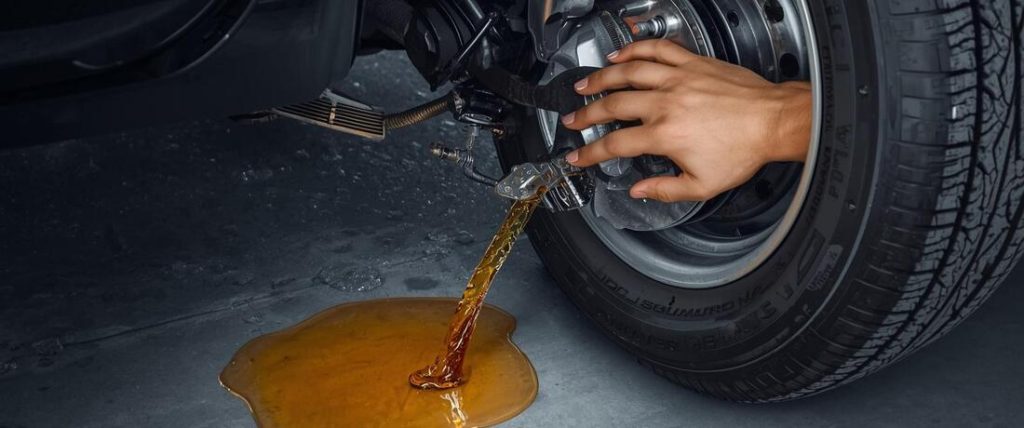
4) Puddle or wet spots under the car Brake fluid can drip onto the ground. You may see a small puddle or stains where you park. This is often where you leave your car overnight. It is a clear sign of an active leak.
5) Fluid near a wheel, tire, or behind the rim Many leaks show up near the wheels. Look behind the tire or on the inside of the wheel. Wetness here usually means a caliper or wheel cylinder is leaking. It can also be a brake hose.
6) Longer stopping distance / poor braking If the car takes longer to stop, something is wrong. A leak can reduce pressure. The brakes will feel weak. You must press harder to get the car to stop. This is very unsafe in traffic.
7) Need to pump the brakes to stop If pumping the pedal helps, pressure may be bleeding off. That can happen with a fluid leak. It can also happen with a failing master cylinder. Pumping builds up pressure for a short time. But it is not a fix.
8) Brake fluid level drops fast If you top it off and it drops again soon, that is not normal. A sealed system should not “use up” fluid quickly. If the reservoir is empty, you have a leak. Find the source before driving.
9) Burning smell or odd smell after braking (sometimes) Not every leak causes a smell. But low fluid can lead to heat. The brakes might drag. This creates odd odors. Sometimes fluid drips on hot parts like the exhaust. This causes a burning smell. Treat it as a warning.
Visual Signs: Puddles and Wet Spots
You can often see a leak with your eyes. It helps to know what to look for.
What brake fluid looks like
Brake fluid changes color over time. New fluid is usually clear or yellow. Old fluid turns amber or brown. It feels slick or oily. Be careful, as brake fluid can strip paint off your car quickly. Do not leave it on the paint.
Where to look (leak-location map)
- Near a wheel: Look for leaks on the caliper, hose, or bleeder screw. On rear drum brakes, look at the wheel cylinder.
- Center/under car: Check along the metal brake lines. Rust can cause holes here. Look at the fittings too.
- By firewall/master cylinder: Check under the hood. Look at the master cylinder and the brake booster area.
Brake fluid vs oil vs coolant (quick comparison)
- Brake Fluid: Clear to brown. Slick/oily. Near wheels or firewall.
- Engine Oil: Black or brown. Thick/greasy. Near the front/middle of the car.
- Coolant: Green, pink, or orange. Slimy texture. Near the radiator or engine front.
Pedal Feel: Soft, Spongy, or Low
Your foot tells you a lot. The pedal is your direct connection to the brakes.
What “spongy” feels like
A spongy pedal feels compressible. It feels like pushing on a spring or a sponge. There is extra travel before the brakes bite. This usually means air is in the lines. It happens after fluid leaks out.
Pedal sinking to the floor (red flag)
This is very serious. If you push the pedal and it goes all the way down, stop driving. This means you have lost hydraulic pressure. It could be a severe leak. It could also be a bad master cylinder. You cannot stop the car safely.
Why it happens
Air gets into the lines when fluid leaks out. Air is compressible. When you push the pedal, you are compressing the air, not pushing the brakes. Also, low fluid means not enough force to push the pistons.
Warning Lights on the Dashboard
Modern cars have sensors. They tell you when something is wrong.
Red “BRAKE” light (what it usually signals)
This red light is critical. It often means low fluid in the reservoir. It can also mean a pressure loss. Check your parking brake first. If the brake is off and the light is on, check the fluid level. For more on dashboard lights, read our guide.
Yellow ABS light (how it connects)
The yellow ABS light is different. It means the Anti-lock Braking System has a fault. This can happen if a wheel speed sensor is blocked by fluid. It can also happen if pressure is uneven. Do not ignore this light either.
What to do when lights come on
Pull over safely as soon as you can. Turn off the car. Open the hood and check the brake fluid reservoir. If it is empty, do not drive. Call a tow truck. Even a small drop in fluid can trigger a sensor.
Performance Issues: Pulling, Noises, and Smells
Sometimes you feel the problem before you see it.
Car pulling to one side
If the car pulls left or right when you brake, check for leaks. A stuck caliper can cause this. But a leak on one side can also cause it. One side has less braking power than the other. This creates a pull.
Burning smell or smoke
This is urgent. Fluid might be dripping on hot exhaust parts. Brake fluid burns and smells bad. Smoke might come from the wheels. This means the brakes are dragging and overheating. Do not keep driving.
Longer stopping distance
If it takes longer to stop, your safety is at risk. A leak reduces the force of the brakes. You might not notice it until you need to stop fast. If the brakes feel weak, check the fluid immediately.
Common Causes of Brake Fluid Leaks (Most to Least Common)
Knowing the cause helps you fix it. Here are the usual suspects.
Brake lines and fittings (rust/corrosion)
Steel lines run under the car. They rust over time, especially in cold climates. Road salt eats the metal. A tiny pinhole can drain the reservoir.
- What you’ll see: Wet lines under the car. Rust on the lines. Fluid dripping from the chassis.
Rubber brake hoses (cracks/bulges)
Hoses connect the steel lines to the wheels. Rubber gets old and cracks. It can also bulge under pressure.
- What you’ll see: Cracks in the rubber hose. Wet spots near the connections. A swollen hose.
Calipers / wheel cylinders (seal failure)
Calipers and wheel cylinders have moving parts. They use seals to keep fluid in. Seals wear out or tear. Dust boots can rip.
- What you’ll see: Wet caliper. Drip inside the wheel rim. Pulling to one side.
Master cylinder / reservoir (external or internal leak)
The master cylinder pushes the fluid. It can leak externally onto the firewall or brake booster. It can also leak internally.
- What you’ll see: Wet spot under the master cylinder. Low fluid in the reservoir with no visible leak elsewhere.
Is It Safe to Drive with a Brake Fluid Leak?
No—any leak can let air into the system and reduce braking. It is not worth the risk.
When to call a tow truck
- If the pedal sinks to the floor.
- If the brake warning light is on and the pedal feels different.
- If you see a fresh puddle and the reservoir is low.
- If you have any loss of stopping power.
If you must move the car a few feet
Only do this if the car is blocking traffic or in a dangerous spot. Move it slowly to a safe spot like a driveway. Do not go back on public roads. Do not drive the car to a shop. It is unsafe for you and others.
What a Mechanic Will Check (So You Know What You’re Paying For)
A mechanic will look at the whole system. They want to find the exact leak.
- Visual inspection: They check lines, hoses, calipers, and the master cylinder.
- Pressure test: They pump the pedal to see where fluid comes out.
- Repair & bleed: They fix the leak. Then they bleed the brakes to remove air.
- Road test: They test the brakes to ensure they are safe.
Estimated Repair Costs (USA) + What Changes the Price
Costs vary by car and location. Here are typical ranges.
Typical cost ranges by part
| Part | Estimated Cost (Parts + Labor) |
|---|---|
| Brake Hose | $100 – $200 |
| Brake Line Section | $150 – $350 |
| Caliper | $300 – $600 |
| Wheel Cylinder | $100 – $250 |
| Master Cylinder | $300 – $700 |
| Brake Fluid Flush | $70 – $120 |
Cost factors
- Rust level: Rusty bolts break and take time to remove.
- Vehicle type: Luxury cars and trucks often cost more.
- Labor rates: City shops often charge more per hour.
- Multiple leaks: You might need more than one part fixed.
For more tips on repair costs, you can visit CarMD’s cost estimator. For official safety information, check the NHTSA website.
FAQ About Symptoms of a Brake Fluid Leak
Can I drive with a brake fluid leak?
No, it is not safe. A leak can cause total brake failure. If the pedal feels soft or sinks, get a tow truck.
How do I know if my brake fluid is leaking?
Look for a soft or spongy pedal. Check for a puddle under the car. Look for wet spots on the wheels or near the master cylinder.
What color is brake fluid when it leaks?
New brake fluid is clear or yellow. Old fluid is brown or black. It looks oily and feels slick.
Why is my brake fluid low but no leak is visible?
Your brake pads might be worn out. As pads wear down, the caliper piston moves out. This draws more fluid from the reservoir. It mimics a leak.
Can I just top off the brake fluid and drive?
No. Topping it off does not fix the leak. The fluid will just leak out again. You must fix the source of the leak.
Where does brake fluid usually leak from? I
t usually leaks from the brake lines, rubber hoses, calipers, or the master cylinder. Rust and age are the main causes.
Verdict / Bottom Line
Most leaks show up as a soft pedal, a puddle, or a dashboard light. These are serious warning signs. Do not wait to fix them. Check your fluid level and look for wet spots immediately. If the pedal feels weird, do not drive. Call a mechanic or a tow truck to stay safe.
Quick Summary
- Soft Pedal: If the pedal feels spongy, you likely have air in the lines from a leak.
- Puddles: Look for clear to brown oily spots under the car or inside wheels.
- Warning Lights: A red BRAKE light or yellow ABS light means check the system now.
- Sinking Pedal: If the pedal goes to the floor, do not drive. Call a tow truck.
- Common Causes: Rusty lines, old hoses, and bad calipers are the top reasons for leaks.
- Repair Costs: Fixing a leak can cost between $100 and $700 depending on the part.
- Safety First: Brakes are your most important safety feature. Never ignore a leak.