
This article was updated in January 22, 2026 with new products and information by Mark S. Taylor
That high-pitched whistle from your car isn’t just annoying—it’s trying to tell you something.
We have all been there. You are cruising down the road. Suddenly, you hear it. A tea kettle sound coming from your engine or window. It is easy to turn up the radio and ignore it. But please don’t. A whistling noise usually means air is escaping where it shouldn’t, or a part is rubbing where it shouldn’t.
I have spent years under the hood fixing these issues. Often, it is a cheap rubber hose or a loose belt. But if you wait, it can turn into a blown engine or a roadside breakdown.
In this guide, I will show you exactly what to check. We will look at 10 common causes, simple DIY tests, and what it costs to fix them.
Let’s find that noise.
Contents
Common Causes of Whistling Noise While Driving
1. Worn or Damaged Serpentine Belt
The most common cause of engine whistling is a slipping belt.
This belt drives your alternator, power steering, and A/C. When it gets old, it gets hard. It slips on the pulleys. This creates a loud squeal or whistle. It gets louder when you hit the gas.
- What It Sounds Like: A loud squeal or chirp that speeds up with the engine.
- Why It Happens: The rubber wears out, gets wet, or the tensioner is weak.
- DIY Check: Look at the belt. Do you see cracks? Is it frayed? Does it look shiny or “glazed”?
- Urgency: Medium. If it snaps, you lose power steering and battery charging.
- Estimated Cost: $50–$150.
2. Vacuum Leak in the Engine
Air sucking into the engine through a crack creates a high-pitched hiss.
Your engine needs a precise mix of air and fuel. A vacuum leak lets extra air in. It acts like a tiny whistle. This often happens near the intake manifold.
- What It Sounds Like: A steady hiss or whistle at idle. It might go away when you drive fast.
- Why It Happens: Old rubber hoses dry out and crack. Gaskets fail.
- DIY Check: Pop the hood while the car runs. Listen for a hissing sound. You can spray soapy water on hoses. Bubbles mean a leak.
- Urgency: High. It messes up your air-fuel mix. This hurts gas mileage.
- Estimated Cost: $100–$300.
3. Damaged Window or Door Seals (Weather Stripping)
Wind noise enters the cabin through gaps in the rubber seals.
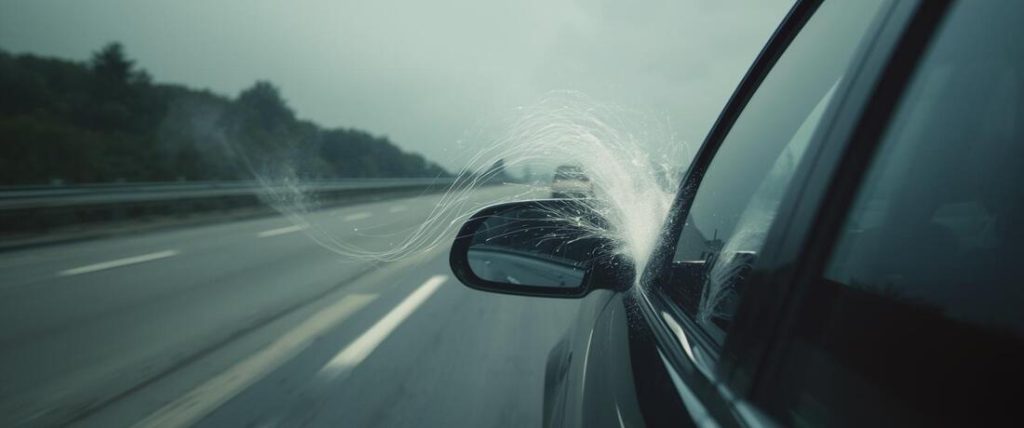
If the whistle starts at 40 mph or faster, check your doors. The rubber lining your doors keeps wind out. Over time, it flattens or tears. Air forces its way through the gap. This sounds like a whistle right by your ear. If you have issues with your windows, you might also want to check your Window Power Switch to ensure the glass is closing all the way.
- What It Sounds Like: Wind rushing or whistling near the window frame.
- Why It Happens: Sun and heat dry out the rubber. It cracks or peels off.
- DIY Check: Run your hand along the door edge while a friend drives. Feel for a draft.
- Urgency: Low. It is just annoying. But rain can get in too.
- Estimated Cost: $50–$200 per seal.
4. Faulty Radiator Pressure Cap
Steam escaping from a weak radiator cap makes a tea kettle sound.
Your cooling system is under high pressure. The cap holds it in. If the seal on the cap goes bad, pressure escapes. It pushes air and steam out.
- What It Sounds Like: A faint whistle from the front of the car. You might hear it after you park.
- Why It Happens: The rubber seal on the cap gets old.
- DIY Check: Wait for the engine to cool! Look for white or green dried fluid around the cap.
- Urgency: Medium. Low pressure leads to overheating.
- Estimated Cost: $10–$30.
5. Exhaust System Leak
Gases escaping from a hole in the exhaust pipe can whistle under pressure.
Your exhaust pipes push hot gas out the back. If there is a hole in the muffler or manifold, gas shoots out sideways. This can make a chugging or whistling noise.
- What It Sounds Like: A whistle or ticking sound that gets louder when you accelerate.
- Why It Happens: Rust eats through the metal. Gaskets blow out.
- DIY Check: Listen near the tailpipe (don’t touch, it’s hot!). Look for black soot marks on the pipes.
- Urgency: Medium to High. Exhaust fumes can enter the car.
- Estimated Cost: $100–$600.
6. Turbo or Intercooler Leak (Turbocharged Engines)
Boost pressure escaping from a loose hose causes a loud air shriek.
If your car has a turbo, it pumps air into the engine. A loose clamp lets that air out. It sounds like a very loud whistle or “whoosh” when you step on the gas.
- What It Sounds Like: A sharp, airy whistle under heavy acceleration.
- Why It Happens: Hoses pop off or intercoolers get stone chips.
- DIY Check: Check the big rubber hoses connected to the turbo. Are the clamps tight?
- Urgency: High. You lose power and can damage the turbo.
- Estimated Cost: $200–$1,000+.
7. Dirty or Failing Fuel Injectors
Restricted fuel flow can sometimes create a faint whistling tone.
This one is rare but tricky. Carbon builds up inside the injector tips. As fuel sprays through the tiny clogged hole, it can whistle. It is like putting your thumb over a hose.
- What It Sounds Like: A very quiet whistle from the engine top.
- Why It Happens: Low-quality gas causes buildup over years.
- DIY Check: Is your idle rough? Is the Airbag Light or Check Engine Light on? Scan the codes.
- Urgency: Medium. It hurts performance.
- Estimated Cost: $50 for cleaning, up to $900 for new parts.
8. Worn Brake Pads with Wear Indicators
Metal tabs on brake pads are designed to squeal when pads are thin.
Brake pads have a safety feature. It is a small metal tab. When the pad wears down, this tab scrapes the rotor. It tells you to change your brakes now. Ignoring this can lead to bigger problems, like the ones discussed in our guide on Symptoms of a Brake Fluid Leak.
- What It Sounds Like: A high-pitched screech when you tap the brakes.
- Why It Happens: The pads are almost gone. Metal is rubbing metal.
- DIY Check: Look through your wheel spokes. Is the pad very thin?
- Urgency: High. You need brakes to stop. Fix this fast.
- Estimated Cost: $150–$400 per axle.
9. Failing Water Pump Bearing
A dying water pump bearing whines or whistles as it spins.
The water pump pushes coolant through the engine. It spins on a bearing. If that bearing dries out, it screams.
- What It Sounds Like: A whine that changes pitch with engine speed.
- Why It Happens: Age and wear.
- DIY Check: Listen to the front of the engine. Look for coolant leaks on the ground.
- Urgency: High. If the pump fails, the engine overheats instantly.
- Estimated Cost: $300–$750.
10. Air Intake System Issues
Loose clamps on the air filter box can cause airflow whistles.
Your engine sucks in a lot of air. If the box holding the air filter is loose, air whistles past the gap. It is a simple fix.
- What It Sounds Like: A sucking or whistling sound when you hit the gas.
- Why It Happens: Clips break or hoses crack.
- DIY Check: Wiggle the air intake tube. Is it tight? Is the filter box shut?
- Urgency: Low. But dirt can get in and hurt the engine.
- Estimated Cost: $20–$150.
How to Diagnose Whistling Noise by Speed
The speed tells you a lot about the problem.
Whistling at Idle
If the car whistles while stopped, the engine is the cause.
- Check: Vacuum leaks (hoses).
- Check: Radiator cap.
- Check: Water pump bearing.
Whistling When Accelerating
If it gets louder when you go faster, it is tied to engine speed or load.
- Check: Serpentine belt (squeals).
- Check: Turbo hoses (air whoosh).
- Check: Exhaust leaks (loud ticks or whistles).
Whistling at High Speeds (60+ mph)
If it only happens on the highway, it is usually wind.
- Check: Door and window seals.
- Check: Roof racks.
- Check: Loose plastic trim under the car.
DIY Diagnostic Checklist
Follow these steps to find the source.
- Pinpoint the Trigger: Does it happen at idle? Or only when moving?
- Locate the Sound: Is it under the hood? Or by the door?
- Check the Dash: Are there warning lights? (See our Airbag Light guide if that light is on too).
- Look Under the Hood: Check belts for cracks. Squeeze hoses to feel for crunches.
- Test Drive: Roll windows up and down. Does the noise change?
When to See a Mechanic Immediately
Some whistles are safe to ignore for a day. Others are not. Go to a shop if:
- The engine gets hot: Watch your temp gauge.
- You smell gas: Exhaust fumes are dangerous.
- The Check Engine Light flashes: This means major trouble.
- Brakes feel soft: Or if the noise is a loud metal grind.
- Power loss: The car feels slow or sluggish.
Preventive Maintenance Tips
Stop the whistle before it starts.
- Change belts: Swap the serpentine belt every 60,000 to 100,000 miles.
- Inspect hoses: Look for dry rot once a year.
- Lubricate seals: Use silicone spray on door seals to keep them soft.
- Flush Coolant: Fresh fluid keeps the water pump happy.
- Scan for Codes: Don’t ignore dash lights.
FAQ About Causes of a Whistling Noise While Driving
Why is my car making a whistling sound while driving?
A whistling sound while driving often comes from a vacuum leak. A bad belt can also cause it. Air leaks from a hose and makes a high noise. Worn parts rub together. It is a sign of a loose seal or a gap in the engine.
Is it safe to drive my car if it’s whistling?
It depends on the whistling noise source. A loose door seal is safe but annoying. A bad belt or brake issue is not safe to ignore. You must check the car fast. Do not drive far if the sound is very loud or sharp.
Can a whistling noise damage my engine?
Yes, a whistling noise can hurt your engine. A vacuum leak makes it run hot. A bad water pump stops flow. This causes heat damage. Fix the whistle fast to save the car. The repair cost will go up if you wait too long.
How much does it cost to fix a whistling noise?
The cost to fix a whistling noise varies. A small hose is cheap. It costs about twenty dollars. A new turbo is high cost. It can be over one thousand dollars. Most fixes for a car whistle are low. Expect to pay less than two hundred.
Why does my car whistle only when it’s cold?
Cold air makes car parts shrink. Rubber belts get hard in the cold. Seals do not fit tight. This causes a whistle. When the car warms up, they grow. The gap closes up. The whistling sound stops when the engine is hot.
Bottom Line: Don’t Ignore the Whistle
A whistling noise while driving is your car’s way of signaling an issue. Most causes are affordable to fix when caught early. Ignoring the sound can lead to expensive repairs—or even safety hazards. Use this guide to narrow down the cause, but when in doubt, have a trusted mechanic take a look.
Quick Summary
- Belts: A squealing belt is the #1 cause. Check for wear.
- Leaks: Vacuum leaks hiss at idle.
- Wind: Damaged door seals whistle at highway speeds.
- Brakes: A high-pitched squeal means change your pads.
- Action: Inspect hoses and belts first. It is often a cheap fix.