
This article was updated in January 24, 2026 with new products and information by Mark S. Taylor
Is your car idling rough, hesitating when you accelerate, or burning more fuel than usual? You might have a bad throttle body. The symptoms of a bad throttle body can be scary and annoying. I have seen this issue cause everything from a check engine light to dangerous stalls. In this guide, I will walk you through the 7 main symptoms and how to fix them. You will learn when to clean it and when to replace it. Let’s get your engine running smooth again.
Contents
What Is a Throttle Body and What Does It Do?
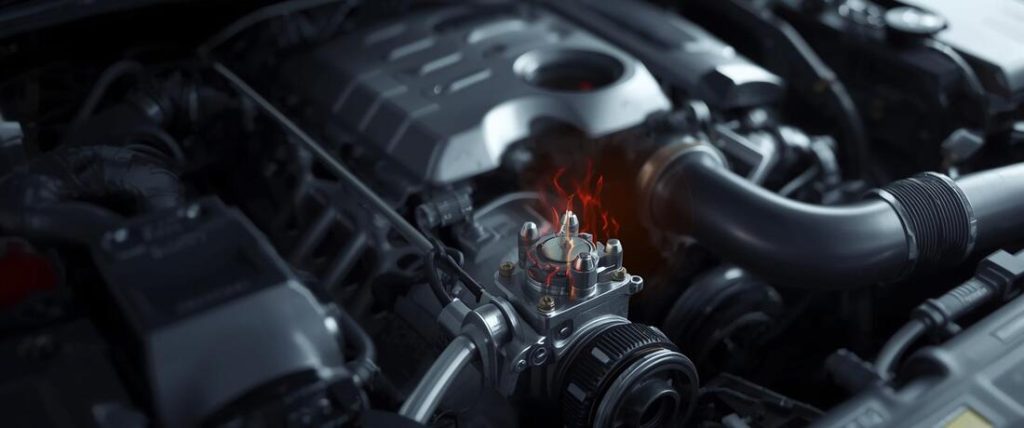
The throttle body is a valve that controls how much air enters your engine.
It acts like a gatekeeper. When you press the gas pedal, the gate opens. When you let go, it closes.
Throttle Body Basics
It mixes air with fuel to create power. Your engine needs air to burn gas. The throttle body sits between the air filter and the engine intake. It opens to let air in. The more air that enters, the more power you get. It is vital for smooth driving.
Types of Throttle Bodies
There are two main types used in cars today.
- Mechanical: These are on older cars. A steel cable connects your gas pedal to the valve.
- Electronic: These are on modern cars. A computer tells a motor to open the valve. This is often called “Drive-by-Wire.”
Key Components
A few small parts make the whole system work.
- Throttle Plate: This is the metal flap that opens and closes.
- TPS Sensor: This tells the computer where the flap is.
- Idle Valve: This lets a bit of air in when you are stopped.
- Motor: This moves the flap on new cars.
7 Common Symptoms of a Bad Throttle Body
Most issues cause rough running, stalling, or a warning light.
Here are the signs I look for first.
1. Check Engine Light Illuminated
A bad throttle body will trigger a dashboard warning light.
Your car’s computer watches the airflow. If the data looks wrong, it turns on the light. This is the most common first sign.
- What It Means: The sensors detect a fault.
- Common Codes: You might see P0121 or P2135.
- What to Do: Go to a parts store. Ask for a free scan. Write down the codes.
- Urgency: Medium. Get it checked in a week or two.
2. Rough or Erratic Idle
Dirt on the valve can make the engine shake when stopped.
When you stop at a red light, the car should feel smooth. If it shakes or the RPM needle jumps up and down, airflow is the issue.
- What It Feels Like: The car vibrates or shudders.
- Why It Happens: Carbon dirt blocks the air gap. The idle valve might be stuck.
- What to Do: Check for leaks. Clean the valve.
- Urgency: Medium. Fix it before it stalls.
3. Poor Acceleration or Sluggish Performance
If the valve sticks, the car will feel slow to speed up.
You step on the gas, but the car waits to go. This hesitation is dangerous when merging. It feels like the car has no power.
- What It Feels Like: You press the pedal, but there is a delay.
- Why It Happens: The plate does not open fast enough. Dirt makes it sticky.
- What to Do: Test it at different speeds. Look for grime inside the part.
- Urgency: Medium. It makes driving annoying.
4. Engine Stalling (Especially at Idle or Low Speeds)
A blocked throttle body can choke the engine until it dies.
This is scary. You stop at a stop sign, and the engine shuts off. It happens because the engine is starved of air.
- What It Feels Like: The engine cuts out when you stop.
- Why It Happens: The plate is clogged. No air can get past the dirt.
- What to Do: Do not drive if it stalls often. It is not safe.
- Urgency: High. Fix this right away.
5. Reduced Fuel Economy
Bad airflow data makes the computer waste gas.
If the sensor is bad, the car guesses how much fuel to use. It usually guesses wrong. It adds too much gas. This hurts your wallet.
- What It Feels Like: You fill up the tank more often.
- Why It Happens: The mix of air and fuel is wrong.
- What to Do: Track your miles per gallon.
- Urgency: Low. It costs money, but won’t break the car.
6. Unstable or High Idle RPM
A vacuum leak can make the engine race while stopped.
Sometimes the idle is too high. The engine sounds like you are pressing the gas, but you are not. This puts stress on the brakes.
- What It Feels Like: The engine runs fast when stopped.
- Why It Happens: Too much air is getting in. The plate might be stuck open.
- What to Do: Listen for a hissing sound. This points to a leak.
- Urgency: Medium. It wastes a lot of gas.
7. Hesitation, Jerking, or Surging While Driving
Electrical glitches cause the car to buck or surge forward.
If the signal to the motor is bad, the valve opens and closes fast. This makes the car jerk. It feels like you are tapping the brakes.
- What It Feels Like: The car lurches or jumps.
- Why It Happens: The sensor signal is weak. The wire might be loose.
- What to Do: Check the plug on the side of the unit.
- Urgency: High. This can cause a crash.
How to Diagnose a Bad Throttle Body: Step-by-Step
You can check this part at home with basic tools.
Follow these steps to find the problem.
Step 1: Get an OBD2 Scan
A scan tool tells you exactly what the computer sees. Plug a scanner into the port under the dash. Look for codes like P0121. This confirms the issue is in the throttle system. If you see other codes, check our guide on Symptoms of Bad Speed Sensor to rule out other parts.
Step 2: Perform Visual Inspection
Take a look inside the air tube. Pop the hood. Find the big black tube going to the engine. Take it off. Look at the metal plate inside. Is it black with soot? That is your problem.
Step 3: Check Throttle Plate Movement
See if the valve opens smoothly. With the engine off, turn the key to “On.” Have a friend press the gas pedal. Watch the plate. It should open fast and smooth. If it sticks, it is bad.
Step 4: Test Drive Observation
Feel how the car drives. Does it jerk? Does it stall? Note when it happens. Is the engine hot or cold? This helps you pinpoint the cause.
Step 5: Clean Throttle Body (If Dirty)
Cleaning fixes the issue most of the time. If the part is dirty, clean it. This is cheap and easy. It works for 8 out of 10 cars.
DIY Throttle Body Cleaning Guide
You can clean this part in less than an hour.
Tools & Supplies Needed
Gather these items before you start.
- Can of throttle body cleaner.
- Screwdriver.
- Clean rag.
- Old toothbrush.
- Rubber gloves.
Step-by-Step Cleaning Process
Follow these steps carefully.
- Disconnect Battery: This is for safety.
- Remove Hose: Take off the air tube.
- Spray: Spray cleaner on the rag, not into the engine.
- Scrub: Wipe the plate and the walls. Use the brush for hard spots.
- Wipe: Clean it until it shines.
- Reassemble: Put the hose back on. Hook up the battery.
When DIY Cleaning Isn’t Enough
Sometimes the part is just broken. If you clean it and the problem stays, the electronics are likely bad. You will need to buy a new one.
Throttle Body Replacement vs. Cleaning
Cleaning is cheap; replacement costs more.
When Cleaning Works
Clean it if dirt is the only issue. If the car runs rough but has no broken parts, clean it. It costs about $10 for the spray.
When Replacement Is Needed
Replace it if the sensor or motor fails. You cannot fix the internal electronics. If the sensor is bad, you need a new unit. This costs $200 to $600.
Bad Throttle Body vs. Other Issues
Make sure you are fixing the right part.
Throttle Body vs. Mass Airflow Sensor (MAF)
Both cause rough running. The MAF sensor measures air. The throttle body controls air. If you have black smoke, it is likely the MAF.
Throttle Body vs. Fuel System Problems
Fuel issues feel different. If the car is hard to start, it might be the fuel pump. Throttle issues happen when the car is already running.
Throttle Body vs. Spark Plug/Ignition Issues
Spark plugs cause misfires. If the engine feels jerky at high speed, it might be a spark plug. Throttle issues mostly affect idle and take-off.
Throttle Body Maintenance & Prevention
Keep it clean to avoid trouble.
Recommended Cleaning Schedule
Clean it every 30,000 miles. If you do this, you will prevent build-up. It is easy to do when you change your air filter.
Prevention Tips
Good habits help parts last.
- Change the air filter often.
- Use good gas.
- Let the car warm up in winter.
- Fix warning lights fast.
Signs It’s Time for Cleaning
Watch for small changes. Is the idle a bit rough? Is the gas mileage dropping? Clean it now before it gets worse.
Cost Breakdown: Throttle Body Repair
Here is what you will pay.
| Service | DIY Cost | Pro Cost | Time |
| Cleaning | $10–$30 | $75–$200 | 45 min |
| Sensor (TPS) | $50–$100 | $150–$350 | 1 hour |
| Replacement | $150–$400 | $300–$600 | 2 hours |
| Idle Valve | $50–$150 | $150–$400 | 1 hour |
Export to Sheets
Prices change based on your car model.
Is It Safe to Drive with a Bad Throttle Body?
It depends on how bad the symptoms are.
Stop Driving Immediately If:
Do not drive if the car is unsafe. If the car stalls in traffic, stop. If the gas pedal sticks, stop. Call a tow truck.
Drive Carefully to Shop If:
You can drive if it is minor. If the idle is just a bit rough, you can drive to the shop. Stay in the slow lane. Be ready if it stalls.
Risks of Ignoring Symptoms:
Ignoring it leads to bigger bills. A bad air mix can ruin your catalytic converter. This is a very expensive part. Just like ignoring a Master Warning Light, waiting makes it worse.
FAQ About Symptoms of a Bad Throttle Body
How can you tell if your throttle body is bad?
A bad throttle body makes the car run rough. You will see a check engine light. The car may stall at a stop. It will not speed up fast when you press the gas pedal.
Can a dirty throttle body cause jerking when accelerating?
Yes, a bad throttle body hurts the idle. Dirt blocks the small air gap. This makes the engine shake or stall when you stop. The idle speed goes up and down a lot.
Does a bad throttle body affect idle?
Yes, a bad throttle body hurts the idle. Dirt blocks the small air gap. This makes the engine shake or stall when you stop. The idle speed goes up and down a lot.
What are the symptoms of a bad throttle body gasket?
A bad throttle body gasket lets extra air in. You will hear a loud hiss sound. The engine will run too fast at a stop. The check engine light will turn on soon.
What are the first signs of a bad throttle body?
The first signs are small. You feel a tiny shake at a red light. The gas mileage drops a bit. You might feel a lag when you step on the gas. Fix it now to save cash.
Bottom Line: Don’t Ignore Throttle Body Symptoms
A bad throttle body affects your engine’s ability to breathe properly, leading to poor performance, reduced fuel economy, and potentially dangerous stalling. The good news? Most throttle body problems are fixable with a simple cleaning that costs under $200.
Key takeaways:
- Most common symptoms: Rough idle, poor acceleration, check engine light, stalling.
- First step: Get an OBD2 scan and visual inspection.
- Try cleaning first: 70-80% success rate.
- Replacement when needed: $300-$600 for most vehicles.
- Don’t ignore: Stalling can be dangerous in traffic.
If you’re experiencing any of these symptoms, start with an OBD2 scan and throttle body inspection. A clean throttle body can restore your engine’s performance and save you from expensive repairs down the road.