
This article was updated in February 20, 2026 with new products and information by Mark S. Taylor
The main parts of the braking system work as a team to stop your car fast. Every time you drive, you trust these parts with your life. Yet, most drivers do not know how they work. As a car pro for many years, I fix brakes all the time. Today, I will show you what each part does. I will teach you how to spot bad signs early. Read on to learn how to keep your brakes safe. This guide will save you cash on big car fixes. Find more auto care tips at The Car Buzz.
Contents
- 1 How the Braking System Works — The 5-Second Overview
- 2 The 10 Main Parts of the Braking System
- 2.1 1. Brake Pedal
- 2.2 2. Brake Booster (Vacuum Servo)
- 2.3 3. Brake Master Cylinder
- 2.4 4. Brake Fluid and Reservoir
- 2.5 5. Brake Lines and Hoses
- 2.6 6. Brake Calipers
- 2.7 7. Brake Pads (Disc Brakes) and Brake Shoes (Drum Brakes)
- 2.8 8. Brake Rotors (Disc Brakes) and Brake Drums (Drum Brakes)
- 2.9 9. ABS — Anti-Lock Braking System Components
- 2.10 10. Parking Brake (Emergency Brake / E-Brake)
- 3 Disc Brakes vs. Drum Brakes — Key Differences at a Glance
- 4 Master Parts Reference Table — All 10 Parts in One Place
- 5 How Long Do Braking System Parts Last?
- 6 Warning Signs Your Braking System Needs Attention
- 7 FAQs About Main Parts of the Braking System
- 8 Bottom Line
How the Braking System Works — The 5-Second Overview
The brake system uses fluid to turn your foot press into pure stopping force.
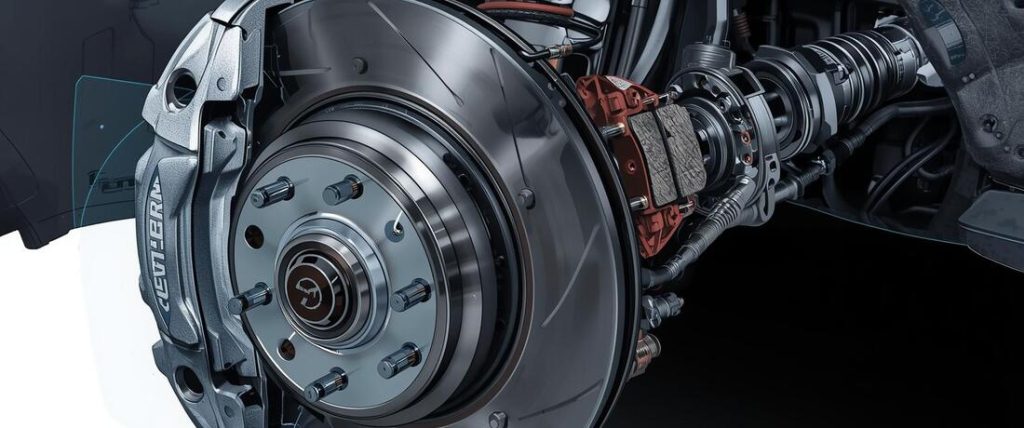
Your foot pushes the pedal down. A brake booster makes that push much stronger. The master cylinder pumps fluid through long tubes. The fluid travels deep under the car. It reaches the wheels. Next, it makes the calipers squeeze the brake pads. The pads press hard against the metal rotors. The loud rubbing slows the wheels down. Your car stops safely on the road.
Every part is a link in a chain — if one fails, the whole system is at risk.

The 10 Main Parts of the Braking System
Ten main parts work together to slow your car down safely every time.
1. Brake Pedal
The brake pedal is the part you press to start the stopping process.
It sits right next to the gas pedal. You push it with your right foot. It changes your foot push into a strong pull. It joins straight to the brake booster. It also links to the master cylinder. A good pedal feels firm. It springs right back when you lift your foot.
If the pedal sinks to the floor, you have a bad problem. It might feel very stiff. It might shake hard under your foot. A pedal rarely breaks on its own. A bad pedal feel usually means you need new fluid. It can also mean a master cylinder fix.
2. Brake Booster (Vacuum Servo)
The brake booster gives your foot extra power to stop the heavy car.
It is a big round black disc. It sits behind the engine near the wheel. You do not have to stomp hard because this part helps you. Gas cars use engine vacuum to run it. Electric cars use a small pump. It pulls a rod inside to do the heavy work.
If the booster breaks, the pedal feels as hard as a rock. You will have to push with all your might. Your car will take a long time to stop. Fixing a bad booster costs about $200 to $600 for parts and work.
3. Brake Master Cylinder
The master cylinder pumps brake fluid through the whole car system.
It is the main heart of the brake system. It sits under the hood. It holds the brake fluid in a clear plastic cup on top. It has two separate paths inside for safety. If one fluid path fails, the other path will still stop the car. You must keep the fluid full.
A bad cylinder makes the pedal feel like soft mush. You might see a wet fluid leak under the hood. You will lose strong stopping power. A new one costs $150 to $400 for parts and work.
4. Brake Fluid and Reservoir
Brake fluid is the special oil that pushes force from the pedal to the wheels.
It is clear like honey when it is new. It also keeps parts slick and stops rust. Brake fluid takes in water from the air over time. This water lowers the boil point of the fluid. Hot, boiling fluid can make your brakes fail fast. Old fluid looks dark brown.
Bad fluid makes the pedal feel soft. The car takes longer to stop. You must change it every two years or 30,000 miles. A shop flush costs about $80 to $150. Learn more car safety facts at the NHTSA website.
5. Brake Lines and Hoses
Brake lines are long metal tubes that carry hot fluid to each wheel.
Hard steel lines run under the bottom of the car. Soft rubber hoses join the steel lines to the moving tires. The rubber hoses bend when the car turns. They deal with high heat and high pressure every day.
A broken line gives you a soft pedal right away. You will see wet oil spots on the ground. The car will not stop well. Fixing broken lines costs $150 to $500. The cost depends on the rust and harm.
6. Brake Calipers
Calipers are the strong metal hands that squeeze your brake pads.
The caliper holds the brake pads inside. It looks like a big metal claw. When hot fluid pushes them, they clamp hard on the rotor. Most cars have floating calipers. These slide a bit to grab both sides evenly. Fast sports cars use fixed calipers. They grab much harder to stop fast.
A stuck caliper pulls your car hard to one side. You may hear a loud grind sound. The brakes might drag even when you do not stop. A new caliper costs $150 to $400 for each wheel. Find more repair guides on our [https://www.google.com/search?q=https://www.thecarbuzz.com/brakes-guide] page.
7. Brake Pads (Disc Brakes) and Brake Shoes (Drum Brakes)
Brake pads and shoes rub against metal parts to slow the wheels down.
Brake pads squeeze the flat metal rotor. Most new cars use flat pads. You can buy good ceramic pads. They are quiet and clean. Semi-metallic pads last long and handle track heat well. Organic pads are soft and cheap. Brake shoes push out against the inside of a drum. Older cars use shoes in the rear wheels.
Worn pads squeal or grind loud. The car takes far to stop. The pedal shakes. You must replace them when they are thin. New pads cost $100 to $300 per pair. Shoes cost $150 to $300 per pair.
8. Brake Rotors (Disc Brakes) and Brake Drums (Drum Brakes)
Rotors and drums are the huge metal parts that turn with your tires.
Rotors are flat, heavy iron discs. The brake pads clamp directly on them. Most rotors have empty spaces inside. These vents let hot air blow out. Brake drums are round metal bowls. The soft shoes push out against them. Both parts get very hot when you brake hard.
A bent rotor makes the brake pedal pulse. You can feel a strong shake in the car. You might see deep lines cut on the metal. Change rotors every 50,000 miles. Change drums every 100,000 miles. Rotors cost $200 to $500 for a set of two.
9. ABS — Anti-Lock Braking System Components
The ABS stops your tires from locking up when you brake hard in a panic.
It keeps you safe so you can steer the wheel in a quick stop. It has four main parts. Wheel speed sensors watch how fast each tire turns. The main computer brain looks at this tire data. The pump block changes the fluid pressure super fast. A dash light warns you if it breaks.
A broken ABS turns on a yellow dash light. Your tires might skid if you slam the brake pedal. A pulsing pedal is normal when the ABS works right in the rain. Speed sensors cost $100 to $250. The main brain module costs $300 to $800.
10. Parking Brake (Emergency Brake / E-Brake)
The parking brake locks the rear wheels to keep a parked car still.
Use it every time you park on a hill. Some old cars have a hand pull lever. Some trucks have a foot pedal. New cars have a tiny electric button. It uses a strong metal cable. It does not use the main wet fluid. It works even if your main brakes fail.
If it breaks, your car might roll down a steep hill. The red dash light might stay on all day. The cable can get stuck in winter cold. A new cable costs $100 to $300. An electric brake part costs $200 to $500.
Disc Brakes vs. Drum Brakes — Key Differences at a Glance
Disc brakes cool down fast, while drum brakes cost less to build.
| Feature | Disc Brakes | Drum Brakes |
| Parts Used | Caliper, pads, rotor | Wheel cylinder, shoes, drum |
| Heat Loss | ✅ Very Good | ⚠️ Very Poor |
| Rain Driving | ✅ Better and safer | ⚠️ Slower to dry off |
| Stop Distance | ✅ Much Shorter | ⚠️ Much Longer |
| Cost to Make | High cost | Low cost |
| Where Used | Front and rear wheels | Rear wheels on cheap cars |
| Fixing Ease | Easy to work on | Hard with many springs |
Master Parts Reference Table — All 10 Parts in One Place
This fast chart shows all ten brake parts, what they do, and cost to fix.
| Part Name | Main Job It Does | Bad Warning Sign | Fix Cost Guess |
| Brake Pedal | Driver touch point | Sinks low to floor | Rare fix |
| Brake Booster | Adds foot push power | Very hard pedal | $200–$600 |
| Master Cylinder | Pushes fluid hard | Soft mushy pedal | $150–$400 |
| Brake Fluid | Moves the pressure | Dark brown fluid | $80–$150 |
| Brake Lines | Carries the fluid | Wet fluid leak | $150–$500 |
| Brake Calipers | Clamps pads tight | Car pulls left or right | $150–$400 |
| Pads and Shoes | Makes stop friction | Loud squeal sound | $100–$300 |
| Rotors and Drums | Flat metal surface | Shake or pulse feel | $200–$500 |
| ABS System | Stops wheel lock | Dash light turns on | $100–$800 |
| Parking Brake | Holds parked car | Car rolls on hill | $100–$500 |
How Long Do Braking System Parts Last?
Brake parts wear out over time based on how fast you drive and stop.
| Part Name | Expected Lifespan |
| Brake pads | 20,000 to 70,000 miles |
| Brake shoes | 30,000 to 60,000 miles |
| Brake rotors | 50,000 to 70,000 miles |
| Brake drums | 100,000 to 150,000 miles |
| Brake fluid | Every 2 years or 30,000 miles |
| Brake lines | Over 10 years (check for rust) |
| Master cylinder | Lasts the life of the car mostly |
| Brake calipers | 75,000 to 100,000 miles |
| ABS wheel sensors | Over 100,000 miles |
| Parking brake cord | 100,000 to 150,000 miles |
Warning Signs Your Braking System Needs Attention
Look out for strange sounds or a soft pedal to know when your brakes need a fix. Check the Car Care Council for more tips on staying safe on the road.
- 🔴 Loud squeal sound → Your pads or shoes are worn down low.
- 🔴 Soft or low pedal → You have air in the brake lines.
- 🔴 Car pulls left or right → A front caliper is stuck tight.
- 🔴 Strong shake or pulse → Your rotor is bent from heat.
- 🔴 Dash light turns on → You have a bad ABS part or low fluid.
- 🔴 Bad hot burning smell → Your brakes are way too hot.
- 🔴 Takes far to stop → Your brake pads are worn out.
- 🔴 Fluid level drops low → You have a wet fluid leak.
FAQs About Main Parts of the Braking System
How often should brake fluid be replaced?
Replace brake fluid every two years or 30,000 miles. The fluid takes in water from the air over time. Old fluid boils very fast. This makes your brakes fail when you need them most.
What does ABS do and what are its parts?
ABS keeps your wheels spinning a bit during a hard stop. It lets you steer safely away from a crash. It uses wheel speed sensors, a brain computer, and a fluid pump. They pulse the brakes fast so you do not skid.
What causes a spongy brake pedal?
A soft pedal means air got inside your wet brake lines. It can also mean you have very low fluid. A bad master cylinder causes this, too. Get it checked right away to stay safe on the fast highway.
How do I know when my brake pads need replacing?
Change your pads when they look very thin. Good pads are thick. Bad pads are thin like a coin. You might hear a loud squeal. You might hear a bad metal grind. Your car will take far to stop.
Is it safe to drive with a brake warning light on?
No, it is not safe to drive. A red brake light means low fluid. It means thin front pads. Or it means the ABS is broken. Pull the car over. Stop the car safe. Get a pro to fix it.
Bottom Line
Your brakes keep you safe, so you must take good care of them every single day.
Your car brake system is a top need. Each of the ten main parts has a set job to do. When they work as a team, you stop smooth and safe. If one part breaks, you feel it fast. The pedal feels bad. The car shakes hard. Know the bad signs. Fix things on time. Do not wait to fix bad brakes. Would you like me to help you find more guides on simple car repairs today?
Quick Summary
- Ten main parts make your car stop safely.
- The brake pedal pushes fluid through the whole car.
- Brake pads squeeze the hot rotors to slow the wheels.
- Change your brake fluid every two years to stop rust.
- Fix a soft pedal or loud noise right away to stay safe.
- Disc brakes cool fast and stop you much better in the rain.