
This article was updated in October 30, 2026 with new products and information by Mark S. Taylor
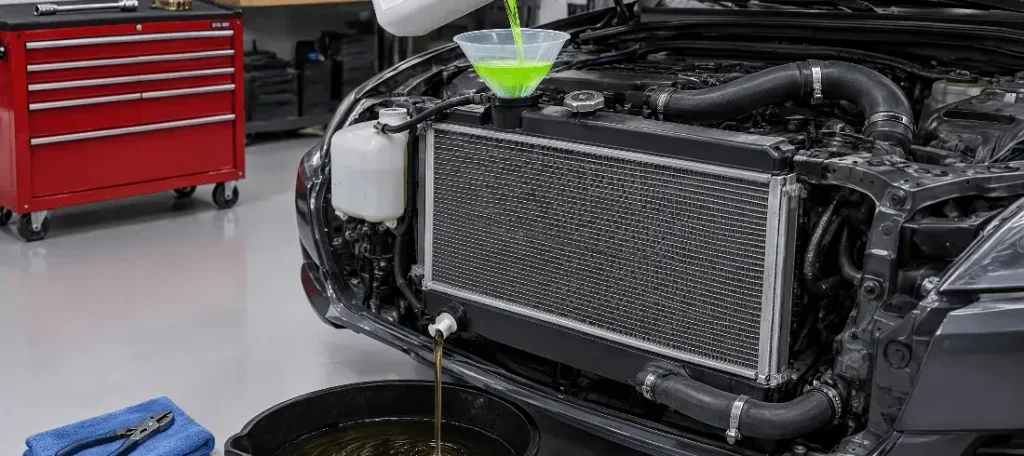
Yes, you can change coolant without flushing the entire cooling system. A simple drain-and-refill is often enough for routine coolant replacement when the existing fluid is clean, the correct replacement coolant is used, and the vehicle manufacturer’s procedure allows it.
But there’s one thing to understand before you skip the flush: draining the radiator doesn’t necessarily remove all the old coolant. Some can remain inside the engine block, heater core, and other cooling passages. Here’s when a basic drain-and-refill works, when a complete flush is necessary, and how to avoid problems when refilling your cooling system.
Contents
- 1 Can You Change Coolant Without Flushing?
- 2 What’s the Difference Between a Coolant Drain-and-Refill and a Flush?
- 3 Does Draining the Radiator Remove All the Old Coolant?
- 4 When Can You Change Coolant Without Flushing?
- 5 When Should You Flush the Cooling System Instead?
- 6 Can You Mix New Coolant With Old Coolant?
- 7 How to Change Coolant Without Flushing: General Drain-and-Refill Procedure
- 7.1 Step 1: Identify the correct coolant
- 7.2 Step 2: Allow the engine to cool completely
- 7.3 Step 3: Locate the correct drain points
- 7.4 Step 4: Inspect the old coolant
- 7.5 Step 5: Close the drain points and refill
- 7.6 Step 6: Bleed trapped air from the cooling system
- 7.7 Step 7: Check for leaks and verify the coolant level
- 8 What Happens If You Don’t Bleed Coolant After Refilling?
- 9 How Much Does a Coolant Drain-and-Refill Cost Compared With a Flush?
- 10 FAQs About
- 10.1 1. Can you change coolant without flushing the radiator?
- 10.2 2. Can you just drain and refill coolant?
- 10.3 3. Does a coolant drain remove all the old coolant?
- 10.4 4. When is a coolant flush necessary?
- 10.5 5. Can you change coolant without flushing if the old coolant is dirty?
- 10.6 6. Can you mix new coolant with the coolant left in the engine?
- 10.7 7. Do you need distilled water when changing coolant?
- 10.8 8. Can you drive immediately after changing coolant?
- 11 The Bottom Line
Can You Change Coolant Without Flushing?
Yes. Many vehicles can have their coolant replaced through a drain-and-refill procedure without a separate cleaning flush.
During a basic drain-and-refill, the old coolant is removed through the manufacturer’s designated drain points. The system is then refilled with fresh coolant that meets the vehicle’s specifications.
This can be sufficient for routine maintenance when:
- The existing coolant is clean and free of visible contamination.
- There is no evidence of rust, sludge, oil, or incompatible coolant.
- You’re using the correct replacement coolant.
- The manufacturer’s maintenance procedure permits a drain-and-refill.
For example, Toyota’s 2025 Tundra maintenance guide describes draining the cooling system and refilling it with the specified coolant. It does not prescribe an additional cleaning flush in that maintenance instruction.
Ford also issued a technical bulletin for certain 2015–2017 F-Super Duty 6.7L vehicles explaining that flushing wasn’t required during the specified coolant-pump repair when the coolant remained clear and uncontaminated.
These are vehicle-specific examples, not universal instructions. Your owner’s manual and applicable service information determine which procedure is correct.
The bottom line: If your cooling system is healthy and the manufacturer allows a drain-and-refill, paying for an additional flush may be unnecessary.

What’s the Difference Between a Coolant Drain-and-Refill and a Flush?
These terms are often used interchangeably at repair shops, but they don’t always describe the same service.
A drain-and-refill removes accessible old coolant and replaces it with fresh fluid. A flush is intended to remove more residual coolant or contamination from the cooling system.
Here’s how the common methods compare:
| Service method | What it does | When it’s useful |
|---|---|---|
| Coolant top-up | Adds coolant to restore the correct level | When coolant is slightly low and no underlying problem exists |
| Drain-and-refill | Removes accessible old coolant and adds fresh coolant | Routine maintenance when the system is clean |
| Water flush | Circulates water through the system to remove more residual coolant | When the manufacturer’s procedure calls for additional rinsing |
| Machine coolant exchange | Uses equipment to replace a greater portion of the existing coolant | Certain service procedures and vehicle applications |
| Chemical flush | Uses an approved cleaning product to address specific deposits or contamination | Only when appropriate for the contamination and manufacturer instructions |
A drain-and-refill isn’t necessarily an incomplete repair. It’s simply a different service method.
A chemical cleaning treatment isn’t automatically better than a basic drain-and-refill. Some manufacturers specifically restrict which cleaning products can be used.
Does Draining the Radiator Remove All the Old Coolant?
No, not necessarily.
This is one of the biggest misunderstandings about changing engine coolant without flushing.
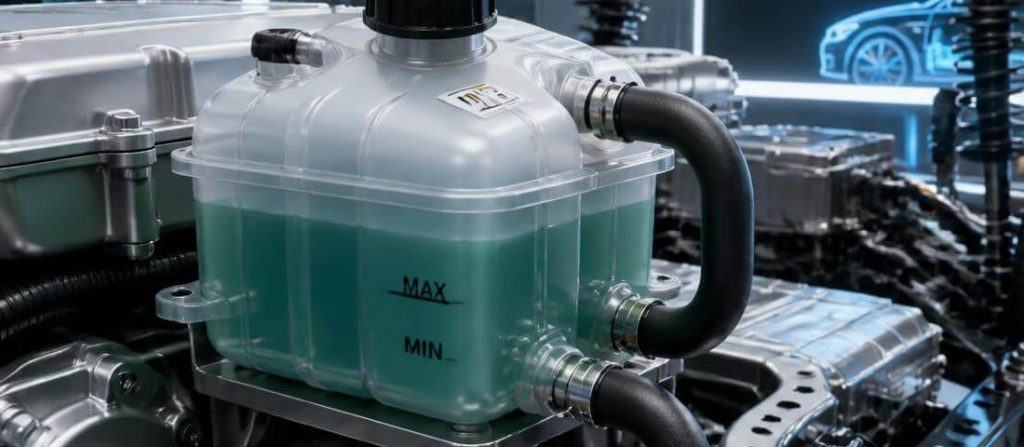
Your vehicle’s cooling system contains several connected components:
- Radiator
- Engine block and cylinder head passages
- Heater core
- Coolant reservoir or expansion tank
- Water pump and connecting hoses
- Thermostat housing and other cooling circuits
Opening the radiator drain plug may remove much of the coolant in the radiator, but it doesn’t guarantee that every connected passage will empty.
Some coolant may remain trapped in the engine block, heater core, or other low points.
The amount left behind depends on the cooling-system design and which drain points the manufacturer specifies.
This matters because the remaining fluid mixes with the fresh coolant.
If you’re using concentrated antifreeze, residual water or old coolant can change the final concentration. Don’t assume that adding a 50/50 mixture automatically produces the correct final ratio.
Follow the manufacturer’s filling instructions and use the specified coolant concentration.
When Can You Change Coolant Without Flushing?
A drain-and-refill is a reasonable option in several situations.
1. Routine coolant replacement
If your vehicle has reached its scheduled coolant replacement interval but the existing fluid is clean and the cooling system is working normally, a drain-and-refill may be sufficient.
You don’t automatically need a chemical cleaning treatment just because the coolant has reached its maintenance interval.
However, check whether your manufacturer specifically requires draining and flushing rather than simply draining and refilling.
2. The existing coolant is clean
Look at the coolant condition before deciding which service is appropriate.
Clean, uncontaminated fluid without visible sediment or sludge generally gives you less reason to request an additional cleaning procedure.
Ford’s 2018 technical bulletin provides a useful example. On the specified Super Duty vehicles, an orange coolant that changed to pink or light red didn’t automatically indicate degradation or require flushing, provided the fluid remained clear and uncontaminated.
That distinction matters because coolant color can change without necessarily indicating a problem.
3. You’re replacing coolant with the same approved specification
If you’re replacing the existing coolant with a fresh product that meets the same required manufacturer specification, a drain-and-refill may be suitable when the service procedure allows it.
You still need to account for residual coolant.
Using the same approved specification reduces compatibility concerns, but it doesn’t remove existing rust, sludge, or other contamination.
4. The manufacturer specifies a drain-and-refill
Some maintenance guides describe coolant replacement as draining the system and refilling it with the specified fluid.
Toyota’s 2025 Tundra maintenance guide provides an example of this approach.
Don’t add a machine flush or chemical cleaner simply because a repair shop advertises it as a standard part of every coolant replacement.
When Should You Flush the Cooling System Instead?
There are situations where skipping the flush is a bad idea.
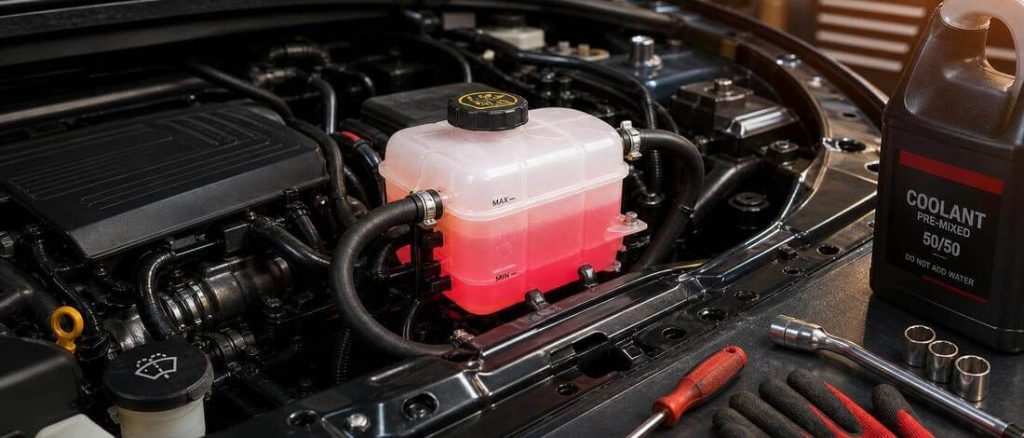
If the coolant is contaminated, the system has a history of incorrect fluid mixing, or there are deposits restricting circulation, replacing only the accessible coolant may leave the underlying problem untouched.
Here are the main situations to watch for.
1. Rust, sediment, or sludge in the coolant
If the drained coolant contains visible rust, particles, sediment, or thick deposits, a basic drain-and-refill may not remove the contamination.
These materials can accumulate in narrow cooling passages, the radiator, and heater core.
Ram’s 2022 owner’s manual specifically directs owners to have the cooling system cleaned and flushed when coolant is dirty or contains visible sediment.
Don’t just replace the fluid and assume the problem is gone.
2. You accidentally mixed incompatible coolant types
Different coolant formulations use different corrosion-inhibitor technologies.
Common technologies include:
- IAT: Inorganic Additive Technology
- OAT: Organic Acid Technology
- HOAT: Hybrid Organic Acid Technology
- P-HOAT and Si-OAT: Different hybrid formulations
Not all these formulations are compatible.
Mixing incompatible products can reduce corrosion protection and, in some circumstances, contribute to deposits or gel-like residue.
If you’ve mixed the wrong coolant, don’t assume that draining only the radiator will solve the problem. Follow the vehicle manufacturer’s corrective procedure, which may require a complete drain, flushing, and refill.
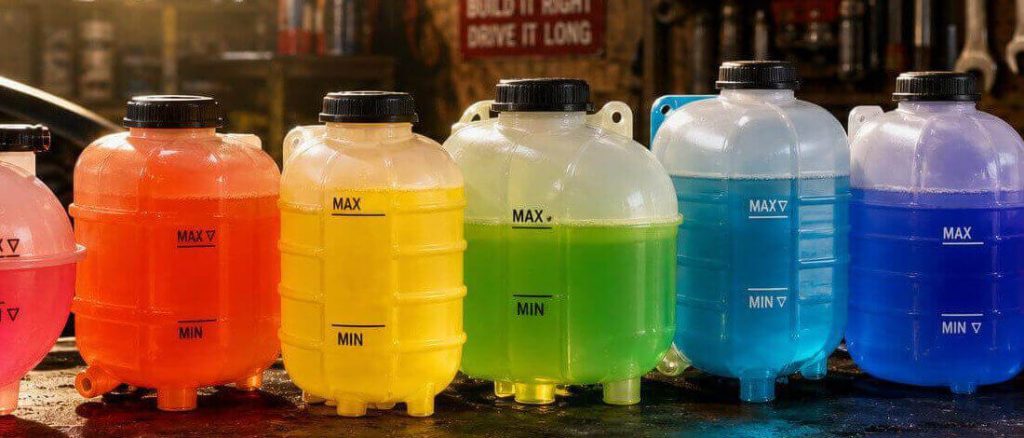
One more thing: don’t identify coolant by color alone. A red, green, orange, or blue product doesn’t automatically tell you its chemical formulation.
Check the owner’s manual and product specifications.
3. Engine oil has entered the cooling system
Oil floating in the coolant reservoir is not a normal maintenance issue.
Possible causes include a leaking engine oil cooler, a head gasket problem, or another internal failure.
In this situation, a simple drain-and-refill won’t fix anything.
The source of the contamination needs to be identified and repaired first.
GM’s March 2025 Service Bulletin 25-NA-052 provides a specific procedure for oil-contaminated cooling systems in covered Buick, Cadillac, Chevrolet, and GMC vehicles. It requires correcting the underlying source and following the prescribed cleaning procedure.
GM also warns against using ordinary household detergents or unvalidated chemicals in the cooling system.
Don’t treat oil contamination as an ordinary coolant change.
4. The engine has experienced repeated overheating
If your engine has overheated repeatedly, don’t assume that replacing the coolant will solve the problem.
Overheating can result from:
- A leaking radiator or hose.
- A faulty thermostat.
- A failing water pump.
- A restricted radiator or heater core.
- A cooling fan problem.
- A damaged head gasket.
Diagnose the cause before deciding whether the system needs flushing.
A flush can remove certain contaminants, but it cannot repair a failed water pump, damaged head gasket, or leaking radiator.
5. You’re changing to a different coolant specification
If you’re moving from one coolant chemistry to another, the correct procedure matters.
A simple drain may leave enough old coolant behind to alter the final mixture.
Check whether the new coolant meets the exact specification required by the vehicle manufacturer and whether the manufacturer requires a complete flush before changing formulations.
Don’t rely on a bottle labeled universal or on matching colors.
Can You Mix New Coolant With Old Coolant?
It depends on whether the formulations are compatible.
If you’re performing a routine drain-and-refill and some of the old coolant remains, the safest approach is to use fresh coolant that meets the same manufacturer specification.
If you don’t know what coolant is already in the system, don’t guess.
Coolant colors aren’t standardized across manufacturers. Two products that look identical may use different additive technologies.
Valvoline’s coolant compatibility guidance explains why the chemical formulation matters more than the dye color.
If incompatible coolant has already been mixed, have the system assessed and follow the manufacturer’s corrective procedure.
Don’t keep adding different products in an attempt to dilute the mixture.
How to Change Coolant Without Flushing: General Drain-and-Refill Procedure
If your vehicle permits a basic drain-and-refill, the process is generally straightforward. However, cooling-system layouts and refill procedures vary considerably.
Use your vehicle’s service manual for the actual drain locations, capacity, coolant specification, and bleeding procedure.
Step 1: Identify the correct coolant
Before opening anything, check your owner’s manual.
Confirm:
- The required coolant specification.
- Whether premixed or concentrated coolant is required.
- The correct water specification for mixing concentrate.
- The total cooling-system capacity.
- The manufacturer’s drain-and-refill procedure.
Don’t choose coolant based on color alone.
Step 2: Allow the engine to cool completely
Park on a level surface, switch off the engine, and let the cooling system cool completely.
Never remove a radiator cap, pressurized reservoir cap, or drain plug while the system is hot.
Hot coolant and steam can escape under pressure and cause serious burns.
Hyundai’s owner guidance specifically warns against removing cooling-system caps or drain plugs while the engine and radiator are hot.
Wear suitable gloves and eye protection, and keep children and pets away from the work area.
Step 3: Locate the correct drain points
Find the coolant drain points specified in your vehicle’s service information.
Depending on the vehicle, the procedure may involve:
- A radiator drain valve.
- A lower radiator hose.
- An engine-block drain.
- A separate expansion tank or cooling circuit.
Not every vehicle provides accessible drain plugs for all these locations.
Don’t force a plastic drain valve or remove a hose without understanding how it is secured.
Collect the old coolant in a suitable drain container.
Step 4: Inspect the old coolant
Before refilling, inspect the drained fluid.
Look for:
- Visible rust particles.
- Thick sediment.
- Sludge or gel-like material.
- An oily film.
- Unusual contamination.
If you find these conditions, stop and investigate before proceeding with a simple refill.
The cooling system may need cleaning, component repair, or a more thorough inspection.
Step 5: Close the drain points and refill
Once the manufacturer’s draining procedure is complete, reinstall the drain plugs, hoses, and seals as specified.
Refill using the correct coolant.
If the product is concentrated, dilute it according to the manufacturer’s specified mixture and water requirements. If it is premixed, use it as directed on the label.
Don’t guess at the total amount. Some old coolant may remain, and the final mixture needs to meet the vehicle’s requirements.
Step 6: Bleed trapped air from the cooling system
This is a step you shouldn’t overlook.
Air trapped in the cooling system can interfere with coolant circulation and heating performance. It may also contribute to overheating.
Some older vehicles use relatively simple bleeding procedures.
Modern vehicles can be more complicated.
For example, Snap-on documents certain Volkswagen and other VAG cooling systems that require an OEM-controlled coolant bleed function. Some procedures also require vacuum filling before the electronic bleed routine.
If your vehicle requires a scan tool, vacuum filling, or a specific pump-activation sequence, don’t substitute a generic internet procedure.
Step 7: Check for leaks and verify the coolant level
After completing the manufacturer’s refill and bleeding procedure, check the cooling system for leaks.
Follow the specified operating and cooling-down procedure.
Once the engine is completely cool, recheck the coolant level and adjust it if the manufacturer’s instructions require it.
Monitor the temperature gauge and cabin heater operation during the prescribed verification process.
If the temperature rises abnormally, the heater stops producing heat, a warning appears, or coolant leaks out, stop operating the vehicle and investigate the problem.
Don’t assume the system is correctly filled just because the reservoir looks full.

What Happens If You Don’t Bleed Coolant After Refilling?
Trapped air can create problems even when you’ve installed the correct coolant.
Air pockets may interfere with circulation through the radiator, engine, and heater core.
Possible symptoms include:
- Engine temperature fluctuations.
- Overheating.
- Poor or inconsistent cabin heat.
- Coolant level changes after the engine cools.
- Coolant circulation warnings on some vehicles.
Snap-on explains that certain modern VAG cooling systems require a controlled OEM bleed routine. Simply running the engine isn’t always enough to remove trapped air.
If your vehicle requires an electronic bleed procedure, use the appropriate diagnostic equipment or have a qualified technician complete the job.
How Much Does a Coolant Drain-and-Refill Cost Compared With a Flush?
A drain-and-refill is generally less expensive than a more involved flushing service.
Jerry’s published US repair-cost estimates, updated in October 2026, report:
| Service | Published estimated cost |
|---|---|
| Basic coolant drain-and-refill | $80–$150 |
| Cooling-system flush | $173–$184 average |
These are broad estimates, not guaranteed prices. Actual costs depend on the vehicle, coolant quantity, labor rates, system condition, and required equipment.
A complicated cooling system or contamination-related repair can cost considerably more.
Before approving service, ask the shop exactly what it intends to do.
Is it performing a simple drain-and-refill, a water exchange, a machine-assisted flush, or chemical cleaning?
Ask whether the quote includes the correct coolant, air bleeding, leak checks, and proper disposal.
A more expensive service isn’t automatically a better service if your vehicle only needs a manufacturer-approved drain-and-refill.
FAQs About
1. Can you change coolant without flushing the radiator?
Yes. A drain-and-refill can replace accessible coolant without a separate flushing procedure. However, some old coolant may remain in the engine block, heater core, and other passages. Check your vehicle’s maintenance instructions before choosing this method.
2. Can you just drain and refill coolant?
Yes, if the cooling system is clean and the manufacturer’s service procedure allows it. Use the specified coolant and complete the correct air-bleeding procedure. A simple drain-and-refill isn’t suitable for every contaminated cooling system.
3. Does a coolant drain remove all the old coolant?
Not necessarily. Opening the radiator drain may remove only part of the total coolant. Some fluid can remain in the engine, heater core, and connected cooling passages. The amount depends on the vehicle and the drain procedure.
4. When is a coolant flush necessary?
A flush or manufacturer-approved cleaning procedure may be necessary when coolant contains visible sediment, rust, sludge, incompatible fluid, or oil contamination. The correct procedure depends on the type of contamination and the vehicle’s service instructions.
5. Can you change coolant without flushing if the old coolant is dirty?
You shouldn’t assume that a basic drain-and-refill is sufficient. Dirty or contaminated coolant may leave deposits behind. Inspect the system, identify the cause, and follow the manufacturer’s cleaning procedure.
6. Can you mix new coolant with the coolant left in the engine?
Only when the existing and replacement formulations are compatible and meet the manufacturer’s requirements. If the old coolant type is unknown, don’t rely on its color. Identify the required specification before refilling.
7. Do you need distilled water when changing coolant?
Many manufacturers specify distilled or deionized water for diluting concentrated coolant. However, the exact water requirements depend on the vehicle and coolant product. Use the water type specified by the manufacturer rather than assuming ordinary tap water is suitable.
8. Can you drive immediately after changing coolant?
Only after the correct refill, bleeding, and verification procedures have been completed. Check for leaks, confirm the coolant level after the system cools, and make sure the engine operates normally. If the vehicle overheats or displays a cooling-system warning, stop driving and investigate.
The Bottom Line
You can change coolant without flushing the entire cooling system, and in many routine maintenance situations, a simple drain-and-refill is enough.
But don’t confuse replacing accessible coolant with cleaning the entire system.
If the existing fluid is clean, the correct coolant is being installed, and the manufacturer’s procedure permits it, an additional flush may not be necessary.
If you find rust, sludge, oil contamination, or incompatible coolant, a basic drain-and-refill may leave the underlying problem untouched.
Check your owner’s manual, use the correct coolant specification, and never skip the required air-bleeding procedure.
Don’t pay for a flush your car doesn’t need. But don’t skip one when the cooling system actually needs cleaning.