
This article was updated in March 1, 2026 with new products and information by Mark S. Taylor
The most common symptoms of a bad piston are a piston slap noise, blue or white exhaust smoke, excessive oil consumption, engine misfires, loss of compression, engine knocking, crankcase blowby, an oily air filter, and a check engine light. Because the piston is buried deep inside the engine, none of these symptoms make it easy to see directly — but each one points specifically enough that a compression test, leakdown test, or borescope inspection can confirm the diagnosis without fully disassembling the engine. A bad piston is usually the result of another engine problem, such as poor maintenance or a failed timing belt. We have seen drivers ignore these signs, turning a minor repair into a full engine replacement. This guide explains the symptoms of a bad piston clearly. You will learn how to test for damage, what repairs cost, and how to spot the signs early.
Contents
- 1 What Does a Piston Do — and Why Does Failure Matter So Much?
- 2 The Five Types of Piston Damage — Why They Matter for Diagnosis
- 3 9 Symptoms of a Bad Piston
- 4 Symptom Severity Table
- 5 Bad Piston vs. Bad Piston Rings vs. Bad Head Gasket vs. Bad Valve Seals — Diagnostic Guide
- 6 The Interference Engine Risk — How a Timing Belt Failure Shatters Pistons
- 7 How to Diagnose a Bad Piston at Home — Three Tests in Order
- 8 What Causes a Piston to Go Bad?
- 9 Is It Worth Fixing a Bad Piston? The Cost Decision
- 10 Can You Drive With a Bad Piston?
- 11 FAQs About Symptoms of a Bad Piston
- 12 Bottom Line
What Does a Piston Do — and Why Does Failure Matter So Much?
The piston is the central moving component of every combustion cylinder.
It travels up and down inside the cylinder bore. It moves thousands of times per minute. It connects to the crankshaft. It compresses the air-fuel mixture so it can ignite. It must seal the cylinder perfectly to hold that pressure.
The piston does three jobs at once. It transfers force to the crankshaft. It seals the combustion gases inside. It helps regulate oil on the cylinder wall. If it fails at any of these jobs, the entire engine suffers immediately.

The Five Types of Piston Damage — Why They Matter for Diagnosis
Understanding how a piston failed determines the repair required and what else may be damaged.
| Damage Type | What It Looks Like | Primary Cause |
|---|---|---|
| Burned / Melted Crown | Hole burned through top. | Detonation, lean fuel mix. |
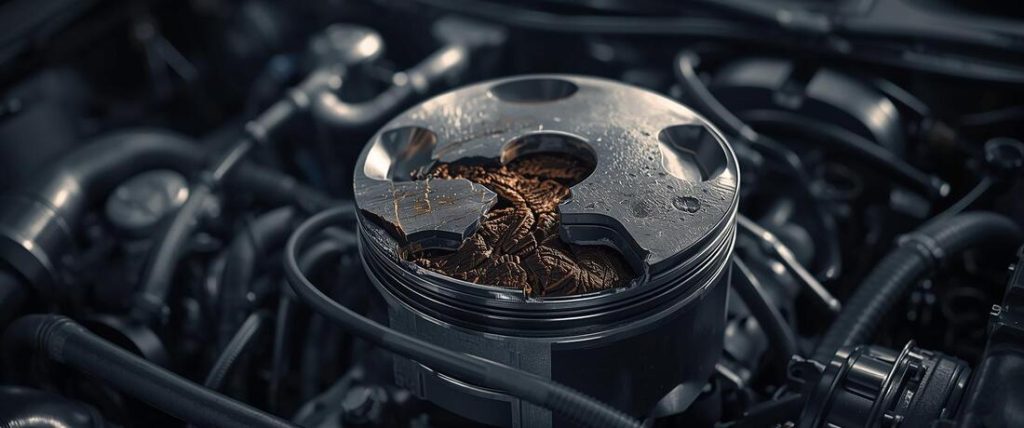
| Shattered / Fragmented | Piston broken into pieces. | Timing belt failure. |
| Scuffed / Scored Skirt | Deep scratches on sides. | Low oil, debris. |
| Cracked Crown | Crack across the top. | Heat cycling, detonation. |
| Ring Land Failure | Grooves holding rings break. | Age, over-revving. |
Each type produces different symptoms. The diagnostic tests can tell you which one happened.
9 Symptoms of a Bad Piston
These symptoms warn you that the piston or rings are failing.
1. Piston Slap — The Most Distinctive Bad Piston Sound
Piston slap is a hollow knocking sound caused by the piston rocking in the cylinder.
It happens when the clearance between the piston and the wall is too big. The piston tips and slaps the side of the cylinder. This is a very specific sound.
Cold vs. Warm Rule:
| Piston Slap Pattern | What It Means | Urgency |
|---|---|---|
| Loud on cold start; clears when warm. | Normal wear. | 🟡 Moderate. |
| Loud on cold start; stays when warm. | Significant wear. | 🔴 High. |
| Present at all temperatures. | Severe damage. | 🔴 Critical. |
Real-world scenario: You start your car on a cold morning. You hear a rhythmic “tak-tak-tak” noise. It goes away after two minutes. This is piston slap. If it stays, the piston is too small for the hole.
Urgency: 🔴 High if it persists when warm.
2. Blue or Grey Exhaust Smoke — Oil Burning in the Combustion Chamber
Blue smoke means oil is burning inside the combustion chamber.
This is a sign that the piston rings are bad. The rings cannot seal the oil out. Oil leaks into the fire and burns. You will smell burning oil.
Exhaust Color Guide:
| Color | What’s Burning | Primary Suspect |
|---|---|---|
| Blue / Grey | Engine oil. | Piston rings or piston skirt. |
| White (Sweet smell) | Coolant. | Head gasket. |
| Black | Too much fuel. | Fuel system issue. |
Urgency: 🔴 High. This damages the catalytic converter.
3. Excessive Oil Consumption — Filling Up Between Changes
You have to add oil constantly between scheduled changes.
The piston rings should scrape oil off the walls. When they fail, oil burns up. The level drops. Normal engines use less than one quart per 3,000 miles. If you use a quart every 1,000 miles, you have a problem.
Urgency: 🟡 Moderate to High. Low oil kills the engine.
4. Engine Misfires — Especially on One Specific Cylinder
A misfire code that won’t go away often points to a piston problem.
The piston cannot build compression. The spark plug fires, but the fuel does not burn right. The engine shakes. The computer sets a code like P0301 or P0302. This code tells you which cylinder is bad. If you have changed the plugs and coils but the code stays, check the piston. We have a guide on symptoms of bad spark plugs to help you rule them out first.
Urgency: 🔴 High. Misfires hurt the catalytic converter.
5. Loss of Compression and Engine Power
The car feels slow and weak.
The piston must squeeze the air and fuel. If the seal is broken, pressure leaks out. The engine loses power. You press the gas, but the car struggles. A compression test will show the pressure is low.
Urgency: 🔴 High. The engine is not running efficiently.
6. Engine Knocking — Connecting Rod Noise From a Failing Piston
A deep knock from the bottom of the engine is very serious.
This sound is different from piston slap. It is deeper and louder. It means the piston damage has hurt the connecting rod bearing. The rod is loose on the crankshaft.
Urgency: 🔴 Critical. Stop driving immediately.
7. Crankcase Blowby and the Oil Filler Cap Test
Pressure builds up inside the engine crankcase.
The piston rings should seal the explosion above. If they fail, pressure blows past the piston into the oil pan. This is “blowby.”
The Oil Cap Test:
- Start the engine.
- Open the oil filler cap.
- If smoke puffs out or the cap blows off, you have severe blowby.
- This confirms piston ring failure.
Urgency: 🔴 High. The engine is breathing from the wrong places.
8. Oily Air Filter or Oil in the Intake Manifold — and the Fire Hazard You Need to Know About
Finding oil in your air filter is a major red flag.
Pressure builds in the crankcase. The PCV valve cannot handle it. Oil vapor is forced into the intake hose. It coats the air filter and intake manifold.
Warning: This is a fire hazard. Oil in the intake can ignite.
Urgency: 🔴 High. Do not ignore this.
9. Check Engine Light With Misfire or Compression Codes
The computer knows something is wrong.
You will see a Check Engine Light. Codes will point to a misfire. You might also see lean or rich codes. The computer tries to fix the mix, but it fails.
Urgency: 🟡 Moderate. Scan the codes.
Symptom Severity Table
Use this table to decide if you can drive.
| Symptom | Failure Stage | Urgency | Can You Drive? |
|---|---|---|---|
| Piston slap (clears warm) | Early wear. | 🟡 Moderate | Yes. Monitor. |
| Piston slap (persists warm) | Significant wear. | 🔴 High | Short distance only. |
| Blue smoke | Ring/skirt failure. | 🔴 High | Short distance. |
| Oil consumption | Ring failure. | 🟡 High | Yes. Check oil often. |
| Misfire | Compression loss. | 🔴 High | Short distance. |
| Loss of power | Structural failure. | 🔴 High | Shop only. |
| Engine knock | Rod damage. | 🔴 Critical | No. Tow it. |
| Blowby | Ring failure. | 🔴 High | No. |
| Oil in intake | Blowby. | 🔴 High | No. Fire risk. |
Bad Piston vs. Bad Piston Rings vs. Bad Head Gasket vs. Bad Valve Seals — Diagnostic Guide
You must identify the right part before spending money.
| Symptom | Bad Piston | Bad Rings | Blown Head Gasket | Bad Valve Seals |
|---|---|---|---|---|
| Blue smoke | ✅ Yes. | ✅ Yes. | ❌ No. | ✅ Yes. |
| White smoke | ⚠️ If cracked. | ❌ No. | ✅ Yes. | ❌ No. |
| Piston slap | ✅ Yes. | ⚠️ Possible. | ❌ No. | ❌ No. |
| Oil consumption | ✅ Yes. | ✅ Yes. | ❌ No (Coolant loss). | ✅ Yes. |
| Overheating | ⚠️ Possible. | ❌ No. | ✅ Yes. | ❌ No. |
| Low comp (1 cyl) | ✅ Yes. | ✅ Yes. | ⚠️ Possible. | ❌ No. |
| Low comp (2 adj cyl) | ❌ No. | ❌ No. | ✅ Yes. | ❌ No. |
Key Distinction: Blue smoke at cold start that clears often means valve seals. Blue smoke all the time means rings or piston. Piston slap sound means the piston body is loose. If you suspect the head gasket, read our guide on symptoms of a blown head gasket to compare.
The Interference Engine Risk — How a Timing Belt Failure Shatters Pistons
A broken timing belt can destroy your pistons instantly.
An interference engine has valves that open into the piston’s path. They must not touch. The timing belt keeps them dancing around each other. If the belt breaks, they crash.
The piston slams into the open valves. The piston shatters. The valves bend. This is why timing belt service is critical. RepairPal notes that this repair is often one of the most expensive.
Prevention: Change the timing belt on time. A belt costs a few hundred dollars. A shattered piston costs thousands.
How to Diagnose a Bad Piston at Home — Three Tests in Order
You can find the problem without taking the engine apart.
Step 1 — Compression Test (First Confirmation)
This measures pressure in the cylinder.
- Warm up the engine.
- Remove all spark plugs.
- Screw the gauge into a plug hole.
- Crank the engine.
- Read the gauge.
Results:
- Normal: 125–175 psi.
- Bad: One cylinder is much lower than the others.
- Zero: Piston or valve is broken.
Step 2 — Leakdown Test (Pinpoints the Leak Location)
This uses air pressure to find the leak.
- Put the cylinder at Top Dead Center.
- Connect the air hose.
- Listen for air.
Where Air Escapes:
- Oil filler/dipstick: Bad rings or piston.
- Radiator: Head gasket.
- Tailpipe: Exhaust valve.
- Intake: Intake valve.
Step 3 — Borescope Inspection (Visual Confirmation)
This is a camera you stick in the spark plug hole.
You can see the piston top. Look for holes, cracks, or scoring on the walls. This confirms the damage type. AutoZone often rents these tools.
What Causes a Piston to Go Bad?
Pistons fail because of other problems.
- Detonation: Bad fuel or timing makes the fuel explode too early. It cracks the piston.
- Low Oil: Metal rubs on metal. The piston scores and seizes.
- Overheating: The piston expands too much. It hits the wall.
- Timing Belt Failure: Valves hit the piston.
- Debris: Dirt gets in the cylinder. It scratches the piston.
Is It Worth Fixing a Bad Piston? The Cost Decision
Repair costs vary based on damage.
| Repair Scenario | Cost | When It Makes Sense |
|---|---|---|
| Ring replacement | $800 – $2,500. | Piston is good. |
| Single piston | $1,500 – $3,500. | Caught early. |
| Multiple pistons | $3,000 – $6,000+. | Major damage. |
| Engine rebuild | $4,000 – $8,000. | Full restoration. |
| Used engine | $3,000 – $7,000. | Cheaper than rebuild. |
Decision: If the repair costs more than half the car’s value, consider a different car.
Can You Drive With a Bad Piston?
You should not drive with a bad piston.
- Slap (cold only): Drive to a shop soon.
- Blue smoke: Drive only to the shop.
- Misfire: Drive short distances only.
- Knock: Do not drive. Tow the car.
- Oil in intake: Do not drive. Fire risk.
FAQs About Symptoms of a Bad Piston
What is the difference between bad piston rings and a bad piston?
Bad rings cause smoke and oil use. A bad piston body causes noise (slap) and low compression. A leakdown test separates them. Air leaking into the crankcase means rings or piston skirt. A borescope sees if the piston is cracked.
How much does piston replacement cost?
It ranges from $1,500 to over $8,000. It depends on how many pistons are bad. It also depends on if the cylinder walls are scored. Get a full estimate before you agree to the work.
What causes a piston to go bad?
The main causes are detonation, low oil, and overheating. A broken timing belt is another cause in interference engines. Most pistons fail because the owner skipped maintenance.
How do I confirm a bad piston without disassembling the engine?
Do a compression test. Then do a leakdown test. Finally, use a borescope camera. These three tests show the damage without opening the block.
What is an interference engine?
It is an engine where the valves and pistons share the same space. They move at different times. If the timing breaks, they crash. This destroys the piston and valves.
Bottom Line
A bad piston is a serious issue. It starts with a noise or a puff of smoke. It ends with a tow truck. Listen to your engine. If you hear a hollow knock that doesn’t stop, test it. Do not wait for the knock to turn into a crash. Use the three tests. Find the bad cylinder. Fix it before the damage spreads. A piston repair is expensive, but a new engine is worse.
Quick Summary
- Piston slap is a hollow knock that signals wear.
- Blue smoke means oil is burning past the rings.
- Low compression causes misfires and power loss.
- Use a compression and leakdown test to confirm.
- Oil in the intake is a fire hazard.
- Do not drive if you hear a deep engine knock.
- Most piston failures are caused by poor maintenance.