
This article was updated in March 13, 2026 with new products and information by Mark S. Taylor
Your brake pedal felt perfectly firm this morning. Now it takes an extra inch of travel to slow down, and at the last red light, you felt it slowly creep toward the floor while you held it. The brake master cylinder is the single most safety-critical hydraulic component in your vehicle, and a failing one does not give you a second warning. The symptoms of a bad brake master cylinder often look like brake booster failure, ABS issues, or air in the lines, so you must know how to tell them apart. We will cover 8 clear symptoms, a free engine-off pump test, and a table to distinguish the master cylinder from the booster.

Contents
- 1 What Does the Brake Master Cylinder Do? (60-Second Explainer)
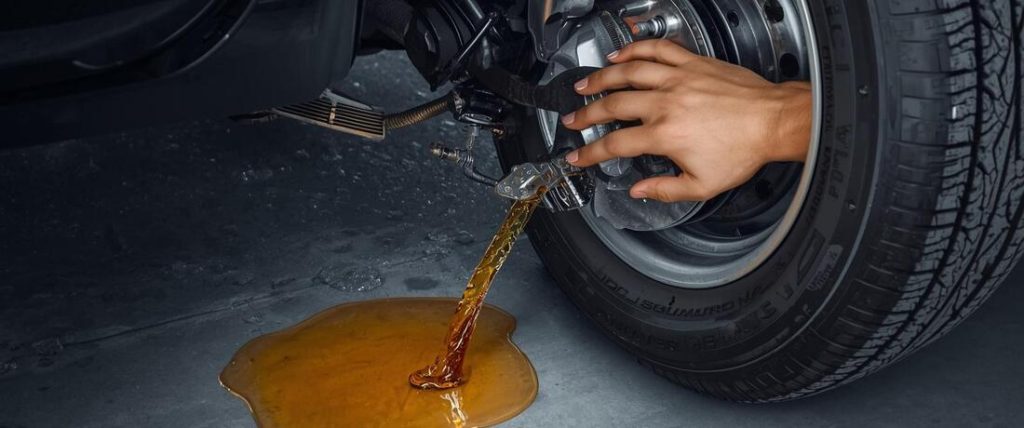
- 2 How the Tandem Master Cylinder Protects You — and What Happens When Half of It Fails
- 3 8 Symptoms of a Bad Brake Master Cylinder
- 3.1 1. Spongy, Soft, or Mushy Brake Pedal — The Most Recognized Sign
- 3.2 2. Brake Pedal Slowly Sinks or Creeps to the Floor While Held
- 3.3 3. The Free Engine-Off Pump Test — Confirm Master Cylinder vs. Booster in 60 Seconds
- 3.4 4. Brake Fluid Leaking Near the Firewall or Under the Dash
- 3.5 5. Brake Warning Light or ABS Light Illuminated
- 3.6 6. Car Pulls to One Side When Braking
- 3.7 7. Brakes That Stick On or Drag — The Blocked Compensation Port Symptom
- 3.8 8. Dark, Cloudy, or Contaminated Brake Fluid
- 4 Master Cylinder vs. Brake Booster — Complete Disambiguation
- 5 Master Cylinder vs. Other Brake Components — Narrowing the Cause
- 6 What Causes Brake Master Cylinder Failure?
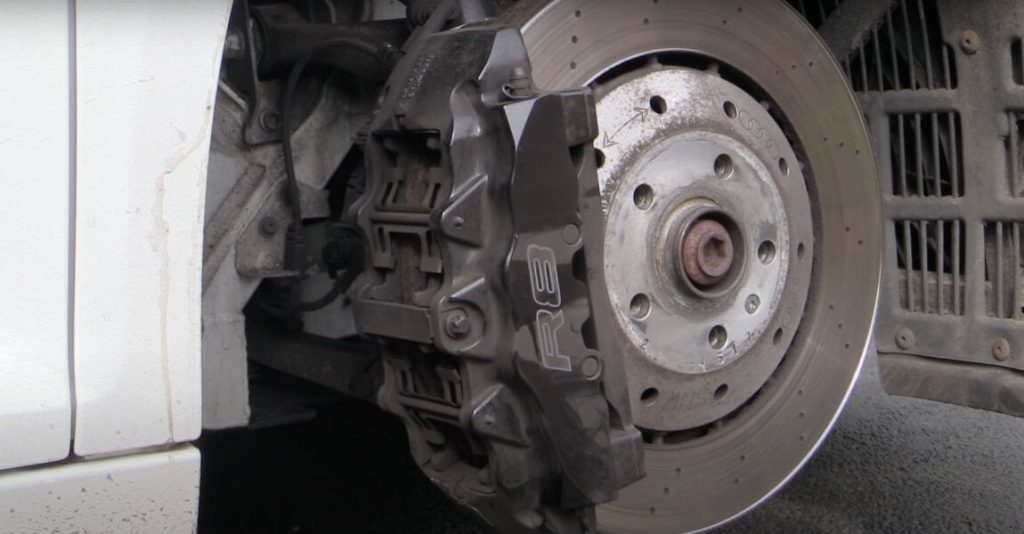
- 7 Is It Safe to Drive With a Bad Brake Master Cylinder?
- 8 Brake Master Cylinder Replacement Cost
- 9 Rebuild vs. Replace — Which Is Right?
- 10 How to Prevent Brake Master Cylinder Failure
- 11 FAQs About Symptoms of a Bad Brake Master Cylinder
- 11.1 How do I know if it’s the brake master cylinder or the brake booster?
- 11.2 How much does brake master cylinder replacement cost?
- 11.3 How often should brake fluid be changed to prevent master cylinder failure?
- 11.4 What is a tandem master cylinder and why does it matter?
- 11.5 Can a bad master cylinder damage other brake components?
- 12 Bottom Line — What to Do Right Now
What Does the Brake Master Cylinder Do? (60-Second Explainer)
The brake master cylinder turns the force from your foot into hydraulic pressure. It acts as a pump that pushes brake fluid through the lines to the calipers at each wheel.
- Tandem Design: Every modern car uses a “tandem” master cylinder. It has two pistons inside. Each piston controls a separate brake circuit.
- Safety: This design is a legal safety requirement. If one circuit fails, the other still works. You get partial braking instead of none.
- Location: Look on the firewall in the engine bay. It sits right in front of the driver’s seat. It connects to the brake pedal lever inside the car.

How the Tandem Master Cylinder Protects You — and What Happens When Half of It Fails
Federal law requires two independent brake circuits. This prevents total brake failure if one line breaks. However, losing half your braking is still dangerous.
| Scenario | What You Experience | Safe to Drive? |
|---|---|---|
| Both circuits working | Normal firm pedal, full braking. | ✅ Yes |
| Front circuit fails | Long pedal travel; reduced stopping power. | 🚨 No — stopping distance doubled. |
| Rear circuit fails | Pedal feels lower; slight pull possible. | ❌ Not recommended. |
| Both circuits fail | Pedal goes to floor; no braking. | 🚨 Stop immediately. |
A failure in one circuit increases your stopping distance by 40% to 70%. This is why any symptom is a safety emergency.
8 Symptoms of a Bad Brake Master Cylinder
1. Spongy, Soft, or Mushy Brake Pedal — The Most Recognized Sign
A healthy pedal feels firm, like pressing a solid wall. A soft or spongy pedal means you are losing hydraulic pressure.
- The Cause: The internal cup seals wear out. Fluid bypasses the piston and flows back into the reservoir instead of going to the wheels.
- Air vs. Seal Failure: If you pump the pedal and it firms up, then gets soft again, the master cylinder is bypassing. If a mechanic bleeds the brakes and it stays firm for weeks, it was just air in the lines.
- Moisture: Old fluid absorbs water. Water creates vapor pockets when hot. Vapor compresses, making the pedal feel soft.
2. Brake Pedal Slowly Sinks or Creeps to the Floor While Held
This is the most specific sign of a bad master cylinder. Press the pedal firmly and hold it. It should stay right there.
- The Symptom: The pedal reaches a spot, then slowly sinks toward the floor over 5 to 15 seconds.
- The Danger: At a red light, the pressure drops. The brakes partially release. The car might creep into traffic.
- Distinction: A bad brake booster makes the pedal feel hard. A sinking pedal is almost always the master cylinder. This requires immediate repair.
3. The Free Engine-Off Pump Test — Confirm Master Cylinder vs. Booster in 60 Seconds
Use this test to separate a booster problem from a master cylinder problem. It takes one minute.
- Deplete Vacuum: Turn the engine off. Pump the brake pedal 5 to 8 times. Wait until it feels hard.
- Hold Pedal: Press the pedal down with medium pressure. Keep your foot there.
- Start Engine: While holding the pedal, start the engine.
- Watch the Pedal:
- Pedal sinks slightly then holds firm: The booster is working. This is normal.
- Pedal sinks to the floor: The master cylinder is bad. It has internal bypass.
- Pedal does not move: The booster is not providing assist. Check the booster.
4. Brake Fluid Leaking Near the Firewall or Under the Dash
External leaks are easy to spot if you know where to look. The master cylinder bolts through the firewall.
- Inside the Car: Pull back the carpet under the brake pedal. Look for wet spots. The fluid may drip onto your feet.
- Engine Bay: Look at the firewall behind the engine. Check for wet streaks on the metal body or the brake booster.
- The Cascade Effect: If fluid leaks into the brake booster, it ruins the booster’s rubber diaphragm. You will need to replace both parts. This adds hundreds to the bill.
5. Brake Warning Light or ABS Light Illuminated
Your dashboard lights are often the first alert.
Red Brake Light: This usually means low fluid. The master cylinder might be leaking externally.
ABS Light: This yellow light means the ABS computer sees a problem. A failing master cylinder can cause pressure faults that trigger this light.
Action: Check the fluid level first. If it is low, find the leak. Do not just add fluid and ignore the light.
6. Car Pulls to One Side When Braking
The master cylinder has two circuits. If one fails, the pressure to the left and right wheels can differ.
- The Feel: The car pulls to one side every time you brake.
- Distinction: A stuck caliper usually pulls harder the longer you drive. A master cylinder issue causes consistent pulling on every stop.
- Check Hoses: A soft brake hose can also cause pulling. Inspect the hoses for bulges.
7. Brakes That Stick On or Drag — The Blocked Compensation Port Symptom
Sometimes the brakes refuse to let go. This happens when the return port inside the cylinder gets blocked.
- The Symptom: The car feels slow. It acts like the parking brake is on. You might smell burning brakes.
- The Cause: Contaminated fluid swells the seals. This blocks the tiny port that lets fluid return to the reservoir.
- The Result: Pressure stays trapped in the lines. The rotors overheat and warp. A cheap repair turns into an expensive brake job.
8. Dark, Cloudy, or Contaminated Brake Fluid
Fresh brake fluid is clear or light amber. Look at the reservoir.
- Dark Fluid: This is rubber debris from wearing seals. It acts like sandpaper inside the cylinder.
- Cloudy Fluid: This is water saturation.
- ABS Risk: Debris from a bad master cylinder can flow into the ABS modulator. The modulator has tiny valves. Debris destroys them. This adds $500 to $1,500 to the repair cost.
Master Cylinder vs. Brake Booster — Complete Disambiguation
These parts sit next to each other. Their symptoms can seem similar. Use this table to tell them apart.
| Symptom | Master Cylinder | Brake Booster |
|---|---|---|
| Pedal sinks while held | ✅ Primary indicator | ❌ Not typical |
| Pedal feels hard | ❌ Not typical | ✅ Primary indicator |
| Hissing sound when braking | ❌ No | ✅ Vacuum leak |
| Fluid on booster body | ✅ Master is leaking | ⚠️ Booster diaphragm failing |
| Engine stalls when braking | ❌ No | ✅ Vacuum leak |
| Pedal firms up when engine starts | ❌ No | ✅ Booster is working |
Key Rule: A hard pedal is usually the booster. A sinking pedal is usually the master cylinder.
Master Cylinder vs. Other Brake Components — Narrowing the Cause
Is it the master cylinder or something else? Check this comparison.
| Symptom | Master Cylinder | Stuck Caliper | Air in Lines |
|---|---|---|---|
| Pedal creeps to floor | ✅ Primary | ❌ No | ❌ No |
| Pulls to one side | ✅ Pressure imbalance | ✅ Yes — drag | ❌ No |
| Brakes stick/drag | ✅ Blocked port | ✅ Primary cause | ❌ No |
| Fluid near firewall | ✅ Master leak | ❌ No | ❌ No |
| Burning smell | ⚠️ If port blocked | ✅ Yes | ❌ No |
What Causes Brake Master Cylinder Failure?
1. Brake Fluid Contamination
Brake fluid absorbs water from the air. This is called being “hygroscopic.” Water causes rust inside the cylinder. Rust pits the metal bore. The seals cannot hold pressure against a rough surface. This is the number one cause of failure.
2. Normal Seal Wear
The seals rub against the metal bore every time you stop. In city traffic, this happens hundreds of times an hour. They eventually wear out. Most last 80,000 to 150,000 miles with clean fluid.
3. Wrong Brake Fluid Type
Never use DOT 5 silicone fluid in a car that asks for DOT 3 or DOT 4. It swells the rubber seals instantly. This ruins the system. Always check the cap for the right type.
4. Extended Operation With Low Fluid
Driving with low fluid pushes the pistons too far. They travel into a part of the cylinder bore that is not used normally. This area might be rusty or rough. It scratches the new seals if you try to rebuild it.
Is It Safe to Drive With a Bad Brake Master Cylinder?
No. It is not safe. Any confirmed symptom is an emergency.
| Symptom | Safe to Drive? | Action |
|---|---|---|
| Slightly spongy pedal | ⚠️ Short distance only | Drive to shop slowly. |
| Pedal sinks while held | ❌ Not recommended | Dangerous. Book same day. |
| Brake warning light on | ❌ Not recommended | Check fluid; book immediately. |
| Pedal goes to floor | 🚨 Stop immediately | Do not drive. Call a tow. |
Unlike a bad suspension or a symptoms of a bad flywheel issue, brake failure can be life-threatening. Do not wait.
Brake Master Cylinder Replacement Cost
Here are the estimated costs for the US market.
| Service | Estimated US Cost |
|---|---|
| Master Cylinder (Parts) | $35 – $450 (OEM costs more) |
| Labor | $140 – $350 (1–3 hours) |
| Total Replacement | $350 – $950 |
| RepairPal Average | $586 – $721 |
| Brake Fluid Flush | $15 – $35 (fluid cost) |
Note: If fluid leaked into the booster, add $200 to $800 for a new booster. If debris reached the ABS module, costs can exceed $1,500.
Rebuild vs. Replace — Which Is Right?
Most mechanics recommend replacing the unit rather than rebuilding it.
| Condition | Rebuild? | Replace? |
|---|---|---|
| Low mileage, clean bore | ✅ Yes | ✅ Also valid |
| Dark fluid history | ❌ Bore likely corroded | ✅ Preferred |
| Aluminum bore (modern cars) | ⚠️ Risky | ✅ Strongly preferred |
| Fluid leaked into booster | ❌ Replace both | ✅ Replace both |
A rebuild kit costs $15 to $50. A new unit costs $35 to $200. The small savings are not worth the risk of a failed repair on a safety item.
How to Prevent Brake Master Cylinder Failure
- Flush Fluid: Change brake fluid every 2 to 3 years. This removes water before it causes rust.
- Check Color: Look at the reservoir monthly. Dark fluid means you need a flush now.
- Use Correct Fluid: Only use the DOT type listed on your cap.
- Fix Leaks Fast: Low fluid ruins the cylinder bore.
- Act Early: A soft pedal is a warning. Fixing it early costs hundreds. Waiting until it fails costs thousands.
FAQs About Symptoms of a Bad Brake Master Cylinder
How do I know if it’s the brake master cylinder or the brake booster?
Do the engine-off pump test. Pump the pedal until it is hard with the engine off. Hold the pedal and start the engine. If the pedal sinks slightly and holds, the booster is good. If the pedal sinks to the floor, the master cylinder is bad. If the pedal does not move at all, the booster is bad.
How much does brake master cylinder replacement cost?
The average cost is between $350 and $950. Parts range from $35 to $450. Labor takes 1 to 3 hours. If the brake booster is also damaged by fluid, the total cost can rise to $700 to $1,800.
How often should brake fluid be changed to prevent master cylinder failure?
You should change brake fluid every 2 to 3 years or every 24,000 miles. Old fluid absorbs water. Water causes internal rust and seal damage. Regular flushing is the best way to make the master cylinder last.
What is a tandem master cylinder and why does it matter?
A tandem master cylinder has two separate pistons inside. Each piston controls half the braking system. If one brake line breaks, the other piston still works. This prevents total brake failure. It is a standard safety feature in all modern cars.
Can a bad master cylinder damage other brake components?
Yes, it can. If fluid leaks into the brake booster, it ruins the booster diaphragm. If debris from worn seals flows into the ABS module, it can clog the valves. This leads to very expensive repairs.
Bottom Line — What to Do Right Now
- Soft Pedal: Check the fluid level. Run the engine-off pump test. Book an inspection soon.
- Sinking Pedal: This is dangerous. Do not drive on the highway. Get it fixed today.
- Warning Light: Check fluid immediately. Do not ignore it.
- Pulling: Check wheel temperatures. If they are even, suspect the master cylinder.
- Drag/Burning: Check for a blocked port. Get a fluid flush.
- Fluid on Booster: You likely need both the master cylinder and the booster replaced.
Golden Rule: A fluid flush costs $80 to $150. A master cylinder repair costs $350 to $950. A crash costs much more. Maintain your fluid to stay safe.
Quick Summary
- The brake master cylinder creates the hydraulic pressure to stop your car.
- A sinking pedal is the most specific sign of internal seal failure.
- Use the “Engine-Off Pump Test” to distinguish the master cylinder from the booster.
- Dark or cloudy fluid indicates contamination that ruins the cylinder.
- Leaks inside the car or on the firewall point to the master cylinder.
- Never drive if the pedal sinks to the floor; call a tow truck.
- Replace the unit rather than rebuilding it for better safety.
- Flush brake fluid every 2 years to prevent failure.