
This article was updated in March 17, 2026 with new products and information by Mark S. Taylor
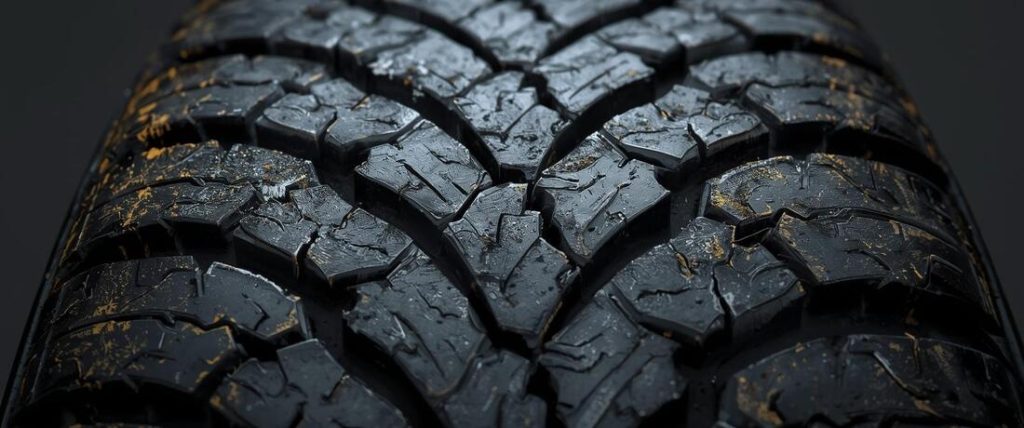
You ran your hand across your tire and felt it — little scooped-out dips in the tread, like someone took an ice cream scoop to the rubber. That’s tire cupping, also called scalloping, and it means your tires aren’t staying firmly on the road. This wear pattern is never a tire defect; it is a vehicle problem the tire is showing you, and new tires on the same unrepaired vehicle will cup the same way within months. At 50% shock absorber efficiency, research shows stopping distances increase by 23%, meaning cupping isn’t just about noise and rough rides—it’s a safety risk. We will cover the 7 causes, a location guide, noise disambiguation, and the repair sequence.
Contents
- 1 What Is Tire Cupping? (30-Second Visual Description)
- 2 Cupping vs. Feathering — Know Which You Have
- 3 ⚡ Cupping Location Guide — Narrow the Cause Before Calling a Shop
- 4 7 Causes of Tire Cupping
- 5 Cupped Tire Noise vs. Wheel Bearing Noise — Critical Disambiguation
- 6 What Road-Force Balancing Is and When You Need It
- 7 The Repair Sequence — Do This in the Right Order
- 8 Is It Safe to Drive on Cupped Tires?
- 9 Tire Cupping Repair and Prevention Cost
- 10 How to Prevent Tire Cupping
- 11 FAQs About What Causes Tire Cupping
- 12 Bottom Line — What to Do Right Now
What Is Tire Cupping? (30-Second Visual Description)
Tire cupping is a pattern of uneven wear that looks like scooped-out dips around the tire’s edge. These dips are usually 3–4 inches wide. They look like someone removed parts of the tread with a melon baller.
People also call this “tire scalloping.” The worn spots look like the edge of a scallop shell. Here is how it forms. The tire briefly loses contact with the road when it bounces. When it slams back down, that hard impact grinds away the rubber at that specific spot. This repeats every time the tire bounces. Over time, it creates a series of scoops around the tire.
The key point to remember is that the tire is the victim, not the cause. The cupping pattern tells you that something upstream—like the suspension, balance, or wheel—is causing the tire to bounce uncontrollably.

Cupping vs. Feathering — Know Which You Have
You must distinguish between cupping and feathering because they have very different causes. Cupping comes from bouncing, while feathering comes from side-scrubbing.
Here is a quick comparison to help you tell them apart.
| Feature | Tire Cupping | Feathering (Heel-Toe Wear) |
|---|---|---|
| What it looks like | Round scooped-out divots, 3–4 inches across | Tread blocks worn on one side, sharp on the other (sawtooth) |
| How it feels | Bumpy, irregular dips around the tire | Sharp on one edge, smooth on the other |
| Primary cause | Bouncing (worn shocks, imbalance) | Side-scrubbing (toe misalignment) |
| Sound it makes | Rhythmic growling/grinding increasing with speed | Similar sawtooth noise but more directional |
| Affected tires | Often rear tires; sometimes all four | Often front tires; linked to alignment |
If you slide your hand across the tread blocks, feathering feels like a sawtooth. Cupping feels like a washboard. If you suspect alignment issues, check our guide on inner tire wear causes for more details on alignment wear patterns.
⚡ Cupping Location Guide — Narrow the Cause Before Calling a Shop
Where the cupping appears on the tread tells you a lot about the root cause. You can save time and money by checking the location first.
Use this guide to narrow down the issue before you visit a mechanic.
| Cupping Location | Most Likely Cause | First Check |
|---|---|---|
| Random scoops across full tread width | Worn shock absorbers or struts | Bounce test; shock inspection |
| Center tread cupping | Tire imbalance; wheel bearing failure | Tire balance check; road-force balance |
| Inside edge cupping | Alignment (negative camber) + worn shocks | Alignment check; suspension inspection |
| Outside edge cupping | Alignment (positive camber) + worn shocks | Alignment check |
| Only one tire cupping | Bent rim; failed shock on that corner | Road-force balance; shock test |
| Both rear tires on a FWD vehicle | Rear shocks worn; rear springs sagging | Rear shock inspection; rear alignment |
| Diagonal/random pattern on one side | Internal tire belt separation | Replace tire — internal defect |

7 Causes of Tire Cupping
1. Worn Shock Absorbers or Struts — The #1 Cause
Worn shock absorbers are the single most common cause of tire cupping. Major tire manufacturers like Goodyear and Bridgestone confirm this.
Why do shocks cause cupping? Here is the plain English explanation. Every road has small bumps. Your suspension springs compress on each bump and then rebound. The shock absorber’s job is to control that rebound. It dampens the spring so it settles in one movement. When shocks wear out, they lose their hydraulic damping power. The spring bounces back, the tire flies up, loses contact, and slams back down hard. That hard slam at the same points on the tire grinds away the rubber.
Safety data highlights the risk. Research from the Cologne Institute for Traffic Safety found that shocks at just 50% efficiency increase stopping distance by 23%. That is about 21 extra feet to stop at 31 mph.
Most shocks last 50,000–80,000 miles. Many drivers wait longer because the wear happens slowly. You can do a free diagnostic check. Push down hard on each corner of your car and release. If it bounces more than twice, the shocks are worn.
Fix cost: Shock absorbers cost $200–$600 per pair installed. Struts cost $450–$1,200 per pair installed. You must get a 4-wheel alignment after strut replacement. For more signs of suspension trouble, read our article on signs of car suspension issues.
2. Unbalanced Tires or Wheels
Tire imbalance is the second most common cause of cupping and the cheapest to fix. Even a tiny 0.25-ounce imbalance creates vibration. This vibration makes the tire lift and slam repeatedly as it spins.
This happens most at highway speeds. Where does imbalance come from? Wheels lose balance weights over time from potholes or car washes. Mud, ice, or debris on the inner wheel can also throw off the balance. Sometimes, new tires are not balanced correctly during installation.
Imbalance cupping usually appears in the center of the tread. Shock-related cupping tends to be random and across the full width. Specialist shops like Atlantic Motorcar confirm that tire balancing is sensitive down to 1 gram. That is the weight of a paper clip. Losing one weight triggers measurable cupping over time.
Fix cost: Tire balancing costs $15–$25 per tire. This is the cheapest fix. Do this first before replacing any parts.
3. Bent or Damaged Rim
A bent wheel rim causes the tire to wobble or hop on every rotation. This condition is called runout. The tire no longer spins in a perfect circle.
There are two types of runout. Radial runout means the rim is out-of-round. The tire moves up and down, causing cupping. Lateral runout means the rim wobbles side-to-side. This causes shimmy but can also wear the tire.
Potholes are the most common cause. A hard hit can bend the inner rim flange. You cannot see this bend without taking the wheel off. A standard balance might miss this issue. You need a “road-force balance.” This test uses a roller to press against the tire. It simulates the road pressing on the wheel. It finds bends that standard balancing misses.
If cupping appears on only one tire, suspect a bent rim. Request a road-force balance for that wheel.
Fix cost: Rim straightening costs $75–$150 if repairable. Rim replacement costs $150–$500 or more.
4. Worn Control Arm Bushings or Ball Joints
Worn bushings or ball joints allow the wheel to move in uncontrolled ways. The wheel “hops” slightly on rough surfaces instead of tracking smoothly.
This micro-hopping creates the same bouncing action as worn shocks. The tire loses and regains contact, creating scalloped wear. A loose ball joint also changes the wheel’s alignment angle during bumps. The tire scrubs the road at an angle instead of rolling straight. This causes both cupping and edge wear.
Often, bushings and shocks are worn at the same time on high-mileage cars. The combination of bouncing and wheel play accelerates cupping.
To check this, a mechanic will lift the car. They will grab the tire at 12 and 6 o’clock to rock it. Vertical play means a worn ball joint. Rocking at 9 and 3 o’clock shows horizontal play, which indicates worn tie rods.
Fix cost: Control arm bushing replacement costs $100–$300 per bushing. Full control arm replacement costs $200–$600 installed.
5. Wheel Misalignment
Wheel misalignment causes the tire to scrub the road at an angle rather than rolling straight. This usually causes feathering or one-sided wear, but it can contribute to cupping too.
Specifically, negative camber (tire leaning inward) and toe-out (tires pointing outward) create scrubbing forces. If you combine bad alignment with worn shocks, you get severe cupping. The Goodyear tire cupping guide confirms that misalignment puts uneven strain on the tire.
It is important to distinguish the patterns. True cupping—random scoops—is almost always shocks or balance issues. Feathering and sawtooth patterns are alignment issues. If you see both, you likely have both problems.
Fix cost: A 4-wheel alignment costs $75–$150. You must do this after fixing worn suspension parts. If you are noticing other handling quirks, like if your car jumps when accelerating, it is wise to check the entire drivetrain and suspension.
6. Low-Quality or Wrong Tires
Cheap or soft tires are much more likely to cup than high-quality tires. This is an overlooked cause. Cheap tires often have fewer steel belt plies and lower tension. The tread compound is softer.
When the tire bounces even slightly, the softer tread deforms more at the impact point. It develops cups faster than a stiffer, quality tire. Aggressive tread designs, like all-terrain or mud-terrain tires, are also vulnerable. Their large, independent tread blocks hit the road with high pressure. Without continuous tread support, they deform easily.
If you have fixed your shocks and balanced your wheels but still see cupping, check your tire quality. Upgrading to a mid-grade or premium tire from a major brand like Michelin or Bridgestone can help.
The rule of thumb is simple: The cheapest tires on the market will cup faster on an imperfect suspension.
7. Neglected Tire Rotation
Tires that are not rotated regularly develop position-specific wear patterns. The constant loading on one corner can concentrate wear forces.
Rear tires on front-wheel-drive (FWD) cars are very prone to this. FWD rear tires carry less weight and no drive load. The rear suspension is often stiffer. As rear shocks wear, the lighter rear tires bounce more freely. Many FWD cars also have slight negative rear camber. The combination leads to rear tire cupping.
Rotation interval: You should rotate tires every 5,000–7,500 miles. If you have a history of cupping, do it every 4,000 miles.
Will rotation fix cupping? Mild cupping can even out if you rotate the tires and fix the root cause. Severe cupping with noise and vibration cannot be fixed by rotation. You must replace the tire.
Cupped Tire Noise vs. Wheel Bearing Noise — Critical Disambiguation
These two problems sound almost identical, but diagnosing them wrong costs you money. A bad wheel bearing sounds like a growl, just like a cupped tire.
Here is how to tell them apart.
| Feature | Cupped Tire Noise | Bad Wheel Bearing Noise |
|---|---|---|
| Sound type | Rhythmic growling, grinding, thumping | Steady growling, rumbling, low howl |
| Speed relationship | Increases with speed; rhythmic pulsing | Increases smoothly with speed |
| Turning test | Does NOT change significantly when turning | Changes pitch or intensity when turning |
| Which side is louder? | Hard to isolate | Gets louder when turning away from bad bearing |
| Tire swap test | Noise moves with the tire | Noise stays at the same corner |
| Visual check | Visible scoops in tread | No tread abnormality; possible wheel play |
Use the free turning test. At highway speed, safely weave slightly left and right in your lane. If the noise changes intensity as you shift weight, it is likely a wheel bearing. The noise gets louder when you turn away from the bad bearing. If the noise stays the same, suspect tire cupping.
What Road-Force Balancing Is and When You Need It
Road-force balancing detects problems that standard balancing misses. Standard balancing spins the wheel in the air. It finds heavy spots. It does not show how the tire acts under the pressure of the road.
Road-force balancing uses a large roller. This roller presses against the spinning tire. It simulates the weight of the car. It can detect:
- Bent rims (radial runout).
- Tire non-uniformity (one side stiffer than the other).
- Subtle belt separation.
Request this service if:
- Standard balance does not fix the vibration.
- Cupping is on only one tire.
- A new tire vibrates after standard balance.
Cost: This costs $20–$50 per wheel. It is worth it to save a bent rim or diagnose a tricky vibration.
The Repair Sequence — Do This in the Right Order
Fixing cupping in the wrong order wastes your money. Follow this sequence to fix the problem efficiently.
- Bounce test + visual inspection: This is free. It finds the most common cause first.
- Tire balance: This costs $15–$50 per tire. It is the cheapest mechanical fix.
- Replace worn shocks/struts: This is the most common cause. Do this before buying new tires.
- Inspect/replace suspension parts: Fix ball joints, bushings, or bent rims.
- Wheel alignment: This costs $75–$150. It is only accurate after you fix the suspension.
- Rotate tires: See if mild cupping evens out.
- Replace tires: Do this last. New tires will cup again if you skip steps 1–5.
Is It Safe to Drive on Cupped Tires?
It depends on the severity, but cupping reduces your safety. Each cupped dip is an area that does not touch the road. This reduces grip.
| Severity | Safe? | Action |
|---|---|---|
| Light cupping (barely visible, no noise) | ✅ Short term | Fix root cause; rotate tires; monitor. |
| Moderate cupping (some noise at speed) | ⚠️ Caution | Reduced wet traction; fix root cause this week. |
| Severe cupping (loud noise, vibration) | ❌ Not recommended | Compromised traction; fix immediately. |
| Deep scoops (visible cords/cracks) | 🚨 Stop driving | Blowout risk; replace tire immediately. |
Remember, worn shocks reduce stopping efficiency by 23%. Combined with cupped tires on wet roads, your stopping distance increases significantly.
Tire Cupping Repair and Prevention Cost
Here are the estimated costs for fixing and preventing tire cupping in the US.
| Service | Estimated US Cost |
|---|---|
| Tire balance (per tire) | $15 – $25 |
| Road-force balance (per tire) | $20 – $50 |
| Tire rotation (4 tires) | $0 – $30 |
| 4-wheel alignment | $75 – $150 |
| Shock absorbers (pair, installed) | $200 – $600 |
| Struts (pair, installed) | $450 – $1,200 |
| Ball joint (per joint, installed) | $150 – $400 |
| New tire (mid-range) | $100 – $250 per tire |
| Full suspension service + alignment | $800 – $2,000+ |
How to Prevent Tire Cupping
Preventing cupping is cheaper than fixing it. Follow these steps to keep your tires smooth.
- Rotate tires every 5,000–7,500 miles. Do it more often if you have had rear cupping before.
- Balance tires every other rotation. Do it immediately after hitting a pothole.
- Replace shocks at 50,000–80,000 miles. Do not wait for the bounce. Cupping starts before you feel it.
- Annual alignment check. Do this after any pothole hit.
- Check tire pressure monthly. Correct inflation reduces stress.
- Choose quality tires. Premium tires resist cupping longer.
- Check after a collision. Get a road-force balance after hitting a curb.
FAQs About What Causes Tire Cupping
Do worn shocks cause tire cupping?
Yes, worn shocks are the single most common cause of tire cupping. When shocks fail, the tire bounces uncontrollably. The repeated impact grinds the rubber into scoops. Shocks at 50% efficiency increase stopping distance by 23%, making this a safety issue.
Why are only my rear tires cupping?
Rear tires on FWD vehicles often cup because they carry less weight. The rear suspension is stiffer. As rear shocks wear, the lighter rear wheels bounce more freely. Many FWD cars also have negative rear camber. This combination creates perfect conditions for rear cupping. Replace rear shocks and rotate tires more often.
Will tire rotation fix cupping?
Rotation helps distribute mild wear, but it cannot reverse existing cupping. If the dips are deep, the tire must be replaced. You must also fix the root cause, like worn shocks, or the new tires will cup too.
How is tire cupping different from feathering?
Cupping creates round dips from bouncing. Feathering creates sawtooth edges from alignment issues. Cupping feels bumpy around the circumference. Feathering feels sharp when you rub your hand sideways across the tread.
How much does it cost to fix tire cupping?
A tire balance costs $15–$25. Shocks cost $200–$600 per pair. New tires cost $100–$250 each. The total depends on the cause. Fixing the suspension first is the best way to save money.
Bottom Line — What to Do Right Now
Follow this action guide based on your specific situation.
- Car bounces + cupped tires: Your shocks are bad. Replace them first. Then balance and align.
- Steering wheel vibrates + cupped tires: Try a tire balance first. If that fails, get a road-force balance.
- Only one tire cupping: Check for a bent rim or a failed shock on that corner.
- Rear tires cupping on FWD car: Check rear shocks and alignment.
- Growling noise: Do the turning test. If the noise changes, check the wheel bearing. If it stays the same, check the tires.
Golden rule: Never buy new tires without fixing what caused the cupping. Shocks last 50,000–80,000 miles. Tires last 40,000–70,000 miles. If you replace tires on worn shocks, the new set will ruin quickly. Fix the shocks first.
Quick Summary:
- Tire cupping is scalloped wear caused by the tire bouncing on the road.
- Worn shock absorbers and struts are the #1 cause of cupping.
- Other causes include imbalanced wheels, bent rims, and worn suspension parts.
- Cupping on the rear tires of FWD cars is common due to lighter loads.
- You can distinguish cupping from feathering by the scoop shape versus sawtooth edges.
- Do not replace tires until you fix the suspension issue causing the bounce.
- Regular rotation and shock replacement prevent cupping.