
This article was updated in April 21, 2026 with new products and information by Mark S. Taylor
When your oil pressure warning light flashes on, your stomach drops. And for good reason — low oil pressure is one of the most serious alerts your car can give you. Ignore it, and you could be looking at thousands of dollars in engine damage. But not every oil pressure light means catastrophic failure. Sometimes it’s a $15 sensor. Sometimes it’s an empty oil level. Sometimes it’s something worse. This guide explains every low oil pressure symptoms, every cause, and exactly what to do — so you can act fast and smart.

🚨 EMERGENCY FIRST: What to Do If Your Oil Pressure Light Comes On
Don’t panic — but don’t ignore it either.
- Pull over safely as soon as possible.
- Turn off the engine immediately.
- Check your oil level with the dipstick.
- If oil is low — add the correct oil and see if the light clears.
- If oil is full but light stays on — do not restart and drive. Call a tow.
Contents
- 1 What Is Oil Pressure and Why Does It Matter?
- 2 6 Symptoms of Low Oil Pressure
- 3 Is It Real Low Pressure or a Bad Sensor?
- 4 7 Common Causes of Low Oil Pressure
- 5 Bonus Cause — Faulty Oil Pressure Sensor
- 6 Oil Pressure Repair Cost Summary
- 7 Oil Pressure at Different RPMs — What Each Pattern Means
- 8 How to Test Your Oil Pressure at Home
- 9 FAQs About Low Oil Pressure Symptoms & Causes
- 10 Bottom Line — Verdict
What Is Oil Pressure and Why Does It Matter?
The oil pump pushes oil through narrow passages to lubricate engine parts. It sends oil to the crankshaft, camshaft, and bearings. Pressure is what ensures oil actually reaches every component. Without pressure, oil can’t coat the parts. Metal grinds on metal. This causes overheating and engine failure. A normal range is usually 25–65 PSI. This changes based on your vehicle and RPM.
6 Symptoms of Low Oil Pressure
1. Oil Pressure Warning Light or Gauge Reading Low
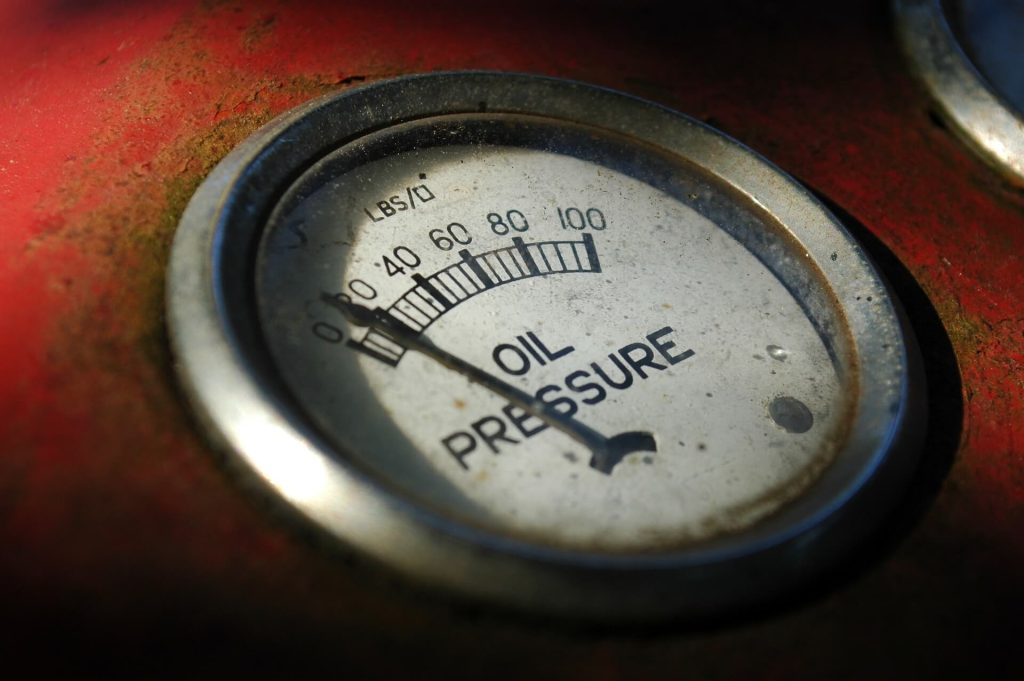
The oil can icon on your dashboard is the most obvious sign. Most modern cars have this dedicated light. It triggers when pressure drops below a safe minimum. This is typically under 10 PSI. If you have a gauge, look at it. A reading below 20 PSI at idle is a serious concern. An oil pressure light on means you should stop the engine immediately. Do not wait to see what happens next.
2. Engine Knocking, Ticking, or Clattering
Low pressure means oil cannot coat bearings and moving parts. This lack of lubrication causes metal-on-metal contact. You will hear sounds like knocking, ticking, or clattering. Hydraulic lifters rattle when they cannot pump up with oil. Knocking while driving usually means damage is actively occurring. This sound means the vital parts of your engine are grinding together.
3. Burning Oil Smell
A burning oil smell often signals a leak. The oil drips onto hot engine surfaces. It can also indicate oil burning inside the combustion chamber. If you smell this and see the pressure light, the urgency is high. The smell means oil is escaping the system where it should be. It is hitting hot parts and burning away.
4. Engine Overheating
Oil does not just lubricate; it carries heat away from moving parts. Low pressure means less oil circulates through the engine. This leads to more engine heat. Watch your temperature gauge. If it creeps toward the red zone while the oil light is on, pull over now. The engine cannot cool itself properly without good oil flow.
5. Loss of Engine Power, Stalling, or Poor Acceleration
Increased friction from oil starvation forces the engine to work harder. It has to push against parts that are dry and grinding. This results in sluggish throttle response. You might feel a loss of power or a rough idle. It can also show as reduced fuel economy. The engine loses power because it is fighting internal friction.
6. Blue or Gray Exhaust Smoke
Oil leaking into the combustion chamber will burn. This creates blue or gray smoke. It indicates a more advanced problem. You might have worn piston rings or failing seals. It can also mean the oil level is severely low. Blue smoke means oil is burning inside the engine itself. This can damage the catalytic converter if left unaddressed.

Is It Real Low Pressure or a Bad Sensor?
This is the most important diagnosis question. Your oil pressure light can come on for two very different reasons. You need to know which one it is.
| Scenario | What It Means | What to Do |
|---|---|---|
| Light on + engine knocking | Real low pressure — serious | Stop engine immediately |
| Light on + no noise + oil level full | Possibly a bad sensor | Test with mechanical gauge |
| Light flickering + engine runs fine | Likely faulty sensor | Schedule inspection soon |
| Light on + cold start only | Normal for 1–2 seconds | Watch if it clears |
How to tell for sure. The best way is to install a mechanical oil pressure gauge. You can buy one for $20–40 at any auto parts store. Screw it into the sensor port. If it reads 25–65 PSI normally while the dashboard shows low, your sensor is the culprit. It is not your oil system.
7 Common Causes of Low Oil Pressure
1. Low Oil Level (Most Common)
The engine needs a certain amount of oil to run. If there is not enough oil in the sump, the pump cannot maintain pressure. This is caused by missed oil changes or slow leaks. The engine might also be burning oil. Fix: Check the dipstick and top up with the correct grade oil. This costs between $5 and $20 for a quart of oil.
2. Wrong Oil Viscosity
Oil must be the right thickness for your engine. Oil that is too thin creates insufficient resistance. This leads to lower pressure. Oil that is too thick is hard to pump. The engine cannot circulate it at startup, especially in cold weather. Always use the manufacturer-specified grade. Look for numbers like 5W-30 or 0W-20 in your manual. The fix is a drain and refill, costing $50–$100.
3. Oil Leak (External or Internal)
Oil can leak out of the engine in two ways. External leaks are visible. You will see oil under the car or on wet gaskets. Internal leaks happen when oil burns via worn piston rings. Common leak points include the valve cover gasket and the oil pan. Fix: Replace the gasket or seal. This can cost anywhere from $100 to over $800 depending on the location.
4. Clogged Oil Filter
The filter keeps dirt out of the oil. A dirty or long-overdue filter restricts oil flow. This restriction causes pressure to drop. Most filters have a bypass valve. When the filter is fully clogged, this valve opens. It sends unfiltered oil to the engine to save it from starvation. Fix: Get a new oil filter and an oil change. This service usually costs $30–$75.
5. Failing or Worn Oil Pump
The oil pump is the heart of the system. It does not create pressure by itself. It circulates oil, and the resistance creates pressure. A worn pump cannot move enough oil. It cannot maintain proper pressure. Signs include low pressure at all RPMs. You might hear knocking even after adding oil. Fix: Oil pump replacement. This is a big job. It costs $400–$1,200 for parts and labor.
6. Worn Engine Bearings (High-Mileage Engines)
Bearings create controlled gaps where oil pressure builds. As bearings wear out, these gaps get wider. The oil flows through them too quickly. The pressure drops because the oil escapes easily. This is typical in engines with over 150,000 miles. It often happens if oil changes were inconsistent. Fix: Bearing replacement. This requires major engine work. It costs between $3,000 and $6,000+.
7. Clogged Oil Pickup Tube Screen
The pickup tube sits in the oil pan. It feeds oil to the pump. Sludge buildup can clog this screen. This happens if you do not change your oil often. The oil level might read fine on the dipstick. But the pump gets starved because it cannot suck the sludge through. Fix: Drop the oil pan and clean or replace the screen. This costs $200–$600.
Bonus Cause — Faulty Oil Pressure Sensor
The sensor itself can fail. It might send a false low-pressure reading to the computer. The light might flicker or come on at idle only. It might stay on even if the oil level is good. Verify the issue with a mechanical gauge before replacing the pump. If the gauge reads fine, just replace the sensor. Fix: Sensor replacement. This is a quick fix that costs $100–$250 total.
Oil Pressure Repair Cost Summary
Fixing low oil pressure can be cheap or very expensive. It depends entirely on the cause. Here is a breakdown of the costs.
| Cause | DIY / Shop Fix | Estimated Cost |
|---|---|---|
| Low oil level | Add correct oil | $5–$20 |
| Wrong viscosity | Oil change with correct grade | $50–$100 |
| Clogged oil filter | Filter + oil change | $30–$75 |
| Oil leak (minor) | Gasket/seal replacement | $100–$400 |
| Faulty oil pressure sensor | Sensor replacement | $100–$250 |
| Oil pickup tube cleaning | Drop pan, clean screen | $200–$600 |
| Oil pump replacement | Engine work required | $400–$1,200 |
| Worn engine bearings | Major engine rebuild | $3,000–$6,000+ |
⚠️ Key stat: Even 30 seconds of driving with critically low actual oil pressure can cause bearing damage. Repairing that damage costs $3,000–$8,000. A tow truck ($100–$200) is always cheaper than a destroyed engine.
Oil Pressure at Different RPMs — What Each Pattern Means
Pay attention to when the light comes on. The pattern of the pressure reading tells a story. It helps you diagnose the problem.
| Pattern | What It Suggests | Urgency |
|---|---|---|
| Low at idle, normal at high RPM | Worn bearings or weak pump | 🟠 Diagnose within 1–2 days |
| Low at all RPMs | Oil pump failure or severe blockage | 🔴 Stop driving now |
| Normal when cold, drops when warm | Oil thinning, wrong viscosity, or worn bearings | 🟠 Diagnose soon |
| Flickering/intermittent | Bad oil pressure sensor (likely) | 🟡 Test and inspect |
| Light on, oil level full, no noise | Faulty sensor (possible) | 🟡 Verify with mechanical gauge |

How to Test Your Oil Pressure at Home
You can test your oil pressure yourself. You do not need to rely only on the dashboard light.
What you need: A mechanical oil pressure gauge kit. You can buy one for $20–$40 at AutoZone or Amazon.
Steps to test:
- Locate your oil pressure sensor. It is usually near the oil filter or on the cylinder head.
- Remove the sensor. Make sure the engine is cold and off.
- Thread in the mechanical gauge adapter.
- Start the engine. Only do this if the oil level is adequate.
- Record the pressure at idle and at 2,000 RPM.
What to look for:
- Idle: You should see at least 10–20 PSI.
- 2,000 RPM: You should see 40–60 PSI.
The verdict:
- If the mechanical gauge reads normal, your sensor is bad. Your oil system is fine.
- If the mechanical gauge reads low, you have a real oil pressure problem. Stop the engine and call a mechanic. You can learn more about symptoms of a bad oil pump to see if this fits your situation.
FAQs About Low Oil Pressure Symptoms & Causes
What is the most common cause for low oil pressure?
The most common cause is simply a low oil level. If the oil is too low, the pump cannot build pressure. This often happens if you have an oil leak or burn oil.
What can I do to fix low oil pressure?
First, check the oil level. If it is low, add oil. If the level is fine, check for leaks. If there are no leaks, you might have a bad sensor. If you have a signs your car needs an oil change issue, change the oil immediately.
Will topping up oil fix low oil pressure?
It depends on the cause. If the pressure is low because the oil level is low, yes. Topping it up will fix it. If the pump is broken or the engine is worn, adding oil will not fix the pressure.
How expensive is it to fix low oil pressure?
It ranges from $20 (for adding oil) to $6,000 (for a rebuild). Most sensor or pump issues cost a few hundred dollars. Engine bearing damage is the most expensive to fix.
What is the normal oil pressure PSI for a car?
A normal range is usually 25 to 65 PSI. At idle, it might drop to 10 to 20 PSI. When driving fast (higher RPM), it should be higher, around 40 to 60 PSI.
Bottom Line — Verdict
Low oil pressure is never something to shrug off. The warning light is your engine’s loudest cry for help. The best case is a $15 sensor swap. The worst case is a $6,000 engine rebuild. The difference between those two outcomes is how fast you react. Pull over. Turn it off. Check the oil. If the light stays on after a top-up, don’t drive it. Tow it. A few hundred dollars in diagnosis today could save you an engine tomorrow. If you are unsure about what does the oil pressure light mean, always err on the side of caution.
Quick Summary
- Warning Light: A steady light means stop the car immediately.
- Listen: Knocking or ticking noises means real damage is happening.
- Check Level: Low oil is the most common cause of low pressure.
- Sensor vs. Real: Use a mechanical gauge to test if the sensor is lying.
- Costs: Repairs range from $20 to $6,000 depending on the part.
- Act Fast: Driving with low pressure ruins bearings in seconds.
- Tow It: If the light stays on with full oil, call a tow truck.