
This article was updated in May 1, 2026 with new products and information by Mark S. Taylor
You are driving down the highway. You need to slow down, so you press the brake pedal. Suddenly, your steering wheel starts to shake violently. It feels like the front end of your car is having a seizure. This is not just annoying. It is a major safety warning.
In my years of working on cars, I have seen this issue hundreds of times. Most drivers ignore it until their brakes fail. Do not make that mistake. This article will show you exactly how to spot a warped brake rotor. We will cover the symptoms of a warped brake rotor, the causes, and how to fix it fast.
Contents
Quick Answer
The most common symptom of a warped brake rotor is a vibrating steering wheel or shaking brake pedal when you slow down. You may also hear a scraping noise or feel the pedal pulsate under your foot. This happens because the rotor surface is uneven, causing the brake pads to grip inconsistently.
What is a Warped Brake Rotor?
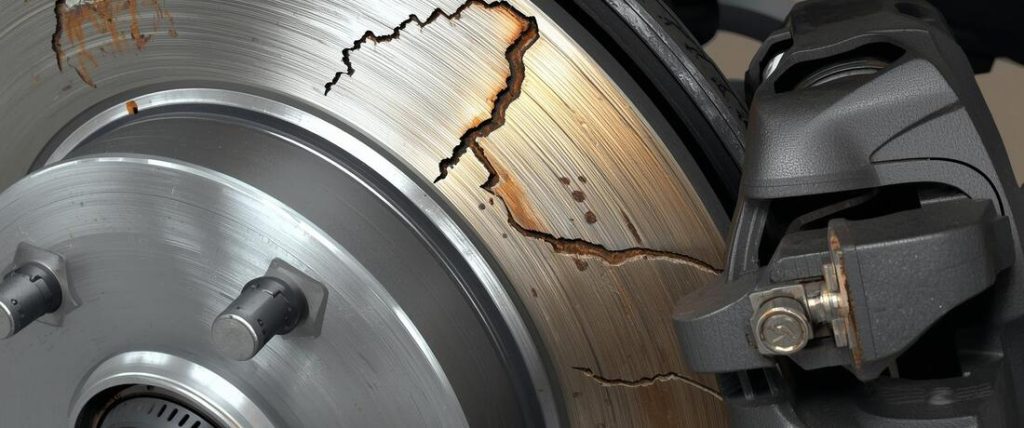
A warped brake rotor is exactly what it sounds like. The metal disc behind your wheel is no longer perfectly flat. Brake rotors spin with your wheels. When you stop, the brake pads clamp down on them to create friction. This friction stops the car.
If the rotor is warped, the surface has high spots and low spots. The pads cannot grab evenly. This causes the shaking you feel. It is usually caused by extreme heat stress. When the rotor gets too hot and cools down too quickly, the metal actually bends.
Top 5 Symptoms of a Warped Brake Rotor
You need to spot the problem early. This saves you money and keeps you safe. Look for these five warning signs.
1. Steering Wheel Vibration
This is the number one sign. You will feel a shake in the steering wheel only when you brake.
- Low speeds: A slight wiggle.
- High speeds: The wheel shakes violently back and forth.
- Location: Usually means your front rotors are warped.
2. Brake Pedal Pulsation
Sometimes the steering wheel is fine, but the pedal feels weird. You press the brake, and the pedal pushes back against your foot. It feels like a rapid throbbing or pulsing sensation. This is the brake pads skipping over the warped high spots on the rotor.
3. Whole Car Shake
If the shaking is not just in the steering wheel but you feel it in your seat or the whole chassis, your rear rotors might be the issue. Front rotor problems usually go to the steering wheel. Rear rotor problems often shake the whole car.
4. Scoring or Scratch Marks
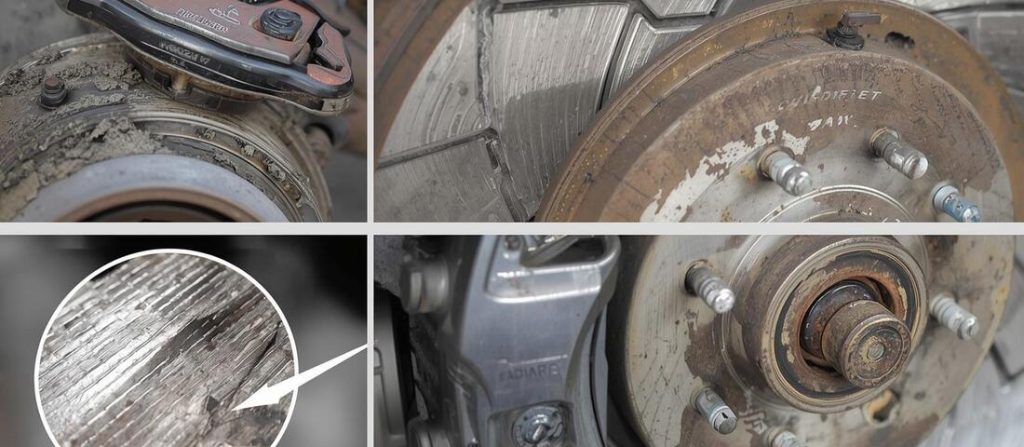
You cannot always see a warp with your eyes. But you can often see the damage it causes. Look through your wheel spokes at the rotor surface.
- Do you see deep grooves?
- Are there scratch marks looking like rings?
- This means the rotor is uneven and wearing down your pads fast.
5. ABS Light Turns On
Newer cars have sensors everywhere. If the wheel speed fluctuates due to a warped rotor, the ABS computer might get confused. It might think you are skidding and trigger the warning light.
Why Do Brake Rotors Warp?
Understanding the cause helps you prevent it. It is not just “bad luck.” It is usually driving habits or installation errors.
Excessive Heat
This is the big one. Brakes convert motion into heat. If you ride your brakes or stop from high speeds constantly, the rotors glow red hot. If they then hit a puddle of cold water, they warp instantly.
Worn Brake Pads
Brake pads are cheap. Rotors are expensive. If you let your pads wear down to the metal, the metal digs into the rotor. This creates deep grooves and heat buildup that warps the disc.
Over-Tightened Lug Nuts
This shocks most people. Using an impact wrench to tighten your lug nuts can warp rotors.
- If the nuts are too tight, they squeeze the rotor unevenly.
- This creates “lateral runout,” which is a fancy word for a wobble.
Poor Quality Metal
Cheap parts are cheap for a reason. Some aftermarket rotors are made from low-grade metal. They cannot handle the heat and will warp much faster than high-quality or OEM parts.
How to Diagnose Warped Rotors (Step-by-Step)
You do not need a fancy shop to check this. You can do a basic inspection at home.
Tools needed:
- Jack and jack stands
- Wheel lug wrench
- Flashlight
The Process:
- Secure the car: Park on a flat surface. Engage the parking brake.
- Lift the vehicle: Use the jack to lift the corner of the car you suspect. Secure it on jack stands. Never work under a car on just a jack.
- Remove the wheel: Take the tire off to expose the brake rotor.
- Visual inspection: Look at the surface. Is it shiny and smooth? Or dull and scratched?
- The touch test (Careful): Do not touch immediately after driving if the car is hot. Run your fingernail gently along the surface. Do you feel ridges?
- Spin check: Spin the rotor by hand. Watch the gap between the rotor and the brake caliper. Does it stay the same, or does it get wide and narrow? If it wobbles, it is warped.

Risks of Driving with Bad Rotors
Can you still drive the car? Yes. Should you? No. Here is why:
- Longer Stopping Distance: Your brakes are not gripping 100%. It will take longer to stop.
- Loss of Control: If the steering wheel shakes violently at highway speeds, you could lose control.
- Damage to Other Parts: A bad rotor will destroy your new brake pads in a few days. It can also damage calipers and wheel bearings.
Can You Fix a Warped Rotor?
Yes, but it depends on the thickness.
Resurfacing (Machining)
A mechanic puts the rotor on a lathe. This machine shaves off a thin layer of metal to make the surface flat again.
- Pros: Cheaper than buying new.
- Cons: The rotor gets thinner. If it is already near the minimum thickness, you cannot do this.
Replacement
If the rotor is too thin or cracked, you must buy a new one.
- Cost: Usually $100-$300 per axle depending on the car.
- Difficulty: Medium DIY job.
Common Mistakes (⭐)
- Ignoring the shake: Many drivers think it is just a tire balance issue. If it only happens when braking, it is the rotors.
- Changing pads only: Putting new pads on a warped rotor is a waste of money. The new pads will wear out instantly.
- Using cheap pads: Semi-metallic pads last longer but can be hard on rotors. Ceramic pads are gentler and stop better.
Pro Tips (⭐)
- Bed-in new pads: When you install new rotors or pads, you must “bed them in.” This means driving and stopping gently for the first 200 miles. It transfers material evenly and prevents warping.
- Torque the lug nuts: Always use a torque wrench. Hand-tighten them in a star pattern. Do not use an impact wrench on the final setting.
- Check runout: If you are handy, buy a dial indicator. It measures the wobble (runout) precisely.
FAQs About Symptoms of a Warped Brake Rotor
How do I know if my rotors are warped or my tires are bad?
Pay attention to when the shake happens. If the car shakes all the time at high speeds, it is likely a tire balance issue. If it shakes only when you press the brake pedal, it is a warped rotor.
Can I fix a warped rotor without replacing it?
Yes, sometimes. If the rotor is thick enough, a mechanic can machine it (resurface it) to make it flat again. However, if it is too thin or cracked, you must replace it.
Is it safe to drive with a warped rotor?
It is not safe. Your car will take longer to stop. The vibration can also damage other suspension parts and cause you to lose control of the steering wheel during emergency braking.
What causes brake rotors to warp so fast?
The main cause is extreme heat followed by rapid cooling. Riding your brakes down a long hill or hitting a puddle after hard braking warps them. Also, overtightened lug nuts are a very common cause.
How much does it cost to fix a warped brake rotor?
If you can do it yourself, parts cost about $50-$100 per axle. At a shop, including labor, expect to pay between $200 and $400 per axle for a full replacement.
Conclusion
A warped brake rotor is a loud and clear signal from your car. It tells you that your braking system is under stress. Do not ignore the shake in the steering wheel. Check your rotors immediately. Whether you choose to resurface them or replace them, fixing this issue restores your stopping power. It ensures you keep control of your car when it matters most. Safe driving starts with good brakes.
Quick Summary
- Shaking steering wheel when braking is the main sign.
- Pulsating brake pedal means the rotor surface is uneven.
- Overheating is the primary cause of warping.
- Do not just change pads; you must fix or replace the rotor too.
- Use a torque wrench to prevent future warping.
- Check thickness before deciding to resurface or replace.
- Safety first; warped brakes increase stopping distance significantly.