
This article was updated in June 6, 2026 with new products and information by Mark S. Taylor
That first tap of the brake pedal after a storm hits, and your car sounds like it’s screaming at you. Your heart jumps. You check the mirror to see if smoke is pouring from the wheels. Nothing. You brake again — same noise, maybe a little quieter. By the third stop, it’s gone, and you’re left wondering if you just imagined the whole thing.
You didn’t. Brake squeal after rain is one of the most common noises I hear in the shop, and 95% of the time it’s completely harmless. The trick is knowing which 5% isn’t. Here’s how to tell the difference without spending a dime.
Contents
- 1 What Brake Squeal After Rain Actually Is
- 2 Symptoms: Normal vs. Something Wrong
- 3 The Real Causes (Beyond “It’s Just Rust”)
- 4 How to Diagnose It Yourself (The 3-Stop Rule)
- 5 Can You Drive With It?
- 6 What It Costs If It’s Not Normal
- 7 DIY vs. Mechanic: Which Route?
- 8 How to Prevent It
- 9 FAQs About Brake Squeal After Rain?
- 9.1 Why do my new brakes squeak after rain?
- 9.2 How many brake applications until the squeal should stop?
- 9.3 Can I spray something on my rotors to prevent rust?
- 9.4 Will a car wash cause the same noise?
- 9.5 Does brake squeal after rain mean my pads are worn out?
- 9.6 Why does the noise sometimes last into the next dry day?
- 10 The Bottom Line
What Brake Squeal After Rain Actually Is
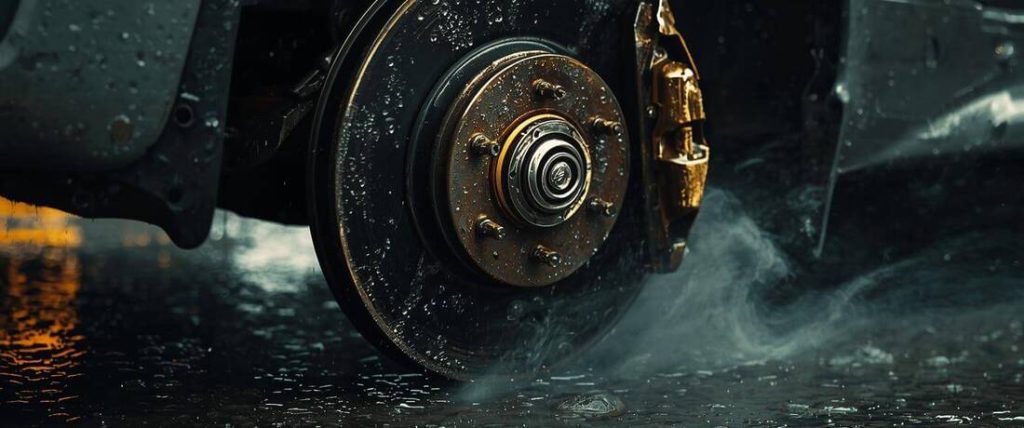
Your brake rotors are made of cast iron. Iron plus moisture plus oxygen equals rust — fast. Even a light overnight drizzle can leave a paper-thin layer of oxidation, called flash rust, across the entire braking surface. When you hit the pedal the next morning, your brake pads scrape against that rust layer like sandpaper on metal. That’s the squeal.
But it’s not just rust. Here’s what most articles miss: your brake pads leave a microscopic layer of friction material on the rotor surface as you drive. Mechanics call this the pad transfer layer or bedding. It’s what gives you smooth, quiet stops. Rain washes that layer away. The pads now contact bare metal with no bedding cushion, which changes the friction frequency and produces a high-pitched squeal even on a perfectly clean rotor.
Both effects happen at once. The good news? Both fix themselves within a few brake applications.

Symptoms: Normal vs. Something Wrong
Not every noise after rain is innocent. Use this table to sort what you’re hearing:
Table
| Noise | What It Usually Means | How Long It Lasts | Action Needed |
|---|---|---|---|
| High-pitched squeal | Surface rust or washed bedding | 1–3 stops | None — drive normally |
| Low groan or moan | Moisture in pad compound | 2–5 stops | Monitor; usually clears |
| Grinding (metal on metal) | Worn pads or debris caught | Does NOT clear after 5+ stops | Inspect immediately |
| Squeal + steering wheel vibration | Warped rotor, worsened by moisture | Persistent | Schedule service |
| Squeal only in reverse | Surface rust on inner rotor face | 1–2 stops | None — very common |
The rule of thumb: if the noise is gone after three gentle stops, you’re looking at normal rain-related squeal. If it’s still there after five, something else is going on.
The Real Causes (Beyond “It’s Just Rust”)
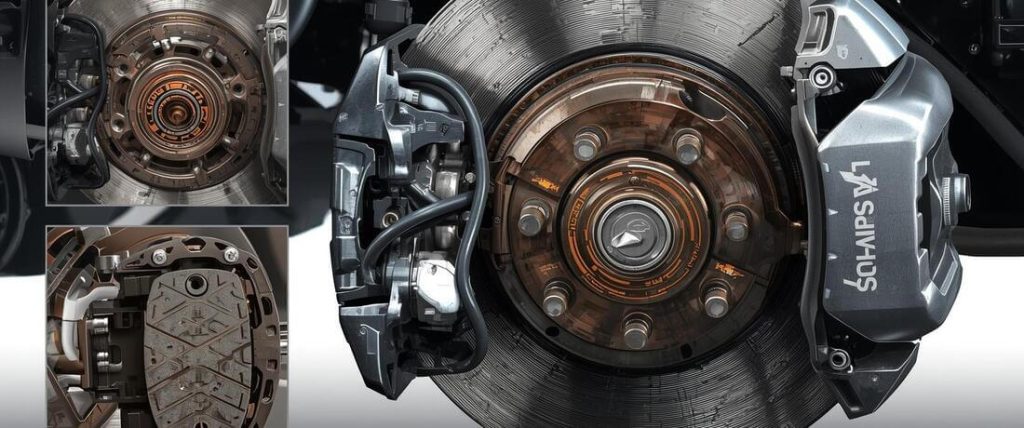
Surface rust gets all the attention, but four different things can trigger post-rain brake noise:
1. Flash rust formation. This is the big one. In humid climates, visible rust can form on a bare rotor in under eight hours. The first brake application scrubs it off in a fraction of a second. The noise is loud but meaningless.
2. Pad transfer layer wash-off. Heavy rain or driving through deep puddles strips the thin film of pad material from the rotor. The brakes feel “grabby” or noisy until the pads re-deposit that layer, which takes 10–20 moderate stops on dry pavement.
3. Debris intrusion. Rain washes road grit, sand, and small gravel into the brake assembly. A pebble trapped between pad and rotor makes a harsh grinding sound that usually clears after one hard stop.
4. Caliper slide pin binding. Moisture gets past worn caliper boots and causes the slide pins to stick. The inner pad drags constantly, so the rotor never fully dries. You get persistent squeal that worsens after rain and may include a slight pull to one side while braking.
How to Diagnose It Yourself (The 3-Stop Rule)
You don’t need to be a mechanic to figure this out. Here’s what I walk customers through on the phone:
Step 1: Find an empty road or parking lot. Roll to about 20 mph and brake gently. Listen. Is it a sharp squeal or a deep grind?
Step 2: Accelerate back to 20 mph and brake again, a little firmer this time. Count this as stop #2.
Step 3: One more moderate stop from 25 mph. By now, normal rain squeal should be 80% quieter or completely gone.
If the noise fades, you’re done. Drive to work with confidence.
If the noise is unchanged after five stops, or if you feel any vibration in the pedal or steering wheel, book an inspection. Don’t wait.
Pro tip: If the noise only happens when you’re backing out of a parking space, it’s almost always surface rust on the inner rotor face — the part that dries slowest. Totally normal.

Can You Drive With It?
Yes — if it follows the 3-stop rule. Normal rain squeal does not reduce your braking power. The rust layer is microns thick and scrubs off instantly under pad pressure. Your full friction surface is restored before you’ve traveled 100 feet.
Do not drive if:
- The grinding persists after five stops
- The brake pedal feels soft or sinks toward the floor
- The car pulls hard to one side while braking
- The brake warning light is on
Those are failure symptoms, not weather symptoms.
What It Costs If It’s Not Normal
Here’s the part no competitor tells you: most rain-related brake noise that isn’t normal is cheap to fix. You don’t need a $600 brake job.
Table
| Repair | Typical Cost | When You Need It |
|---|---|---|
| Brake pad replacement (front axle) | $150–$350 | Pads worn below 3mm or grinding persists |
| Rotor resurfacing | $40–$80 per rotor | Rotor surface is glazed but thickness is good |
| Rotor replacement | $80–$200 per rotor | Rotor is below minimum thickness or deeply scored |
| Caliper slide pin service | $50–$150 | Pins are seized or boots are torn |
| Brake hardware kit (clips, shims) | $30–$60 | Anti-rattle clips are missing or corroded |
If a shop quotes you pads, rotors, and calipers for a noise that only happens after rain, get a second opinion. You’re likely being upsold.

DIY vs. Mechanic: Which Route?
Try it yourself if: the noise is intermittent, weather-dependent, and clears within three stops. You can also do a basic pad inspection at home — remove the wheel and look through the caliper window. If the pad material looks thicker than a nickel, wear isn’t your problem.
See a mechanic if: the noise persists, you feel vibration, or you smell burning after normal driving. Also, if your car is over five years old and the brakes have never been serviced, the caliper slides are probably dry. A proper brake service — cleaning, lubricating, and inspecting — runs $100–$200 and prevents real problems.
How to Prevent It
You can’t stop rain, but you can reduce how often this happens:
- Park in a garage or carport when possible. Covered parking cuts flash rust formation by more than half.
- Avoid puddle splashes at low speed. Driving through standing water at parking-lot speeds soaks the rotors without the centrifugal drying that highway speed provides.
- Re-bed your pads after heavy rain. On a dry day, make five firm stops from 40 mph down to 10 mph with 30 seconds between each. This rebuilds the transfer layer and quiets the brakes for weeks.
- Wash your car after winter storms. Road salt accelerates corrosion on every brake component, not just the rotors.
- Consider ceramic pads at your next replacement. They transfer less material to the rotor and are less prone to moisture-induced noise than semi-metallic pads.
FAQs About Brake Squeal After Rain?
Why do my new brakes squeak after rain?
New pads are still bedding in and haven’t built a stable transfer layer yet. Rain washes away what little bedding exists, so the noise is louder and lasts longer. Give them 200–300 miles of normal driving to fully bed.
How many brake applications until the squeal should stop?
One to three for normal surface rust. Up to five if the pad transfer layer was washed off. More than five means it’s not weather-related.
Can I spray something on my rotors to prevent rust?
No — never spray lubricants, WD-40, or rust inhibitors on brake rotors. You’ll destroy braking performance. The rust is self-clearing and harmless.
Will a car wash cause the same noise?
Yes, especially if you drive slowly afterward and the rotors don’t get hot enough to dry quickly. The mechanism is identical to rain.
Does brake squeal after rain mean my pads are worn out?
Rarely. Worn pads usually squeal all the time, not just after moisture. If your pads are below 3mm of remaining material, replace them regardless of weather.
Why does the noise sometimes last into the next dry day?
The pad transfer layer takes time to rebuild. If you only make gentle stops, it can take a full day of driving to re-bed. A few firm stops from 40 mph will speed this up dramatically.
The Bottom Line
If your brakes squeal after rain and the noise is gone within three stops, you’re witnessing basic chemistry, not a breakdown. Flash rust and washed bedding are normal, self-correcting events that every car experiences.
If the noise outlasts the weather, or if you feel vibration, pulling, or a soft pedal, then it’s time to get eyes on the brakes. Most real problems are cheap if you catch them early — and now you know exactly when to worry and when to ignore it.