
This article was updated in July 7, 2026 with new products and information by Mark S. Taylor
Your car’s steering wheel feels straight, but your tires are screaming for help. If you walk out to your driveway, bend down, and slide your palm horizontally across your tire tread, you might notice something strange. It feels perfectly smooth when you slide your hand inward, but rough, sharp, and jagged when you drag it back toward you.
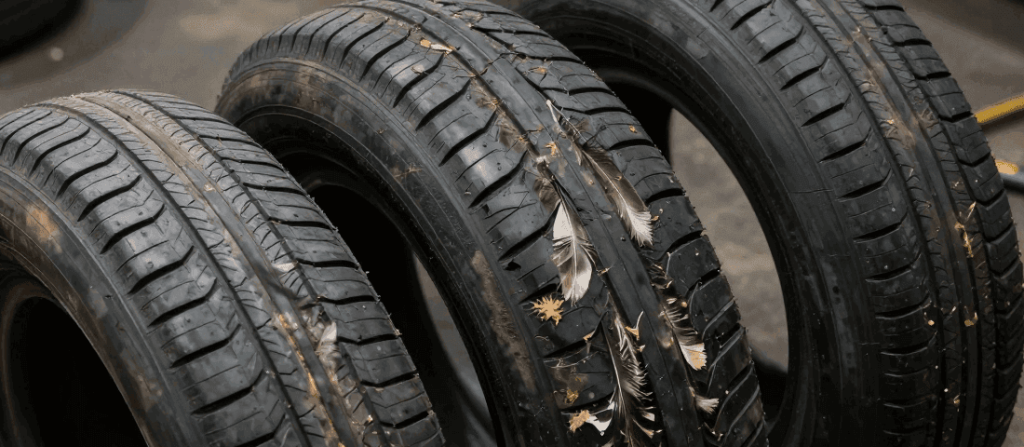
This distinct sawtooth pattern is known as feathered tire wear. It means your tires are not rolling straight down the highway. Instead, they are literally being dragged sideways across the asphalt, slicing down the rubber edges block by block.
When a truck or sedan rolls into my shop service bay with this specific complaint, the driver usually complains about a persistent, annoying hum at highway speeds or a slight vibration in the steering linkage. They often assume they just need a quick tire balance. However, feathering is never a balancing issue; it is a clear warning sign that your steering geometry is out of spec, or your front-end hard parts have developed dangerous structural play. Let’s break down exactly what causes feathered tires is happening under your car right now so you can stop the damage before it destroys a costly set of rubber.
Contents
- 1 The Primary Culprit: Incorrect Toe Alignment Explained
- 2 Worn Suspension Parts That Mimic Bad Alignment
- 3 How to Diagnose the Root Cause (The Driveway Shake Test)
- 4 “Can I Drive With It?” The Safety & Financial Reality Check
- 5 Real-World Cost Breakdown: Getting It Fixed Right
- 6 FAQs About What Causes Feathered Tires
- 6.1 Can bad shocks or struts cause feathered tire wear?
- 6.2 Will feathered tires make a humming sound like a bad wheel bearing?
- 6.3 Can I perform a toe alignment at home to fix feathering?
- 6.4 Why is my tire feathering only on the inside edge?
- 6.5 Is tire feathering covered under tire treadwear warranties?
- 7 The Verdict
The Primary Culprit: Incorrect Toe Alignment Explained
Ninety-five percent of all feathered tire wear patterns stem directly from an incorrect toe alignment setting. When a technician places your vehicle on an alignment rack, they are looking at three primary spatial measurements: caster, camber, and toe. While camber involves the vertical tilt of the wheel, toe measures the exact angle at which the front tires point inward or outward relative to the centerline of the vehicle when viewed from directly above.
- Excessive Toe-In (Pigeon-Toed): When the front edges of your tires point inward toward each other, the vehicle is running toe-in. As you drive forward down the road, the street forces the front edge of the tires apart, scrubbing the rubber across the pavement. This creates sharp, feathered edges that point directly toward the inside of the car’s body.
- Excessive Toe-Out (Duck-Footed): When the front edges of your tires point outward away from each other, the vehicle is running toe-out. As you drive, the road surface pulls the front edges inward, forcing the tires to drag outward. This creates a sawtooth edge that catches your hand when you pull it from the inside of the tire out toward the sidewall.
Even a tiny misalignment can cause severe damage. If your toe setting is off by just an eighth of an inch, it is mechanically equivalent to dragging your tire sideways down the highway for two full miles for every hundred miles you drive forward. That relentless lateral friction is what carves those distinct, uneven ramps into each individual tread section.
Worn Suspension Parts That Mimic Bad Alignment
You can take your car to the most advanced laser alignment system in town, but if your suspension or steering joints are worn out, that alignment is completely useless. Many drivers get trapped in a frustrating cycle: they pay for an alignment, yet their tires continue to feather. This happens because of the critical difference between static alignment (how the car sits stationary on the shop floor) and dynamic alignment (how the wheel positions itself under real-world driving conditions).
When your steering linkages develop physical play, your car may look perfect on the alignment rack. However, the moment you accelerate, hit a bump, or press the brake pedal, those loose joints flex under the weight of the vehicle, throwing the toe setting completely out of spec.
- Worn Outer and Inner Tie Rod Ends: Tie rods are the direct mechanical link between your steering rack and your wheel spindles. They hold your tires at the correct toe angle. When the internal ball-and-socket joints inside a tie rod end wear down or lose their protective grease, the tire is free to wiggle back and forth horizontally. This creates severe, erratic feathering.
- Failing Control Arm Bushings: Control arms connect your wheel assembly to the vehicle’s frame. They rely on heavy rubber bushings to isolate road shock. When these rubber inserts dry out, crack, or completely tear apart, the entire wheel assembly moves rearward under braking and forward under acceleration. This severe shift alters your toe alignment dynamically at highway speeds.
- Loose or Failing Wheel Bearings: If the internal steel bearings that allow your wheel hub to spin smoothly develop excessive play, the entire tire assembly tilts and wobbles on its axis. This loose movement combines camber and toe wear, creating an aggressive sawtooth profile along the inner or outer shoulder ribs.

How to Diagnose the Root Cause (The Driveway Shake Test)
When a car rolls into my bay with sawtooth wear, I don’t guess what’s wrong. I lift the vehicle and perform a physical check. You can easily complete this same diagnostic check in your home garage with basic tools to pinpoint the exact failure before a repair shop tries to upsell you on unnecessary parts.
1. Lift and Secure the Vehicle: Requires Jack and Heavy Duty Jack Stands.
Park your car on a flat concrete surface, apply the emergency parking brake, and place wheel chocks behind the rear tires. Use a floor jack to lift the front end of the vehicle until the tires clear the ground completely. Lower the vehicle safely onto heavy-duty jack stands. Never rely on a hydraulic floor jack alone to support the car’s weight while reaching under the wheel assembly.
2. Perform the 9-and-3 O’Clock Tie Rod Test: Checks for Horizontal Steering Linkage Play.
Place your hands firmly on the outer edge of the tire tread at the 9 o’clock and 3 o’clock positions. Gently but firmly wiggle the tire back and forth horizontally, pushing inward with your left hand while pulling outward with your right. If you feel a tiny click, distinct play, or mechanical movement before the steering wheel itself moves, your tie rod ends are worn out and must be replaced.
3. Perform the 12-and-6 O’Clock Bearing and Ball Joint Test: Checks for Vertical Structural Play.
Reposition your hands to the top (12 o’clock) and bottom (6 o’clock) edges of the tire. Push and pull the tire vertically on its axis. If you notice structural movement or clicking here, you are looking at a failing wheel bearing or a loose lower or upper ball joint. Have an assistant look behind the wheel with a flashlight during this test to see exactly which joint is shifting.
4. Visually Inspect the Rubber Bushings: Requires Flashlight and Mechanics Pry Bar.
Shine a bright light onto the inner control arm connections. Look for visible tearing, missing rubber chunks, or dark grease stains leaking from liquid-filled bushings. Take a small mechanics pry bar and gently leverage the control arm against the subframe. If the arm moves freely or clunks with minimal pressure, the bushings are dead.
“Can I Drive With It?” The Safety & Financial Reality Check
You can drive with feathered tires for a short period without immediate mechanical failure, but doing so is a terrible idea for both your safety and your wallet. Feathered rubber drastically compromises your car’s contact patch—the small area of tire actually touching the road surface.
Because the tread blocks are distorted into a sawtooth shape, they cannot flex or grip the asphalt evenly. This dramatically reduces your traction when cornering and lengthens your emergency stopping distances.
| Severity Tier | Physical Symptoms | Safety Risk Level | Financial Impact & Action Required |
| Mild | Barely visible; felt by hand; slight increase in road noise at 65 mph. | Low | Minimal. Get a routine $90 to $130 alignment immediately to save the tires. |
| Moderate | Clearly visible sawtooth ridges; noticeable vehicle drift or pulling; loud cabin drone. | Medium | Accelerating wear. Tires will be ruined within 3,000 miles. Requires parts replacement. |
| Severe | Chunking rubber blocks; visible steel cords; steering wheel vibration; heavy wet-weather sliding. | High (Dangerous) | Extreme danger of hydroplaning or tire blowout. Replace tires and steering linkages immediately. |
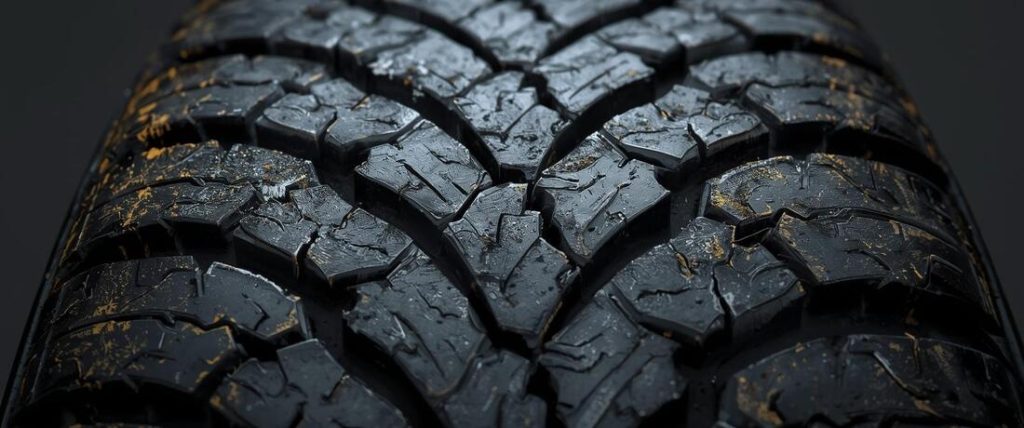
The most hidden danger of severe feathering is hydroplaning. Tire treads are engineered with precise directional channels to pump water out from underneath the tire carcass. When the blocks are distorted into a jagged sawtooth wall, they block that water flow. If you drive over standing water at 60 mph with heavily feathered tires, the tire cannot clear the water, causing it to lift off the road and glide uncontrollably across the wet surface.
Real-World Cost Breakdown: Getting It Fixed Right
The cost to fix feathered tires depends entirely on whether you caught the issue early enough to need a simple alignment, or if you ignored the warning signs until your steering linkages wore out completely. Below is a realistic breakdown of current US automotive repair market rates for parts and professional labor.
| Repair Operation | Average Part Cost | Average Shop Labor | Total Expected Cost Range |
| Four-Wheel Laser Alignment | N/A | $90 – $150 | $90 – $150 |
| Outer Tie Rod End Replacement (Single Side) | $35 – $75 | $80 – $130 | $115 – $205 |
| Front Control Arm & Bushing Assembly | $90 – $180 | $150 – $260 | $240 – $440 |
| Front Wheel Bearing Assembly | $110 – $220 | $130 – $210 | $240 – $430 |
Tech Note on Alignment Costs: If a repair shop replaces a tie rod, control arm, or steering rack, they must perform an alignment afterward. The tie rod controls toe directly, and installing a new one alters the steering geometry. Always ensure the shop includes the final alignment fee in their written estimate.
Can You Save a Feathered Tire? Prevention Tactics
If your tires have developed a severe sawtooth pattern down to the underlying steel belts, they are garbage and must be replaced immediately. However, if you catch the feathering early and correct the mechanical issue, you can often save the tire and smooth out the tread surface without spending money on new rubber.
- Rotate to a Non-Driven Axle: Once you replace the worn parts and complete a proper alignment, rotate the feathered tires to the non-driven axle (move them to the rear if your vehicle is front-wheel drive). The straight, even rolling motion of the rear wheels will cause the road surface to work like a flat abrasive block. Over 1,500 to 2,000 miles of driving, the asphalt will gradually shave down those high jagged ridges, flattening out the tire tread.
- Maintain Exact Inflation Pressures: Check your tire pressure weekly using a high-quality digital gauge when the tires are cold. Match the exact PSI listed on the placard inside your driver’s door jamb—not the maximum inflation pressure stamped on the tire sidewall. Proper inflation spreads your vehicle’s weight perfectly across the entire contact patch, minimizing localized tire scrubbing.
- Commit to a Strict 5,000-Mile Rotation Schedule: Routine tire rotations prevent any single alignment error from permanently wearing out a tire. Swapping the tires between different corners of the car balances out directional forces, ensuring the tread blocks wear down evenly over the lifespan of the tire.
FAQs About What Causes Feathered Tires
Can bad shocks or struts cause feathered tire wear?
No, bad shocks or struts do not cause feathering. Worn dampening components cause tire cupping or scalloping, which looks like smooth dips or hollowed-out valleys carved vertically down the tread. Feathering is exclusively caused by horizontal side-to-side scrubbing from incorrect toe angles or loose steering components.
Will feathered tires make a humming sound like a bad wheel bearing?
Yes, feathered tires produce a loud, rhythmic humming or droning sound at highway speeds that sounds exactly like a failing wheel bearing. To tell them apart, look at how the sound changes when you turn. A bad wheel bearing will grow significantly louder or quieter when you gently swerve the vehicle left or right, changing the load on the bearing. A feathered tire’s drone will remain relatively constant regardless of which way the car is turning.
Can I perform a toe alignment at home to fix feathering?
While you can perform a crude “string alignment” in an emergency to get your car to a repair shop after replacing a tie rod, it is not precise enough to fix feathering permanently. Modern laser alignment machines read angles down to hundredths of a degree. A string or tape measure cannot match that precision, meaning your tires will likely continue to scrub and wear unevenly.
Why is my tire feathering only on the inside edge?
Feathering on the inside edge is typically caused by a combination of excessive toe-out (the tires point outward) and negative camber (the tops of the tires tilt inward). This shifts the vehicle’s weight heavily onto the inner shoulder rib, forcing that specific section of rubber to scrape sideways across the pavement.
Is tire feathering covered under tire treadwear warranties?
No, tire manufacturers will not honor treadwear warranties for feathered tires. If you read the warranty fine print, it clearly states that uneven wear caused by mechanical issues, improper alignment, striking road debris, or failing to perform routine tire rotations completely voids the treadwear mileage coverage.
The Verdict
Feathered tires are not a defect in the rubber; they are a clear sign that your car’s steering geometry is dragging the tire sideways down the road. If your tread blocks feel like a jagged saw blade, skip the simple wheel balance, find the loose tie rod or control arm bushing causing the alignment shift, and get a laser-accurate four-wheel alignment before that expensive set of tires is completely ruined.