
This article was updated in September 6, 2026 with new products and information by Mark S. Taylor
The transmission fluid temperature sensor, commonly called a TFT sensor, monitors the temperature of the transmission fluid and sends that information to the vehicle’s control module.
That information matters because transmission operation changes with temperature. The control system can use TFT data when managing shift behavior, line pressure and torque-converter clutch operation.
When the sensor or its circuit develops a problem, you may notice harsh shifting, delayed shifts, warning lights, abnormal temperature readings or limp-mode operation.
But there’s an important diagnostic distinction:
A transmission temperature sensor code does not automatically mean the sensor itself has failed.
Wiring, connectors, internal transmission harnesses, control modules and actual transmission problems can also cause TFT-related faults.
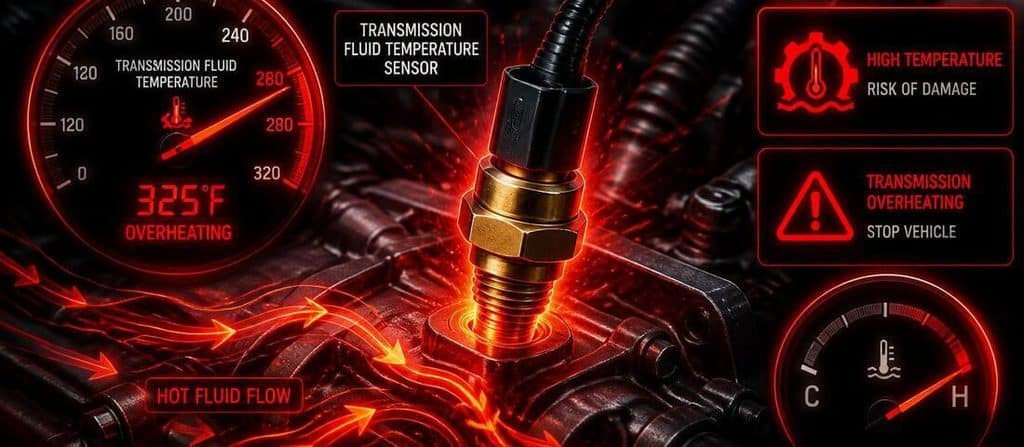
The most common transmission fluid temperature sensor symptoms include:
- Check-engine or transmission warning light
- Harsh or delayed shifts
- Torque-converter clutch problems
- Limp-mode operation
- Abnormal transmission temperature readings
- Poor transmission behavior as temperature changes
- P0710–P0714 diagnostic trouble codes
Before replacing the sensor, scan the transmission system, inspect the wiring and connector, and compare the temperature reported by the scan tool with what the transmission should actually be doing.
Contents
- 1 What Is a Transmission Fluid Temperature Sensor?
- 2 How Does a TFT Sensor Work?
- 3 7 Transmission Fluid Temperature Sensor Symptoms
- 3.1 1. Check Engine or Transmission Warning Light
- 3.2 Don’t make this mistake:
- 3.3 2. Harsh or Delayed Shifting
- 3.4 3. Torque Converter Clutch Problems
- 3.5 Diagnostic clue
- 3.6 4. Transmission Goes Into Limp Mode
- 3.7 Important
- 3.8 5. Abnormal Transmission Temperature Reading
- 3.9 The important question is:
- 3.10 6. Transmission Behavior Changes as It Warms Up
- 4 7. P0710–P0714 Codes Appear
- 5 Bad TFT Sensor vs Actual Transmission Problem
- 6 P0710–P0714 Codes Explained
- 7 What Causes a Transmission Temperature Sensor to Fail?
- 8 How to Test a Transmission Fluid Temperature Sensor
- 9 Step 3: Inspect the Wiring and Connector
- 10 Step 4: Test Sensor Resistance
- 11 Step 5: Check Reference Voltage and Circuit Integrity
- 12 Step 6: Verify the Ground/Circuit
- 13 Can You Drive With a Bad Transmission Temperature Sensor?
- 14 Common Diagnostic Mistakes
- 14.1 Mistake 1: Replacing the sensor because of P0711
- 14.2 Mistake 2: Using a universal resistance chart
- 14.3 Mistake 3: Ignoring the transmission harness
- 14.4 Mistake 4: Assuming high TFT means the sensor is bad
- 14.5 Mistake 5: Ignoring fluid level and condition
- 14.6 Mistake 6: Replacing the PCM too early
- 14.7 Mistake 7: Testing an energized circuit incorrectly
- 15 FAQs About Transmission Fluid Temperature Sensor Symptoms
- 15.1 What are the symptoms of a bad transmission fluid temperature sensor?
- 15.2 Can a bad transmission temperature sensor cause hard shifting?
- 15.3 What code indicates a transmission fluid temperature sensor problem?
- 15.4 Does P0711 mean the transmission temperature sensor is bad?
- 15.5 How do you test a transmission fluid temperature sensor?
What Is a Transmission Fluid Temperature Sensor?
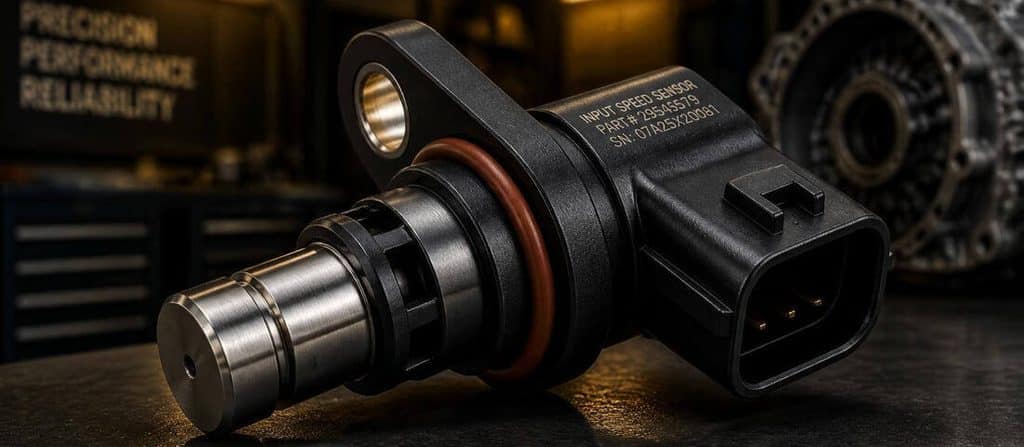
The transmission fluid temperature sensor measures the temperature of the transmission fluid.
It may be:
- Installed inside the transmission
- Integrated into a valve-body assembly
- Part of an internal transmission harness
- Located in or around the transmission oil pan
The exact arrangement varies by transmission.
For example, some Hyundai service procedures access an oil-temperature sensor through the transmission/valve-body assembly and monitor its value through the manufacturer’s diagnostic system.
This is why you shouldn’t promise readers:
“The transmission temperature sensor is always located here.”
Use the vehicle’s service information.
How Does a TFT Sensor Work?
Many TFT sensors are NTC thermistors.
That means:
As transmission-fluid temperature increases, sensor resistance generally decreases.
The control module interprets the changing electrical signal as temperature information.
This is useful diagnostically.
If the transmission warms up but the sensor’s electrical behavior doesn’t change as expected, the sensor or circuit becomes suspicious.
However, the exact resistance-versus-temperature specification is vehicle-specific.
Never use one universal resistance chart for every transmission.
7 Transmission Fluid Temperature Sensor Symptoms
1. Check Engine or Transmission Warning Light
This is often the first visible sign.
Possible diagnostic codes include:
- P0710 — Transmission Fluid Temperature Sensor A Circuit
- P0711 — Transmission Fluid Temperature Sensor A Circuit Range/Performance
- P0712 — Transmission Fluid Temperature Sensor A Circuit Low Input
- P0713 — Transmission Fluid Temperature Sensor A Circuit High Input
- P0714 — Transmission Fluid Temperature Sensor A Circuit Intermittent
These codes belong to the generic OBD-II transmission DTC family, but exact repair procedures vary by vehicle.
Don’t make this mistake:
P0710 ≠ automatically bad sensor.
The code tells you where to investigate—not necessarily which component to replace.
2. Harsh or Delayed Shifting
Incorrect transmission temperature information can affect transmission control.
You might notice:
- Hard upshifts
- Hard downshifts
- Delayed engagement
- Shift timing that feels different
- Transmission behavior that changes as the vehicle warms up
P0710 and P0711 are both associated with improper or abnormal transmission shifting in generic diagnostic references.
But these symptoms have many possible causes.
A bad shift solenoid, low fluid level, valve-body problem, worn transmission, or incorrect fluid can also cause harsh shifting.
So don’t diagnose the TFT sensor from shift quality alone.
3. Torque Converter Clutch Problems
The transmission control system can use temperature information when controlling the torque-converter clutch.
A faulty temperature signal may therefore be associated with:
- Incorrect TCC operation
- Lockup occurring at the wrong time
- Failure to lock up
- Abnormal RPM behavior
P0710/P0711 diagnostic references specifically list improper torque-converter clutch operation among possible symptoms.
Diagnostic clue
If the problem appears alongside a TFT code, investigate the temperature-sensor circuit before condemning the torque converter itself.
4. Transmission Goes Into Limp Mode
Some vehicles may enter a protective operating strategy when the transmission control system detects a serious fault.
You may experience:
- Limited gears
- Fixed gear operation
- Poor acceleration
- Transmission warning message
- Reduced transmission functionality
Generic P0710/P0711 diagnostic information lists limp-mode operation as a possible symptom.
Important
Limp mode is not proof of a bad TFT sensor.
It simply means the control system has detected a problem serious enough to alter normal operation.
5. Abnormal Transmission Temperature Reading
This is one of the strongest diagnostic clues.
Suppose the transmission is cold after sitting overnight.
The scan tool reports:
275°F
That would immediately deserve investigation.
Likewise, if the vehicle has been driven long enough for the transmission to warm up but the TFT reading remains implausibly low or doesn’t change, the sensor signal deserves attention.
Manufacturer diagnostic procedures commonly instruct technicians to monitor the transmission oil-temperature sensor through scan-tool live data while driving.
The important question is:
Does the reported temperature behave logically as the transmission warms up?
6. Transmission Behavior Changes as It Warms Up
A TFT sensor problem may become more noticeable as temperature changes.
For example:
- Transmission operates normally when cold
- Shifting becomes abnormal when warm
- Temperature data suddenly jumps
- Temperature reading stops changing
- Warning appears after driving
Because the sensor’s electrical characteristics change with temperature, an intermittent fault may not appear under every condition.
P0714 specifically describes an intermittent TFT sensor problem.
7. P0710–P0714 Codes Appear
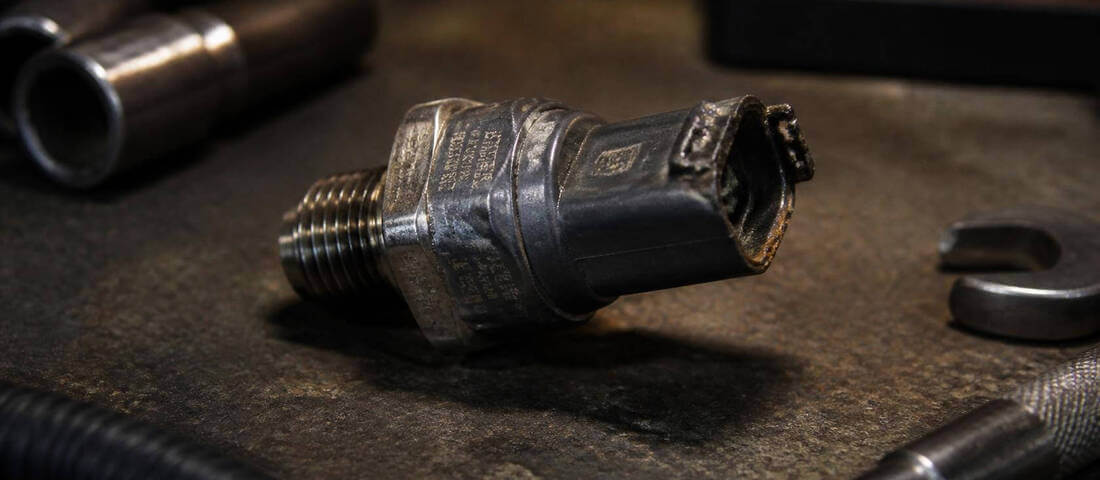
These codes are extremely important for this topic.
| Code | General meaning |
|---|---|
| P0710 | TFT sensor A circuit malfunction |
| P0711 | TFT sensor A circuit range/performance |
| P0712 | TFT sensor A circuit low input |
| P0713 | TFT sensor A circuit high input |
| P0714 | TFT sensor A circuit intermittent |
These descriptions are generic OBD-II definitions.
The actual diagnostic path can differ substantially by manufacturer.
Bad TFT Sensor vs Actual Transmission Problem
This should be one of the most important sections on the page.
| Finding | Possible explanation |
|---|---|
| Temperature reading is implausible | Sensor/circuit problem |
| Temperature doesn’t change | Sensor/circuit problem |
| Temperature jumps suddenly | Sensor/wiring/connector problem |
| Sensor code + normal electrical circuit | Sensor becomes more suspicious |
| TFT code + other transmission codes | Actual transmission issue also possible |
| Low fluid + high temperature | Possible real overheating problem |
| Damaged harness | Wiring problem |
| Fault disappears after harness repair | Sensor may have been good |
The key principle:
The TFT sensor reports transmission temperature. It doesn’t cause the transmission to become hot simply because it reports a high temperature.
That distinction is excellent for AI extraction and human understanding.

P0710–P0714 Codes Explained
P0710 — TFT Sensor Circuit Malfunction
This indicates a problem with the transmission fluid temperature sensor circuit.
Possible causes include:
- Sensor failure
- Wiring damage
- Connector problem
- Transmission harness problem
- PCM/TCM issue
P0711 — TFT Sensor Range/Performance
This is a plausibility/performance problem.
The signal isn’t behaving as expected.
That doesn’t automatically mean the sensor is defective.
In fact, an Allison service document provides a particularly useful reminder: P0711 was documented as falsely activating on properly functioning sensors and circuitry in certain affected calibrations, with a calibration update used as the resolution.
That’s a fantastic example of why:
DTC ≠ failed part
P0712 — TFT Sensor Low Input
A low sensor signal can indicate a circuit problem.
One generic diagnostic reference notes that P0712 commonly indicates a shorted condition.
But use the manufacturer’s diagnostic procedure for the actual vehicle.
P0713 — TFT Sensor High Input
A high sensor signal can indicate an open circuit or related electrical problem.
Generic diagnostic references associate P0713 with high input and list sensor, wiring, transmission and PCM problems as possible causes.
P0714 — TFT Sensor Intermittent
This indicates an intermittent TFT sensor-circuit problem.
Possible causes include:
- Loose connector
- Damaged wire
- Corrosion
- Internal harness issue
- Sensor failure
What Causes a Transmission Temperature Sensor to Fail?
1. Sensor failure
The thermistor itself can fail or drift outside its expected characteristics.
2. Damaged wiring
Look for:
- Broken wires
- Chafing
- Short circuits
- Open circuits
- Heat damage
3. Corroded connector
Transmission heat and fluid contamination can create difficult electrical problems.
4. Internal transmission harness problem
On some transmissions, the sensor is integrated into an internal harness or valve-body assembly.
Hyundai service procedures, for example, specifically direct technicians to inspect the control harness between the transmission and ECU for damage and connector issues when diagnosing P0711–P0713.
5. PCM/TCM problem
A control-module fault is possible, although it should generally be considered after simpler circuit causes have been ruled out.
6. Actual transmission problem
If the TFT circuit tests correctly but multiple transmission faults are present, the transmission itself may require further diagnosis.

How to Test a Transmission Fluid Temperature Sensor
This is where The Car Buzz can provide substantially more value than a symptom-list competitor.
Step 1: Scan for transmission codes
Don’t just scan the engine module.
Where supported, access the transmission/automatic-transaxle module.
Record:
- DTCs
- Freeze-frame data
- TFT temperature
- Engine RPM
- Vehicle speed
- Gear
- Other transmission-related data
Manufacturer procedures commonly begin by recording DTCs and monitoring the oil-temperature sensor through the diagnostic system.
Step 2: Look at TFT live data
With the transmission cold, the reported temperature should make sense relative to the vehicle’s actual conditions.
Then monitor the value as the transmission warms.
Healthy pattern:
Cold → temperature rises progressively → warm operating temperature
Suspicious pattern:
Cold → extremely high reading
or
Cold → reading doesn’t change
or
Temperature suddenly jumps from normal to implausible
Step 3: Inspect the Wiring and Connector
Check for:
- Loose terminals
- Corrosion
- Broken wires
- Pin damage
- Harness chafing
- Transmission-fluid contamination
Manufacturer service procedures specifically direct technicians to inspect the harness and connector for damage when diagnosing TFT faults.
Step 4: Test Sensor Resistance
If the vehicle’s service procedure calls for resistance testing, disconnect the sensor and measure resistance across the specified terminals.
Because many TFT sensors are NTC thermistors:
Resistance should generally decrease as temperature increases.
A generic diagnostic procedure describes monitoring resistance as the transmission warms and looking for a smooth decrease.
But don’t publish one universal resistance number.
The correct resistance at 68°F, 100°F, 176°F, etc. depends on the sensor.
Use the manufacturer’s resistance-temperature chart.
Step 5: Check Reference Voltage and Circuit Integrity
Some TFT systems use a reference voltage from the PCM.
A generic diagnostic procedure describes checking for approximately 5V on the reference side and verifying circuit continuity.
Important:
Do not assume every transmission uses an identical circuit.
Use the wiring diagram for that vehicle.
Step 6: Verify the Ground/Circuit
If the reference and signal aren’t behaving correctly, inspect the ground and circuit continuity according to the factory diagnostic procedure.
Don’t jump straight to replacing the PCM.
A broken wire can produce the same apparent sensor fault.

Can You Drive With a Bad Transmission Temperature Sensor?
This deserves a cautious answer.
A TFT fault can affect:
- Shift strategy
- Torque-converter control
- Transmission protection
- Limp-mode operation
P0710/P0711 references classify these faults as potentially moderate to severe depending on the vehicle and circumstances.
My recommendation for the article:
Avoid treating a TFT sensor fault as a harmless check-engine light. If the transmission is shifting harshly, slipping, overheating, entering limp mode, or showing a transmission warning, have it diagnosed promptly rather than continuing to drive normally.
Common Diagnostic Mistakes
Mistake 1: Replacing the sensor because of P0711
P0711 is a range/performance fault, not a guaranteed sensor failure. Some manufacturer documentation has even identified false P0711 activation associated with calibration.
Mistake 2: Using a universal resistance chart
Don’t.
Sensor specifications vary.
Mistake 3: Ignoring the transmission harness
An internal or external harness problem can mimic sensor failure.
Mistake 4: Assuming high TFT means the sensor is bad
The transmission may actually be overheating.
Mistake 5: Ignoring fluid level and condition
A genuine transmission problem can produce temperature-related symptoms.
Mistake 6: Replacing the PCM too early
Rule out the sensor and wiring first.
Mistake 7: Testing an energized circuit incorrectly
Use the manufacturer’s wiring diagram and test procedure.
FAQs About Transmission Fluid Temperature Sensor Symptoms
What are the symptoms of a bad transmission fluid temperature sensor?
Common symptoms include a check-engine or transmission warning light, harsh or delayed shifting, torque-converter clutch problems, limp-mode operation, abnormal temperature readings, and P0710–P0714 diagnostic trouble codes.
Can a bad transmission temperature sensor cause hard shifting?
Yes. Incorrect TFT information can affect transmission control and is associated with harsh or delayed shifts in some vehicles. However, other transmission faults can produce the same symptoms.
What code indicates a transmission fluid temperature sensor problem?
Common generic codes include P0710, P0711, P0712, P0713 and P0714. Their exact diagnostic meaning and repair procedure can vary by vehicle.
Does P0711 mean the transmission temperature sensor is bad?
No. P0711 indicates a transmission fluid temperature sensor range/performance problem. The cause can be the sensor, wiring, connector, control module, transmission, or even a calibration issue on certain applications.
How do you test a transmission fluid temperature sensor?
Start with scan-tool live data, inspect the wiring and connector, and test the sensor’s resistance and circuit according to the manufacturer’s specifications. The sensor’s resistance should generally change as temperature changes on NTC-based systems.