
This article was updated in November 2, 2026 with new products and information by Mark S. Taylor
If you’re comparing a drain and fill vs. flush transmission service, don’t assume one method is automatically better.
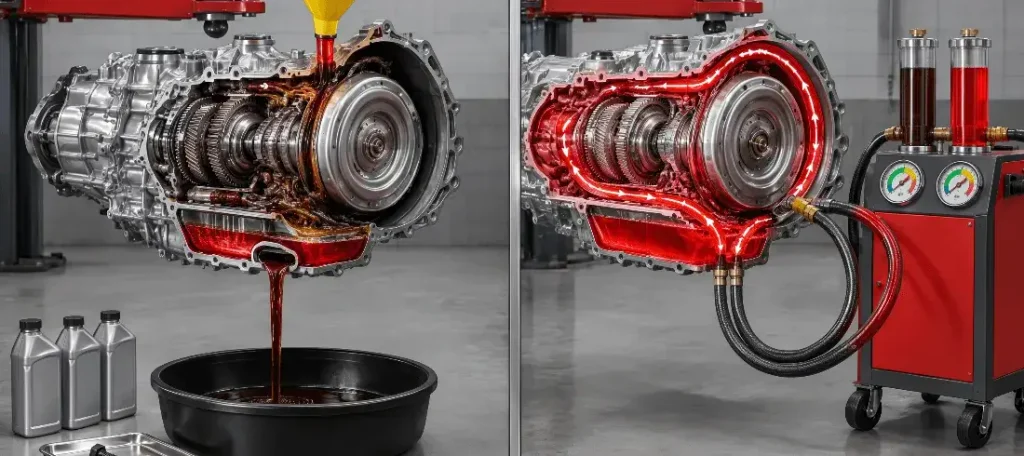
A drain and fill removes the transmission fluid that can be drained from the transmission and replaces it with fresh fluid. A fluid exchange or “flush” is designed to replace a much larger portion of the fluid, often by using the transmission’s fluid circuit or specialized service equipment.
The important part is this: your vehicle manufacturer’s service procedure should decide which method is appropriate.
Some manufacturers specifically recommend draining and refilling instead of using an external flush machine. Others have specific fluid-exchange procedures for certain transmissions or conditions. Honda, for example, has service documentation that uses repeated drain-and-fill procedures for what it calls a “flush,” while a current GM bulletin says external transmission fluid exchange or flush machines should not be used for the applications covered by that bulletin.
So before paying for a transmission service, find out exactly what procedure the shop plans to perform.
Contents
- 1 Drain and Fill vs. Transmission Flush
- 2 What Is a Transmission Drain and Fill?
- 3 What Is a Transmission Flush?
- 4 Drain and Fill vs Flush Transmission: Side-by-Side
- 5 Is a Transmission Flush Better Than a Drain and Fill?
- 6 When Is a Drain and Fill the Better Choice?
- 7 When Can a Fluid Exchange or “Flush” Make Sense?
- 8 Does a Transmission Flush Change the Filter?
- 9 Can You Do Multiple Drain and Fills Instead of a Flush?
- 10 What About CVT Transmissions?
- 11 What If My Transmission Is Already Slipping?
- 12 Does Dark Transmission Fluid Mean I Need a Flush?
- 13 Can a Transmission Flush Damage a Transmission?
- 14 How to Choose Between Drain and Fill vs Flush
- 15 What Should You Ask a Transmission Shop?
- 16 The Biggest Mistake: Choosing the Service Before Identifying the Transmission
- 17 Drain and Fill vs Flush Transmission: Bottom Line
- 18 FAQs About Drain and Fill vs Flush Transmission: Which Is Better?
- 18.1 Is a transmission flush better than a drain and fill?
- 18.2 What is the difference between a drain and fill and a transmission flush?
- 18.3 How much fluid does a drain and fill replace?
- 18.4 Should I flush a high-mileage transmission?
- 18.5 Can a transmission flush fix slipping?
- 18.6 Does a transmission flush replace the filter?
- 18.7 Can I do multiple drain and fills instead of a flush?
- 18.8 Can I flush a CVT transmission?
- 18.9 Can a transmission flush damage a transmission?
- 18.10 What should I do if a shop recommends a transmission flush?
- 19 Sources and Manufacturer Resources
Drain and Fill vs. Transmission Flush
For routine maintenance, a drain and fill is often the more conservative choice, especially when it is the procedure specified by the vehicle manufacturer.
A fluid exchange can replace more of the old fluid in one service, but that does not automatically make it better. It should only be used when the procedure is appropriate for that specific transmission.
The safest decision is:
Follow the manufacturer’s specified fluid, service interval, fluid level procedure, and service method for your exact transmission.
Don’t choose a service simply because a shop calls it a “full flush.”
What Is a Transmission Drain and Fill?
A transmission drain and fill is a relatively straightforward fluid service.
The technician drains the accessible transmission fluid through a drain plug or by removing the transmission pan, depending on the vehicle. Fresh fluid is then added according to the manufacturer’s specified procedure.
If the pan is removed, the service may also include:
- Cleaning the transmission pan
- Inspecting the pan and magnets
- Replacing a serviceable transmission filter
- Replacing a gasket or seal
- Refilling with the specified transmission fluid
- Setting the fluid level using the required procedure
The exact procedure varies considerably between vehicles.
A drain and fill does not normally remove all of the fluid in the transmission. Some fluid can remain in components and passages that do not drain during a normal service.
Toyota describes a transmission fluid change as draining the fluid from the transmission pan and replacing only a portion of the total fluid, along with a filter replacement in the procedure it describes.
How much transmission fluid does a drain and fill replace?
There is no universal percentage.
Depending on the transmission design and service procedure, a drain and fill may replace a portion of the total fluid capacity while leaving some old fluid inside the transmission.
That is why you should be skeptical of claims such as “a drain and fill always replaces exactly 40%” or “a flush always replaces 100%.”
The actual amount depends on the vehicle, transmission design, drain procedure, and service method.
What Is a Transmission Flush?
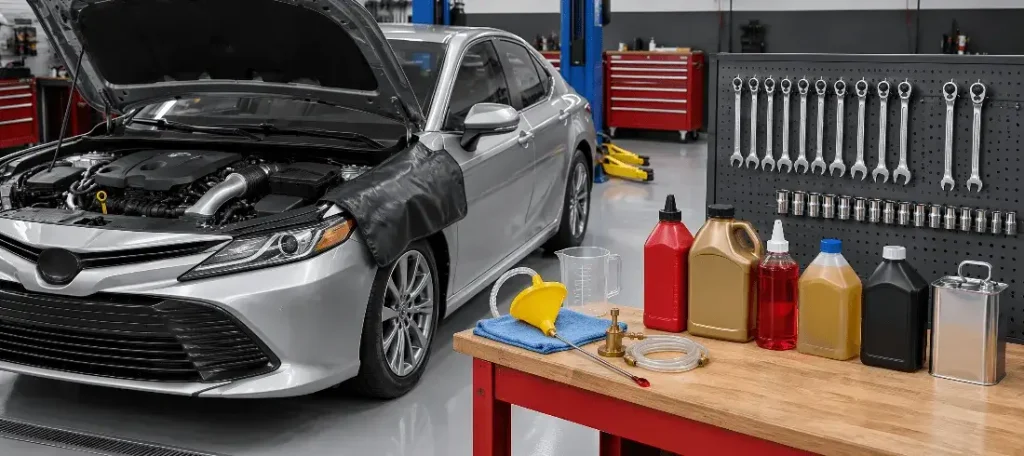
The term transmission flush can be confusing because repair shops and manufacturers don’t always use the word in exactly the same way.
In the aftermarket, a flush may refer to a machine-assisted fluid exchange that removes old transmission fluid while new fluid enters the transmission’s fluid circuit.
The goal is to replace a much larger proportion of the old fluid than a single drain and fill.
However, there is an important distinction:
A machine fluid exchange is not automatically an approved procedure for every transmission.
For example, a 2024 GM bulletin covering specified vehicles states that external transmission fluid exchange or flush machines are not recommended and directs technicians to replace transmission fluid by draining and refilling according to GM service information.
Mazda’s 2026 guidance is similarly specific: it says transmission flushing should only be performed when specifically instructed by the owner’s manual, workshop manual, technical service bulletin, recall, or other Mazda communication.
That is why “flush or no flush?” cannot be answered correctly without knowing the vehicle.
Drain and Fill vs Flush Transmission: Side-by-Side
| Feature | Drain and Fill | Fluid Exchange / Flush |
|---|---|---|
| Basic idea | Drain accessible fluid and refill | Exchange a much larger portion of the fluid |
| Fluid replaced | Partial amount | Usually substantially more |
| Machine required | Usually no | Often, but not always |
| DIY suitability | Often easier | Usually more equipment-dependent |
| Filter service | May be included if pan/filter is serviced | Not necessarily included |
| Pan inspection | Possible if pan is removed | Usually not part of the exchange itself |
| Best use | When specified for routine maintenance | When specifically permitted or required |
| High-mileage vehicle | Often a conservative option when appropriate | Requires more careful evaluation |
| CVT | Follow exact CVT procedure | Do not assume a machine flush is acceptable |
| Manufacturer approval | Always follow vehicle-specific procedure | Especially important |
| Repairs worn components? | No | No |
The table’s most important point is the last one:
Neither procedure repairs mechanically damaged transmission components.
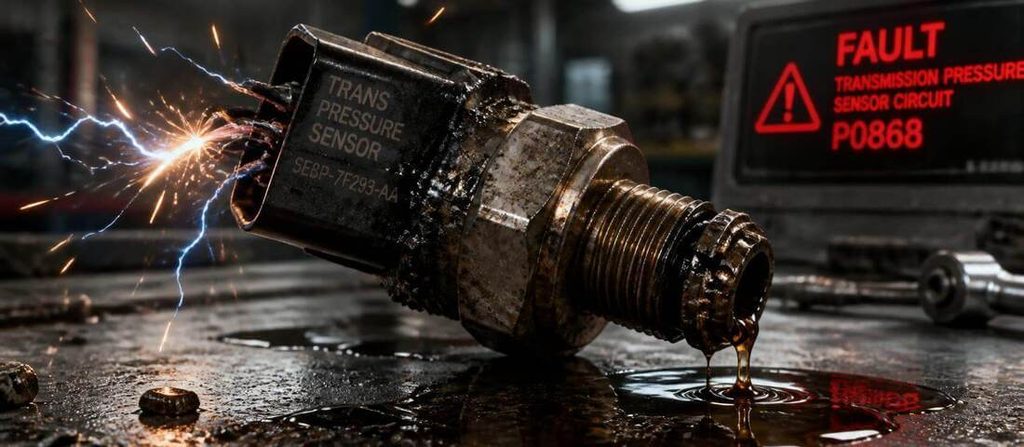
Fresh fluid can be important maintenance, but it cannot rebuild worn clutch packs, repair damaged bearings, fix a failed valve body, or restore a broken transmission pump.
Is a Transmission Flush Better Than a Drain and Fill?
Not necessarily.
A flush or fluid exchange may replace more old fluid in one service. But more fluid replacement does not automatically mean the procedure is better for every transmission.
The manufacturer’s procedure takes priority.
For example, Honda has published a service procedure in which “flushing” means repeatedly draining and refilling the transmission with Honda Genuine ATF-DW1. Honda specifically recommends avoiding aftermarket flush systems in that procedure.
On the other hand, other manufacturers or specific service procedures may call for a fluid exchange under particular circumstances.
So the better question isn’t:
“Is a flush better?”
It is:
“What transmission-fluid service does my manufacturer specify for this exact vehicle?”
That question will lead you to a much safer answer.
When Is a Drain and Fill the Better Choice?
A drain and fill makes sense when it is the manufacturer’s recommended maintenance procedure.
It can also be attractive when you want to:
- Perform routine transmission maintenance
- Replace some aged fluid without using an external exchange machine
- Inspect the transmission pan when the design allows it
- Replace a serviceable filter
- Avoid an unnecessary aftermarket procedure
- Perform a straightforward DIY service when the vehicle allows it
For example, GM’s 2024 bulletin specifically directs covered applications toward draining and refilling rather than using an external transmission-fluid exchange or flush machine.
What about a high-mileage transmission?
This is where internet advice often becomes too absolute.
You’ve probably heard:
“Never flush a high-mileage transmission.”
That’s too broad.
A transmission doesn’t automatically become unsuitable for fluid service just because the odometer has passed a certain mileage.
What matters more is:
- The manufacturer’s procedure
- Transmission condition
- Maintenance history
- Correct fluid specification
- Current symptoms
- Evidence of contamination or mechanical problems
- Whether the transmission is designed for the proposed procedure
A neglected transmission with slipping, severe shudder, abnormal engagement, or other symptoms should be diagnosed before you authorize a fluid service intended as routine maintenance.
A fluid change isn’t a substitute for diagnosis.
When Can a Fluid Exchange or “Flush” Make Sense?
A fluid exchange can make sense when the manufacturer specifically allows or requires that procedure.
There are also circumstances where a manufacturer may prescribe a particular exchange procedure for a specific condition.
Honda provides a useful example. Its service documentation uses repeated drain-and-fill cycles as a flushing procedure for a specific application rather than relying on an aftermarket flush machine.
The important distinction is that this is a vehicle-specific service procedure, not a universal rule for all transmissions.
Before agreeing to a “flush,” ask:
- What exactly does your shop mean by flush?
- Is it a drain-and-fill, pan service, or cooler-line exchange?
- Does the manufacturer approve that method?
- What fluid specification will be used?
- Will the filter be replaced?
- How will the final fluid level be checked?
- Is this routine maintenance or a repair procedure for a specific symptom?
If the shop cannot clearly answer those questions, don’t authorize the service yet.
Does a Transmission Flush Change the Filter?
Not necessarily.
A machine-based fluid exchange primarily addresses the transmission fluid.
It does not automatically mean the transmission pan has been removed or the filter has been replaced.
A drain-and-fill that includes pan removal may provide an opportunity to:
- Replace a serviceable filter
- Inspect the pan
- Inspect the magnet
- Look for unusual debris
- Replace the pan gasket
But transmission designs differ.
Some transmissions don’t have a conventional serviceable filter. Others require specific procedures that are very different from older automatic transmissions.
That’s another reason to look up the service procedure for your exact transmission rather than choosing based on the name of the service.
Can You Do Multiple Drain and Fills Instead of a Flush?
Sometimes, yes.
Multiple drain-and-fill services can progressively replace more of the old fluid because each service removes another portion of the fluid mixture.
Honda’s published procedure provides a real-world example of repeated drain-and-fill cycles being used as its specified “flush” procedure for a particular application.
But don’t turn that into a universal DIY formula.
The number of cycles, fluid quantity, operating temperature, shifting procedure, level-setting procedure, and fluid specification can all depend on the vehicle.
If your owner’s manual or service information specifies a particular procedure, follow it.

What About CVT Transmissions?
Be especially careful with CVT fluid.
A CVT is not simply a conventional automatic transmission with a different name. Its fluid is engineered for the transmission’s specific operating requirements.
Do not assume that a conventional automatic-transmission flush procedure applies to a CVT.
The correct approach is:
Identify the exact CVT and use the manufacturer’s specified fluid and service procedure.
This is particularly important because manufacturers can have different maintenance requirements even among their own models.
For example, Mazda’s current maintenance documentation provides model-specific service intervals and procedures rather than treating all transmissions identically.
If your vehicle has a CVT, check the owner’s manual or manufacturer service information before authorizing a machine exchange.
What If My Transmission Is Already Slipping?
Don’t start with a flush.
If your transmission is:
- Slipping
- Delaying engagement
- Shifting violently
- Shuddering
- Making abnormal noises
- Losing drive
- Leaking fluid
- Setting transmission-related trouble codes
the first step should be diagnosis.
Fresh fluid may be part of the correct repair in some situations, but it should not be treated as a guaranteed cure.
A worn clutch pack doesn’t become unworn because you installed fresh fluid.
Likewise, a failed solenoid, damaged valve body, broken transmission pump, or internal mechanical failure requires appropriate diagnosis and repair.
A useful rule
Symptoms first. Diagnosis second. Service method third.
Don’t reverse that order simply because a shop is offering a discounted flush.

Does Dark Transmission Fluid Mean I Need a Flush?
Not by itself.
Fluid color can provide useful information, but color alone does not tell you which service procedure your transmission needs.
Fluid condition should be considered alongside:
- Mileage
- Service history
- Odor
- Fluid level
- Vehicle symptoms
- Contamination
- Manufacturer maintenance requirements
- Transmission type
More importantly, the appearance of the fluid doesn’t override the manufacturer’s service procedure.
Can a Transmission Flush Damage a Transmission?
A blanket statement such as “a flush will damage your transmission” is not technically defensible.
Likewise, saying “a flush is completely safe for every transmission” is also wrong.
The risk depends on the specific vehicle, transmission, procedure, equipment, fluid, and condition.
There is documented manufacturer concern about aftermarket flush equipment for certain applications. GM’s 2024 bulletin warns that external machines may affect operation or durability and directs covered vehicles toward drain-and-refill procedures. Mazda’s 2026 guidance says transmission flushing should only be performed when specifically instructed by Mazda documentation.
So the accurate answer is:
A flush isn’t inherently dangerous, but an unapproved flush procedure can be inappropriate for a particular transmission.
How to Choose Between Drain and Fill vs Flush
Use this decision process.
Choose the manufacturer’s specified drain-and-fill procedure when:
- The owner’s manual calls for a fluid change by draining and refilling.
- The manufacturer does not approve an external flush machine.
- You want to inspect the pan or replace a serviceable filter.
- The vehicle has an unknown maintenance history and the manufacturer’s procedure favors drain-and-fill.
- You are performing routine maintenance and there is no reason for a different procedure.
Consider a fluid exchange when:
- The manufacturer specifically permits or requires it.
- A manufacturer service bulletin calls for an exchange.
- The shop can explain exactly what equipment and procedure will be used.
- The correct fluid specification is being used.
- The transmission is appropriate for that service.
Stop and diagnose first when:
- The transmission is slipping.
- Engagement is severely delayed.
- There is significant shuddering.
- The transmission is losing fluid.
- The fluid is heavily contaminated.
- There are transmission DTCs.
- The vehicle has abnormal transmission noises.
- You don’t know what transmission or fluid specification the vehicle uses.

What Should You Ask a Transmission Shop?
Before approving the service, ask one simple question:
“What exactly are you doing to my transmission?”
Then ask:
- Is this a drain and fill?
- Are you removing the pan?
- Are you replacing the filter?
- Is this a cooler-line fluid exchange?
- Are you using an external flush machine?
- What exact fluid specification are you installing?
- What does the manufacturer recommend for my transmission?
- How will you set the final fluid level?
- Does the procedure require a specific fluid temperature?
- Are you servicing it because of a maintenance interval or because of a transmission problem?
A reputable shop should be able to explain the procedure clearly.
If someone simply says “Our machine flushes everything out” without identifying the procedure or fluid specification, that’s not enough information to make a good decision.
The Biggest Mistake: Choosing the Service Before Identifying the Transmission
This is the part many generic articles miss.
The transmission determines the service.
Not the mileage sticker.
Not the color of the fluid.
Not what your neighbor’s truck received.
Not what a quick-lube shop sells as its standard package.
And not the fact that a machine can exchange more fluid.
Start with:
- Year
- Make
- Model
- Engine
- Drivetrain when relevant
- Transmission type/code when available
- Manufacturer fluid specification
- Manufacturer service procedure
Then choose the service.
For manufacturer maintenance information, start with the vehicle owner’s manual. Toyota, Mazda, and Honda all provide manufacturer-specific maintenance resources, while Honda’s owner site provides access to manuals and maintenance information.
Drain and Fill vs Flush Transmission: Bottom Line
A drain and fill is not automatically better, and a flush is not automatically better.
A drain and fill replaces a portion of the old fluid and can be a straightforward maintenance procedure. A fluid exchange can replace a larger portion of the old fluid, but its suitability depends on the transmission and manufacturer’s instructions.
The most reliable rule is:
Use the exact transmission fluid and service procedure specified by the manufacturer for your vehicle.
If the transmission is operating normally and the manufacturer specifies a drain and fill, there is little reason to substitute an aftermarket machine flush simply because it sounds more thorough.
If the manufacturer specifies or approves a fluid-exchange procedure, follow that procedure instead.
And if the transmission is already showing serious symptoms, diagnose the problem before treating fluid replacement as the solution.
FAQs About Drain and Fill vs Flush Transmission: Which Is Better?
Is a transmission flush better than a drain and fill?
Not necessarily. A flush or fluid exchange can replace more of the old fluid, but that doesn’t make it the correct procedure for every transmission. Follow the manufacturer’s service procedure for your specific vehicle.
What is the difference between a drain and fill and a transmission flush?
A drain and fill removes accessible transmission fluid and replaces it with fresh fluid. A fluid exchange is designed to replace a larger proportion of the old fluid, often using the transmission’s fluid circuit or specialized equipment.
How much fluid does a drain and fill replace?
It varies by vehicle and transmission. A drain and fill replaces only the portion that can be drained during that service, while some fluid remains elsewhere in the transmission. There is no universal percentage that applies to every vehicle. Toyota, for example, describes one transmission fluid change procedure as replacing about 30–40% of the fluid.
Should I flush a high-mileage transmission?
Mileage alone should not determine the service method. Check the transmission’s service history, current condition, and manufacturer’s procedure. If the transmission is already slipping or showing other serious symptoms, diagnose it before performing routine fluid service.
Can a transmission flush fix slipping?
Usually, you should not expect a fluid service to repair a mechanically damaged transmission. Slipping can have many causes, including hydraulic, electrical, fluid, clutch, or internal mechanical problems. Diagnose the cause before choosing a service.
Does a transmission flush replace the filter?
Not automatically. A machine-based fluid exchange does not necessarily include transmission-pan removal or filter replacement. If filter service is required or available, it should be performed according to the manufacturer’s procedure.
Can I do multiple drain and fills instead of a flush?
Some manufacturers use repeated drain-and-fill procedures as their specified method for replacing more of the old fluid. Honda provides an example of this approach. However, the number of cycles and procedure are vehicle-specific, so don’t copy another vehicle’s service procedure.
Can I flush a CVT transmission?
Do not assume that a conventional automatic-transmission flush procedure is appropriate for a CVT. Use the exact CVT fluid and maintenance procedure specified by the manufacturer.
Can a transmission flush damage a transmission?
A flush is not inherently guaranteed to damage a transmission. However, some manufacturers specifically discourage or prohibit certain external flush-machine procedures for particular vehicles. GM and Mazda both provide examples of manufacturer-specific restrictions.
What should I do if a shop recommends a transmission flush?
Ask exactly what procedure they mean by “flush,” what fluid they will use, whether they will replace the filter, and whether the procedure matches the manufacturer’s service information for your transmission. If they cannot answer those questions, get the procedure clarified before authorizing the work.
Sources and Manufacturer Resources
For readers who want to verify the procedure themselves, these are better starting points than generic transmission-service advertisements:
- Honda Owners — Service & Maintenance
- Toyota — How Often Should You Change Your Transmission Fluid?
- GM Technical Service Bulletin 04-06-01-029K
- Mazda — Transmission Flush Guidance
- Honda ATF Flush Procedure
Editorial note: Manufacturer procedures can differ by year, model, engine, transmission, and market. Always verify the procedure for the exact vehicle before performing or authorizing transmission service.