
This article was updated in November 21, 2026 with new products and information by Mark S. Taylor
You press the windshield washer control, but no fluid reaches the glass. Maybe the pump makes a buzzing sound. Maybe one nozzle sprays while the other stays dry. Or the system worked yesterday but stopped after a cold night.
The problem may be simple, such as an empty reservoir or frozen fluid. It can also involve a clogged nozzle, disconnected hose, leaking line, pump, fuse, wiring, or control switch.


Start with the fluid level and pump sound. Then follow the fluid delivery path before replacing parts.
Quick answer: Windshield washer fluid may stop spraying because the reservoir is empty, the fluid has frozen, a nozzle or hose is blocked, a hose has disconnected, the pump or its inlet screen is restricted, or an electrical fault is preventing the pump from operating.
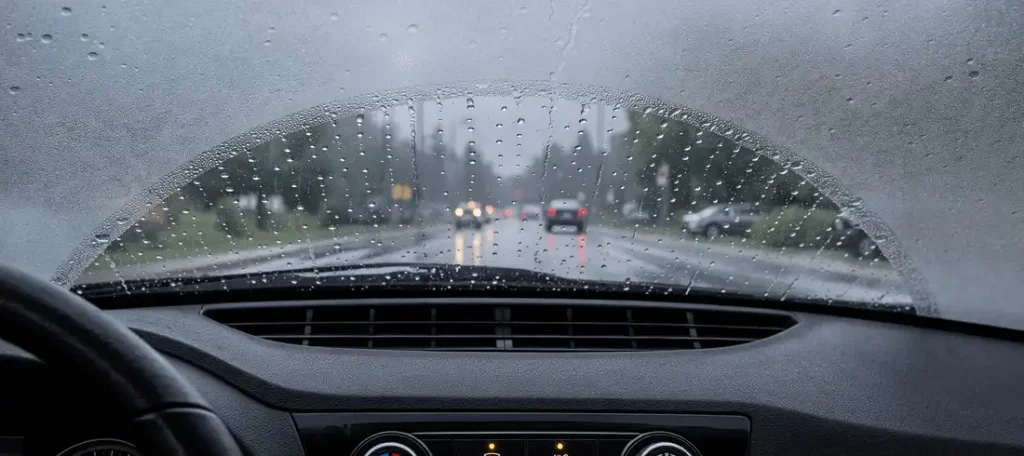
If your windshield cannot be cleaned and visibility is compromised, do not drive in conditions that require the washer system. Stop somewhere safe and arrange repair if necessary.
Contents
- 1 Check the windshield washer-fluid reservoir
- 2 Does the washer pump make a sound?
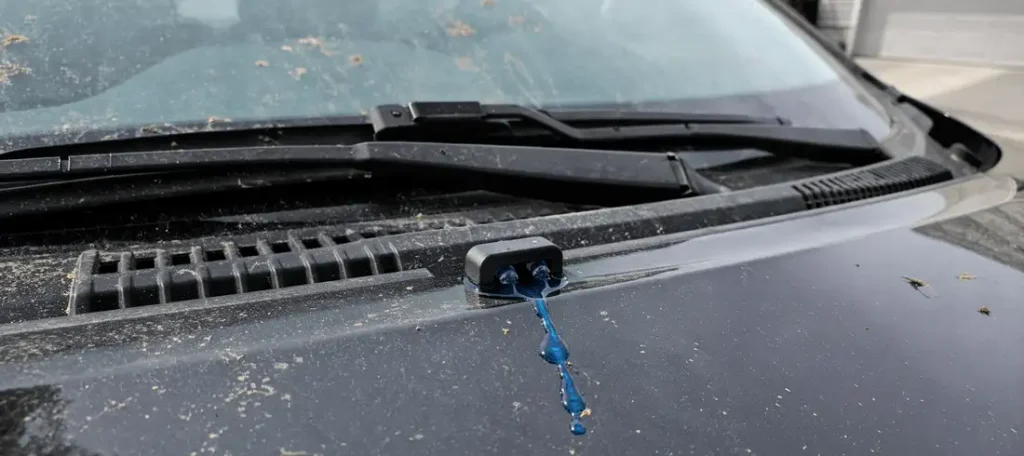
- 3 Why does only one washer nozzle spray?
- 4 Why is windshield washer spray weak?
- 5 Washer fluid frozen in the system
- 6 Could a clogged nozzle or pump screen be the problem?
- 7 What should a repair shop test?
- 8 When should you stop driving?
- 9 FAQs About Windshield Washer Fluid Not Spraying?
- 9.1 Why does my windshield washer pump make noise but no fluid comes out?
- 9.2 Why is only one windshield washer nozzle working?
- 9.3 Can frozen washer fluid damage the pump?
- 9.4 Can I use water instead of windshield washer fluid?
- 9.5 Why does my washer reservoir keep emptying?
- 9.6 Does a silent washer pump mean it is bad?
- 10 Bottom line
Check the windshield washer-fluid reservoir
Start with the easiest check.
Locate the washer-fluid reservoir using your owner’s manual. Check the fluid level and look for visible cracks or signs of leakage around the reservoir and pump area.
If the reservoir is empty, refill it with washer fluid rated for the temperatures you expect. Do not use plain water in freezing conditions. Follow the vehicle’s manual and the fluid manufacturer’s directions.
Checking washer fluid is also part of a basic car maintenance checklist, especially before long trips or seasonal weather changes.
If the reservoir becomes empty again quickly, look for a leak rather than repeatedly refilling it.
Does the washer pump make a sound?
Ask someone to operate the washer control while you listen from a safe position near the reservoir. Keep your hands and clothing away from moving components.
The washer pump is silent
If you hear no pump sound, possible causes include:
- A blown fuse.
- A failed pump motor.
- A loose or corroded electrical connector.
- Damaged wiring or ground.
- A control-switch or module issue.
- Frozen fluid or a pump that has been damaged by attempting to operate against ice.
Check the washer fuse location and rating in the owner’s manual. If a fuse has blown, replace it only with the correct rating.
If the replacement fuse blows again, stop. The circuit needs diagnosis.
A silent pump does not prove that the pump itself is bad.
The pump hums but no fluid reaches the windshield
If you hear the pump but no fluid sprays, the pump may be operating, but the fluid delivery path could be restricted or leaking.
Possible causes include:
- A clogged nozzle.
- A blocked inlet screen.
- A kinked or disconnected hose.
- A leak in the hose.
- Frozen fluid.
- A weak or damaged pump.
Do not repeatedly hold the washer switch down if no fluid is flowing. Prolonged operation can overheat or damage a pump, especially if the reservoir is empty or the system is frozen.
Why does only one washer nozzle spray?
If one side sprays normally and the other stays dry, the problem may be localized to the non-working side.
Possible causes include:
- A blocked nozzle.
- A disconnected hose.
- A split hose.
- A pinched line.
- A damaged fitting or tee.
- A nozzle that is incorrectly aimed or restricted.
Inspect accessible hoses and connections with the ignition off. Look for fluid escaping under the hood when the washer is operated, but do not place your hands near moving components.
Use the nozzle-cleaning method specified by your vehicle’s manufacturer. Avoid forcing a large pin, needle, or wire into a nozzle. A tool that is too large can damage the opening or alter the spray pattern.
Why is windshield washer spray weak?
Weak spray may result from a partially blocked nozzle, restricted hose, inlet-screen debris, a leak, or a pump that is not delivering sufficient flow.
Look for:
- Spray that barely reaches the windshield.
- A stream instead of the intended spray pattern.
- Fluid appearing under the hood.
- A reservoir that empties faster than expected.
- Spray that changes when the hood is opened or closed.
A weak spray does not automatically mean the pump needs replacement. A restricted or leaking delivery path can produce the same symptom.
Washer fluid frozen in the system
Cold weather can freeze washer fluid in the reservoir, hoses, or nozzle openings if the fluid is not rated for the temperatures present.
If the system is frozen:
- Park the vehicle in a safe, warmer location if possible.
- Allow the system to thaw naturally.
- Do not use boiling water, a heat gun, or an open flame.
- Do not repeatedly operate the washer pump while the system remains frozen.
- Once thawed, check for leaks or damaged components.
- Replace or top up with the correct seasonal washer fluid as directed by the owner’s manual.
Frozen fluid may have damaged a reservoir, hose, pump, or connector. If the system does not work after thawing, have it inspected.

Could a clogged nozzle or pump screen be the problem?
Yes. Mineral deposits, dried washer-fluid residue, debris, or contamination may restrict flow.
A Mitsubishi service bulletin, TSB-22-51-001, discusses deposits at the washer-nozzle injection port and describes a model-specific cleaning procedure. It also explains how mineral content in water can contribute to deposits.
A Kia service bulletin, BOD 095, documents restricted washer-fluid flow caused by debris on the pump inlet filter in specified Kia vehicles. The bulletin directs technicians to service the inlet filter rather than automatically replacing the pump assembly.
These are vehicle-specific examples, not universal repair procedures.
If the nozzle or pump screen is difficult to access, follow the service information for your vehicle or have a technician inspect it.
What should a repair shop test?
If basic checks do not restore the system, a technician may need to:
- Inspect the reservoir, pump seal, and inlet screen.
- Check the fuse and electrical supply.
- Test the pump circuit under the correct operating conditions.
- Inspect hoses, fittings, check valves, and nozzle openings.
- Verify switch or control-module commands where applicable.
- Check for freeze damage or contamination.
- Confirm that the system sprays correctly after repair.
The shop should confirm the failed component before recommending a new washer pump.

When should you stop driving?
Do not drive in rain, snow, road spray, mud, or other conditions where the windshield needs cleaning if the washer system cannot provide adequate visibility.
If you cannot clean the windshield safely, stop in a safe location.
A washer system that is not functioning may be a minor repair in dry weather, but it can become a serious visibility problem when conditions change.
FAQs About Windshield Washer Fluid Not Spraying?
Why does my windshield washer pump make noise but no fluid comes out?
The pump may be operating, but fluid could be blocked or leaking before it reaches the windshield. Check the fluid level, hoses, nozzle restrictions, and possible freeze damage. Pump noise alone does not prove that the pump is delivering fluid correctly.
Why is only one windshield washer nozzle working?
The non-working side may have a clogged nozzle, disconnected hose, pinched line, or damaged fitting. Inspect accessible hoses and connections, then use the nozzle-cleaning procedure specified by the vehicle manufacturer.
Can frozen washer fluid damage the pump?
It can. If the system is frozen, the pump may be unable to move fluid. Avoid repeatedly operating the washer switch and allow the system to thaw before testing it again.
Can I use water instead of windshield washer fluid?
Plain water is not a suitable choice when freezing temperatures are possible. It may freeze in the reservoir, hoses, or nozzle openings. Use washer fluid rated for the temperatures you expect and recommended for your vehicle.
Why does my washer reservoir keep emptying?
A leak may be present in the reservoir, pump seal, hose, or connection. If the fluid level drops quickly after filling, inspect for leakage rather than continuing to refill it.
Does a silent washer pump mean it is bad?
No. A blown fuse, damaged connector, wiring problem, ground issue, switch, control module, or frozen system can prevent the pump from running. Confirm the electrical and mechanical conditions before replacing the pump.
Bottom line
Windshield washer fluid not spraying does not automatically mean the pump has failed. Check the reservoir and seasonal fluid first. Then listen for the pump and follow the fluid path to the nozzles.
Use the vehicle-specific cleaning and testing procedure. Do not force tools into nozzle openings, repeatedly run a frozen or empty pump, or replace electrical parts without confirming the fault.