
This article was updated in November 27, 2026 with new products and information by Mark S. Taylor
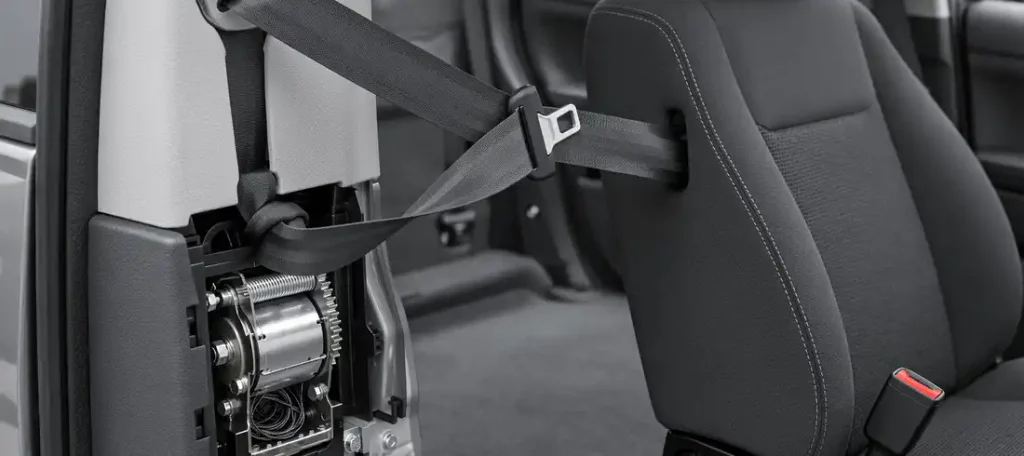
When a seat belt will not retract or pulls back slowly, the cause is usually twisted webbing, skin-oil buildup on the upper D-ring guide, accidental child-seat locking mode, or a failing retractor or pretensioner. Never spray lubricants or open the housing, and replace any belt that is frayed, locked, or crash-damaged.
You unbuckle your seat belt, step out of the car, and realize the strap is still dangling loose across the seat—or worse, slammed right into the door jamb. Other times, the belt locks solid and refuses to budge in either direction.
Because a seat belt is a primary crash-restraint system, never pry open the retractor housing or spray lubricants into the mechanism. Start with a few safe exterior checks to rule out simple friction or locking modes, and arrange a professional inspection if the belt still fails to retract or lock smoothly.
Contents
Seat Belt Symptom Diagnostic Triage Table
Use this table to separate simple external friction from an internal restraint fault that needs shop inspection.
| What the Seat Belt Is Doing | Most Likely Cause Group | Safe First Check |
| Pulls out normally, retracts slowly or hangs slack | Twisted webbing, grime on the upper D-ring guide, or weak retractor spring | Inspect exposed webbing and gently clean the belt and D-ring slot if permitted by the manual |
| Makes a ratcheting click and will not pull back out | Accidental Automatic Locking Retractor (ALR) child-seat lock mode | Feed the webbing completely back into the housing so the locking pawl resets |
| Locks tight only when parked on a steep hill | Normal pendulum tilt-sensor lock inside the retractor | Move the vehicle onto level ground and pull the belt smoothly |
| Will not extend or retract at all on level ground | Jammed retractor, deployed or corroded pretensioner, or recall defect | Do not yank or disassemble; check your VIN for recalls and schedule shop service |
| Webbing is frayed, cut, melted, or stitched seams are torn | Physical structural damage | Stop using that seating position immediately and replace the belt assembly |
| Belt was worn during a collision (even if it looks normal) | Stretched webbing or fired pretensioner | Have the entire restraint assembly inspected under the automaker’s post-crash procedure |
5 Common Reasons a Seat Belt Won’t Retract
Seat belt assemblies vary across makes and model years, so external clues help you narrow down the problem without opening the pillar trim.
1. Twisted Webbing or Accidental Child-Seat Lock Mode
A single fold or half-twist in the webbing creates heavy drag as the strap slides through the narrow upper D-ring guide near your shoulder. Follow the belt slowly from the anchor up through the shoulder loop and straighten any visible twist by hand without forcing it.
If a passenger or rear seat belt clicks like a ratchet and refuses to pull back out after being extended, you likely triggered Automatic Locking Retractor (ALR) mode. That built-in mode locks child car seats tightly whenever the webbing is pulled all the way to the end of the spool. Letting the belt feed completely back into its resting position resets it to normal movement.
2. Grime Buildup on the Webbing and Upper D-Ring Guide
Over years of daily driving, skin oils, hand lotion, dust, and spilled drinks coat the fabric webbing and bake onto the flat plastic slot of the upper shoulder guide. Even when the fabric looks clean, sticky buildup inside that plastic loop creates enough drag to stop a healthy retractor spring from pulling the belt back.
Check your owner’s manual before cleaning. When your manual permits mild cleaning:
- Pull the exposed webbing out gently without yanking or forcing it.
- Inspect both sides of the strap from end to end for cuts, fraying, burns, or broken stitching.
- Wipe the exposed fabric and the flat inner slot of the upper D-ring guide using a microfiber cloth dampened with warm water and mild, non-detergent soap.
- Keep water and cleaner completely out of the retractor slot, buckle latch, and pillar trim cavity.
- Hold the belt extended with a clean clip or towel until it is completely bone dry before letting it retract, because winding damp webbing into the pillar can rust the internal coil spring and cause mold.
Never use bleach, household solvents, stain removers, or abrasive cleaners on seat-belt webbing, as harsh chemicals weaken the synthetic fibers invisibly.
3. Vehicle Parking Angle
Most modern retractors use an internal weighted pendulum that locks the spool automatically during hard braking or when the vehicle tilts sharply. If a belt refuses to move while you are parked on a steep driveway or uneven curb, move onto level ground and test it with a smooth, steady pull.
4. A Weak or Failing Internal Retractor
Seat belt retractors are built to strict durability and locking standards under Federal Motor Vehicle Safety Standard 209 (49 CFR 571.209). Over high mileage, the coiled clock spring inside the housing can weaken, or internal locking pawls can jam from debris or wear.
If the belt still crawls back slowly after confirming the webbing is straight, clean, and dry—or if it binds on level ground—the internal retractor assembly needs professional inspection. Do not open the sealed retractor housing or attempt to rewind the spring yourself.
5. Collision Damage or a Seat-Belt Pretensioner Fault
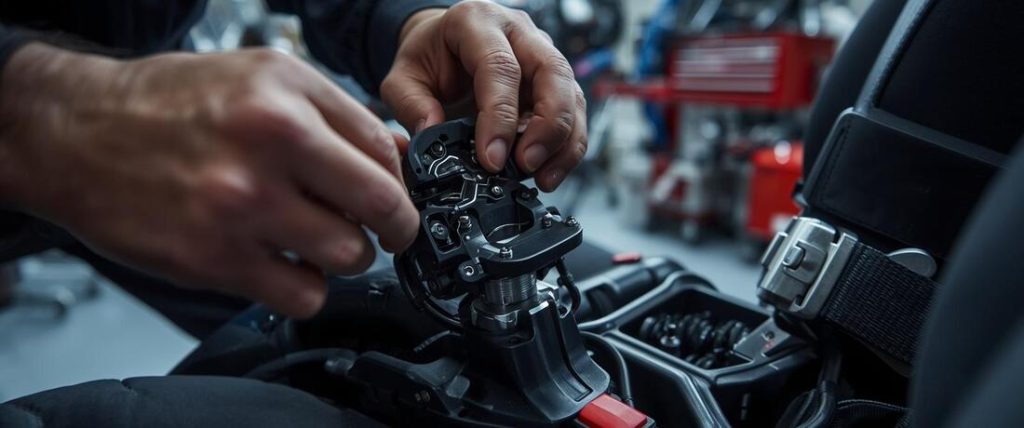
Modern seat belts pair the retractor with a pyrotechnic pretensioner connected to the Supplemental Restraint System (SRS) airbag module. During a crash, the pretensioner fires to cinch slack out of the belt in milliseconds, which permanently locks or damages the assembly even if the fabric looks untouched.
Pretensioner faults can also stem from manufacturer defects rather than a crash. For example, NHTSA Safety Recall 26V344 (Ford campaign 26S34) covers roughly 420,000 2018–2022 Ford Expedition and Lincoln Navigator vehicles where heat-degraded pretensioner chemicals can cause internal corrosion, making the front belt tighten rapidly and lock in place without a crash (Ford 26S34 recall details). That recall applies strictly to covered VINs, so enter your own 17-digit VIN in the NHTSA VIN recall lookup before paying out of pocket for a locked belt.
What You Should Never Do to a Stuck Seat Belt
- Never spray WD-40, silicone spray, oil, or dry graphite into the retractor housing or upper D-ring guide. Lubricants attract grit, stain clothes, and can degrade seat-belt webbing and plastic locking pawls.
- Never pry off B-pillar trim panels or unplug yellow SRS pretensioner connectors without factory safety procedures, as static electricity or improper probing can damage restraint circuits.
- Never use a belt that hangs loose across your chest, refuses to latch crisply, or shows cuts, fraying, or melted fibers.
When to Stop Using the Belt and Get Professional Repair
Stop using the affected seating position immediately—and do not drive the vehicle if the faulty belt is at the driver’s seat—if any of these apply:
- The webbing is cut, frayed, burned, melted, or contaminated with bleach or harsh chemicals
- The belt stays locked tight on level ground or fails to lock when tugged sharply
- The buckle refuses to latch solidly or sticks when pressing the release button
- The belt was worn during a collision
- The dashboard SRS or airbag warning light is illuminated
A qualified repair shop or dealership can scan the SRS module for stored restraint codes, verify whether an open safety recall covers the assembly, and install a factory-specified replacement unit safely.
FAQs About Seat Belt Won’t Retract?
Can dirt really cause a seat belt to retract slowly?
Yes. Skin oils, dust, and spilled drinks build up on the exposed webbing and inside the flat plastic slot of the upper shoulder D-ring, creating enough friction to slow the retractor spring. Wiping both with warm water and mild non-detergent soap (if permitted by your owner’s manual) and letting the strap dry fully often restores smooth return.
Can I spray silicone or WD-40 on a slow seat belt?
No. Never spray silicone, WD-40, or any lubricant onto seat-belt webbing, guides, or retractors. Chemicals can weaken synthetic belt fibers, attract abrasive dust, and interfere with internal locking mechanisms.
Why does my seat belt lock every time I try to pull it out?
If you hear a ratcheting click on a passenger or rear belt, you likely pulled the webbing all the way out and activated child-seat locking (ALR) mode—feed it completely back in to reset it. If it locks on level ground without clicking, or locks on the driver’s side, suspect a jammed retractor or pretensioner fault.
Is a seat belt still safe to use if it retracts slowly?
Not if it leaves slack across your lap or shoulder while buckled. A seat belt must stay snug against your body and lock immediately under sudden braking to protect you properly. Have any belt that stays loose or refuses to retract inspected right away.
Does a seat belt need to be replaced after a car accident?
Any seat belt worn during a collision should be inspected under the automaker’s post-crash guidelines, even if the fabric looks spotless. Crash forces can stretch the webbing or fire internal pretensioners, requiring full assembly replacement.
Start with the safe exterior checks: park on level ground, untwist the webbing, reset any accidental child-seat lock mode, and check your owner’s manual before cleaning the exposed strap and upper D-ring guide. If the belt remains locked, hangs slack, shows any fiber damage, or triggers an airbag light, leave the restraint housing sealed and have a qualified technician inspect or replace the assembly. For more safety and diagnostic walkthroughs, explore our car problem and symptom troubleshooting guides and preventive vehicle maintenance guides.