
This article was updated in May 26, 2026 with new products and information by Mark S. Taylor
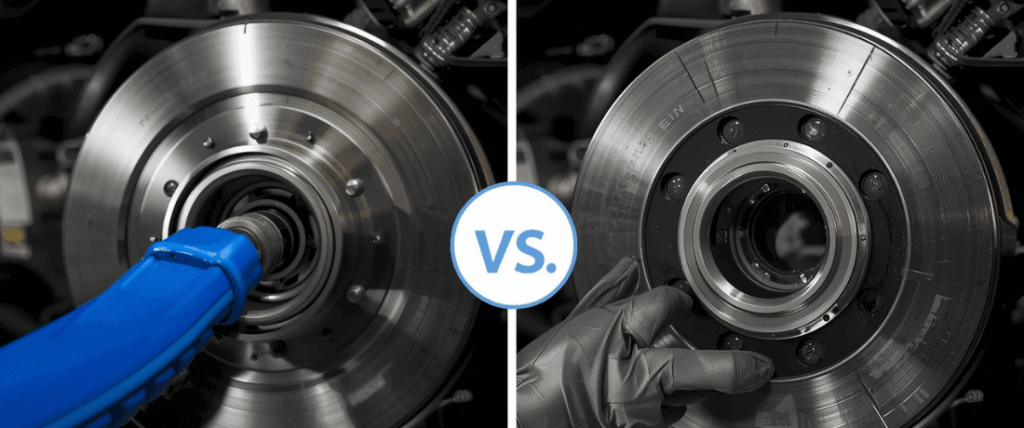
You’re hearing a noise from the wheel area — grinding, humming, clicking, or clunking — and you need to know whether it’s the wheel bearing or the CV joint before you call a shop or order a part. The good news is that these two components produce distinctly different sounds under different conditions. Once you know what to listen for and what tests to run, you can narrow it down in your driveway.
Here’s exactly how to tell them apart — and what to do once you know.
Contents
- 1 Quick Winner
- 2 What Each Component Is and Does
- 3 Key Differences Table
- 4 Failure Characteristics — What Each Means for Safety and Repairability
- 5 The At-Home Diagnostic Tests
- 6 Maintenance & Cost
- 7 Fuel Economy
- 8 Best for Daily Driving — Which Is More Manageable
- 9 Best for High-Mileage and Performance Vehicles
- 10 Which Is More Dangerous — Safety Urgency Comparison
- 11 FAQs About Bad Wheel Bearing vs CV Joint Noise
Quick Winner
Humming or growling that gets louder as speed increases: Wheel bearing. Speed-proportional noise is the defining characteristic of a failing wheel bearing.
Noise that changes pitch or intensity when you swerve or change lanes: Wheel bearing. When you shift weight left or right, the loaded bearing gets louder. This is the most reliable early-stage diagnostic indicator.
Clicking or popping during slow turns — especially at full steering lock: Outer CV joint. This sound appears specifically when the joint is at an extreme angle, like turning into a parking space or driveway.
Clunking when you accelerate from a stop or shift from drive to reverse: Inner CV joint. Clunk under torque load, not turning angle, points to the inner joint.
Grinding or growling that’s present at all speeds and gets worse over time: Could be either — late-stage wheel bearing or severely degraded CV joint. Run the diagnostic tests below before concluding.
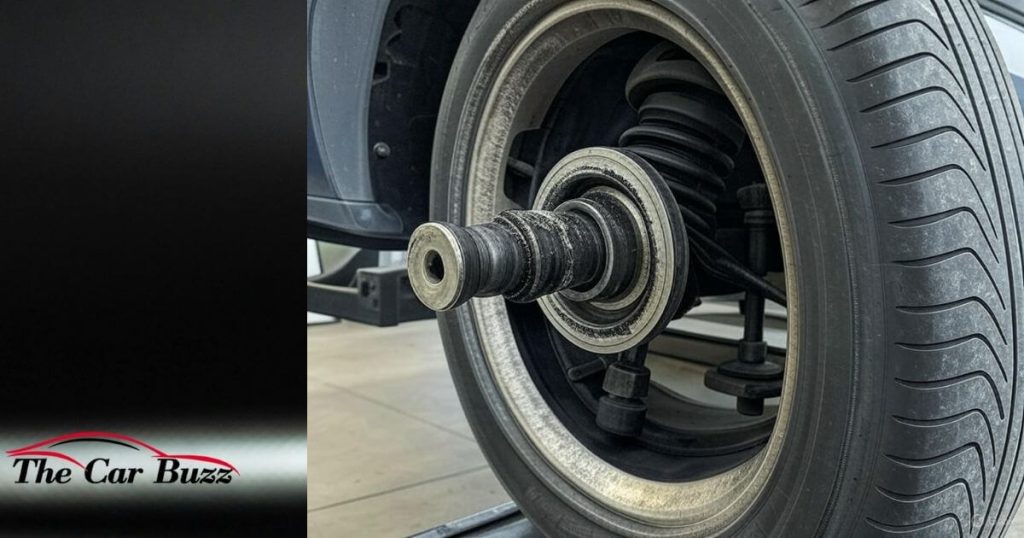
Grease sprayed on the inside of the wheel or on the suspension components: CV boot is torn. The CV joint itself may or may not be damaged yet — inspect immediately.
What Each Component Is and Does
Wheel Bearing
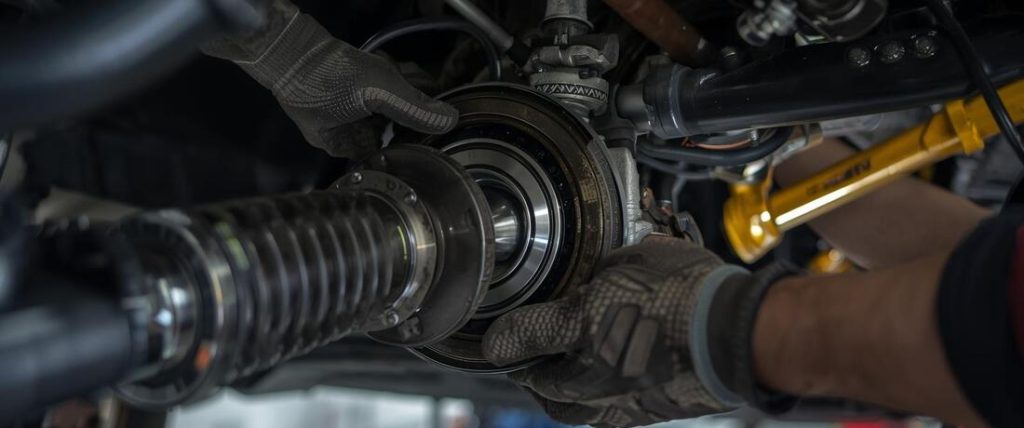
The wheel bearing is a set of precision steel ball or roller bearings housed in a race, mounted between the wheel hub and the spindle or knuckle. Its job is to allow the wheel to spin freely with minimal friction while supporting the full weight of the vehicle at that corner.
On most modern vehicles, the bearing is integrated into a sealed hub assembly — a single bolt-on unit that replaces cleanly when it fails. On older vehicles, the bearing is a separate pressed-in component. Either way, it sits at the center of the wheel and carries the vehicle’s load through every mile driven.
When a wheel bearing fails, the precision surfaces inside the bearing degrade, metal contacts metal, and the resulting friction produces the characteristic humming or grinding that changes with vehicle speed.
CV Joint (Constant Velocity Joint)
The CV joint connects the transmission to the driven wheel via the CV axle (also called the half shaft or CV shaft). Its job is to transmit engine torque to the wheel at a constant velocity regardless of the angle the suspension and steering put the axle at. Without it, every steering input and suspension movement would cause the drive wheel to speed up and slow down with each revolution — making the car undriveable.
There are two CV joints on each driven axle. The outer CV joint — at the wheel end — operates at the largest angles, particularly during turning. It produces the characteristic clicking when it fails. The inner CV joint — at the transmission end — handles the plunge motion as the suspension moves up and down. It produces clunking under torque load when it fails.
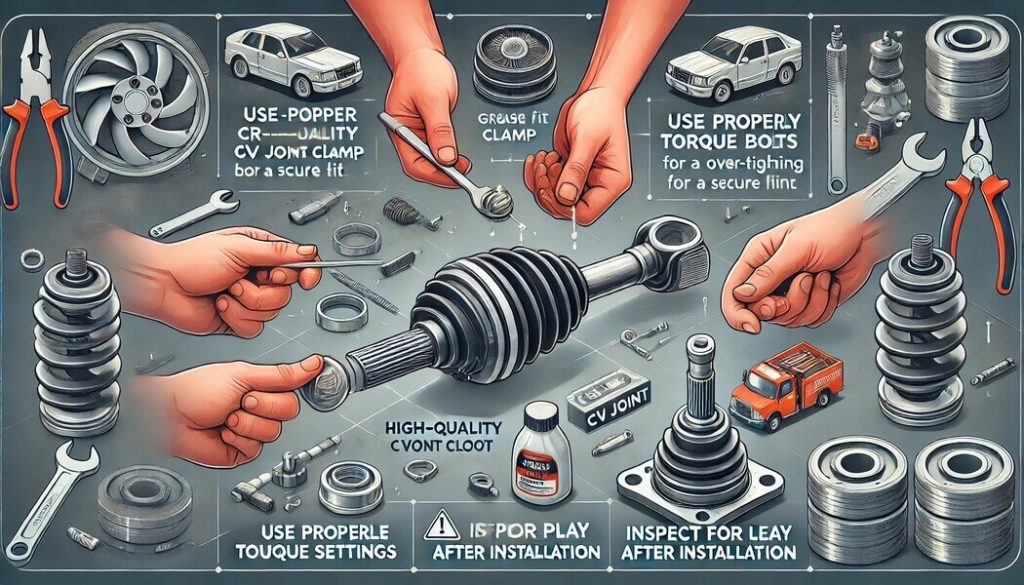
A rubber CV boot covers each joint, retaining grease and keeping contamination out. When the boot tears, grease escapes, dirt enters, and joint failure follows — usually within months.

Key Differences Table
| Feature | Bad Wheel Bearing | Bad CV Joint (Outer) | Bad CV Joint (Inner) |
|---|---|---|---|
| Primary noise | Humming / growling / grinding | Clicking / popping | Clunking |
| Noise trigger | Vehicle speed | Tight turning angle | Acceleration/deceleration torque load |
| Speed relationship | Increases with speed | Not speed-dependent | Not speed-dependent |
| Turn relationship | Changes with lane shift / swerve | Loud during full-lock turns | Not turn-dependent |
| Location on vehicle | All four wheels (any corner) | Wheel end of driven axle | Transmission end of driven axle |
| Vehicles affected | All (FWD, RWD, AWD) | FWD and AWD driven wheels | FWD and AWD driven wheels |
| Visual clue | Wheel wobble / play when jacked | Grease on wheel inner surface | Grease on inner boot area |
| ABS light triggered | Yes (speed sensor in hub) | No | No |
| Safety urgency | High — wheel separation risk at advanced stage | Moderate — gradual failure | Moderate — gradual failure |
| Replacement cost (parts + labor) | $200–$600 per corner | $150–$400 (full axle) | $150–$400 (full axle) |
Failure Characteristics — What Each Means for Safety and Repairability
Wheel Bearing Failure
The safety reality: A wheel bearing in early failure is noisy and annoying. A wheel bearing in late failure is dangerous. A completely failed wheel bearing can allow the wheel to detach from the vehicle — not gradually, but suddenly, at any speed. At highway speed, wheel separation is catastrophic.
Most guides mention this as a footnote. It deserves more than that. If your wheel bearing has progressed to audible grinding at all speeds, or if you can detect wheel play by jacking the car and trying to rock the wheel by hand, you are past the “monitor and manage” stage. That car should not go on a highway until the bearing is replaced.
Repairability: Wheel bearing replacement is generally a shop job on modern hub-assembly designs — the hub unbolts cleanly in most cases. On older vehicles requiring a press to install bearings, a shop press is needed. DIY is feasible on bolt-on hub assemblies with basic tools and moderate mechanical skill.
CV Joint Failure
The safety reality: CV joint failure is more progressive and gives more warning than wheel bearing failure. A clicking outer CV joint will typically click for weeks or months before the joint seizes completely. Complete seizure locks the axle — the vehicle loses drive to that wheel and handling becomes unpredictable, but the wheel does not detach.
The torn CV boot is the most important early warning sign. A boot that has just torn is a $80–$200 repair. Left another 10,000 miles, it becomes a $150–$400 axle replacement. Left until the joint seizes, it’s the same axle cost plus potential damage to the transmission output shaft or wheel hub.
Repairability: CV axle replacement is a solid DIY job on most FWD and AWD vehicles — remove the axle nut, disconnect the lower ball joint or strut, pull the axle out, install new one. A skilled home mechanic can complete it in 2–3 hours.

The At-Home Diagnostic Tests
This is what separates a real diagnosis from a guess. Run these in order — each one narrows the field further.
Test 1: The Speed Variation Test
Drive at a steady highway speed — 60–65 mph — on a smooth, empty road. Listen carefully to the noise. Now gradually vary speed between 45 and 70 mph without turning.
If the noise is clearly speed-proportional — gets louder as you speed up, quieter as you slow down — that’s a wheel bearing characteristic. CV joint noise is not speed-dependent in a straight line.
If the noise is constant regardless of speed, and only appears during certain maneuvers or under certain loads, look toward the CV joint.
Test 2: The Swerve / Lane Change Test
At highway speed on an empty road, gently swerve left and right — as if avoiding something in the lane. Don’t jerk the wheel. Smooth, deliberate weight shifts.
Here’s what the result means — and this is the part most guides get backwards:
When you swerve left, vehicle weight shifts to the right. The right bearing is loaded. If the noise gets louder when you swerve left, the right bearing is bad.
When you swerve right, vehicle weight shifts to the left. If the noise gets louder when you swerve right, the left bearing is bad.
The bearing that’s unloaded goes quiet because there’s less force pressing the damaged surfaces together. The bearing that’s loaded gets louder because the damaged surfaces are under maximum pressure.
If the noise doesn’t change with swerving in either direction, it’s unlikely to be a wheel bearing — refocus on the CV joint.
Test 3: The Full-Lock Slow Turn Test
In a parking lot, drive slowly at under 5 mph and turn the wheel to full lock in one direction, then drive a slow circle. Repeat in the other direction.
Clicking or popping that appears at full lock in one direction strongly indicates a failing outer CV joint on that side. The outer joint operates at its maximum angle during full-lock turns, and a worn or dry joint announces itself clearly in this position.
A wheel bearing does not produce clicking during slow full-lock turns — the load and speed are too low. If you get clicking only during this test, it’s almost certainly an outer CV joint.
Test 4: The Acceleration and Deceleration Clunk Test
From a complete stop, accelerate moderately and listen for a clunk or thud. Then, from highway speed, lift off the throttle sharply and listen again.
A clunk on acceleration or on engine braking — not during a turn, not speed-proportional — points to the inner CV joint. The inner joint is stressed by torque load (acceleration and deceleration) rather than by angle (turning). This sound is sometimes confused with worn motor mounts or loose exhaust components — but it’s consistently reproducible under throttle input.
Test 5: Jack and Inspect
With the car safely on jack stands, grab the wheel at the 12 o’clock and 6 o’clock positions and try to rock it. Then try the 3 o’clock and 9 o’clock positions.
Any detectable play — any movement that isn’t coming from the tire flexing — indicates a worn wheel bearing. A good wheel bearing has zero play when the car is jacked.
While you’re under there, inspect the CV boot on both ends of the axle. Look for:
- Grease sprayed onto the inside of the wheel, the suspension arm, or the axle itself
- A cracked, split, or missing boot
- Grease that looks gritty or dark rather than clean and amber-colored
A torn boot with contaminated grease means the CV joint has been running in dirt. It may still be serviceable — or it may be weeks from failure. A boot that just tore with clean grease still inside is the ideal scenario — replace the boot and save the joint.
Maintenance & Cost
Cost Comparison
| Repair | DIY Parts Cost | Shop Total (Parts + Labor) | Urgency |
|---|---|---|---|
| CV boot replacement (early catch) | $20–$50 per boot | $80–$200 | Soon — before joint damage |
| CV axle replacement (outer or inner) | $60–$150 per axle | $150–$400 | When clicking begins regularly |
| Wheel bearing (bolt-on hub assembly) | $80–$200 per corner | $200–$450 | Based on failure stage |
| Wheel bearing (pressed-in — older vehicles) | $30–$80 (bearing only) | $200–$500 | Based on failure stage |
| ABS sensor replacement (if damaged by bearing) | $20–$80 | $100–$250 | With bearing replacement |
The CV Boot Opportunity Cost
The single best value in drivetrain maintenance is catching a torn CV boot before the joint fails.
The first thing I do when a customer comes in with a clicking noise that’s been going on for three months is check the boot. Half the time, the boot has been torn since well before the clicking started — they’ve been driving on a contaminated joint the whole time.
Boot replacement: $80–$200. CV axle replacement: $150–$400. That gap is the cost of ignoring the early warning sign.
Check your CV boots at every oil change — it’s a 30-second visual inspection from under the car. A splitting boot is easy to see. Replace it before it tears completely and you’ll never pay for a CV axle on that corner.
Fuel Economy
Both a failing wheel bearing and a failing CV joint increase drivetrain friction — and both have a measurable though modest effect on fuel economy.
Wheel bearing: A worn wheel bearing running metal-on-metal increases rolling resistance at that corner. The drag is real — a severely failed bearing can feel like a slight brake drag under certain conditions. Real-world fuel economy impact is typically 1–3% in advanced failure. Not the primary concern, but present.
CV joint: A dry or worn CV joint running without adequate grease creates friction in the drive axle. The effect on fuel economy is similar in magnitude to a worn bearing — small but real. A joint that’s beginning to bind under torque load forces the engine to work slightly harder.
Neither component should be kept in failed condition for fuel economy reasons — the safety and repair cost implications dwarf the MPG consideration entirely.
Best for Daily Driving — Which Is More Manageable
The answer depends entirely on failure stage — not on the component type.
Early-stage CV joint clicking (appears only during slow full-lock turns): Manageable short-term. The joint is failing but not at risk of sudden complete failure. Drive normally, avoid unnecessary full-lock turns, and arrange repair within the next few weeks. Monitor for progression — if the clicking starts appearing during normal turns, urgency increases.
Torn CV boot with no clicking yet: Drive normally, but book the repair within a week. Every mile adds contamination to the joint. The clicking will start soon.
Early-stage wheel bearing humming (changes with swerve, not yet grinding): Manageable for highway driving with monitoring. Get it confirmed and scheduled for repair. Check it weekly for progression.
Advanced wheel bearing — grinding audible at all speeds, wheel play detected by hand: No highway driving. This bearing is in late-stage failure. The risk of wheel separation, however small per mile, is not acceptable at highway speed. Local roads at moderate speed while arranging emergency repair is the maximum appropriate use.
Advanced CV joint — clicking during all turns or clunking under all acceleration: Book repair immediately. Imminent complete joint failure means loss of drive and unpredictable handling. Not a safety situation as acute as a late-stage wheel bearing, but not a “drive it another month” situation either.
Best for High-Mileage and Performance Vehicles
High-mileage vehicles: At 100,000+ miles, wheel bearings and CV axles both enter their statistical failure window on many platforms. If you’re replacing one because of a confirmed failure, inspect the other at the same time — while the wheel is off and the work area is open. The labor overlap is significant. Replacing a CV axle and discovering a marginal wheel bearing in the same session costs one shop visit. Discovering that bearing six months later costs another.
Performance vehicles and aggressive drivers: Wheel bearings on performance vehicles see higher lateral loads from aggressive cornering — particularly on track days or autocross. Bearing wear accelerates under these conditions. Quality matters here — Timken, SKF, and Moog make bearings with tighter tolerances and higher load ratings than the typical import-brand replacements. On a car that sees hard cornering regularly, OEM-quality or better replacement bearings are worth the premium.
AWD vehicles: CV joints are present at all four corners on most AWD systems — not just the front axle. Rear CV joint failure on an AWD vehicle produces the same clicking and clunking symptoms in the rear, which drivers often initially misidentify as a rear differential problem. If you hear clicking during rear-biased turns on an AWD vehicle, inspect the rear CV boots and joints before assuming a differential issue.
Which Is More Dangerous — Safety Urgency Comparison
Advanced wheel bearing failure is more immediately dangerous than CV joint failure. The mechanisms are different and the consequences are not equivalent.
A wheel bearing that has failed to the point of loose play has lost its structural integrity. The bearing is no longer controlling the position of the wheel hub accurately. Under lateral load — a lane change, a curve, a pothole at speed — the hub can move beyond its designed range. In extreme cases, this leads to wheel separation: the entire wheel and hub departing the vehicle.
Wheel separation at highway speed is not survivable in most scenarios. It is rare — but it becomes meaningfully less rare as the bearing progresses from “humming” to “grinding with play.”
CV joint complete failure — the joint seizing and the axle stopping rotation — is serious but less immediately catastrophic. The vehicle loses drive to that wheel and handling is compromised, but the wheel itself remains attached. A CV joint that fails completely while driving gives enough progressive warning (increasing clicking, eventual binding) that most drivers have time to pull over safely.
The practical urgency ranking:
- Late-stage wheel bearing with detectable play — fix before next highway trip, no exceptions
- Advanced CV joint clicking during all turns — fix within days to one week
- Torn CV boot, no clicking yet — fix within one week before joint damage begins
- Early-stage wheel bearing hum — fix within 2–4 weeks, no extreme driving
- Early outer CV clicking, only at full lock — fix within 4–6 weeks, monitor progress
FAQs About Bad Wheel Bearing vs CV Joint Noise
How do I tell if I have a bad wheel bearing or a bad CV joint?
The most reliable distinction is the noise trigger. Wheel bearing noise is speed-proportional — it hums or growls louder as the car goes faster and changes intensity when you shift weight left or right by swerving. CV joint noise is angle or load-dependent — outer CV joints click during tight turns at low speed; inner CV joints clunk under acceleration and deceleration. Run the swerve test at highway speed and the full-lock slow turn test to confirm which component is causing the noise.
Is it safe to drive with a bad wheel bearing?
It depends on the failure stage. An early-stage wheel bearing that hums and changes with lane changes can be driven carefully for two to four weeks while you arrange repair. Avoid highway driving as it progresses. An advanced wheel bearing with audible grinding at all speeds and detectable wheel play when jacked is not safe for highway driving — the risk of wheel separation, however low per individual trip, is unacceptable at speed. Repair it before any highway use.
Can I drive on a bad CV joint?
Yes, for a limited time with monitoring. A clicking outer CV joint in early failure typically gives weeks to a few months of warning before complete failure. Avoid full-lock turns where possible and monitor for progression — if the clicking starts appearing during normal driving rather than just tight turns, the joint is failing faster. Do not ignore it indefinitely. A seized CV joint causes sudden loss of drive and unpredictable handling.
What does a bad wheel bearing sound like?
A failing wheel bearing produces a humming, growling, or grinding sound that increases with vehicle speed. Early-stage failure is a subtle hum that sounds like road noise but slightly louder on one side. As it progresses, it becomes a more pronounced growl that can be heard over the radio. Late-stage failure produces grinding audible at walking speed. The definitive diagnostic feature is that the noise changes when you shift the car’s weight side to side by swerving gently at highway speed.
How much does it cost to fix a wheel bearing vs. a CV joint?
Wheel bearing replacement typically costs $200–$450 per corner at a shop, including a bolt-on hub assembly and labor. CV axle replacement runs $150–$400 per axle at a shop. A CV boot replacement — if caught before the joint is damaged — costs $80–$200. If both components are found to need replacement during the same repair visit, the overlapping labor reduces the combined cost below what two separate visits would cost.
Verdict
You hear humming that changes with speed and shifts intensity when you swerve: Wheel bearing — confirmed. Run the swerve test to identify which side. Get it inspected for play and book repair based on severity.
You hear clicking during slow full-lock turns only: Outer CV joint. Run the full-lock test to confirm which side. Inspect the CV boot immediately. If the boot is intact and grease is clean, you have time — weeks to a couple of months. If the boot is torn, treat it as urgent.
You hear clunking under acceleration or engine braking: Inner CV joint. Book repair within one to two weeks — inner joint failure progresses faster than outer once it starts.
You can hear grinding at all speeds and feel play in the wheel when jacked: Late-stage wheel bearing. No highway driving. Repair immediately.
You see grease sprayed on the inside of the wheel: Torn CV boot. This is your early warning. $80–$200 now or $150–$400 in six months. The choice is straightforward.
You’re not sure after all of this: Jack the car safely and do Test 5. Wheel play points to a bearing every time. No play and no grease on the boot narrows it to the CV joint. If you still can’t tell, a shop can confirm in 20 minutes on a lift — the diagnostic fee is worth it before ordering parts.