
This article was updated in May 6, 2026 with new products and information by Mark S. Taylor
Car electrical problems are among the most frustrating and common issues vehicle owners face today. Modern cars contain hundreds of electronic components, sensors, wiring harnesses, and control modules that make driving safer and more comfortable—but also more complex when something goes wrong.
This comprehensive pillar guide will help you understand car electrical problems, recognize early symptoms, identify root causes, perform safe diagnostics and repairs, and prevent future failures. Whether you’re dealing with a dead battery, flickering lights, or mysterious warning lights, you’ll find practical, step-by-step solutions to get your vehicle back on the road reliably while saving time and money.

Contents
- 1 What Are Car Electrical Problems?
- 2 Common Car Electrical Problem Symptoms and Signs
- 3 What Causes Car Electrical Problems?
- 4 Safety and Risks — Critical Rules Before You Start
- 5 Step-by-Step Electrical Diagnosis Guide
- 6 Common Car Electrical Fix Costs and Difficulty
- 7 Common Mistakes People Make ⭐
- 8 Pro Tips from Real Experience ⭐
- 9 FAQ — Car Electrical Problems
- 9.1 Q: How do I find an electrical fault in my car without a mechanic?
- 9.2 Q: Can a bad ground cause multiple electrical problems at once?
- 9.3 Q: Why do electrical problems in cars seem to fix themselves?
- 9.4 Q: Is it safe to drive with an electrical warning light on?
- 9.5 Q: How much does it cost to diagnose car electrical problems at a garage?
- 9.6 Conclusion
- 9.7 Quick Summary
Quick Answer
Car electrical problems are faults in the wiring, power supply, or control modules that prevent systems from working. Common causes include bad grounds, blown fuses, and failing alternators. You can diagnose most issues using a multimeter and an OBD2 scanner.
Dashboard lights flickering at 70mph. Windows stuck halfway down. The car starts fine one morning and refuses the next. Electrical problems are the most unpredictable issues in modern vehicles. They account for a growing share of breakdowns as cars pack more electronics into every system. Electrical problems have a reputation for being mysterious and expensive. Most of the time, they are neither. The hard part is knowing where to look. In this guide, you will learn what car electrical problems look like and how to safely diagnose them. Work through this before you hand the car to a mechanic. Knowing the basics saves you hundreds.
What Are Car Electrical Problems?
Car electrical problems are faults in the vehicle’s wiring, power supply, sensors, or control modules that prevent one or more systems from working correctly.
A modern car’s electrical system works like a chain. It starts with the battery and alternator. Power flows through fuse boxes and relays. It reaches control modules and finally powers individual components like lights or windows.
Modern cars have 50 to 100 electronic control units (ECUs). They contain up to 1.5 miles of wiring. This complexity is why electrical problems are increasing.
Every electrical fault falls into three categories:
- Power supply faults: battery, alternator, fuses, relays.
- Wiring faults: broken, corroded, or shorted wires.
- Component/module faults: failed sensors, ECUs, switches.
Why do they feel random? Intermittent faults come and go. Heat, vibration, and corrosion cause connections to fail one minute and work the next.
Common Car Electrical Problem Symptoms and Signs
Electrical problems show up as warning lights, non-functioning accessories, starting issues, flickering lights, and strange smells — often appearing and disappearing unpredictably.
Your car gives you clues when an electrical fault occurs. You just need to recognize them.
Warning Lights on the Dashboard
Battery, check engine, or ABS lights staying on signal an electrical fault. A flickering warning light is a classic sign of a wiring or connector issue.
Do not ignore these lights. The check engine light alone covers hundreds of possible codes. Reading the code is your essential first step.
Car Won’t Start or Starts Intermittently
An electrical no-start might crank but not fire. It might just click, or stay completely silent. Intermittent starting points to a corroded connector or loose ground wire.
If the car starts fine for days but suddenly refuses, suspect an electrical connection rather than a mechanical part.
Flickering or Dim Lights
Headlights or dash lights that pulsate usually mean a loose ground or failing alternator. Lights dimming under a heavy load mean the alternator struggles to keep up.
If your headlights dim when you turn on the heated rear window, test your charging system immediately.
Blown Fuses — Repeatedly
A fuse that blows once did its job. A fuse that blows repeatedly means an active short circuit in that wiring.
Never put in a higher-rated fuse to stop it from blowing. This removes the fire protection and risks burning the car down.
Electrical Accessories Not Working
Power windows or locks failing usually mean a blown fuse or bad relay. Multiple unrelated accessories failing points to a wiring or Body Control Module (BCM) issue.
If your radio and power windows stop working at the same time, look for a shared ground wire.
Burning Smell or Smoke
Burning plastic means an overheating wire. Visible smoke from under the dash means pull over immediately.
These are not “drive to the garage” symptoms. They are “pull over and call a tow truck” symptoms. Wire fires spread fast.
Battery Draining Overnight (Parasitic Drain)
A car dead by morning with no lights left on means a parasitic drain. A component is drawing power when it should be off.
This is one of the most common and misunderstood electrical complaints. A healthy car should not drain its battery overnight.
Erratic or Malfunctioning Electronics
A radio resetting itself or windows moving on their own are “gremlins.” They are almost always caused by poor grounds or voltage spikes.
These strange behaviors confuse drivers. However, they follow strict electrical rules once you find the bad connection.

What Causes Car Electrical Problems?
The most common causes are corroded or loose connections, faulty grounds, blown fuses, failing alternators, water ingress, and worn wiring — many of which develop slowly over years.
Parts do not fail without a reason. Understanding the root cause prevents the problem from returning.
Corroded or Loose Connections and Terminals
This is the number one cause of intermittent faults. Corrosion builds up on connectors and battery terminals.
This crust creates resistance. Resistance blocks electrical current. Vibration also gradually loosens connector clips over time.
Bad Ground Connections
Every electrical circuit needs a return path to the battery. Ground straps run from the battery to the chassis and engine block.
A single loose ground strap can cause problems across multiple unrelated systems. This is the most underdiagnosed cause of mysterious electrical faults.
Blown Fuses and Failed Relays
Fuses protect circuits from overcurrent. Relays are electrically controlled switches that fail through age and heat.
A blown fuse is a symptom, not the root cause. Something caused that fuse to blow. Find the short circuit before replacing the fuse.
Failing Alternator
The alternator charges the battery and powers all electronics while the engine runs. A failing alternator causes voltage to fluctuate.
This triggers warning lights, flickering lights, and erratic electronics. Alternator diode failure can also corrupt sensitive module memory.
Water and Moisture Ingress
Water enters through bad door seals, blocked sunroof drains, or damaged firewall grommets. Moisture corrodes connectors and shorts circuits silently.
A wet carpet in the boot or footwell is a major red flag. Water destroys ECUs hidden under the floorboards.
Rodent Damage
Rats and mice chew wire insulation. Vehicles parked outdoors or near fields are prime targets.
Damage is often hidden inside wire looms. Modern soy-based wire insulation makes this problem even worse.
Heat and Age-Related Wiring Degradation
Wire insulation becomes brittle and cracks over time. This happens mostly near the hot engine bay.
Cracked insulation causes intermittent shorts. High-mileage vehicles over 10 years old suffer from this the most.
Failed Sensors and Control Modules (ECUs)
Modern cars have dozens of sensors feeding data to ECUs. Sensor failure triggers warning lights and affects multiple systems.
ECU failure is relatively rare but expensive. It is often caused by voltage spikes from improper jump-starting.
DIY Wiring Mistakes
Aftermarket dashcams, stereos, or alarms wired incorrectly cause major headaches. Poor splices and wrong fuse ratings create persistent electrical gremlins.

Safety and Risks — Critical Rules Before You Start
Car electrical work carries risks of shock, fire, and permanent module damage — always disconnect the battery and follow the correct sequence.
You must respect automotive electricity. A simple mistake can cost thousands of dollars.
When to Stop and Call a Professional
Do not touch airbag (SRS) system wiring. Airbag circuits carry stored charge that can deploy the bag even with the battery disconnected.
If you smell burning or see smoke, do not try to find the fault yourself. Call a mobile mechanic or have the car recovered.
Battery Disconnection Safety
Always disconnect the negative terminal first before working on any electrical component. Wait 10 to 15 minutes for module capacitors to discharge.
Reconnect the positive terminal first when you finish the job. This specific sequence prevents dangerous short circuits.
Short Circuit and Fire Risk
A short circuit happens when a bare wire touches ground. It generates extreme heat instantly. Wire fires can start within seconds.
Never probe live circuits with bare metal tools. Always use insulated probes. Keep a fire extinguisher nearby when working on wiring. You can learn more about vehicle fire risks from the NHTSA.
Voltage Spike Risks to Modules
Modern ECUs are extremely sensitive to voltage spikes. Connecting a battery charger incorrectly can destroy them.
Disconnecting the battery while the engine is running is another common way to fry expensive modules. A $50 error can easily produce a $1,500 repair bill.
Step-by-Step Electrical Diagnosis Guide
Systematic diagnosis — starting with power supply and grounds, then working outward — solves most electrical faults without expensive specialist equipment.
Do not guess. Follow these steps in order to find the fault logically.
Step 1: Record the Exact Symptoms
Write down exactly what fails and when. Note if it happens on a cold start, hot engine, or after rain. Intermittent faults are hard to find. Documenting patterns reveals the cause.
Step 2: Read the Fault Codes with an OBD2 Scanner
Plug a scanner into the OBD2 port under the dash. Record every code, even ones that seem unrelated. U-codes are particularly useful. They indicate a module that lost communication with the network.
Step 3: Check the Battery and Charging System First
Test battery voltage with the engine off. A healthy battery reads 12.6V. Test charging voltage with the engine running. It should read 13.7V to 14.7V. A bad power supply causes cascading faults across the whole car.
Step 4: Inspect All Fuses and Relays
Locate both fuse boxes. Visually inspect every fuse for a broken metal strip. Use a cheap fuse tester to check both sides of the fuse with the circuit live. Swap suspect relays with identical ones from the same box to test them.
Step 5: Check All Ground Connections
Find the main ground strap from the battery to the chassis. Ensure it is tight and free of rust. Find the engine-to-body ground straps and clean them. A voltage drop test across a ground connection identifies hidden resistance.
Step 6: Inspect Visible Wiring and Connectors
Look for obvious damage like melted insulation or chewed wires. Check firewall grommets where wiring passes through the metal. Focus on areas near exhaust heat and door hinges where wires flex.
Step 7: Test for Parasitic Drain
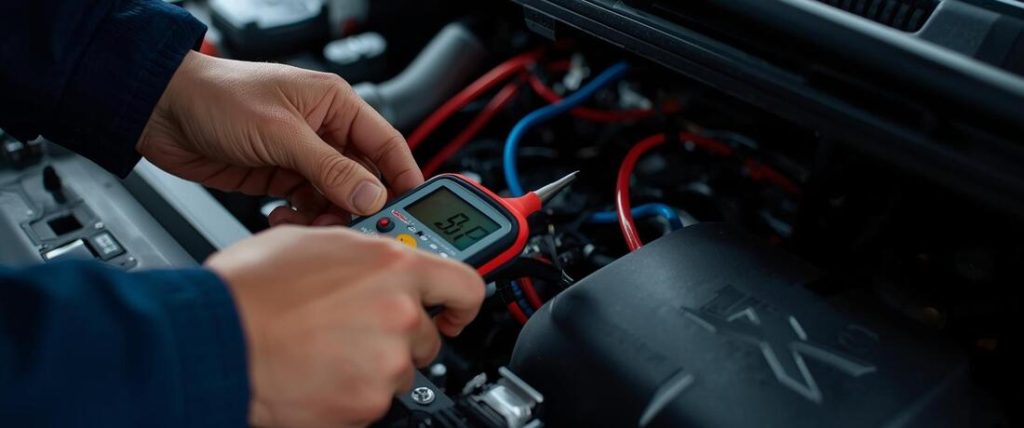
Connect a multimeter in milliamp mode in series with the negative battery terminal. Normal standby draw is under 50mA after 10 minutes. Pull fuses one at a time while watching the meter. The fuse that drops the reading identifies the bad circuit.
Step 8: Isolate the Fault Circuit
Work from the power source toward the broken component. Check the fuse, then the relay, then the wiring, then the component. Use a test light to confirm voltage is present at each point in sequence.
Step 9: Repair or Refer
Clean loose connectors with electrical contact cleaner and apply dielectric grease. Solder broken wires and use heat-shrink tubing. Never use crimp connectors or tape alone under a car. If you suspect a failed ECU, take your codes to a specialist.
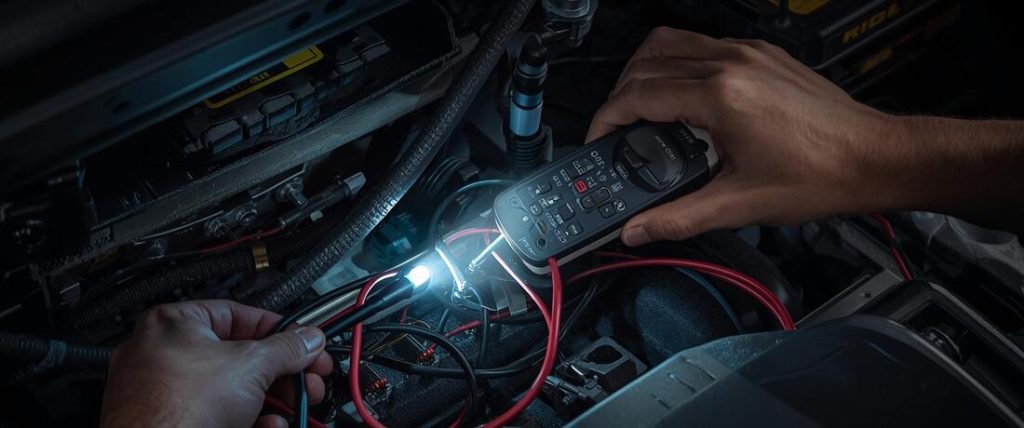
Common Car Electrical Fix Costs and Difficulty
You must understand the cost and difficulty before you start a repair. Use this table to plan your next steps.
| Fault | DIY Possible? | Cost | Difficulty |
|---|---|---|---|
| Blown fuse replacement | Yes | Under $5 | Very easy |
| Relay replacement | Yes | $10–$40 | Very easy |
| Battery terminal cleaning | Yes | Free–$10 | Very easy |
| Ground strap cleaning | Yes | $5–$30 | Easy |
| Alternator replacement | Possible | $300–$700 | Moderate–Hard |
| Wiring repair (accessible) | Yes | $10–$50 | Moderate |
| Wiring repair (hidden loom) | No | $200–$800 | Specialist |
| Sensor replacement | Possible | $50–$300 | Moderate |
| ECU / module replacement | No | $300–$1,500+ | Specialist only |
| Parasitic drain diagnosis | Yes | $10–$15 | Moderate |
| Water ingress repair | Partial | $100–$600+ | Moderate–Hard |
Common Mistakes People Make ⭐
Replacing parts without reading codes and fitting higher-rated fuses are the fastest ways to waste money and start fires.
I see these mistakes in the shop every single week. Do not let them happen to you.
Replacing Parts Without Reading Fault Codes First
Guessing that a warning light means a specific part needs replacing is a waste of money. A check engine light for a catalyst code does not always mean you need a new catalytic converter. It could be a simple oxygen sensor. Scan the car first, always.
Fitting a Higher-Rated Fuse to “Fix” a Blown Fuse
This is one of the most dangerous DIY mistakes you can make. The fuse is the last protection between a wiring fault and a car fire.
A 20A fuse in a 10A circuit will not blow when it should. The wire will overheat and catch fire instead.
Connecting Ground Wires to Painted Metal
Paint is an insulator. A ground connected to a painted surface has poor or zero continuity.
Always scrape or sand the metal down to bare metal at every ground connection. Bad grounds cause more unexplained electrical gremlins than anything else.
Jump-Starting Incorrectly
Reversed polarity during a jump-start sends a massive voltage spike through every module in the car. Modern cars are incredibly vulnerable to this.
Always follow the correct order. Red to dead positive, red to good positive, black to good negative, black to unpainted metal on the dead car. Never connect black directly to the dead battery.
Ignoring Water Ingress
A small wet patch under the carpet might dry out. But the water usually corrodes a hidden connector or ECU. That corrosion will cause electrical problems months later.
Any confirmed water entry into the cabin must be traced to its source. Seal the leak and clean all affected wiring.
Chasing Symptoms Instead of the Root Cause
Replacing a battery that keeps going flat without finding the parasitic drain just kills the new battery. Replacing a sensor that keeps throwing a code without fixing the wiring achieves nothing.
Fix the root cause. Do not just throw parts at the symptom.
Pro Tips from Real Experience ⭐
Cleaning the ground system first and using a wiring diagram will solve half the electrical problems you will ever face.
These tips come from years of real-world diagnostics. They will save you hours of frustration.
Always Fix the Ground System First
Bad grounds cause more seemingly complex faults than anything else. Before you chase a difficult wiring issue, spend 30 minutes cleaning every accessible ground point on the car.
This single step resolves a surprising number of mysterious problems at zero cost.
Use a Wiring Diagram
Free wiring diagrams are available online for most vehicles. A wiring diagram turns a complex multi-wire problem into a logical, traceable map.
Without a diagram, chasing electrical faults is pure guesswork. Find the diagram for your specific car.
A Quality Multimeter Is Worth Every Penny
A decent $30 digital multimeter is enough to diagnose the majority of car electrical faults. Combine it with a wiring diagram and you have professional-level diagnostic power.
Learn four basic measurements: DC voltage, continuity, resistance, and milliamp draw. These four tests cover 90% of automotive diagnosis.
Document Everything
Take photos of every connector and wire before you disconnect anything. Note the color codes and exact positions of the wires.
In a complex repair, a five-second photo saves an hour of confusion when you put the car back together.
Get a Full System Scan — Not Just Engine Codes
Basic cheap code readers only scan the engine management system. A full system scan at a good workshop covers every module in the car.
This includes body, chassis, airbag, and transmission modules. It gives you a complete picture of the problem. For more practical diagnostic guides, visit The Car Buzz.
FAQ — Car Electrical Problems
Q: How do I find an electrical fault in my car without a mechanic?
A: Start with an OBD2 scan to read stored fault codes. Then check the battery and charging voltage. Inspect all fuses and look at all ground connections. Work logically from the power source toward the problem component. A $15 multimeter and a free wiring diagram get you surprisingly far.
Q: Can a bad ground cause multiple electrical problems at once?
A: Yes. Multiple unrelated systems share common ground paths in a car. A single corroded or loose ground strap can simultaneously affect the engine, power windows, and lighting. When several unrelated systems fail at once, check every ground connection first.
Q: Why do electrical problems in cars seem to fix themselves?
A: Intermittent faults are usually caused by a connection that works in some conditions but not others. Heat makes metals expand and close a cracked wire. Vibration causes a loose connector to make contact temporarily. The fault has not fixed itself. It will return and get worse.
Q: Is it safe to drive with an electrical warning light on?
A: It depends on the light. A battery or oil pressure light means pull over immediately. A steady check engine light is safe to drive to a garage soon. A flashing check engine light means avoid heavy acceleration and get it seen urgently. Airbag or ABS lights mean the safety system is offline, but the car is safe to drive carefully.
Q: How much does it cost to diagnose car electrical problems at a garage?
A: A basic OBD2 code read costs $40 to $80. A full multi-system diagnostic scan costs $80 to $150. Complex diagnosis for an intermittent fault can take 2 to 4 hours of labor. Doing the initial checks yourself before going to a garage saves significant money.
Conclusion
Car electrical problems are complex. But they are almost always traceable with a logical, systematic approach. Most faults start with something simple. A corroded terminal, a failed fuse, or a loose ground wire are usually the culprits. With an OBD2 scanner, a basic multimeter, and the diagnostic steps in this guide, you can accurately identify most electrical faults. You will arrive at the garage knowing exactly what you need, not just what is wrong. Start with Step 1 — record your symptoms. Then scan the codes. The answer is almost always in the data. Remember, if you smell burning or see smoke from any electrical component, do not drive the car. Automotive wiring fires spread rapidly. Call for recovery immediately.
Quick Summary
- Car electrical problems fall into three categories: power supply faults, wiring faults, and component faults.
- Always read OBD2 fault codes before touching anything. This is the fastest diagnostic step.
- Check the battery and alternator first. A bad power supply causes cascading faults across every system.
- Bad ground connections are the most underdiagnosed cause of multiple simultaneous electrical faults.
- Never replace a blown fuse with a higher-rated one. This removes the only protection against a wiring fire.
- Fix causes, not symptoms. Replacing parts that keep failing without finding why wastes money.
- Know when to stop. Airbag systems, active smoke, and ECU faults require a professional.