
This article was updated in May 17, 2026 with new products and information by Mark S. Taylor
Car quarter panel repair costs anywhere from $150 for a simple PDR fix to over $3,000 for a full replacement with paint on a newer vehicle. Where you land on that range depends entirely on the type of damage, how the shop fixes it, and whether your car even qualifies for repair over replacement.
If someone just tagged your car in a parking lot, you probably have options. If the panel is crumpled, has deep rust, or the metal is torn — the math changes significantly. This guide walks you through exactly how to assess your damage, pick the right repair method, and decide whether filing an insurance claim actually makes sense for your situation.

Contents
- 1 What Is a Quarter Panel? (And Why It’s Not Like a Regular Body Panel)
- 2 Types of Quarter Panel Damage and What They Mean
- 3 Repair vs. Replace: How to Decide
- 4 Quarter Panel Repair Methods Explained
- 5 How Much Does Quarter Panel Repair Cost? (Real Numbers)
- 6 The Insurance Question: File a Claim or Pay Out of Pocket?
- 7 Hidden Costs Body Shops Don’t Always Mention Upfront
- 8 When Repair Costs More Than the Car Is Worth
- 9 Can You Drive with a Damaged Quarter Panel?
- 10 DIY Quarter Panel Repair: What’s Realistic
- 11 FAQs About Car Quarter Panel Repair
- 11.1 What is the difference between a quarter panel and a fender?
- 11.2 Can a dented quarter panel be fixed without replacing it?
- 11.3 Does quarter panel damage affect my car’s resale value?
- 11.4 How long does quarter panel repair or replacement take?
- 11.5 Will a repaired quarter panel rust again?
- 11.6 Is it worth repairing a quarter panel on an older car?
- 12 The Verdict
What Is a Quarter Panel? (And Why It’s Not Like a Regular Body Panel)
The quarter panel is the exterior body section that runs from the rear door opening back to the trunk or tailgate, wrapping around the rear wheel well. You’ve got one on each side of the car.
Here’s the thing most people don’t realize until they get a body shop estimate: a quarter panel is welded to your car’s frame, not bolted on. That’s what makes it so much more expensive to replace than a front fender. Fenders are bolt-on parts — swap one in a few hours, done. Quarter panels require cutting out spot welds, removing the damaged section, welding in a new panel, sealing the seams, and refinishing. It’s a structural job, not a bolt-on swap.
| Feature | Quarter Panel | Front Fender |
|---|---|---|
| Attachment Method | Welded to unibody frame | Bolted on |
| Structural Role | Yes — contributes to frame rigidity | Minimal |
| Replacement Complexity | High — cutting and welding required | Low — unbolt and replace |
| Typical Repair Cost | $500–$3,000+ | $200–$1,000 |
| DIY Feasibility | Not recommended | Possible for experienced DIYers |
The quarter panel also sits over and around the rear wheel arch, which means any significant damage can affect tire clearance, suspension alignment, and the inner wheel house structure behind it.
Types of Quarter Panel Damage and What They Mean
Before you call a shop, it helps to understand what you’re actually dealing with. Not all quarter panel damage is equal — and knowing the category helps you set realistic expectations on cost and repair method.
Surface Scratches and Paint Scuffs The paint is damaged but the metal underneath is untouched. Usually caused by shopping carts, tree branches, or light contact. Cheapest and easiest to fix. Sometimes can be handled with touch-up paint or a paint correction service.
Minor Dents Without Paint Damage The metal is pushed in but the paint is intact and uncracked. This is the sweet spot for paintless dent repair (PDR). Common cause: parking lot door dings, minor low-speed impacts.
Dents With Cracked or Broken Paint The impact was hard enough to crack or crease the paint. PDR may not work here. Usually requires body filler work and a repaint of the panel.
Deep Creases or Sharp Folds The metal has a sharp crease or fold that’s stretched the metal beyond what PDR can massage back. This typically means body filler repair at minimum, sometimes panel sectioning or replacement.
Crumple or Structural Collapse Significant impact that has pushed the panel inward or deformed the wheel arch. This is replacement territory. The inner structure may also be compromised.
Rust Bubbling or Perforation Surface rust is caught early and can be sanded, treated, and refinished. But once rust perforates through the metal — you can poke a finger through it — the panel needs to be cut out and replaced or patched with a new section.

Repair vs. Replace: How to Decide
This is the central question — and most body shops will give you an honest answer if you ask directly. Here’s a simple framework.
| Damage Type | Recommended Approach |
|---|---|
| Surface scratch or scuff (no metal damage) | Paint correction / touch-up |
| Small dent, paint intact | Paintless Dent Repair (PDR) |
| Dent with cracked paint, no crease | Body filler + spot repaint |
| Deep crease, stretched metal | Panel sectioning or full replacement |
| Crumpled or collapsed panel | Full replacement |
| Surface rust (not perforated) | Sand, treat, refinish |
| Rust perforation (hole through metal) | Patch panel or full replacement |
| Structural damage to wheel arch | Full replacement + inner structure repair |
The key questions to ask your shop: Is the inner wheel house damaged? Is the metal stretched or just pushed in? Will the repair hold a proper paint match?
If the answers to the first two are yes and the repair cost exceeds roughly 60–70% of what full replacement would cost, most experienced body technicians lean toward replacement. The labor invested in a borderline repair often isn’t worth it versus starting fresh with new metal.
Quarter Panel Repair Methods Explained
Shops have several tools in their arsenal depending on the damage. Here’s what each method involves and when it applies.
1. Paintless Dent Repair (PDR) A technician uses specialized rods and tools to push or pull the dented metal back from behind the panel — without disturbing the paint. This only works when the paint surface is intact and the metal isn’t creased or stretched. It’s the fastest and cheapest option when applicable, usually completed in a few hours. Best for: Minor dents, door dings, small hail damage Cost: $150–$400 depending on dent size and location
2. Body Filler Repair (Traditional Bodywork) The damaged area is worked with hammers and dollies to get close to its original shape, then body filler (commonly called Bondo) is applied, shaped, sanded smooth, and the panel is repainted. This is the standard approach for dents with paint damage or minor creases. Best for: Dents with cracked paint, minor creases, surface imperfections Cost: $300–$900 depending on damage area and paint complexity
3. Panel Sectioning Instead of replacing the entire quarter panel, the shop cuts out only the damaged section and welds in a new piece of metal. Experienced body men often prefer this because it preserves more of the original structure and avoids disturbing undamaged areas. Best for: Localized severe damage or rust where the rest of the panel is sound Cost: $500–$1,500 depending on the section size
4. Full Quarter Panel Replacement The entire panel is cut away from the unibody frame, a new panel is welded in, seams are sealed and finished, and the panel is painted to match. This is the most invasive and expensive option but necessary for extensive crumpling, structural damage, or widespread rust. Best for: Major collision damage, extensive rust, structural compromise Cost: $1,000–$3,000+ depending on vehicle and labor market

How Much Does Quarter Panel Repair Cost? (Real Numbers)
Here’s a realistic cost breakdown across all repair methods, including parts, labor, and paint.
| Repair Method | Parts Cost | Labor | Paint/Finish | Total Range |
|---|---|---|---|---|
| PDR (paintless dent repair) | $0 | $150–$350 | $0 | $150–$400 |
| Body filler + spot repaint | $20–$100 | $200–$400 | $150–$300 | $300–$900 |
| Panel sectioning | $50–$300 | $300–$600 | $200–$400 | $500–$1,500 |
| Full replacement (aftermarket) | $150–$500 | $400–$800 | $300–$600 | $800–$2,000 |
| Full replacement (OEM) | $400–$1,200 | $400–$800 | $300–$700 | $1,200–$3,000+ |
| Rust repair (minor) | $50–$150 | $200–$400 | $150–$300 | $300–$800 |
| Rust repair (severe/perforation) | $150–$600 | $400–$800 | $300–$600 | $800–$2,500 |
What drives costs up the most:
- Vehicle make and model — European and luxury brands cost significantly more in parts and labor
- Paint complexity — tri-coat pearl, matte, or specialty colors add $200–$500 to any repaint
- Geographic location — body shop labor rates in major metro areas run 20–40% higher than rural markets
- Damage discovered after teardown — hidden inner structure damage commonly adds $300–$800 to the final bill
The Insurance Question: File a Claim or Pay Out of Pocket?
This is where most guides let you down. They say “contact your insurer” and leave you hanging. Here’s how to actually think through the decision.
When filing a claim makes sense:
- The repair estimate exceeds $1,500–$2,000
- You have full coverage with a deductible of $500 or less
- The damage was caused by someone else and you have their information
- The damage involves structural components that affect safety
When paying out of pocket makes more sense:
- The repair estimate is only a few hundred dollars more than your deductible
- You’ve filed a claim in the past 3–5 years and another claim could trigger a significant premium increase
- Your car is older and you’re already considering selling it
Here’s the math that matters: If your repair estimate is $1,200 and your deductible is $1,000, you’re only saving $200 by filing — but your annual premium could increase by $200–$400 for the next 3–5 years. That’s up to $2,000 in additional premiums for a $200 payout. In that scenario, paying out of pocket is often the smarter move.
One more thing: the insurance adjuster’s initial estimate is almost always lower than the final repair cost. Shops routinely file supplement claims after teardown reveals hidden damage. Your deductible stays the same regardless — the insurer covers the supplement — but be prepared for the timeline to extend by several days while the supplement gets approved.
Hidden Costs Body Shops Don’t Always Mention Upfront
This is the section that will save you from sticker shock when you pick up your car.
- ADAS sensor recalibration: Many modern vehicles have blind-spot monitoring sensors and parking assist radars embedded in or behind the rear quarter panel area. When these panels are replaced, the sensors must be recalibrated to factory specifications. This adds $150–$400 to the job and requires specialized equipment. Not every body shop has it. Make sure yours does.
- Adjacent panel blending: To achieve a seamless color match, shops often need to blend the paint onto the door, trunk lid, or bumper cover next to the repaired panel. This adds labor and materials cost — typically $150–$350 per adjacent panel — but skipping it often results in a visible color mismatch.
- Inner wheel house damage: The quarter panel has an inner structure behind it — the wheel house. Collision energy often damages both. If the inner structure is compromised, it adds significant labor and sometimes requires additional patch panels. Shops can’t always see this before teardown.
- Corrosion treatment: Any time bare metal is exposed during welding, it needs to be treated to prevent future rust. Quality shops include this; budget shops sometimes skip it to save time. Ask specifically if seam sealer and corrosion protection are included in your estimate.
When Repair Costs More Than the Car Is Worth
This is a conversation nobody wants to have — but it’s important.
Insurance companies declare a vehicle a total loss when the estimated repair cost exceeds roughly 70–80% of its actual cash value (ACV). The threshold varies by state and insurer. Quarter panel replacement — especially when it involves structural work — is one of the most common repairs that pushes a vehicle over that line.
If your car is worth $8,000 and the shop estimates $6,500 in repairs, the insurer will likely total it. You get a payout based on ACV minus your deductible.
Even without insurance involvement, the math applies to your personal decision. If your 2010 sedan is worth $4,500 in the market and you’re looking at a $3,200 quarter panel replacement, it’s worth asking whether putting $3,200 into a $4,500 car makes sense — or whether that money is better used as a down payment on a different vehicle.
Can You Drive with a Damaged Quarter Panel?
It depends entirely on the type and severity of the damage.
Probably fine to drive temporarily:
- Surface scratches or scuffs
- Minor dents without cracked paint
- Small rust bubbles that haven’t perforated the metal
Use caution / get it checked soon:
- Dents that are close to or affecting the wheel arch — the tire could make contact with damaged metal at full suspension compression
- Any damage that has shifted the body lines visibly — gaps between doors and panels may indicate structural movement
Don’t drive until repaired:
- Crumpled panel with sharp exposed metal edges
- Panel pushing against the tire or suspension components
- Any damage that caused visible misalignment of the trunk or rear doors
If there’s any question about whether the panel is contacting the tire — put the car on a lift and check first. A tire blowout caused by rubbing against a damaged wheel arch is far more dangerous than the original dent.
DIY Quarter Panel Repair: What’s Realistic
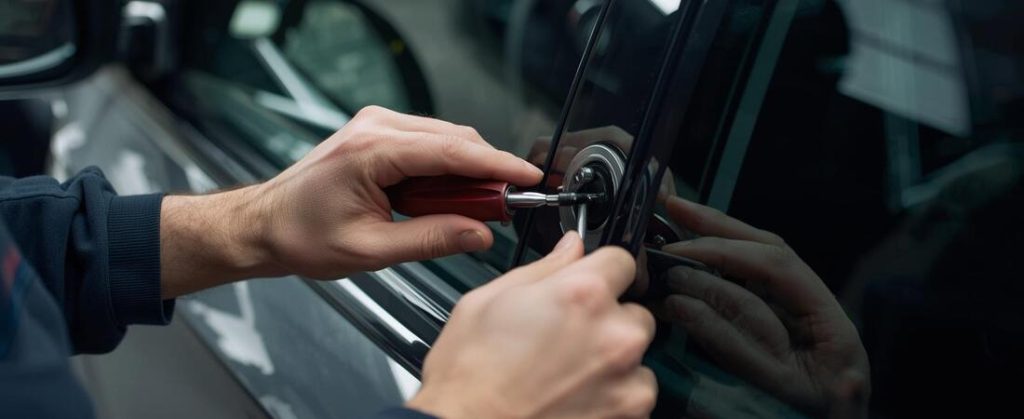
Let’s be straight about this: full quarter panel replacement is not a DIY job. It requires a spot welder, MIG welder, panel cutting tools, a paint booth, and years of body work experience. Attempting it without proper equipment almost always results in poor fitment, water leaks, and structural weakness.
That said, some things are reasonably DIY-able:
- Minor scratches: Touch-up paint pens or spray cans from the manufacturer (matched to your VIN color code) can address surface scratches acceptably, though professional paint matching is always better.
- Small rust spots: If you catch rust early — just surface bubbling with no perforation — you can sand the area down to bare metal, apply a rust converter, prime it, and paint it. This is a reasonable weekend job for anyone comfortable with body work basics.
- PDR tools: You can buy PDR slide hammer kits for around $50–$150. They work acceptably on very small, accessible dents. Anything larger or in a location that doesn’t allow tool access behind the panel needs a professional.
For anything involving the structural integrity of the panel, or any damage that’s resulted in stretched or creased metal — hire a professional. The cost of a bad DIY job is always higher than the cost of doing it right the first time.
FAQs About Car Quarter Panel Repair
What is the difference between a quarter panel and a fender?
A fender covers the front wheel of your car and is a bolt-on part. A quarter panel covers the rear wheel area and is welded directly to the car’s unibody frame. This makes quarter panels significantly more expensive and complex to repair or replace than fenders.
Can a dented quarter panel be fixed without replacing it?
Yes — in many cases. If the dent hasn’t cracked the paint and the metal isn’t creased or stretched, paintless dent repair (PDR) can restore it without any cutting or painting. For deeper damage with paint cracking, body filler and a spot repaint may be enough. Full replacement is only necessary when the panel is severely crumpled, structurally compromised, or riddled with rust perforation.
Does quarter panel damage affect my car’s resale value?
Yes, even after repair. A vehicle history report (Carfax, AutoCheck) will show structural or collision damage if it was reported through insurance. A properly repaired panel with no visible defects will minimize the impact, but buyers will typically discount a vehicle with disclosed collision history by 10–25% depending on severity.
How long does quarter panel repair or replacement take?
PDR repairs can be completed the same day — often in 1–3 hours. Body filler repairs typically take 1–2 days including paint drying time. Full quarter panel replacement usually takes 3–5 business days, sometimes longer if hidden damage is discovered during teardown and a supplement claim needs to be filed with insurance.
Will a repaired quarter panel rust again?
It can, if the repair isn’t done correctly. A quality repair includes proper corrosion treatment on any bare metal, seam sealer on all welds, and a full primer coat before paint. Shops that cut corners on corrosion protection during welded repairs often leave vehicles vulnerable to rust reoccurrence within a few years. Always ask if corrosion protection is included in the estimate.
Is it worth repairing a quarter panel on an older car?
It depends on the repair cost relative to the vehicle’s market value. A $500 PDR fix on a $5,000 car? Probably worth it. A $2,500 full replacement on a $4,000 car? Worth a serious conversation about whether the money is better spent elsewhere. Get the car’s current market value from KBB or CarGurus before committing to any major body repair.
The Verdict
Quarter panel damage is one of the more stressful body repair situations — because it’s not always obvious from the outside how deep the problem actually goes.
The key things to take away:
- Minor dents with intact paint = PDR is your best option, fastest and cheapest
- Paint cracking or creasing = body filler and repaint, usually $300–$900
- Crumpling, structural collapse, or rust perforation = replacement territory, budget $1,000–$3,000+
- Insurance math = run the deductible vs. premium increase calculation before filing
- Modern vehicles = always ask about ADAS sensor recalibration; it’s a real cost most shops won’t volunteer upfront