
This article was updated in May 2, 2026 with new products and information by Mark S. Taylor
You turn the key. Nothing happens. Or maybe you hear a sad little click. Either way, your heart sinks — you’re going to be late, you’re stuck, and you have no idea what’s wrong.
I’ve been there. And so have millions of drivers every year. The good news? In most cases, a car that won’t start has one of just a handful of causes — and many of them are things you can fix yourself or at least diagnose in under 10 minutes.
In this guide, I’ll walk you through every major reason a car won’t start, how to quickly tell which one you’re dealing with, and exactly what to do about it. Whether you want to fix it yourself or just know what to tell your mechanic, this guide has you covered.
Looking for more car repair help? TheCarBuzz.com is a great place to start.

Quick Answer A car that won’t start is usually caused by a dead battery, a faulty starter motor, or a fuel system problem. Check the battery first — it causes over 70% of no-start issues. If jump-starting works, test your alternator next. If the engine cranks but won’t fire, suspect fuel or spark.
Contents
- 1 What Are the Symptoms? (Start Here)
- 2 Top 10 Reasons Your Car Won’t Start
- 2.1 1. Dead or Weak Battery
- 2.2 2. Corroded or Loose Battery Terminals
- 2.3 3. Bad Alternator
- 2.4 4. Faulty Starter Motor
- 2.5 5. Fuel System Problem
- 2.6 6. Ignition System Failure (Spark Plugs / Coils)
- 2.7 7. Bad Crankshaft Position Sensor
- 2.8 8. Security System / Immobilizer Issue
- 2.9 9. Failed Neutral Safety Switch
- 2.10 10. Timing Belt or Chain Failure
- 3 Quick Cost and Difficulty Reference
- 4 Safety First — Don’t Skip This
- 5 Step-by-Step Troubleshooting Guide
- 6 Common Mistakes to Avoid ⭐
- 7 Pro Tips from the Garage ⭐
- 8 FAQs About
- 8.1 Why won’t my car start but the battery is fine?
- 8.2 What does it mean when your car just clicks but won’t start?
- 8.3 How do I fix a car that cranks but won’t start?
- 8.4 Can a bad alternator cause a car not to start?
- 8.5 How much does it cost to fix a car that won’t start?
- 8.6 Is it safe to jump-start a car by yourself?
- 8.7 Quick Summary
What Are the Symptoms? (Start Here)
The sound your car makes — or doesn’t make — is your biggest clue. Before you do anything else, listen carefully when you turn the key.
| What You Hear / See | Most Likely Cause |
| Rapid clicking sounds | Dead or very weak battery |
| One single loud click | Bad starter motor solenoid |
| Complete silence | Blown fuse, dead battery, ignition switch failure |
| Engine cranks but won’t fire | Fuel, spark, or sensor problem |
| Starts then immediately stalls | Fuel pressure or MAF sensor issue |
| Security light stays on | Immobilizer or key fob problem |
Identify your symptom from the table above, then jump to that section below.
Top 10 Reasons Your Car Won’t Start
Here are the most common causes, in order of how frequently they actually happen. Start from the top.
1. Dead or Weak Battery
This is the #1 cause of no-start problems — by a large margin. Batteries typically last 3 to 5 years. Cold weather, accidentally leaving your lights on, or a failing alternator can drain them quickly.
How to tell: Rapid clicking, dim dashboard lights, or the engine cranking very slowly. A multimeter should read 12.4V or higher at rest.
Quick fix: Jump-start the car. If it starts, drive for 20–30 minutes to recharge. Then get the battery tested — most auto parts stores do it free.
2. Corroded or Loose Battery Terminals
Sometimes the battery is fine — the problem is that it can’t deliver power because the connections are corroded or loose. This is a 10-minute, $5 fix.
How to tell: White or blue-green powder around the battery terminals. The cables feel loose or wiggle when you push them.
Fix: Disconnect the cables, mix baking soda and water, scrub the terminals with an old toothbrush, rinse, dry, reconnect, and tighten.
3. Bad Alternator
Your alternator charges the battery while the engine runs. If it fails, even a brand-new battery will die within a day or two of driving.
How to tell: Battery keeps dying, the battery warning light comes on while driving, or headlights dim when you rev the engine.
Fix: Check charging voltage with a multimeter. A healthy alternator reads 13.5V to 14.7V while the engine is running. Below that, replace the alternator.
Read more about alternator problems and symptoms on TheCarBuzz.
4. Faulty Starter Motor
The starter physically cranks your engine to start the combustion process. When it fails, you usually hear one loud click — and nothing else.
How to tell: Single click when turning the key. Jump-starting does nothing. Car has high mileage (100,000+ miles).
Fix: Starter replacement. This is a moderate DIY job on most cars — typically 1 to 2 hours. Cost: $300 to $700 parts and labor.
5. Fuel System Problem
No fuel, no start. It’s that simple. The issue could be an empty tank, a failed fuel pump, or a clogged fuel filter.
How to tell: Engine cranks normally but never fires. No “hum” from the fuel tank when you turn the key to ON (before cranking). Fuel gauge reads low or empty.
Fix: Check the gas gauge first (seriously — it’s the most embarrassing fix). Then check the fuel pump fuse. Then test fuel pressure at the fuel rail.
Learn to spot fuel pump failure symptoms before you get stranded.
6. Ignition System Failure (Spark Plugs / Coils)
Worn spark plugs or failed ignition coils mean the fuel-air mix never ignites. The engine cranks, but there’s no spark.
How to tell: Engine cranks but doesn’t fire. Check engine light may be on. You may have noticed misfires or rough idle in the days before.
Fix: Inspect spark plugs (replace every 30K–60K miles for standard, 100K for iridium). Test each ignition coil with a multimeter or by swapping coils.
7. Bad Crankshaft Position Sensor
This sensor tells your car’s computer when to fire the spark plugs and inject fuel. Without it working, the engine can crank all day and never start.
How to tell: Engine cranks but won’t start. OBD-II code P0335 or P0336. Sometimes fails intermittently in hot weather.
Fix: Read the fault codes with an OBD-II scanner. If P0335/P0336 shows up, replace the crankshaft position sensor. Cost: $150 to $400.
8. Security System / Immobilizer Issue
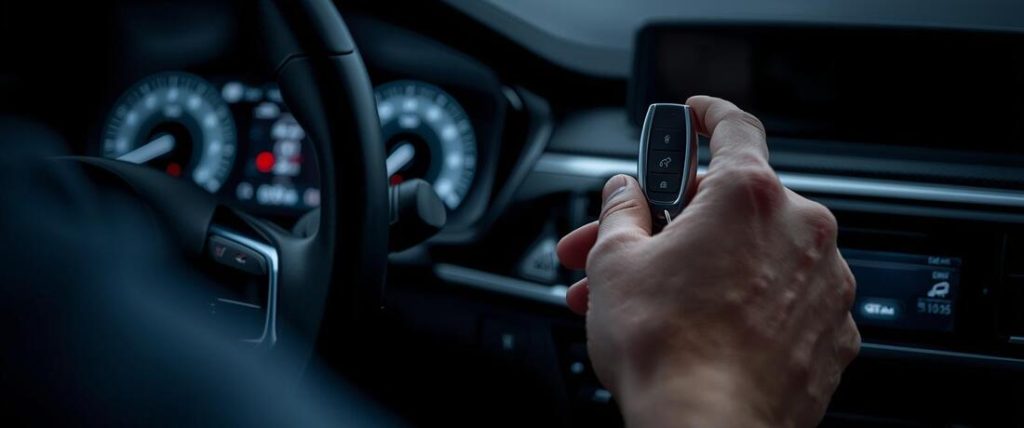
Modern cars have anti-theft immobilizers that prevent the engine from starting if they don’t recognize the key. A dead key fob battery or a damaged chip triggers this.
How to tell: Security light flashes or stays on after you turn the key. Car may crank briefly then cut out. Other keys work fine.
Fix: Replace the key fob battery first ($3). If that doesn’t work, try your spare key. If neither works, the immobilizer needs reprogramming by a dealer or locksmith.
9. Failed Neutral Safety Switch
This switch tells the car it’s safe to start — only when in Park or Neutral. A faulty one makes the car think you’re in gear, even when you’re not.
How to tell: No crank, no click, complete silence. Happens inconsistently. Try shifting firmly into Park, or try starting from Neutral.
Fix: If starting in Neutral works, the switch needs adjustment or replacement. This is a quick shop fix — usually under $200.
10. Timing Belt or Chain Failure
A broken timing belt is one of the worst no-start causes because it can also destroy your engine. If you heard a loud bang or snap before the car died, this might be it.
How to tell: Engine sounds strange when cranking — almost “loose.” Car may have died suddenly while driving. Check for a scheduled timing belt replacement that was skipped.
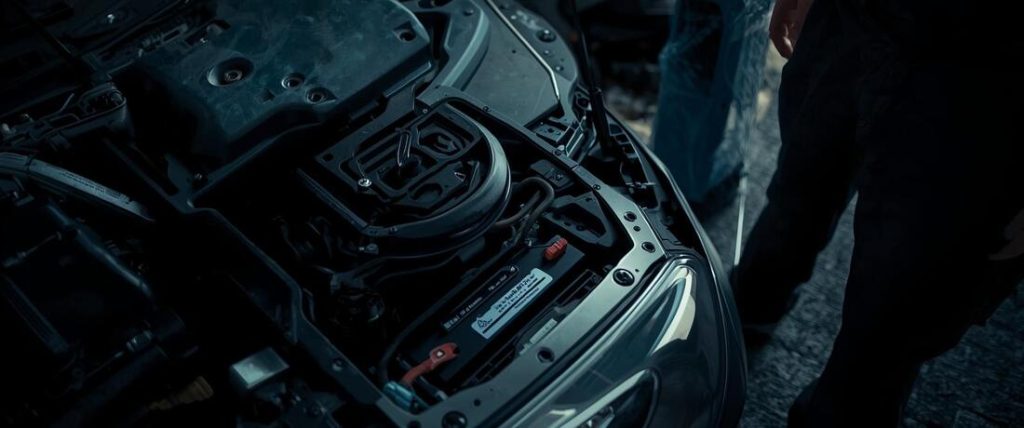
⚠ Warning: Do not keep cranking the engine if you suspect a timing belt failure. You risk bending valves and causing thousands of dollars in engine damage. Call a tow truck.
Quick Cost and Difficulty Reference
Use this as a fast reference before deciding whether to DIY or call a mechanic.
| Problem | Estimated Cost | DIY Difficulty |
| Dead battery | $100 – $300 | Easy |
| Clean battery terminals | Under $15 | Very easy |
| Alternator replacement | $400 – $800 | Moderate |
| Starter motor | $300 – $700 | Moderate |
| Fuel pump | $400 – $900 | Moderate–Hard |
| Spark plugs | $100 – $300 | Easy–Moderate |
| Ignition coil | $200 – $500 | Moderate |
| Crankshaft sensor | $150 – $400 | Moderate |
| Timing belt/chain | $800 – $2,000+ | Hard — use a pro |
| Immobilizer / key fob | $50 – $300 | Easy–Moderate |
Note: Costs include parts and labor estimates. DIY saves 40–60% on labor costs.
Safety First — Don’t Skip This
| ⚠ SAFETY: Never try to jump-start a cracked, leaking, or frozen battery. It can explode and cause serious injury. If the battery looks swollen or smells like sulfur, do not touch it — call for professional help. |
- Disconnect the negative battery cable before touching any electrical components
- If you smell gasoline strongly, do not crank the engine — exit the car and ventilate first
- Never crank the engine for more than 10–15 seconds at a time — it overheats the starter
- Use jack stands if working under the car — never trust a floor jack alone
- Keep sparks and flames away from the battery — it produces hydrogen gas
Step-by-Step Troubleshooting Guide
Follow these steps in order. This catches 95% of no-start problems without a mechanic.
Step 1 — Check the Obvious Stuff First
- Is the fuel gauge above empty? (Don’t laugh — it happens to everyone.)
- Is the gear selector fully in Park? Try shifting firmly into Park then Neutral.
- Is the security light flashing? If yes, skip to the immobilizer section above.
- Does the key fob need a new battery? Try the spare key.
Step 2 — Listen When You Turn the Key
- Rapid clicking = weak battery. Move to Step 3.
- One loud click = starter motor issue. Move to Step 5.
- Complete silence = check the fuse box first, then battery.
- Engine cranks but won’t start = move to Step 6.
Step 3 — Test the Battery
- Look at the battery terminals. Is there white or green corrosion? Clean it.
- Are the cable connections tight? Wiggle them. If loose, tighten and retry.
- Use a multimeter on DC voltage setting. Touch red to (+) and black to (–).
- 12.4V to 12.7V = healthy. Under 12.0V = discharged. Under 11.8V = dead.
Step 4 — Jump-Start the Car
- Position the donor car or jump starter near the dead battery.
- Red cable → positive (+) terminal of dead battery.
- Red cable (other end) → positive (+) of good battery.
- Black cable → negative (–) of good battery.
- Black cable (other end) → unpainted metal on engine block (NOT the dead battery).
- Let donor car run 2–3 minutes. Then try to start your car.
- It starts? Drive for 20+ minutes. Get the battery and alternator tested today.
- It doesn’t start? The problem goes deeper. See how to jump-start a car safely for more detail.
Step 5 — Check the Alternator
- With the engine running (after a jump-start), put the multimeter on the battery.
- Reading 13.5V to 14.7V = alternator is fine.
- Reading under 13V = alternator is failing. Replace it soon.
Step 6 — Check Fuel and Spark
- Turn the key to ON (not START). Listen for a 2-second hum from the fuel tank — that’s the pump priming. No hum = check the fuel pump fuse.
- For spark: pull one spark plug wire, insert an old plug, ground it against the engine, and have someone crank the engine. Blue spark = good. No spark = ignition problem.
Step 7 — Read the Fault Codes
- Plug an OBD-II scanner into the port under the dash (driver’s side).
- Common no-start codes: P0300 (misfire), P0335 (crank sensor), P0087 (fuel pressure), P0340 (cam sensor), P0016 (timing).
- Search your specific code or share it with your mechanic for a faster diagnosis.
Common Mistakes to Avoid ⭐
| ✗ COMMON MISTAKE: Replacing the battery without testing the alternator. A bad alternator kills a new battery within days. Always test the charging system before buying a new battery. |
| ✗ COMMON MISTAKE: Cranking the engine over and over. Continuous cranking floods the engine and overheats the starter. Try 3 times max, then wait 2 minutes between attempts. |
| ✗ COMMON MISTAKE: Guessing and replacing parts randomly. A starter is $400 on some vehicles. Diagnose first. A $25 OBD-II scanner from Amazon can save you hundreds. |
| ✗ COMMON MISTAKE: Skipping the fuse box. A single blown fuse (worth $1) can cause a complete no-start. Check the fuse box under the hood and inside the cabin before anything else. |
| ✗ COMMON MISTAKE: Jump-starting in the wrong order or connecting to the wrong terminal. Always: red to positive first, black to engine ground last. Reversing polarity can fry your car’s electronics instantly. |
Pro Tips from the Garage ⭐
| ★ PRO TIP: Keep a portable jump starter in your car. Modern lithium jump starters are the size of a thick wallet and can jump a car 10+ times on one charge. They cost $50–$80 and are worth every cent. |
| ★ PRO TIP: Test your battery every fall. Cold weather cuts battery capacity by up to 50%. A battery that works fine in summer can fail on the first cold morning. Free testing is available at AutoZone, O’Reilly, and Advance Auto Parts. |
| ★ PRO TIP: Don’t ignore the check engine light. Many no-start conditions are preceded by warning codes stored days or weeks earlier. A stored P0335 (crank sensor) or P0087 (fuel pressure) almost always precedes a sudden no-start. |
| ★ PRO TIP: Learn the two-minute battery trick. If your car dies and you suspect a dead battery, connect a battery charger at 2 amps overnight. If the battery can’t hold a charge after 8 hours, it’s time for a new one — not a jump. |
| ★ PRO TIP: Know your battery’s age. Most batteries have a date code on the label (e.g., “5/21” means May 2021). If it’s over 4 years old, replace it proactively — before it leaves you stranded. |
FAQs About
Why won’t my car start but the battery is fine?
If the battery checks out, the next suspects are the starter motor, fuel pump, crankshaft position sensor, or a blown fuse. A single loud click = starter. No fuel pump hum = fuel pump. OBD-II code P0335 = crankshaft sensor. Check the fuse box before anything else — a $1 fuse causes a complete no-start.
What does it mean when your car just clicks but won’t start?
Rapid clicking = dead or weak battery that can’t deliver enough current to crank the engine. One single loud click = the starter solenoid is engaging but the motor isn’t turning. Both are diagnosable in minutes with a multimeter or a jump-start attempt.
How do I fix a car that cranks but won’t start?
Check for fuel (listen for the pump hum), check for spark (plug test), and read OBD-II codes. The most common causes are a failed fuel pump, bad ignition coil, clogged fuel injectors, or a faulty crankshaft position sensor. Each has a clear diagnostic test described in this guide.
Can a bad alternator cause a car not to start?
Yes — indirectly. A failing alternator drains the battery over time until it can no longer start the car. If your battery keeps dying and jump-starts only last a day or two, test the alternator. It should output 13.5V to 14.7V while running.
How much does it cost to fix a car that won’t start?
It depends entirely on the cause. Cleaning corroded terminals: under $15. New battery: $100 to $300. Starter motor: $300 to $700. Fuel pump: $400 to $900. Timing belt: up to $2,000 or more. Always diagnose before spending money — the cheapest fix first saves the most.
Is it safe to jump-start a car by yourself?
Yes, as long as you follow the right order: red to positive, black to engine ground on the dead car (not the negative terminal). Never jump a battery that’s cracked, leaking, or frozen. A portable jump starter is safer than cables because you don’t need another car.
Quick Summary
- Most no-starts = battery. Check it first with a multimeter or jump-start attempt.
- Listen to the sound. Rapid clicks = battery. One click = starter. Silence = fuse or ignition.
- Engine cranks but won’t fire? Check fuel, spark, and OBD-II codes.
- Always test the alternator after a battery failure — it may be the real root cause.
- Read the fault codes before replacing any expensive parts.
- Safety first: never jump a damaged battery, never crank more than 15 seconds at a time.
- Prevention wins: test your battery every fall and replace it at 4–5 years old.