
This article was updated in December 22, 2025 with new products and information by Mark S. Taylor
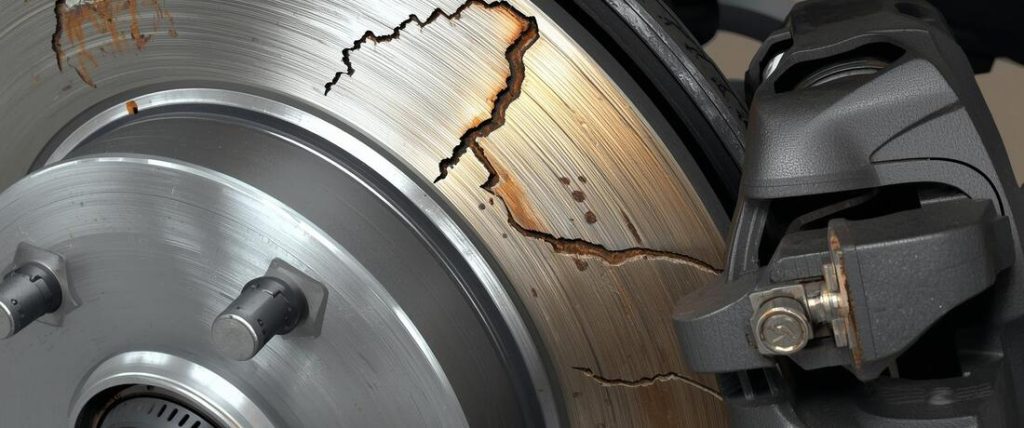
Does your steering wheel shake like a washing machine when you slow down? Or maybe you hear a grinding noise that sounds like rocks in a blender. These are classic clues that you need to know how to tell if a brake rotor is bad. As a mechanic, I often see drivers ignore these signs until their car is unsafe to drive. Bad rotors increase your stopping distance and can ruin your new brake pads instantly. In this guide, I will show you the 5 clear signs of failure, how to check them in your driveway with a simple “fingernail test,” and whether you should resurface them or buy new ones.
Contents
How to Tell If a Brake Rotor Is Bad
Look for shakes, noise, marks, rust, or uneven wear. These signs mean bad rotors. Measure thickness and check for warping. This tells you if you need new ones. Get a pro check if your brakes don’t feel right.
Think of rotors like tires. They wear down slowly. You need to fix them before they fail. I had a customer who ignored a small shake. He ended up needing new calipers and pads. Don’t be like him. Check your rotors often. It saves money. It keeps you safe.

What Brake Rotors Do and Why They Matter
Brake rotors are metal discs. They work with pads to stop your car. When you press the brake pedal, pads squeeze the rotors. This creates friction. Your car slows down. Good rotors mean good stops. Bad rotors mean big trouble.
Rotors take a lot of heat. They get stressed every time you stop. They need to be smooth and flat. If they get warped or scored, your brakes won’t work well. This puts you at risk. Your safety depends on good rotors.
5 Critical Signs of Bad Brake Rotors
1. Vibration in Steering Wheel or Brake Pedal
Vibration when braking means warped rotors. If your wheel shakes, it’s likely the front rotors. If the pedal pulses, it’s often the rear ones. Don’t ignore this. It leads to more damage. It makes your brakes unsafe.
I had a customer say it felt like “driving over a rumble strip.” That’s a perfect way to describe warped rotors. The shake happens because the rotor isn’t flat anymore. The pads grab and release fast. This makes the wheel shake. It gets worse over time. Don’t wait to fix it.
2. Squealing or Grinding Noises When Braking
Strange noises mean rotor problems. Squealing often means worn pads. Grinding means metal is touching metal. Grinding needs help right away. It means rotors are damaged. Pads are worn out.
Squealing is your car crying for help. It’s the first sign something’s wrong. Grinding is your car screaming. I’ve seen people drive with grinding for weeks. By the time they came in, rotors were destroyed. If you hear grinding, get help now. It’s not worth the risk.
3. Visible Scoring, Grooves or Blue Discoloration
If you see marks or blue spots, rotors are bad. Look through your wheel spokes. Deep grooves or blue tint mean trouble. Blue color means the rotor got too hot. These signs mean rotors need replacing.
Blue color comes from extreme heat. It happens when brakes get too hot. This can be from hard stops. Or from stuck calipers. Blue means the metal is now brittle. Scoring makes the surface uneven. Both mean your rotors can’t do their job.
4. Excessive Rust or Corrosion
Some rust is normal. Too much rust is bad. Surface rust that wipes away is fine. Deep pits or flaking mean trouble. If rust covers large areas, replace the rotors. This keeps your brakes safe.
A little rust on parked cars is normal. It wears off after a few stops. But deep rust pits are bad. I’ve seen rotors so rusted they looked like coral. These rotors can’t handle heat well. They can crack. Rust makes metal weak. It creates uneven surfaces.
5. Reduced Braking Performance
If your car takes longer to stop, rotors may be bad. If braking feels uneven, rotors could be the cause. This is a serious safety issue. It needs help right away.
This is the most dangerous sign. It affects your ability to avoid accidents. I’ve tested cars with bad rotors. They took twice as long to stop. In an emergency, that extra distance matters. If your brakes don’t feel right, don’t wait. Get them checked now.
How to Inspect Brake Rotors Yourself
Visual Inspection Without Removal
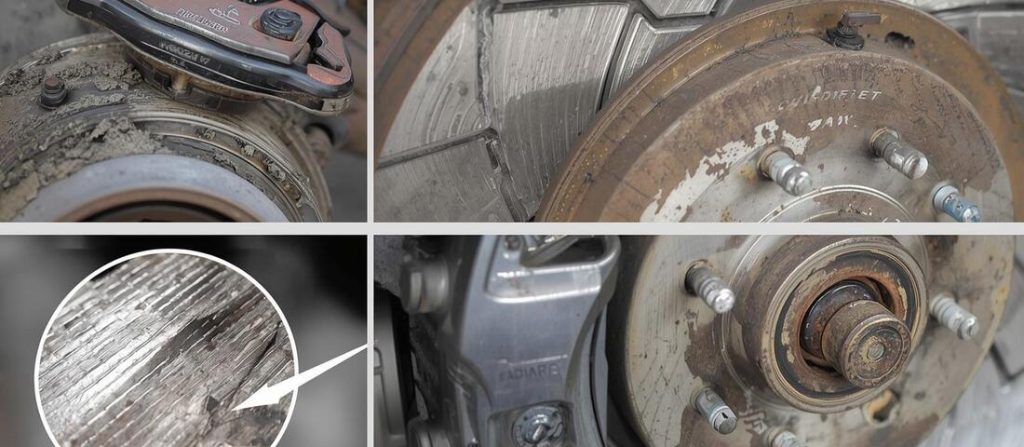
You can check rotors without taking off the wheel. Look through the spokes for marks, rust, or color changes. Use a flashlight. If you see deep grooves, blue spots, or lots of rust, get help.
Make sure your car is parked on level ground. The wheels should be cool. Shine a light through the wheel spokes. Turn the wheel by hand if you can. Look at the whole rotor surface. Check for deep grooves, cracks, or heavy rust. If you see anything bad, get a pro to look.
The Fingernail Test for Grooves and Scoring
Run your fingernail across the rotor. If it catches in grooves, the rotor is bad. It needs replacing. Deep grooves can’t be fixed. They cause noise and shaking.
This test is simple but works well. Lightly run your nail on the rotor surface. If it glides smoothly, the rotor is good. If it catches in rough spots, the rotor is scored. I’ve used this test for years. It’s very accurate. If your nail catches, think what your pads are going through.
Measuring Rotor Thickness
Use a tool called a micrometer to measure rotor thickness. Check the minimum thickness. It’s usually stamped on the rotor or in your manual. If rotors are too thin, they must be replaced.
Measuring thickness is the best way to know if rotors need replacing. You need a micrometer or caliper for this. Measure in several places. Compare to the minimum thickness. This number is on the rotor or in your car’s manual. If any spot is too thin, the rotor must go.
| Rotor Type | New Thickness | Minimum Safe | Replace Below |
|---|---|---|---|
| Standard Solid | 22–28mm | +2mm discard | Discard spec |
| Vented | 26–32mm | +2mm discard | Discard spec |
Checking for Warpage and Runout
Warpage causes shaking. You can check it with a dial indicator. Runout measures how much the rotor wobbles. More than 0.003 inches means replace it. Bad warping can’t be fixed.
Checking warpage needs a special tool. Not everyone has one. But you can feel for shaking when you brake. If you have a dial indicator, mount it to the car. Measure how much the rotor wobbles. More than 0.003 inches is too much. This tells you if the rotor is warped.
When to Replace vs. Resurface Brake Rotors
When Resurfacing Is an Option
Resurfacing removes a thin layer of metal. It makes the rotor smooth again. You can do this if the rotor is thick enough. It should have no cracks or deep grooves. Resurfacing costs less. But new rotors last longer.
Resurfacing used to be common. Now it’s less popular. The process shaves off a thin layer of metal. This makes the rotor flat again. It can fix minor warping and light marks. But the rotor must be thick enough after. If it’s already close to the minimum, resurfacing won’t work.
When Replacement Is Necessary
Replace rotors if they’re too thin, cracked, or badly warped. Modern rotors are often thin to start. This leaves little material for resurfacing. In 2025, replacement is often better. It’s more reliable and cost-effective.
Most new cars have thin, light rotors. This helps save gas. But it means there’s not much material to remove. Many new rotors are made with materials that don’t resurface well. If your rotors are cracked, too thin, or very warped, you need new ones. Often, replacement is the smarter choice.
Cost Comparison: Resurface vs. Replace
Resurfacing costs $20-$30 per rotor. Replacement costs $50-$100 each. But new rotors last longer. They work better too. This makes them a better value. If the cost difference is small, choose replacement.
Resurfacing seems cheaper at first. But it’s not always the best deal. A resurfaced rotor has less material. It might warp again sooner. New rotors have full thickness. They often have better materials. For just $30-$70 more, you get a part that lasts longer. It performs better too. In my view, replacement is almost always better for safety and value.
Brake Rotor Replacement Cost (2026 Estimates)
Parts Cost
Rotor parts cost $50-$150 each. The price depends on type and quality. OEM parts cost more. Aftermarket parts offer good value. Don’t buy the cheapest rotors. Quality matters for safety.
Rotor prices vary based on what they’re made of. Basic economy rotors start at $50 each. Mid-range ones cost $80-$120. Premium rotors can be $150 or more. OEM parts from dealers cost the most. I suggest avoiding the cheapest options. Spending a bit more gets you better performance and longer life.
Labor Cost
Labor for rotor replacement is $80-$150 per axle. Most shops charge 1-2 hours of work. Rates are $80-$100 per hour. Labor costs vary by location. Dealerships charge more than local shops.
Replacing rotors takes about 1-2 hours per axle. The exact time depends on the car. It also depends on if other parts need work. Independent shops charge $80-$100 per hour. Dealerships may charge $120-$150 per hour. Some shops offer deals when replacing pads and rotors together. This can save money.
Total Replacement Cost
Total rotor replacement costs $200-$500 per axle. This includes parts and labor. For all four wheels, expect $400-$1,000. The cost depends on your car and rotor quality. Other repairs like calipers will cost more.
Here’s what you might expect to pay:
| Service Type | Parts Cost | Labor Cost | Total Cost |
|---|---|---|---|
| Front Rotors Only | $100-$300 | $80-$150 | $180-$450 |
| Rear Rotors Only | $100-$300 | $80-$150 | $180-$450 |
| All Four Rotors | $200-$600 | $160-$300 | $360-$900 |
| Rotors + Pads (1 axle) | $150-$400 | $100-$200 | $250-$600 |
| Rotors + Pads (all 4) | $300-$800 | $200-$400 | $500-$1,200 |
DIY vs. Professional Brake Rotor Replacement
When to Replace Brake Rotors Yourself
You can replace rotors yourself if you have basic skills. You’ll need jack stands, a lug wrench, sockets, and a torque wrench. Only do this if you know what you’re doing. Brakes are too important to get wrong.
DIY rotor replacement can save money. But you need the right tools and knowledge. The basic job involves removing the wheel, caliper, and old rotor. Then you put on the new rotor and put everything back. You need to torque bolts correctly. You also need to bed in the new brakes. If you’re not experienced with brakes, the risks are too high.
When to Hire a Professional
Get a pro for complex brake systems. Or if you don’t have experience. Modern cars have electronic brakes, ABS, or tricky calipers. These need expert knowledge. Pros offer warranties. They can spot other problems you might miss.
Professional brake service has advantages. Mechanics have the right tools. They have experience. They can do the job quickly and correctly. They can find other issues, like sticking calipers. Most shops warranty their work. This gives you peace of mind. For such a critical safety system, professional help is often worth the cost.
How to Extend Brake Rotor Life
Gentle driving helps rotors last longer. Avoid hard braking. Don’t ride your brakes. Regular brake checks during tire rotations can catch problems early.
How you drive affects rotor life a lot. Coast to stops instead of braking at the last second. Avoid riding your brakes down hills. Shift to a lower gear instead. When you do brake, use firm, steady pressure. Don’t pump the pedal. These simple habits can make your rotors last much longer.
Regular maintenance helps too. Get your brakes checked when you get your tires rotated. This is about every 6,000 miles. Clean brake parts often. This prevents buildup that causes uneven wear. If you notice any rotor problems, fix them fast. This prevents worse damage.
FAQ: About If a Brake Rotor Is Bad
Why don’t mechanics turn rotors anymore?
Mechanics don’t turn rotors much now. New rotors are affordable and more reliable. Resurfacing removes material. This makes rotors thinner and less durable. In 2026, replacement is usually better.
What does it sound like when the rotors need to be replaced?
Bad rotors make squealing, grinding, or scraping noises when you brake. Grinding means metal is touching metal. This means you need new rotors right away.
Can I check my own rotors?
Yes, you can check your own rotors. Look through the wheel spokes. Check for scoring, rust, or color changes. Use the fingernail test to feel for grooves.
How do I know when my brake rotors are bad?
Look for shaking when you brake. Listen for strange noises. Check for visible damage. Notice if stopping takes longer. These signs mean bad rotors that need help.
Why don’t mechanics turn rotors anymore?
Mechanics like replacement better than resurfacing. New rotors cost less and last longer. Resurfaced rotors may warp again sooner.
Bottom Line: Don’t Ignore Bad Brake Rotors
Replace rotors when you see lines, feel shaking, or they’re too thin. Check them often to prevent costly repairs. Good brakes keep you safe. Replacement costs $200-$500 per axle. This is much less than the risk of bad brakes.
I’ve seen too many drivers wait until they have bad shaking or grinding. By then, they often need other repairs too. This doubles the cost. Don’t be like them. Check your rotors often. Fix problems fast. Buy quality parts. Your safety is worth it.
Quick Summary
Don’t ignore warning signs – bad rotors are unsafe and can cause accidents
Bad rotors shake, make noise, look worn, or reduce braking power
Check rotors by looking at them and feeling with your fingernail
Measure thickness and compare to the minimum number; replace if too thin
Resurfacing works for minor issues, but replacement is often better
Replace rotors in pairs (both front or both rear) for even braking
Check rotors during tire service to catch problems early