
This article was updated in April 27, 2026 with new products and information by Mark S. Taylor
A small puddle of reddish-brown fluid under your car is easy to ignore. But it shouldn’t be. That fluid is your transmission’s lifeblood. If it is leaking from the pan gasket, it is only going to get worse. A bad pan gasket starts as a slow seep. Left alone, it becomes a serious leak. This causes hard shifts, slipping gears, and total transmission failure. The repair is usually simple and cheap. But only if you catch it early. Here is how to spot every symptom of a transmission pan gasket leak before the damage gets expensive.
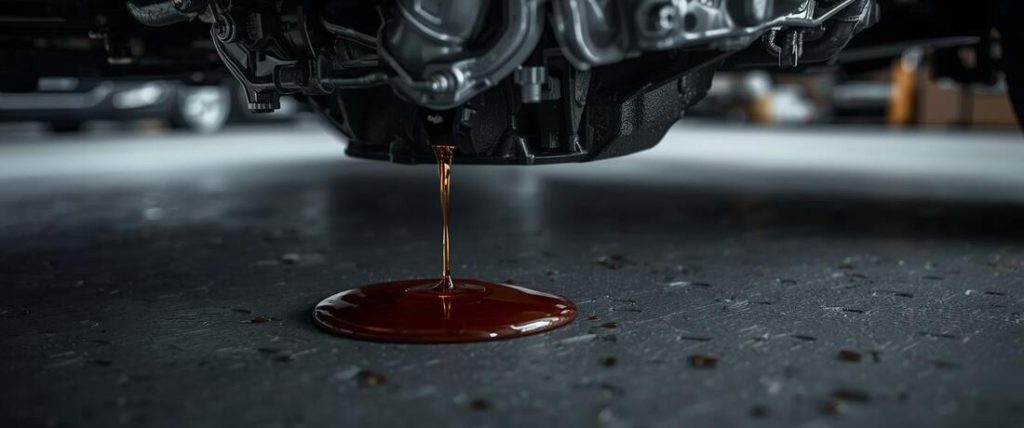
🟡 QUICK WIN BOX — Confirm It in 60 Seconds:
- Look under your car after it’s been parked for 30+ minutes.
- See red or reddish-brown fluid? That is transmission fluid.
- Is it dripping from the center or slightly rear of center of the vehicle?
- Check your transmission dipstick — is the level low?
- If YES to all four: you very likely have a transmission pan gasket leak.
Contents
- 1 What Is a Transmission Pan Gasket?
- 2 What Color Is Transmission Fluid and Where Does It Drip?
- 3 6 Symptoms of a Transmission Pan Gasket Leak
- 4 Symptom Urgency Scale — How Bad Is Your Leak?
- 5 Transmission Pan Gasket Leak vs. Other Transmission Leaks
- 6 What Causes a Transmission Pan Gasket to Fail?
- 7 How to Inspect for a Transmission Pan Gasket Leak at Home
- 8 Is It Safe to Drive With a Transmission Pan Gasket Leak?
- 9 Transmission Pan Gasket Replacement — Cost Breakdown
- 10 Gasket Type Comparison — Which Is Best?
- 11 FAQs About Symptoms of a Transmission Pan Gasket Leak
- 12 The Bottom Line — Verdict
What Is a Transmission Pan Gasket?
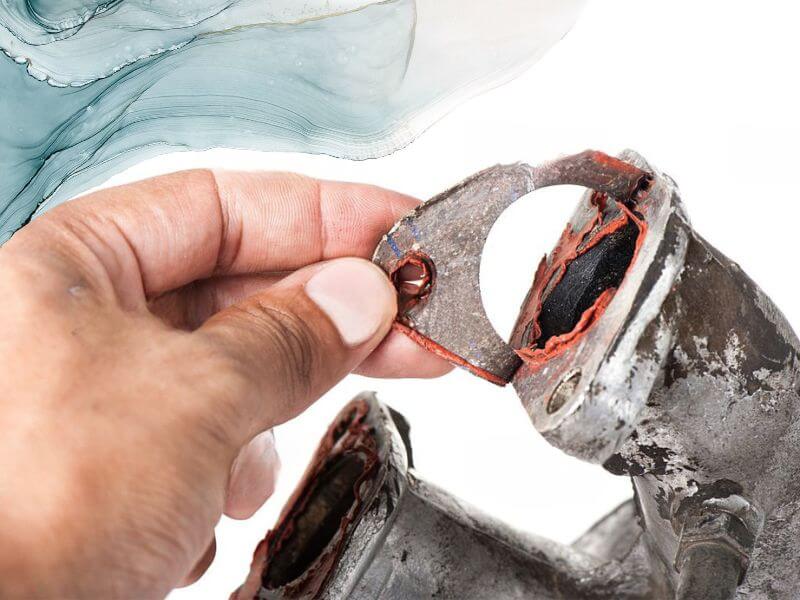
A transmission pan gasket is a flat seal. It sits between the transmission pan and the transmission case. It is made of rubber, cork, or composite material. The pan sits at the bottom of the transmission. It holds the reservoir of transmission fluid (ATF). The gasket prevents that fluid from leaking out around the pan edge. When it fails, fluid escapes. Levels drop and transmission performance gets worse.
What Color Is Transmission Fluid and Where Does It Drip?
Knowing what your fluid looks like is key. Transmission fluid is different from engine oil or coolant.
| Fluid Condition | Color | Smell | What It Means |
|---|---|---|---|
| Fresh ATF | Bright red / pink | Mild, slightly sweet | Healthy |
| Normal ATF (used) | Dark red / reddish-brown | Mild petroleum smell | Normal aging |
| Old/degraded ATF | Dark brown / black | Burnt, sharp smell | Change needed |
| Leaking on hot parts | Any color | Acrid burnt chemical smell | Active leak |
Where does a pan gasket leak drip?
- Rear-wheel drive (RWD) vehicles: Drips from the center of the vehicle underside.
- Front-wheel drive (FWD) vehicles: Drips from the side of the vehicle where the transmission is mounted.
Key distinction: Pan gasket leaks drip directly down from the pan edge. It does not drip from the front bell housing area (torque converter) or rear (output shaft seal).
💡 Quick ID tip: Place a white piece of cardboard under your car overnight. Red or pink fluid in the center likely means a transmission pan gasket. Clear water is an AC drain (normal). Dark brown is engine oil. Green or orange is coolant.
6 Symptoms of a Transmission Pan Gasket Leak
1. Red or Reddish-Brown Fluid Puddle Under Your Car
This is the most obvious and earliest sign. You will see a puddle of fluid beneath the vehicle. This is especially true where it is parked for a long time. A slow seep leaves small drips. A bad failure leaves a visible pool. Do not confuse this with engine oil (darker, thicker) or coolant (green/orange/yellow).
Urgency: 🟡 Minor seep → 🔴 Puddle after short park.
2. Consistently Low Transmission Fluid Level
If you check your dipstick and the level is low, you have a leak. If it keeps dropping despite topping it off, it is not just evaporation. A continuous reduction in fluid is a symptom of pan gasket failure.
⚠️ Note: Many newer vehicles do not have a traditional dipstick. Low fluid may only be detected by a mechanic with the vehicle raised.
Urgency: 🟠 Moderate — investigate source before continuing to top off.
3. Burning Smell From Under Your Car
Transmission fluid dripping onto hot pipes creates a smell. Dripping onto hot exhaust pipes or the catalytic converter creates a sharp, acrid burning smell. The smell is often described as a sharp chemical odor. It is distinct from burning rubber or coolant smell. You might see light wisps of smoke from under the vehicle.
Urgency: 🟠 Moderate-Serious — burning fluid also poses a fire risk.
4. Hard, Rough, or Delayed Shifting
Low fluid levels can cause your transmission to hesitate. It might shift hard or rough. The automatic transmission relies on hydraulic pressure. This pressure comes from fluid. Less fluid means lower hydraulic pressure. The clutch packs cannot engage smoothly. This leads to hard or abrupt gear changes.
Urgency: 🔴 Serious — fluid is now low enough to affect transmission function.
5. Transmission Slipping or Hesitating
As fluid continues to drop, the transmission may slip. It might slip out of gear or rev without accelerating. The clutch packs lack the hydraulic pressure to hold gear engagement. Slipping combined with a burning smell means your transmission is under serious stress.
Urgency: 🔴 Serious — internal damage risk is real at this stage.
6. Foamy, Aerated, or Discolored Transmission Fluid
This is the most overlooked symptom. When fluid drops very low, the pump can draw air into the system. This causes the fluid to become foamy. It loses its hydraulic properties. Fluid contaminated by water or metal debris appears milky, gray, or sparkly. At this point, the gasket is not your only problem. The transmission may need an inspection for internal damage.
Urgency: ⛔ Critical — stop driving; have the transmission inspected immediately.
Symptom Urgency Scale — How Bad Is Your Leak?
| What You’re Seeing | Leak Stage | Urgency | Action |
|---|---|---|---|
| Small drips/stains after long park | Seepage | 🟡 Monitor | Inspect and schedule repair soon |
| Drips after short park + low dipstick | Slow leak | 🟠 Moderate | Book repair this week |
| Hard shifting + burning smell | Moderate leak | 🔴 Serious | Minimize driving; repair ASAP |
| Slipping gears + burning smell | Major leak | 🔴 Serious | Stop driving when possible; repair now |
| Foamy fluid + no forward movement | Critical failure | ⛔ Critical | Do not drive — tow to mechanic |

Transmission Pan Gasket Leak vs. Other Transmission Leaks
It is important to know which seal is leaking. Different leaks have different repair costs.
| Leak Source | Drip Location | Unique Sign | Repair Cost |
|---|---|---|---|
| Pan gasket | Center/bottom underside | Drips from pan edge perimeter | $150–$400 |
| Drain plug | Bottom center (spot drip) | Single point drip directly below plug | $20–$100 |
| Output shaft seal | Rear of transmission | Fluid on driveshaft or near rear axle | $150–$300 |
| Torque converter | Front of transmission (bell housing) | Fluid near engine/transmission joint | $600–$1,200 |
| Cooler lines | Mid-vehicle along underbody | Spray or trail pattern along line route | $150–$400 |
| Cracked pan | Bottom center (larger area) | Visible crack or dent on pan | $250–$500 |
What Causes a Transmission Pan Gasket to Fail?
Most gaskets fail due to age and heat. Rubber gaskets harden and shrink after years of heat exposure. Road debris is another cause. Hitting curbs or potholes can distort the pan. This compromises the sealing surface. Bad installation is also common. This includes wrong torque sequence or over-tightening. Using the wrong gasket type can cause leaks too. A scraped mating surface creates micro-channels where fluid seeps through. Overfilling the transmission creates excess internal pressure. This forces fluid past the gasket.
How to Inspect for a Transmission Pan Gasket Leak at Home
You can check for this yourself. You just need a flashlight and a safe way to look under the car.
What you need: Flashlight, floor jack + jack stands OR drive-up ramps, paper towels, white cardboard.
Steps:
- Place cardboard under the car. Leave it overnight (or for 2+ hours). Mark which end is front.
- Check the cardboard. Look for red/pink fluid in the center. This tells you it is transmission fluid.
- Safely raise the vehicle. Use jack stands or ramps.
- Shine a flashlight on the pan. Look for wet, oily residue around the pan edge perimeter. Look for dried reddish-brown crust along the pan rail.
- Check for specific leaks. Look for oil streaking down the pan sides. Look for a wet spot around a single bolt (over-torqued).
- Run the engine. Run it for 5 minutes, then re-inspect while warm. Small leaks often only appear at operating temperature.
- Check the dipstick. If it is low, the leak is likely ongoing.
⚠️ Safety Note: Never get under a vehicle supported only by a floor jack. Always use proper stands or ramps.

Is It Safe to Drive With a Transmission Pan Gasket Leak?
It depends entirely on how much is leaking. You must judge the severity carefully.
| Leak Severity | Can You Drive? | Condition |
|---|---|---|
| Seepage (barely damp) | 🟡 Yes, short-term | Check fluid weekly; book inspection |
| Slow drip | 🟠 Limited driving | Top off fluid; repair within days |
| Active drip + shifting issues | 🔴 Minimize driving | Fluid too low; risk internal damage |
| Slipping + burning smell | ⛔ Do not drive | Transmission damage risk is high |
💡 Rule of thumb: If you top up the fluid and it drops below the MIN mark within 24–48 hours, do not drive. Tow it.
Transmission Pan Gasket Replacement — Cost Breakdown
Replacing a pan gasket is a standard repair. The cost varies by vehicle type and fluid type.
| Cost Component | Estimated Cost | Notes |
|---|---|---|
| Gasket (aftermarket cork/rubber) | $10 – $30 | Most vehicles |
| Gasket (OEM reusable rubber) | $30 – $80 | Preferred for longevity |
| Transmission fluid (ATF refill) | $50 – $100 | Always replace after pan drop |
| Transmission filter (recommended) | $15 – $40 | Replace while pan is off |
| Labor (1–2 hours) | $80 – $200 | Standard shop rate |
| Total (shop) | $150 – $400 | Most vehicles |
| DIY (parts only) | $30 – $100 | Doable for most DIYers |
💡 Pro Tip: Always replace the transmission filter at the same time as the gasket. The pan has to come off for both. Paying separate labor twice costs more.
Gasket Type Comparison — Which Is Best?
Not all gaskets are the same. Choosing the right material matters for a long-lasting fix.
| Type | Material | Durability | Best For |
|---|---|---|---|
| Cork | Compressed cork fiber | Moderate | Budget repair; older vehicles |
| Paper/fiber | Pressed fiber composite | Moderate | Cheap replacement |
| Rubber (aftermarket) | Molded rubber | Good | Most vehicles; DIY-friendly |
| OEM reusable rubber | Vehicle-specific molded rubber | Best | Preferred by mechanics; exact fit |
| RTV silicone (no gasket) | Applied sealant | Variable | Some vehicles factory-designed for RTV only |
⚠️ Do NOT use silicone RTV on a vehicle that requires a gasket — it will leak. ⚠️ Always use OEM reusable gasket if your vehicle specifies it. Generic cork gaskets are a common cause of post-repair leaks.
FAQs About Symptoms of a Transmission Pan Gasket Leak
How serious is a transmission pan gasket leak?
It is serious if ignored. A small leak can lead to low fluid levels. This causes overheating and internal damage. Repair it quickly to save money.
What is the biggest killer of transmissions?
Heat is the biggest killer of transmissions. A leaking pan gasket causes low fluid, which leads to overheating. Contaminated fluid is also a major cause of failure.
How much does it cost to fix a transmission pan leak?
The average cost is $150 to $400. This includes the gasket, fluid, and labor. A DIY fix costs around $30 to $100 for parts.
What can be mistaken for a transmission leak?
Engine oil is often mistaken for transmission fluid. Power steering fluid can look similar too. However, those leak from the front of the car, not the center.
What’s the difference between a transmission pan gasket leak and a seal leak?
A pan gasket leaks from the bottom pan edges. A seal leak, like a front main or rear seal, leaks from the shafts where they enter or exit the transmission case.
The Bottom Line — Verdict
A transmission pan gasket leak is one of the most common problems. It is also one of the most fixable transmission problems. Catch it early and you are looking at a $150–$400 repair. Ignore it until the transmission starts slipping and overheating, and you are staring down thousands in damage. The signs are clear: red fluid under your car, a low dipstick, a burning smell, or shifts that start feeling rough. Any one of those is your cue to act. Don’t top it off and forget about it. Fix the source. It is cheap, it is quick, and it keeps a $5,000 transmission rebuild off your repair bill.
Quick Summary
- Red Puddle: Reddish fluid under the car is the main sign.
- Check Dipstick: Low fluid confirms a leak is happening.
- Burning Smell: Fluid dripping on hot parts smells acrid.
- Hard Shifting: Low pressure from fluid loss causes rough gears.
- Don’t Drive: Slipping or foamy fluid means stop driving immediately.
- Repair Cost: Expect to pay $150–$400 at a shop.
- Inspect: Use cardboard to spot the drip location easily.