
This article was updated in April 30, 2026 with new products and information by Mark S. Taylor
Your brakes are the most important safety system on your car. But most drivers never think about brake pads — until something squeals.
Choosing the wrong brake pads can cost you money, damage your rotors, and put you at risk. The good news? Once you understand the main types, the choice becomes simple.
In this guide, we’ll break down every type of brake pad, compare their pros and cons, and help you pick the right one for your car and driving style. Let’s get into it.

⚡ Quick Answer
There are four main types of brake pads for cars: organic, semi-metallic, ceramic, and carbon-ceramic. Organic pads are cheapest and quiet but wear fast. Semi-metallic offer strong stopping power. Ceramic pads are quiet, long-lasting, and great for daily driving. Carbon-ceramic are for high-performance and track use.
Contents
- 1 What Are Brake Pads and How Do They Work?
- 2 The 4 Main Types of Brake Pads for Cars
- 3 Quick Comparison Table
- 4 How to Choose the Right Brake Pad for Your Car
- 5 Signs Your Brake Pads Need Replacing
- 6 How Much Do Brake Pads Cost?
- 7 How Long Do Brake Pads Last?
- 8 Common Mistakes When Choosing Brake Pads
- 9 Pro Tips for Getting the Most from Your Brake Pads
- 9.1 FAQs About Types of Brake Pads
- 9.2 Q1: What is the best type of brake pad for everyday driving?
- 9.3 Q2: Are ceramic brake pads better than semi-metallic?
- 9.4 Q3: How do I know what type of brake pads my car uses?
- 9.5 Q4: Can I mix different types of brake pads on the same car?
- 9.6 Q5: How long do ceramic brake pads last?
- 9.7 Q6: Are cheap brake pads safe?
- 9.8 Quick Summary
What Are Brake Pads and How Do They Work?
Brake pads create friction to stop your car. That’s their whole job.
When you press the brake pedal, hydraulic fluid pushes the brake caliper. The caliper squeezes the brake pads against the spinning rotor. That friction slows the wheel — and stops your car.
This process causes the pads and rotors to wear down slightly with each application of the brakes. Over time, they thin out and lose stopping power. That’s when replacement becomes critical.
The material your brake pad is made from determines everything — noise, heat handling, dust, rotor wear, and lifespan.
The 4 Main Types of Brake Pads for Cars
1. Organic Brake Pads (NAO)
Best for: Daily city driving, light vehicles, budget-conscious drivers.
Organic brake pads come standard on about 67% of new vehicles sold in the United States. They’re made from a mixture of fibers and materials like rubber, carbon compounds, glass or fiberglass, and Kevlar®, bound together with resin.
They are also called Non-Asbestos Organic (NAO) pads — a name that replaced the old asbestos-based formulas decades ago.
Pros:
- Quiet and gentle on rotors
- Affordable — lowest price of all pad types
- Soft, smooth pedal feel
- Eco-friendly and easy to dispose of
Cons:
- Wear out faster than other types
- Not great under heavy braking or heat
- Can produce more brake dust
Organic brake pads generate a moderate amount of friction without creating much heat, making them ideal for everyday driving and commuting.
Bottom line: Great for light cars and low-stress driving. Not ideal if you tow, drive aggressively, or live in hilly areas.
2. Semi-Metallic Brake Pads
Best for: Trucks, performance cars, towing, highway driving, aggressive driving.
Semi-metallic brake pads have 30 to 70% metal in their material composition. It’s often mixed with other materials like graphite, iron, copper, wool, or steel in varying ratios.
These are the workhorse pads. They handle heat well, bite hard, and last a long time under demanding conditions.
Pros:
- Excellent stopping power
- Outstanding heat dissipation
- Great for heavy loads and towing
- Durable and widely available
Cons:
- Noisier — can squeal, especially when cold
- Harder on rotors — causes more wear over time
- More brake dust than ceramic
- Poor performance in very cold temperatures
Semi-metallic brake pads are ideal for aggressive driving because they provide excellent heat dissipation, essential when brakes are used heavily. They offer superior braking power and are resistant to brake fade.
Bottom line: Strong choice for trucks, SUVs, and drivers who push their vehicles hard. Not the best for quiet, clean daily commutes.
3. Ceramic Brake Pads
Best for: Everyday driving, highway commuters, drivers who want quiet + clean + long-lasting pads.
Ceramic brake pads are made from material very similar to the type of ceramic used to make pottery and plates, just made denser and more durable. Fine copper fibers are added to boost both friction and heat conductivity.
These are the most popular upgrade choice for daily drivers — and for good reason.
Pros:
- Very quiet — minimal brake noise
- Low brake dust — keeps wheels cleaner
- Long lifespan
- Consistent performance across temperatures
- Easy on rotors
Cons:
- More expensive than organic or semi-metallic
- Not ideal for extreme cold conditions
- Not suited for racing or very heavy towing
Ceramic brakes last longer than semi-metallic brakes on average. They’re also better at limiting noise and require less maintenance. Ceramic brakes are best for daily driving.
Bottom line: The sweet spot for most drivers. If you want quiet, clean, long-lasting pads and don’t mind paying a little more — go ceramic.
4. Carbon-Ceramic Brake Pads
Best for: High-performance vehicles, track days, sports cars, muscle cars.
Carbon-ceramic pads are the premium tier. They combine ceramic compounds with carbon fiber for maximum heat resistance and stopping power.
Pros:
- Highest friction and stopping power
- Shortest braking distances at speed
- Exceptional heat tolerance — won’t fade on a track
- Very long lifespan on performance applications
Cons:
- Most expensive of all pad types
- Overkill for everyday commuting
- Require warm-up period before peak performance
Carbon-ceramic brake pads are the best brake pads for track use. They offer the most friction, stopping power, and have the shortest braking distance.
Bottom line: Unless you’re hitting a track or driving a high-performance sports car, you probably don’t need these. But if you do — nothing beats them.

Quick Comparison Table
| Type | Cost | Noise | Rotor Wear | Best For |
|---|---|---|---|---|
| Organic (NAO) | $ Low | Low | Low | City driving, light cars |
| Semi-Metallic | $$ Mid | Medium-High | High | Trucks, towing, performance |
| Ceramic | $$$ Mid-High | Very Low | Low-Medium | Daily driving, highway |
| Carbon-Ceramic | $$$$ Highest | Low | Low | Track, sports cars |
How to Choose the Right Brake Pad for Your Car
The right pad depends on three things: your vehicle, your driving style, and your budget.
Start with your vehicle’s OE spec. Most vehicles are engineered to use a specific type of brake pad — organic, semi-metallic, or ceramic — to ensure proper braking performance, noise control, and durability. Check your owner’s manual or look up your car’s OEM pad type before upgrading.
Match the pad to how you drive:
- City stop-and-go traffic → Organic or Ceramic
- Highway commuting → Ceramic
- Towing or hauling → Semi-Metallic
- Spirited or aggressive driving → Semi-Metallic or Carbon-Ceramic
- Track days → Carbon-Ceramic
Think about your climate. Semi-metallic pads underperform in very cold weather. Ceramic pads stay consistent across most temperature ranges.
You can also read our full guide on how car brakes work and when to replace them for more context before making your decision.
Signs Your Brake Pads Need Replacing
Don’t wait until your brakes fail. Watch for these warning signs:
- Squealing or screeching when you brake — the wear indicator is touching the rotor
- Grinding or metal-on-metal sound — the pad is completely worn
- Longer stopping distances — you need more road to stop
- Vibration or pulsing through the brake pedal
- Brake warning light on your dashboard
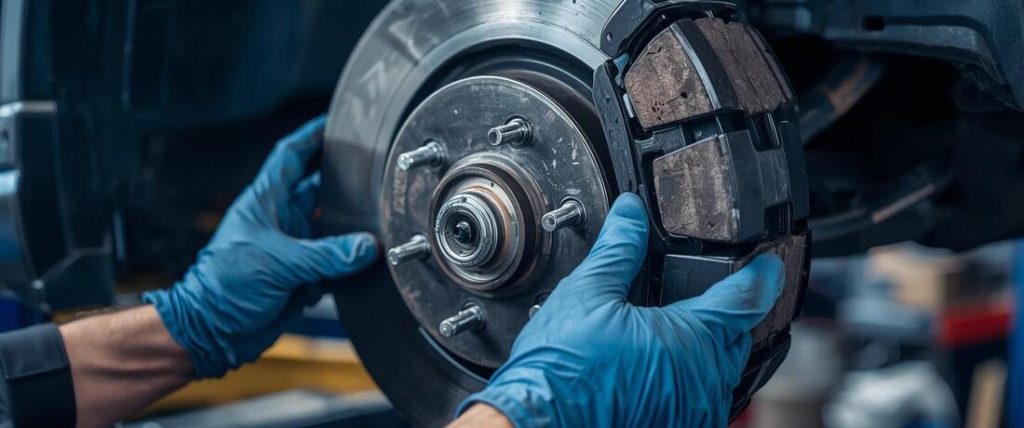
Remove the wheel and measure the remaining brake pad friction material. Less than 3mm indicates it’s time for replacement. O’Reilly Auto Parts
You should change your brake pads every 25,000 to 65,000 miles because the friction generated while braking gradually wears them out.
How Much Do Brake Pads Cost?
Cost varies by type and vehicle. Here’s a general range:
The cost of replacing a set of brake pads ranges from $115 to $300 per axle, depending on the brake pad materials and the location of the service. Replacing all four brake pads can range from $200 to $600 or more. NuBrakes
- Organic pads: $20–$50 per axle (parts only)
- Semi-metallic pads: $30–$80 per axle
- Ceramic pads: $50–$120 per axle
- Carbon-ceramic pads: $100–$300+ per axle
Labor adds $80–$150 per axle at most shops. DIY installation can save you significantly if you’re comfortable with basic tools.
Want to understand what’s actually worth spending on? Check out our breakdown of car maintenance costs and what to prioritize.
How Long Do Brake Pads Last?
Lifespan depends heavily on driving habits and pad type.
Brake pads can last 30,000 to 35,000 miles from city driving. They may last up to 80,000 miles or more from mostly highway driving.
City driving kills pads faster because of constant stopping. Highway driving is far gentler.
As a general rule:
- Organic pads: 25,000–45,000 miles
- Semi-metallic pads: 35,000–65,000 miles
- Ceramic pads: 50,000–80,000 miles
- Carbon-ceramic pads: 50,000–100,000+ miles (performance use)
Common Mistakes When Choosing Brake Pads
Avoid these pitfalls — they’re more common than you think.
1. Buying the cheapest pads available. Low quality brake pads can be very noisy, wear down faster, and also cause wear on other brake system parts like brake rotors — which means spending more in the long run. Don’t penny-pinch on safety. Wagner Brake
2. Ignoring your vehicle’s OEM spec. Switching to a harder pad when your car was designed for organic pads can accelerate rotor wear fast.
3. Only replacing one axle. Always replace pads in pairs (both front or both rear). Mismatched pads cause uneven braking.
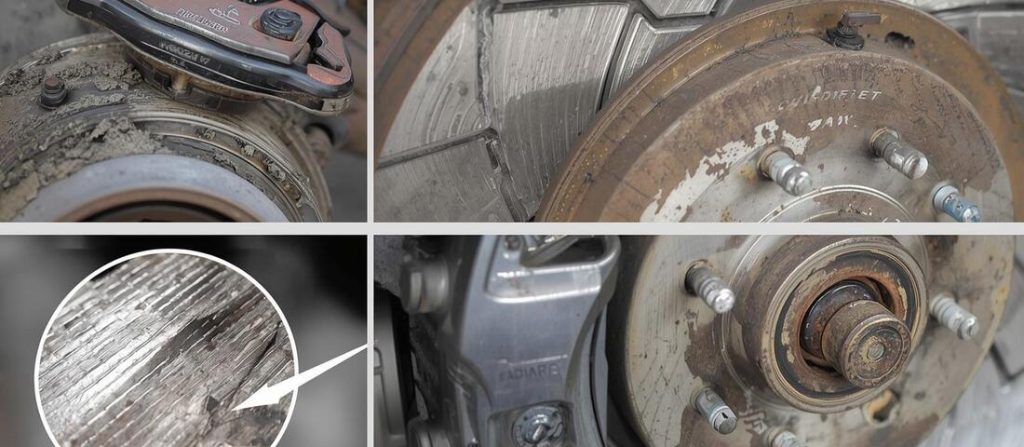
4. Skipping rotor inspection. Warped, worn, or grooved rotors may require resurfacing or replacement to maintain proper braking performance. This can also cause accelerated pad wear, so always resurface or replace rotors during your brake service. O’Reilly Auto Parts
5. Waiting for noise before replacing. By the time metal is grinding on metal, you’ve likely damaged your rotors — turning a $60 pad job into a $300+ repair.
Pro Tips for Getting the Most from Your Brake Pads
- Bed in new pads properly. New pads need a break-in period. Do 5–10 moderate stops from 30 mph to deposit an even layer of friction material on the rotor. This improves performance and reduces noise.
- Avoid riding the brakes downhill. Use engine braking on long descents to prevent overheating.
- Clean your wheels regularly. Brake dust is acidic — it eats wheel finishes over time, especially with semi-metallic pads.
- Upgrade pads and rotors together. When doing a full brake job, matching new pads to fresh rotors delivers the best, most consistent performance.
- Check pads every 12,000 miles. Don’t wait for noises. A quick visual check saves money and keeps you safe.
For more hands-on maintenance tips, browse our car maintenance guides at TheCarbuzz.
FAQs About Types of Brake Pads
Q1: What is the best type of brake pad for everyday driving?
Ceramic brake pads are the best choice for most daily drivers. They are quiet, produce little brake dust, and last longer than organic or semi-metallic pads. They perform well in both city and highway driving conditions.
Q2: Are ceramic brake pads better than semi-metallic?
It depends on your driving style. Ceramic pads are better for quiet, clean, everyday driving. Semi-metallic pads perform better under heavy loads, high heat, and aggressive or performance driving. Neither is universally better — the right choice depends on how you use your vehicle.
Q3: How do I know what type of brake pads my car uses?
Check your vehicle’s owner’s manual or look up your car’s OEM specifications online by year, make, and model. You can also ask at any auto parts store — they can identify the correct pad type in seconds.
Q4: Can I mix different types of brake pads on the same car?
You can use different pad types on the front and rear axles — many vehicles are built this way from the factory. However, you should never mix different pad types on the same axle, as this can cause uneven braking and compromise your safety.
Q5: How long do ceramic brake pads last?
Ceramic brake pads typically last between 50,000 and 80,000 miles, depending on driving habits. Drivers who do mostly highway driving may exceed 80,000 miles, while those who frequently stop and start in city traffic will see a shorter lifespan.
Q6: Are cheap brake pads safe?
Cheap brake pads can function, but they often wear out faster, create more noise, and can damage your brake rotors — leading to higher repair costs over time. For a safety-critical component like brakes, it is always worth investing in a reputable mid-range or premium brand.
Quick Summary
- There are 4 main types of brake pads: organic, semi-metallic, ceramic, and carbon-ceramic
- Organic pads are cheapest and quietest — ideal for light city driving
- Semi-metallic pads offer the best stopping power — great for trucks and towing
- Ceramic pads are the best all-rounder for most daily drivers
- Carbon-ceramic pads are for track and performance use only
- Always check your vehicle’s OEM specification before choosing a pad
- Replace pads before they hit 3mm — don’t wait for grinding sounds
- Never buy the cheapest pads — your brakes keep you alive