
This article was updated in June 25, 2026 with new products and information by Mark S. Taylor
When you turn your vehicle’s ignition key, the high-pressure fuel delivery network demands absolute mathematical precision. Modern internal combustion engines rely on electronic fuel injectors engineered to atomize highly volatile gasoline into a micro-fine mist at pressures often exceeding 40 to 60 PSI in multi-port systems, and over 2,000 PSI in Direct Injection (GDI) platforms.
Over thousands of driving miles, the intense thermal heat radiating from the combustion chamber after engine shutdown bakes residual fuel drops right onto the injector tips. This chemical process creates hard, crusty carbon rings and lacquer deposits that distort the fine fuel spray pattern. Instead of a uniform, easily ignitable mist, the injector begins to dribble raw liquid droplets, causing severe fuel starvation, uneven combustion cycles, and high fuel bills.
As an ASE-Certified Master Technician, I know that you don’t always need to pay a professional shop $300 to pull your intake rails apart. In this comprehensive workshop guide, we will break down the precise symptoms of injector clogging, how to run a pressurized on-car canister cleaning loop safely, and review actual 2026 industry service costs.
Contents
- 1 What Dirty Fuel Injectors Actually Do to Your Engine
- 2 5 Definitive Signs Your Fuel Injectors are Clogged
- 3 The Chemical Matrix: Choosing the Right Cleansing Agents
- 4 Active Fuel Injector Cleaning Substrate Comparison
- 5 Step-by-Step Pressurized Fuel Injector Canister Loop
- 6 Industry Cost Matrix for Injector Service (US Pricing)
- 7 DIY vs. Professional Mechanic Decision Guide
- 8 Essential Safety Precautions and Error Avoidance
- 9 FAQs – How to Clean Fuel Injectors Without Removal
- 10 The Verdict: Target the Carbon Before Buying Components
What Dirty Fuel Injectors Actually Do to Your Engine
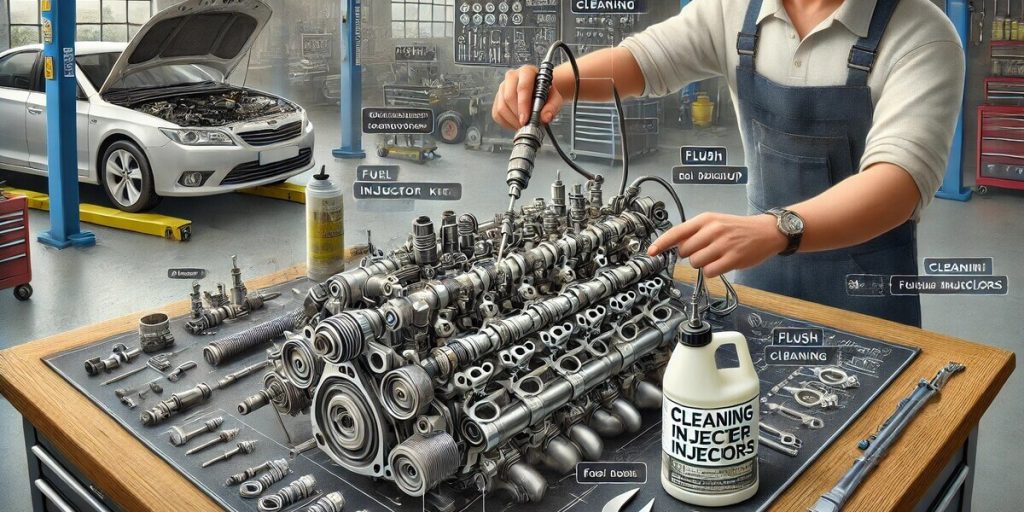
Fuel injectors don’t just dump liquid gas into the cylinder. They are ultra-precise hydraulic valves designed to atomize fuel into a microscopic mist. Think of a heavy-duty spray bottle set to a “micro-fine mist” position versus a harsh “solid stream” setting.
When the injector tip is clean, fuel enters the combustion chamber as a perfectly balanced fine cone of vapor that mixes instantly with incoming oxygen and burns completely flat. When the tip is partially fouled with varnish, oil blow-by, or hard carbon, the spray pattern distorts into a ragged stream.
Streaming fuel cannot mix properly with air, causing incomplete combustion. This unburned liquid fuel washes the protective lubricating oil film straight off the cylinder walls, accelerating piston ring wear and destroying your engine’s internal compression balance over time.
5 Definitive Signs Your Fuel Injectors are Clogged
Before opening your vehicle’s hood, monitor your engine’s idle behavior for these five classic symptoms of a restricted fuel matrix:
- A Hunting, Shaking, or Rough Idle: If one or more injectors suffer from carbon clogs, the cylinder fuel-to-air balance drops below the $14.7:1$ stoichiometric ratio. This lean imbalance causes the engine block to shake, vibrate, or fluctuate erratically in RPM while idling at a stoplight.
- Abrupt Engine Misfires (DTC P0300-P0304): When an injector is heavily blocked, it fails to deliver enough fuel to trigger a clean combustion arc. The spark plug fires, but the cylinder misses entirely, logging trouble codes like P0301 (Cylinder 1 Misfire Present). A single clogged injector usually flags one specific cylinder, whereas random misfires (P0300) point to a weak fuel pump or failing inline filter.
- Sluggish Acceleration and Throttle Hesitation: When you step on the gas pedal to merge onto the highway, the engine stumbles, bogs down, or hesitates momentarily because the clogged injector nozzles cannot scale their fuel volume flow to match the wide-open air intake.
- Significant Drop in Fuel Economy: To compensate for the underperforming, lean-misfiring cylinder, the Engine Control Module (ECM) forces the healthy injectors to stay open significantly longer, dumping excess unmetered fuel into the remaining tracks and destroying your MPG metrics.
- Pungent Unburned Fuel Smell at the Tailpipe: When an injector’s internal pintle valve is fouled with lacquer, it cannot seal completely flat. Fuel drips continuously into the cylinder instead of atomizing, allowing raw, unburned gasoline vapors to escape directly into your hot exhaust loop.
The Chemical Matrix: Choosing the Right Cleansing Agents
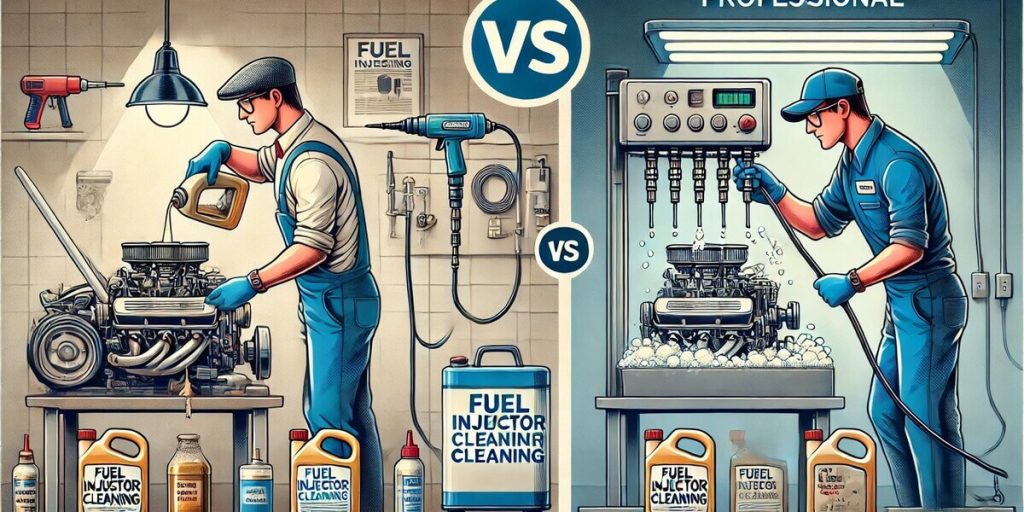
There are two primary ways to chemically clean your fuel injection loops without physically dropping the fuel tank or pulling the structural rails:
1. In-Tank Pour-In Cleaners (Preventative Maintenance)
These are concentrated liquid additives poured directly into a near-empty gas tank before a full fill-up.
- The Chemistry: Look exclusively for cleaners formulated with PEA (Polyetheramine). PEA is the only automotive detergent stable enough to survive the extreme $400^\circ\text{F}+$ thermal heat inside the combustion chamber, allowing it to chemically strip carbon crust off the injector nozzle head. Avoid cheap, alcohol-based additives which dry out internal fuel pump seals.
2. Pressurized Canister Loops (Corrective Repair)
This method utilizes a professional tool canister hooked directly to the engine’s mechanical fuel rail service port (Schrader valve). The car’s internal electric fuel pump is fully disabled, and the engine runs 100% exclusively on the pure, undiluted chemical solvent under compressed shop air. This is the absolute gold standard for severely clogged systems.
Active Fuel Injector Cleaning Substrate Comparison
| Cleansing Agent Category | Primary Active Chemical | Application Delivery System | Target Carbon Removal | Recommended Usage Frequency |
| Premium Fuel Additive | Polyetheramine (PEA) | Poured straight into fuel filler neck | Light varnish and surface glaze | Every 3,000 to 5,000 Miles |
| Pressurized Solvent Canister | Professional Grade Solvents | Direct connection to fuel rail barb | Heavy baked carbon rings | Every 30,000 to 50,000 Miles |
| Ultrasonic Bench Cleaning | Commercial Alkaline Solutions | Removed from car; soundwave tank | Ultimate structural clogs | Only when internal solenoids seize |
Step-by-Step Pressurized Fuel Injector Canister Loop
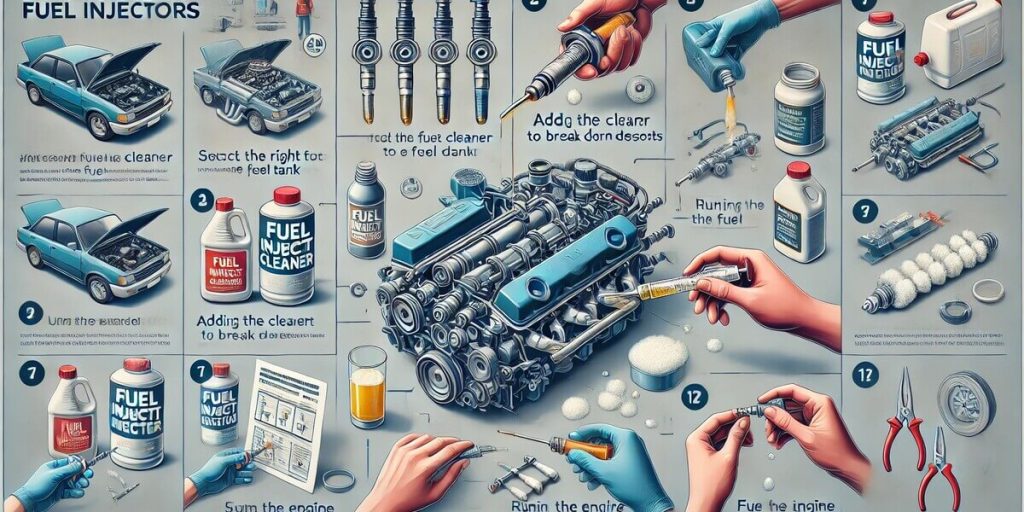
Follow this precise technician sequence to run a professional-grade on-car injector flush without triggering high-pressure fuel spills:
1. Isolate and Fully Disable the Vehicle Fuel Pump: 2 min.
Open the main under-hood fuse panel and locate the diagram pin for the Fuel Pump Relay or Fuse. Pull the fuse straight out. Start the engine and let it run until it sputters and stalls out on its own—this fully relieves the dangerous 50 PSI of residual fuel line pressure trapped inside the system tracks.
2. Connect the Tool Canister to the Fuel Rail Valve: 3 min.
Locate the test port Schrader valve on your engine’s aluminum fuel rail loop. Thread the high-pressure adapter hose from your professional injector cleaning canister straight onto this service port. If your vehicle features a fuel return line running back to the tank, clamp it closed using specialized line pinch pliers to prevent the chemical cleaner from escaping.
3. Pressurize the Canister with Shop Compressed Air: 2 min.
Fill the tool canister with a dedicated bottle of professional fuel injector solvent. Connect your shop compressed air line to the canister regulator. Adjust the regulator dial to match your vehicle’s exact factory fuel system running specification—typically between 40 and 45 PSI. Turn the canister valve to the open position to fill the rail.
4. Run the Engine Exclusively on the Cleaner System: 15 min.
Start the vehicle engine. It will idle smoothly, running 100% on the undiluted chemical solvent inside the pressurized canister. Let the motor run until the canister empties completely and the engine stalls on its own. Turn the vehicle ignition key to the off position.
5. Depressurize and Restore the Factory Loop Network: 3 min.
Close the canister air valve and disconnect the hose line from the Schrader valve. Unclamp the fuel return line. Reinsert the vehicle’s factory fuel pump relay back into the fuse block. Start the engine and drive the vehicle at highway speeds for 10 minutes to safely flush remaining residue out of the exhaust valves.
Industry Cost Matrix for Injector Service (US Pricing)
| Selected Service Method | Average DIY Product Cost | Professional Shop Labor Cost | Total Estimated Bill |
| Premium PEA Pour-In Additive | $15 – $30 | $0 (5-Minute Driveway Task) | $15 – $30 |
| Pressurized Canister Tool Kit | $60 – $120 (One-time buy) | N/A | $60 – $120 |
| On-Car Pressurized Shop Flush | N/A | $120 – $180 | $120 – $180 |
| Ultrasonic Bench Cleaning Sweep | N/A | $250 – $450 | $250 – $450 (Requires rail removal) |
DIY vs. Professional Mechanic Decision Guide
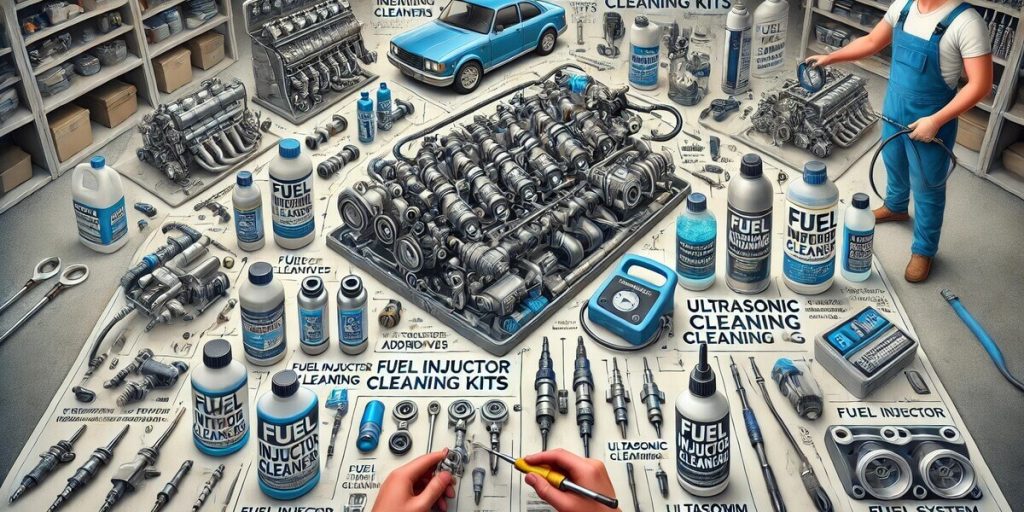
- DIY Approved Operations: If you are using an in-tank PEA cleaner as a preventative measure, it is 100% DIY friendly. Furthermore, if you own a standard port-injected engine layout, have basic hand tools, and feel comfortable isolating fuel pressures, running the on-car pressurized canister flush is an entry-level task that saves significant workshop fees.
- Professional Mechanic Operations: If your vehicle features a modern Gasoline Direct Injection (GDI) or common-rail diesel infrastructure, never attempt to unbolt the fuel rail at home. Direct injection fuel loops operate at lethal pressures exceeding 2,000 to 3,500 PSI. Servicing these components requires advanced diagnostic tools, digital cylinder balance calibration, and off-car Ultrasonic Bench Flow Testing to clean safely. Never use manual tools, brushes, or wire pins to scrub injector tips, as you will scratch the micro-machined orifices, permanently destroying the fuel metering assembly.
Essential Safety Precautions and Error Avoidance
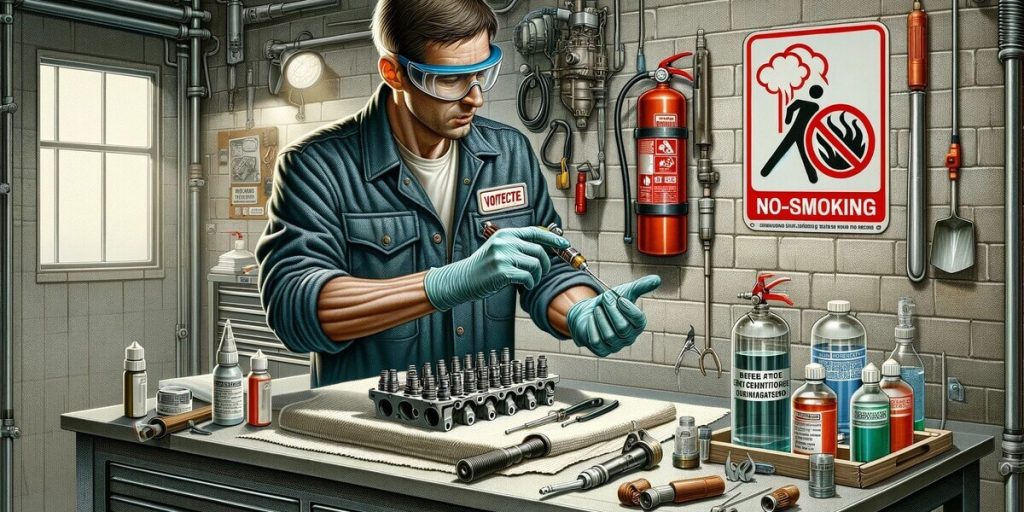
When servicing automotive fuel components, you are interacting with highly volatile liquids under continuous line pressure. Adhere strictly to these professional safety parameters:
Avoid Cleaner Overdosing: When executing in-tank maintenance, adhere strictly to the fluid-to-gallon ratio stamped on the manufacturer’s bottle. Pouring an excessive concentration of solvent into a low gas reservoir can dry out internal electronic fuel pump sending unit seals and chemically scour the tank tank lining.
Atmospheric Ventilation: Always execute pressurized canister cleaning loops outdoors or inside an open-air garage bay with a continuous exhaust extraction fan running. Concentrated hydrocarbon fumes pose acute neurotoxic and inhalation risks.
Chemical Safety Gear: Wear thick nitrile chemical-resistant safety gloves (standard latex gloves dissolve on contact with commercial automotive solvents) and wrap-around safety goggles.
Static and Spark Isolation: Ensure no open flames, lit cigarettes, or electrical arc hazards (such as running trouble lights or battery chargers) operate within 20 feet of your fuel workspace tray. A single localized fuel vapor spark can trigger immediate thermal ignition.
FAQs – How to Clean Fuel Injectors Without Removal
Q: Can you clean fuel injectors without removing them from the engine?
A: Yes, partially. In-tank PEA additives and pressurized on-car canister systems can completely flush out light-to-moderate carbon varnish from port-injected engines without disassembly. However, if an internal solenoid valve is mechanically seized or the injector is 100% completely blocked with hard carbon chunks, the rail must be removed for bench ultrasonic cleaning or replacement.
Q: How often should I realistically use a fuel injector cleaner additive?
A: If you regularly pump high-quality fuel from stations certified under the latest TOP TIER™+ performance standard (which contains advanced factory detergents engineered specifically for direct injection and traditional motors), using an additive every 10,000 miles is plenty. If you utilize unbranded economy gasoline, pouring a PEA-based cleaner into your tank every 3,000 to 5,000 miles protects the pintle seals from premature lacquering.
Q: What is the absolute best chemical compound for removing fuel varnish?
A: Any automotive cleaner that uses Polyetheramine (PEA) as its primary core active substrate (such as Chevron Techron Concentrate Plus or BG 44K). Avoid bargain-bin additives that rely entirely on cheap polyisobutylene amine (PIBA) or simple mineral spirits—these lesser solvents flash off instantly and cannot survive the extreme thermal conditions required to clean baking intake valves.
The Verdict: Target the Carbon Before Buying Components
Never blindly replace electronic fuel injectors before identifying a physical flow restriction. Over 85% of fuel injection errors are caused by simple carbon varnish buildup, which can be fully dissolved for under $30 using a high-quality PEA pour-in cleaner or a pressurized rail canister loop. Take your time, disable your fuel pump relay properly before opening service lines, and protect your internal piston rings from lean thermal stress.
(Want to ensure your vehicle’s alternative mechanical components, engine sensors, and computer networks are operating with absolute factory precision? Read our master workshop guide on How to Read Check Engine Light Codes Without a Scanner or check out The Car Buzz Official Testing and Editorial Integrity Guidelines Page).