
This article was updated in December 21, 2025 with new products and information by Mark S. Taylor
our brakes are your car’s most important safety feature – knowing when to change brake pads could save your life. I’ve seen too many drivers wait too long and face costly repairs. Brake pads wear down gradually and need regular replacement to keep you safe. In this guide, you’ll learn the warning signs, how to check pad thickness, typical lifespan, and replacement options. Read on to know exactly when your brake pads need changing.
Contents
When Should You Replace Brake Pads?
Replace brake pads when they reach 3mm thickness or you hear squealing/grinding noises. Most brake pads need replacement every 30,000-70,000 miles depending on driving conditions. Visual inspection should be done at least twice a year or during tire rotation to catch wear early.
Think of brake pads like the soles of your shoes – they wear down with use and need replacing before they’re completely gone. I once had a customer who ignored squealing for weeks and ended up needing new rotors too. Don’t let that happen to you. Checking your brake pads regularly is the best way to avoid expensive repairs and stay safe on the road.

How Brake Pads Work and Why They Wear
Brake pads create friction against rotors to slow your vehicle, gradually wearing down over time. When you press the brake pedal, hydraulic fluid forces calipers to squeeze the pads against the spinning rotors. This friction converts kinetic energy into heat, stopping your car.
The friction material on brake pads is designed to wear away instead of your rotors. This is normal and expected. Most pads start with about 12mm of friction material and wear down to the point where they need replacement. Regular replacement is critical because worn pads can damage rotors and reduce stopping power, putting you at risk.
5 Critical Signs Your Brake Pads Need Replacement
1. High-Pitched Squealing or Screeching
A high-pitched squeal means your brake pads have wear indicators scraping against the rotor. This is the most common early warning sign that it’s time to change your brake pads. The noise is intentional – manufacturers build small metal tabs that contact the rotor when pads wear down.
If you hear this sound, check your pads soon. The squeal typically starts when pads have about 3mm of material left. I’ve seen customers ignore this for weeks, leading to more expensive repairs. Don’t wait until the noise stops – that usually means the wear indicator has worn off completely.
2. Grinding Metal Sound
Grinding means your brake pads are completely worn and metal is touching metal. This is an urgent sign that requires immediate replacement. When you hear grinding, the pad’s friction material is gone and the metal backing plate is contacting the rotor.
This sound means you’re likely damaging your rotors with every brake application. I once had a customer drive with grinding for just a few days and ended up needing new rotors too. The repair cost doubled from what it would have been with just pad replacement. If you hear grinding, get your brakes checked immediately.
3. Vibration or Pulsing in Brake Pedal
Vibration or pulsing when braking often indicates warped rotors or uneven pad deposits. This symptom suggests your brake system isn’t working as efficiently as it should. You might feel the pedal pulse under your foot or notice the steering wheel shake when braking.
While vibration can have other causes, it’s often related to brake issues. Uneven pad wear can create deposits on rotors, leading to that pulsing sensation. If you notice this, have your brakes inspected soon. It’s not as urgent as grinding, but it shouldn’t be ignored.
4. Longer Stopping Distances
If your car takes longer to stop than usual, your brake pads might be worn. This reduction in performance is called brake fade. You might notice yourself pressing the pedal further to get the same stopping power.
Test your brakes in a safe area like an empty parking lot. If stopping distances seem longer, or if the pedal feels “spongy,” it’s time for an inspection. Remember, longer stopping distances directly impact your safety, especially in emergency situations.
5. Dashboard Brake Warning Light
Modern vehicles have electronic sensors that trigger dashboard lights when brake pads need replacement. These lights are designed to get your attention. A yellow brake warning light typically indicates it’s time for service, while a red light means there’s a more serious problem.
Don’t ignore these warning lights. They’re connected to sensors that measure pad thickness directly. I’ve seen drivers cover warning lights with tape instead of addressing the problem. This is dangerous and can lead to complete brake failure. If a brake light comes on, check your pads soon.
Brake Pad Thickness: When to Measure and Replace
Minimum Safe Thickness
Brake pads should be replaced when they reach 3mm thickness or about 1/8 inch. This is the minimum safe thickness recommended by most manufacturers. The “Quarter-Inch Rule” is a simple way to check – if your pad is thinner than a quarter (about 1/4 inch or 6mm), it’s time to plan for replacement.
Thickness matters more than mileage because driving conditions vary so much. I’ve seen pads wear out in 15,000 miles for city drivers, while highway drivers might get 80,000 miles. Always measure thickness rather than relying solely on mileage estimates.
How to Check Brake Pad Thickness Yourself
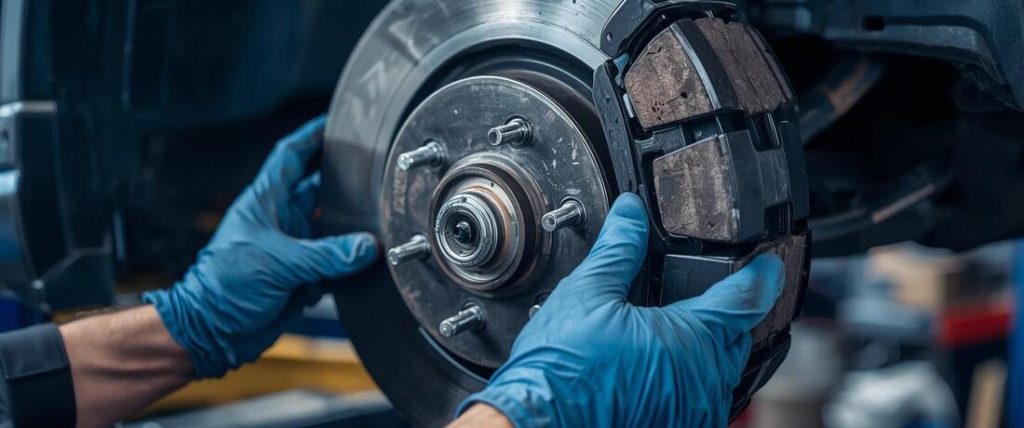
You can check brake pad thickness through the wheel spokes on many vehicles. Look at the caliper where the pads sit – you’ll see the outer pad pressed against the rotor. The friction material is the part that touches the rotor, not the metal backing.
For a more accurate measurement, you’ll need to remove the wheel. Use a ruler or caliper to measure the friction material thickness. New pads typically have 10-12mm of material. Replace them when they reach 3mm. If you’re not comfortable doing this, many shops offer free brake inspections.
Average Brake Pad Lifespan
Most brake pads last between 30,000 and 70,000 miles, with 50,000 miles being a common average. Front brake pads typically wear out faster than rear pads because they handle about 70% of the braking work. This is especially true in front-wheel drive vehicles.
Manufacturer recommendations vary, but real-world experience shows driving habits matter more than mileage. I’ve seen identical vehicles with pad life differing by 40,000 miles based solely on how they’re driven. Always check thickness rather than relying on mileage estimates alone.
Factors That Affect Brake Pad Wear
Several factors affect how quickly your brake pads wear:
- Driving conditions: City driving with frequent stops wears pads faster than highway driving
- Driving habits: Hard braking and riding the brakes accelerate wear
- Brake pad material: Ceramic pads last longer than semi-metallic or organic pads
- Vehicle weight: Heavier vehicles and towing put more stress on brakes
Your driving style has the biggest impact on pad life. I once had two customers with identical trucks. The highway commuter got 75,000 miles from his pads, while the construction worker who drove in stop-and-go traffic needed replacement at 25,000 miles. How you drive matters as much as what you drive.
Brake Pad Replacement Cost (2026 Estimates)
Parts Cost
Brake pad parts typically cost $30-$100 per axle, depending on material and quality. Organic pads are cheapest ($30-$50), semi-metallic are mid-range ($40-$70), and ceramic pads cost the most ($60-$100). OEM parts usually cost 20-30% more than quality aftermarket options.
I generally recommend ceramic pads for most drivers. They cost more upfront but last longer and create less brake dust. The extra $20-$40 is worth it for most people. Avoid the cheapest pads – they wear quickly and may not perform well in emergencies.
Labor Cost
Labor for brake pad replacement typically costs $80-$150 per axle. Most shops charge 1-2 hours of labor at $80-$100 per hour. Some shops charge a flat rate per axle, which can range from $100-$200 depending on the vehicle.
Labor costs vary by region and shop type. Dealerships usually charge more than independent shops. I’ve seen labor rates range from $70/hour in rural areas to $120/hour in big cities. Get quotes from several shops if cost is a concern.
Total Replacement Cost
The total cost for brake pad replacement typically ranges from $150-$450 per axle. This includes both parts and labor. For all four wheels, expect to pay $300-$900. If rotors need replacement, add $200-$400 per axle.
Here’s a breakdown of typical costs:
| Service Type | Parts Cost | Labor Cost | Total Cost |
|---|---|---|---|
| Front Pads Only | $30-$100 | $80-$150 | $110-$250 |
| Rear Pads Only | $30-$100 | $80-$150 | $110-$250 |
| All Four Pads | $60-$200 | $160-$300 | $220-$500 |
| Pads + Rotors (1 axle) | $130-$300 | $120-$200 | $250-$500 |
| Pads + Rotors (all 4) | $260-$600 | $240-$400 | $500-$1,000 |
Should You Replace Pads and Rotors Together?
Replace rotors when they’re warped, scored, or below minimum thickness. Many mechanics recommend replacing rotors with pads for optimal braking performance. Rotors can typically be resurfaced once if they have enough material left, but replacement is often more cost-effective.
Worn pads can damage rotors over time. The metal backing plate can score the rotor surface when friction material wears away. I’ve seen customers save $100 by not replacing rotors, only to return a month later with vibration issues. Replacing both together often provides better results and prevents comebacks.
DIY vs. Professional Brake Pad Replacement
When to Replace Brake Pads Yourself
DIY brake pad replacement is possible if you have basic mechanical skills and tools. You’ll need jack stands, lug wrench, socket set, and possibly a C-clamp or brake tool. The process typically takes 1-2 hours per axle for a first-timer.
DIY makes sense if you want to save money and enjoy working on your car. You’ll typically save $100-$200 in labor costs. However, brakes are critical safety components. If you’re not confident in your skills, it’s worth paying a professional.
When to Hire a Professional
Hire a professional for complex brake systems or if you lack tools/experience. Modern vehicles with electronic parking brakes, ABS sensors, or complex calipers can be challenging for DIYers. Professionals also have the expertise to spot other issues like leaking calipers or worn rotors.
I recommend professional service if you’re not mechanically inclined. The extra cost is worth it for the peace of mind knowing your brakes were installed correctly. Professionals also typically offer warranties on their work, providing additional protection.
How to Extend Brake Pad Life
You can extend brake pad life by changing your driving habits. Coast to stops instead of braking at the last minute. Look ahead and anticipate traffic flow to avoid sudden braking. These simple habits can significantly extend pad life.
Regular maintenance also helps. Have your brakes inspected during tire rotations (about every 6,000 miles). Clean brake components regularly to prevent buildup that can cause premature wear. Using engine braking on downhill slopes (in manual or low gear) can also reduce brake wear.
FAQ: About When to Change Brake Pads
1. How do you know if brake pads need replacing?
Look for squealing, grinding, or dashboard lights. Check pad thickness. If less than 3mm, replace soon. Also, longer stopping times mean new pads are needed.
2. Is 4mm ok on brake pads?
Yes, 4mm is still safe. But plan replacement soon. At 4mm, you have some life left. Check again in a few thousand miles. Replace when they reach 3mm.
3. Do brake pads come with wear indicators?
Yes, most brake pads have wear indicators. These are small metal tabs. They make a squealing noise when pads wear down. This tells you it’s time to replace them.
4. How long can you drive with a brake wear indicator?
Drive only a short distance when the wear indicator squeals. It means pads are low. Replace them soon to avoid damage. Don’t wait more than a few weeks.
5. How to check brake pad wear indicator?
Look through the wheel spokes. See the caliper and pads. The wear indicator is a small metal tab. If it touches the rotor, pads need replacing. Or check for a squeal.
Bottom Line: Don’t Wait Too Long to Replace Brake Pads
Change brake pads at 3-4mm thickness or when you first hear squealing to avoid rotor damage. Regular inspection prevents costly repairs and ensures your safety. The cost comparison is clear: $150-$450 for timely pad replacement versus $500-$1,000+ if you need rotors too.
Your next steps are simple: inspect your brake pads regularly, address warning signs immediately, and choose quality replacement parts. I’ve seen too many drivers wait until they hear grinding, turning a simple repair into an expensive one. Don’t let that happen to you.
Quick Summary
- Replace brake pads when they reach 3mm thickness or you hear squealing/grinding noises
- Most brake pads last 30,000-70,000 miles, but check thickness rather than relying on mileage
- Look for 5 key signs: squealing, grinding, vibration, longer stopping distances, and warning lights
- Replacement costs typically range from $150-$450 per axle, including parts and labor
- Consider replacing rotors with pads for optimal performance and to prevent comebacks
- DIY replacement can save money but requires mechanical skills and proper tools
- Regular inspections and gentle driving habits can extend brake pad life