
This article was updated in January 1, 2026 with new products and information by Mark S. Taylor
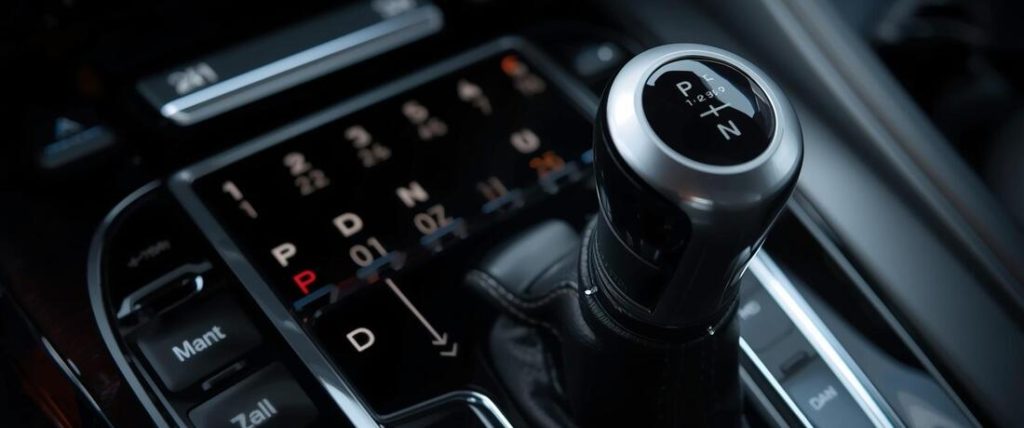
The letters P, R, N, D, and L stand for Park, Reverse, Neutral, Drive, and Low. Numbers like 1, 2, or 3 limit the transmission to lower gears for extra power or braking on hills.
I remember the first time I drove a car with a “B” on the shifter. I had no idea what it meant. Was it for “Boost”? “Back”? It turns out, I wasn’t alone. Many drivers know P-R-N-D, but the other letters and numbers can be confusing. In this guide, I will explain the meanings of automatic gear shift letters & numbers. You will learn exactly when to use “S” mode, what “L” does on a steep hill, and why shifting wrong can cost you thousands. Let’s clear up the confusion so you can drive with confidence.
Contents
The Main Letters: P, R, N, D
The main letters are on every automatic car. They are the most used gears. You need to know what each one does.
P (Park)
P stands for Park. This gear locks the transmission. It keeps your car from rolling. You can only remove the car key in Park. Always use the parking brake too.
R (Reverse)
R stands for Reverse. This gear makes the car go backward. Your white backup lights will turn on. Only shift to R when the car is fully stopped.
N (Neutral)
N stands for Neutral. This gear disconnects the engine from the wheels. The car can roll freely. Use N if you need to push the car. It is not for everyday driving.
D (Drive)
D stands for Drive. This is the main gear for going forward. The car shifts through all gears on its own. You will use D for most of your driving.
The Performance Letters: S, M, L, B
These letters give you more control. They are for special times. They can make driving more fun or more safe.
S (Sport)
S stands for Sport. This mode holds gears longer. The engine runs at higher RPMs. This gives you more power for fast driving. But it will use more gas.
M (Manual)
M stands for Manual. This mode lets you shift gears yourself. It feels like a manual car. You use the plus and minus signs to shift. The car might tell you when to shift.
L (Low)
L stands for Low. This gear keeps the car in low gears. It is great for towing a heavy load. It also helps when you go down a very steep hill. It gives you more engine braking.
B (Engine Brake)
B stands for Engine Brake. This is for very steep hills. It helps slow the car down. This means you don’t have to use your brake pedal as much. It saves your brakes from getting too hot.
The Numbers (1, 2, 3) and Plus/Minus
Some cars have numbers on the shifter. They work with the plus and minus signs. They give you even more control.
What Do the Numbers Mean?
The numbers limit the top gear. For example, if you select ‘3’, the car will not shift past 3rd gear. This is useful on hilly roads. It gives you more power for climbing hills.
Using Plus (+) and Minus (-)
The plus and minus signs are for shifting. In Manual mode (M), push the plus sign to shift up. Push the minus sign to shift down. This is like a manual car but without a clutch.
Modern Shifter Symbols & Features
New cars have new symbols and ways to shift. They do the same things but look different. Here are some you might see.
+ and – (Plus/Minus)
These signs give you manual gear control. Push toward + to upshift. This means you go to a higher gear. Push toward – to downshift. This means you go to a lower gear. You can find these on the shifter or on the steering wheel.
Paddle Shifters
Paddles are levers on the steering wheel. The right paddle is for upshifting (+). The left paddle is for downshifting (-). This lets you shift without taking your hands off the wheel. It is a sporty feature.
Electronic Shifters
Many new cars do not have a lever. They have buttons, dials, or stalks.
- Push-button: You push a button for P, R, N, D.
- Rotary dial: You turn a dial to select a gear.
- Stalk shifter: A lever on the steering column. These are “shift-by-wire.” There is no physical link to the transmission.
OD or O/D Button
Older cars had an Overdrive button. O/D OFF means the car stays in lower gears. This is good for engine braking. O/D ON lets the car use its highest gear for better gas mileage. New cars do this automatically.
When to Use Each Gear Setting
Knowing when to use each gear is a skill. It makes you a better driver. Here is a simple guide.
Everyday Driving
Use D (Drive) almost all the time. Let the car do the work. It is smart and efficient.
Mountain Driving
Going downhill, use L, 2, or 3. This uses the engine to help brake. Going uphill, D is usually fine. Use 2 or 3 if the car is struggling.
Towing
Use L or 2 when you tow on steep grades. This stops the transmission from getting too hot. Overheating can cause big damage.
Slippery Conditions (Snow, Ice, Mud)
Use 2 or 3 to start. This gives the car less power. The wheels will not spin as much. Some cars have a “Snow Mode” button that does this for you.
Stop-and-Go Traffic
Use D for the best gas mileage. Some people put the car in N at long lights. This is not a good idea.
Highway Driving
Use D for normal driving on the highway. Use S for quick passing or merging onto the highway.
Common Automatic Transmission Types
Not all automatic cars are the same. They have different types of transmissions. They feel different to drive.
Traditional Automatic (Torque Converter)
This is the most common type. It has 4 to 10 forward gears. It shifts very smoothly. Most cars you see have this type.
CVT (Continuously Variable Transmission)
A CVT has no fixed gears. It has infinite ratios. It feels very smooth because there are no shift points. It gives the best fuel economy. Nissan, Subaru, and Toyota use these a lot.
Dual-Clutch (DCT)
A DCT has two clutches. It shifts very, very fast. It feels sporty. VW, Porsche, and Hyundai use these in some of their cars.
Single-Speed (Electric Vehicles)
Electric cars (EVs) have no gears. They have just one forward gear. This gives instant torque. They just have P, R, N, and D.
What NOT to Do with an Automatic Transmission
You can damage your car if you use it wrong. Here are things you should never do.
- Don’t shift into P while moving. This can badly damage the transmission.
- Don’t shift into R while moving forward. This is also very bad for the car.
- Don’t coast in N to save gas. It does not save gas. It is also unsafe.
- Don’t rest your hand on the shifter. This can wear out the parts inside.
- Don’t rev the engine in N then drop into D. This shocks the gears and can break them.
- Don’t shift without pressing the brake. Modern cars will not let you do this. It is a safety lock.
- Don’t use P as a brake on a hill. Use the parking brake. P puts stress on a small part.
How to Shift an Automatic Transmission
Quick Answer: Always press the brake pedal first.
Basic Shifting Procedure
- Press the brake. Push it all the way down.
- Move the lever. Pick your gear.
- Release the button. Some shifters have a lock button.
- Release the brake. The car will move.
Starting the Car
The car must be in Park (P) or Neutral (N). It will not start in Drive.
Parking the Car
- Stop the car.
- Keep the foot brake pressed.
- Shift to Park (P).
- Pull the parking brake (hand brake).
- Turn off the key.
Troubleshooting Common Shifter Problems
Sometimes, shifters have problems. Here are some common ones and what to do.
Stuck in Park
Sometimes the shifter will not move out of Park. First, press the brake pedal harder. Check if your brake lights are working. There is a “shift lock release” slot. Check your owner’s manual to find it. A low battery can also cause this.
Shifter Won’t Move Out of Park
If the shifter is truly stuck, the brake light switch may have failed. The shift interlock solenoid might be bad. This needs a pro to fix.
Wrong Gear Selected
If you pick the wrong gear, stop the car fully. Then shift to the right gear. Do not force the shifter.
Check Engine Light with Gear Issues
A check engine light can mean a transmission problem. The transmission control module might be bad. The shift position sensor could fail. This requires an OBD2 scan tool to check.
Transmission Damage from Improper Shifting
Using the shifter wrong can cost a lot of money. Here are some examples of repair costs.
| Bad Habit | Potential Damage | Estimated Cost |
| Shifting to P while moving | Broken Parking Pawl | $2,000+ |
| Neutral Drop (Rev then D) | Blown Transmission | $4,000+ |
| Towing in Overdrive | Overheating | $3,500 |
| Coasting in Neutral | Wear from low oil | $1,500 |
FAQ About Meanings of Automatic Gear Shift Letters & Numbers
Q: What do the letters on the automatic gear shift mean?
A: The main letters are P (Park), R (Reverse), N (Neutral), and D (Drive). Other letters like S (Sport) or L (Low) give you more control over the car.
Q: What does the gear 1, 2, 3, 4, 5 mean?
A: These numbers limit the highest gear the car will use. For example, ‘3’ means the car will not shift past 3rd gear. This is useful for hills or towing.
Q: Should I drive in D or S?
A: Use D for most daily driving. It gives the best fuel economy. Use S when you want more power and a sportier feel.
Q: What do D and L mean in an automatic car?
A: D stands for Drive. It is the normal forward gear. L stands for Low. It keeps the car in lower gears for more power or engine braking.
Q: Can I shift from D to S while driving?
A: Yes, you can safely shift from D to S while driving. The car will change its shifting behavior right away.
The Bottom Line: Know Your Gears, Drive Better
Understanding your shifter’s symbols is a great skill. It unlocks your car’s full capabilities. It makes you a safer and more confident driver. These letters and numbers are tools. Use ‘D’ for daily driving. Use ‘S’ for fun. Use ‘L’ when you need extra control on hills. Knowing the difference will make your driving better.
Quick Summary
- P, R, N, and D are the main gears for Park, Reverse, Neutral, and Drive.
- S (Sport) mode holds gears longer for more power.
- L (Low) gear is for steep hills and towing.
- The numbers (1, 2, 3) limit the highest gear the car can use.
- You can safely shift from D to S while you are driving.
- Never shift into Park while the car is moving.
- Using the right gear makes driving safer and can save your transmission from harm.