
This article was updated in March 14, 2026 with new products and information by Mark S. Taylor
You press the brake pedal and instead of the firm, confident resistance you expect — it feels like pressing into a sponge. The car slows down, but something is clearly wrong. A spongy brake pedal means your hydraulic brake system is not generating full pressure, which makes your stopping distance longer than normal. The cause varies significantly based on when the sponginess occurs — it might happen always, only on the first press, or only after a long downhill. We will show you 9 distinct causes, a condition-based diagnostic table, and a free pump test to find the problem fast.

Contents
- 1 What “Spongy” Means — and Why Your Brakes Feel That Way
- 2 ⚡ When Does Your Pedal Feel Spongy? Use This Table First
- 3 The Free Pump Test — Do This Before Calling Anyone
- 4 The 9 Causes of a Spongy Brake Pedal
- 4.1 1. Air in the Brake Lines — The #1 Most Common Cause
- 4.2 2. Brake Fluid Leak — Anywhere in the System
- 4.3 3. Failing Brake Master Cylinder
- 4.4 4. Swollen or Ballooning Brake Hose
- 4.5 5. Pad Knockback — The “Only First Press” Cause
- 4.6 H3: 6. Vapor Lock — Overheated Brake Fluid
- 4.7 7. Drum Brakes Out of Adjustment
- 4.8 8. ABS Modulator Fault or Air Trapped in ABS System
- 4.9 9. Contaminated Brake Fluid
- 5 Spongy Brakes After a Recent Brake Job — What to Check
- 6 Why ABS-Equipped Vehicles Are Harder to Bleed
- 7 DIY Brake Bleed Methods — Which One to Use
- 8 Is It Safe to Drive With a Spongy Brake Pedal?
- 9 Spongy Brake Pedal Repair Cost — By Cause
- 10 How to Prevent a Spongy Brake Pedal
- 11 FAQs About Why Is My Brake Pedal Spongy
- 12 Bottom Line — What to Do Right Now
What “Spongy” Means — and Why Your Brakes Feel That Way
A spongy pedal means something compressible has entered your brake system. Brake hydraulics depend on one simple rule: brake fluid cannot be squeezed into a smaller space. Because the fluid is incompressible, every bit of force from your foot goes directly to the calipers to stop the wheels.
Air, gas, and vapor are different — they compress when you push them. They absorb your pedal force instead of sending it to the brakes. This absorption creates that soft, mushy, spongy sensation.
The formula for a spongy pedal: Anything that puts air, gas, or vapor into the fluid, or anything that lets pressure escape before it reaches the wheels, will make the pedal feel soft. There are 9 specific ways this happens.

⚡ When Does Your Pedal Feel Spongy? Use This Table First
You can cut your diagnosis time in half by looking at when the pedal feels soft. Use this table to match your symptom to the most likely cause.
| When the Sponginess Happens | Most Likely Cause(s) | First Check |
|---|---|---|
| Always spongy on every stop | Air in lines, master cylinder bypass, fluid leak | Pump test; check fluid level. |
| Only on the first press — firms after pump | Pad knockback (warped rotor), drum shoes out of adjustment | Check rotor runout; inspect drums. |
| Spongy then firms after pumping several times | Air in system, ABS module air trap | Bleed brakes; scan ABS. |
| Only when brakes are hot (downhill) | Vapor lock / fluid boiling from moisture | Check fluid condition; flush. |
| After a recent brake job | Air introduced during service | Re-bleed system. |
| Pedal slowly sinks while held | Master cylinder internal bypass | Output line block test. |
| Spongy with visible puddle near wheel | Caliper or wheel cylinder leak | Inspect wheels for wet spots. |
| Spongy with no leak, fluid drops | Internal master or CSC leak | Check master cylinder. |
| Spongy after ABS activation | Air trapped in ABS modulator | Requires scan tool bleed. |
The Free Pump Test — Do This Before Calling Anyone
This 60-second test tells you if you have air in the lines or a pressure leak. You can do it in your driveway for free.
- Pump the pedal: With the engine off, press the brake pedal slowly several times.
- Does it get firmer? If the pedal firms up when pumped, you have air in the system. Pumpming builds pressure temporarily. Bleeding is the likely fix.
- Stays spongy? If the pedal stays soft no matter how much you pump, you have a physical leak or the master cylinder is bypassing internally. Bleeding alone will not fix this.
- Hold the pedal: Now press and hold the pedal firmly for 30 seconds.
- Holds position: No active leak at rest. Likely air in the system or pad knockback.
- Sinks to floor: Active internal bypass or external leak. You need immediate inspection.

The 9 Causes of a Spongy Brake Pedal
1. Air in the Brake Lines — The #1 Most Common Cause
Air is the enemy of hydraulic systems. It compresses under pressure instead of moving the brake calipers. When you press the pedal, the force goes into squeezing the air bubble instead of stopping the car.
How air gets in:
- Low fluid allows air to enter the lines.
- A part was replaced without bleeding the air out.
- A caliper piston was pushed back during a pad change without opening the bleeder screw.
- Old rubber hoses let air seep in over many years.
The clue: The pedal firms up after pumping, but goes soft again after a few seconds. The fix: Bleed all four brakes in the right order. Start at the wheel furthest from the master cylinder. Cost: $0 DIY, or $80–$180 at a shop.
2. Brake Fluid Leak — Anywhere in the System
A brake system is sealed. Any fluid loss means pressure loss. A leak will make the pedal feel spongy or soft.
Where to look:
- Calipers: Look for a wet, oily film behind the wheel or inside the rim.
- Wheel cylinders: On drum brakes, look for fluid tracks behind the drum.
- Brake lines: Look for wet spots along the metal lines under the car.
- Master cylinder: Look for wetness on the firewall or carpet under the pedal.
The clue: The reservoir fluid level drops after you top it up. The fix: Replace the leaking part. If the leak emptied the reservoir, you must bleed the brakes too. Cost: $80–$200 for hoses; $200–$600 for calipers.
3. Failing Brake Master Cylinder
The master cylinder creates the pressure. When the internal seals wear out, fluid leaks past the piston. This is called “internal bypass.” The pedal sinks instead of holding firm.
Two failure modes:
- Internal bypass: No visible leak. Fluid slips past the piston back into the reservoir.
- External leak: Fluid leaks out onto the firewall or carpet.
The clue: The pedal sinks to the floor while you hold it. It may firm up when pumped, but sink again right away. The fix: Replace the master cylinder. For more details, see our guide on symptoms of a bad brake master cylinder. Cost: $350–$950 installed.
4. Swollen or Ballooning Brake Hose
Each wheel has a flexible rubber hose that connects the metal line to the caliper. These hoses flex with the suspension. Over 10 to 15 years, the inner lining gets weak.
When you brake, pressure forces the weak hose to expand like a balloon. This expansion steals the pedal travel. The pedal feels mushy because the hose is getting bigger instead of pushing the caliper.
How to find it: Have a friend press the pedal while you watch the hoses. If a hose bulges or swells visibly, it is bad. The fix: Replace the bad hose. Cost: $80–$200 per hose.
5. Pad Knockback — The “Only First Press” Cause
This is a very specific problem. The pedal is spongy on the first press, but firms up perfectly on the second.
What happens: A warped rotor or worn wheel bearing makes the rotor wobble as it spins. The wobble pushes the caliper piston back into its bore. Now the pads are too far from the rotor. The first press has to push the piston all the way back out, which takes extra pedal travel.
The clue: Spongy only on the very first press after driving. Firms up on the second pump and stays firm. The fix: Check for warped rotors or loose wheel bearings. You might need to learn when to replace brake rotors and pads to solve this. Cost: $200–$500 for rotors/pads or bearings.
H3: 6. Vapor Lock — Overheated Brake Fluid
Brake fluid absorbs water from the air over time. This water lowers the boiling point of the fluid. If you drive down a long hill or tow a heavy load, the brakes get hot. The water in the fluid boils and turns to steam.
Steam compresses easily. Your pedal goes from firm to spongy suddenly.
The clue: Brakes were fine, then got spongy after heavy use. They felt better after they cooled down. The fix: Flush the brake fluid completely. Cost: $80–$150.
7. Drum Brakes Out of Adjustment
Many trucks and economy cars have drum brakes on the rear. These have shoes that move out to touch the drum. They have a self-adjuster to keep the gap small.
If the adjuster rusts or fails, the gap gets too big. The pedal has to travel further to push the shoes out. This feels like a low or spongy pedal.
The clue: Pumping the pedal makes it feel better. You rarely use the parking brake. The fix: Adjust the drum brakes or repair the adjuster. Cost: $0–$50 DIY, or $80–$200 at a shop.
8. ABS Modulator Fault or Air Trapped in ABS System
ABS systems have a hydraulic control unit with many valves. Air can get trapped inside this unit. Standard bleeding cannot get the air out because the valves stay closed during a normal bleed.
The clue: You bled the brakes four times, but the pedal is still soft. The ABS light might be on. This often happens after the ABS activated during a skid.
The fix: You need a mechanic with a special scan tool. The tool opens the ABS valves to let the air out. Cost: $100–$250 for the bleed procedure.
9. Contaminated Brake Fluid
Old fluid looks dark brown or black. It is full of water and dirt. Water changes how the fluid works. It can also freeze or boil easily.
Warning on DOT 5: Never mix DOT 5 (silicone) fluid with DOT 3 or DOT 4. They turn into a gel that clogs the lines. This ruins the system.
The clue: Fluid looks like coffee or has debris floating in it. The fix: Flush the entire system immediately. Cost: $80–$150.
Spongy Brakes After a Recent Brake Job — What to Check
Did the sponginess start right after you worked on the brakes? This is a common issue. Use this checklist.
| What Was Done | Cause | First Step |
|---|---|---|
| New brake pads only | Piston pushed back without opening bleeder. | Bleed all four corners. |
| New caliper installed | Air entered during the swap. | Bleed that corner; check ABS. |
| New brake hoses | Air in the new hose. | Bleed from that corner. |
| New master cylinder | Air trapped in the cylinder bore. | Bench bleed master; bleed system. |
| Any work on ABS car | Air trapped in ABS modulator. | Professional scan tool bleed. |
The #1 DIY Mistake: Using a C-clamp to push the caliper piston back without opening the bleeder screw. This forces dirty fluid back into the ABS module and master cylinder. Always open the bleeder screw when pushing pistons back.
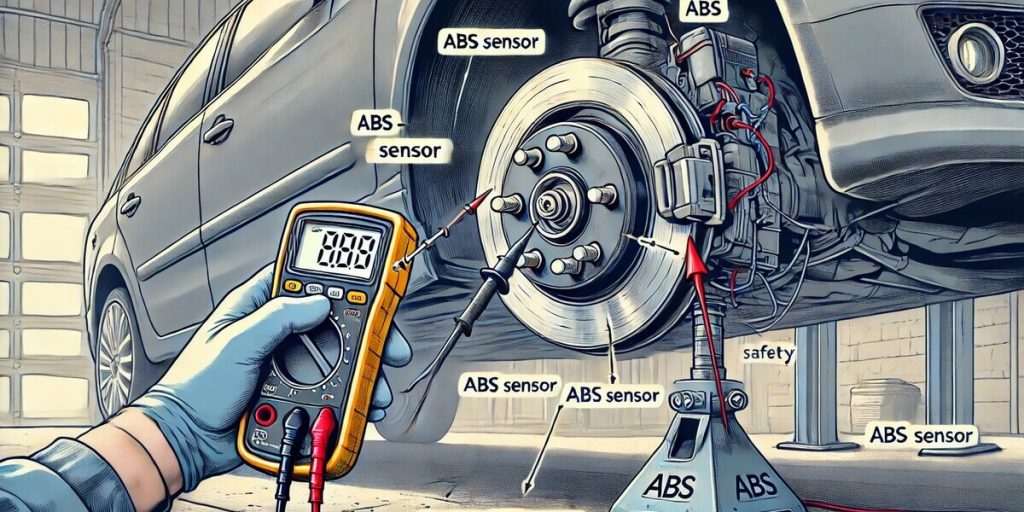
Why ABS-Equipped Vehicles Are Harder to Bleed
Standard bleeding pushes fluid forward through the lines. This works for regular brakes. But the ABS module has small valves that stay closed.
Air can hide behind these closed valves. Fluid flows around the air, but the air stays trapped. When the ABS activates, the valves open. The trapped air moves into the main lines.
The result: A spongy pedal that won’t go away after normal bleeding. The solution: A mechanic uses a bidirectional scan tool. It commands the ABS valves to open. Then they can push the air out.
DIY Brake Bleed Methods — Which One to Use
| Method | How It Works | Best For | Cost |
|---|---|---|---|
| Two-person | Helper pumps pedal; you open valve. | Most reliable for air. | $0 (plus fluid). |
| Gravity bleed | Open valve; let fluid drip out. | Simple refresh; no air. | $0. |
| Pressure bleeder | Push fluid with tank pressure. | One-person job. | $30–$80 (tool). |
| Vacuum bleeder | Suck fluid out with a pump. | Quick service. | $25–$60 (tool). |
| ABS scan tool bleed | Cycles ABS valves. | Post-ABS repair. | $100–$250 (shop). |
Sequence: Start at the wheel furthest from the master cylinder (usually Right Rear). Then Left Rear, Right Front, Left Front.
Is It Safe to Drive With a Spongy Brake Pedal?
Direct Answer: No. It is a safety risk.
| Situation | Safe? | Action |
|---|---|---|
| Slightly long travel, stops fine | ⚠️ Short distance | Drive to shop now. |
| Firms after pumping | ⚠️ Emergency only | Pump before stops; fix today. |
| Visible fluid puddle | ❌ No | Tow to shop. |
| Pedal sinks to floor | ❌ No | Dangerous. Stop driving. |
| Spongy after downhill (vapor) | ⚠️ After cooling | Flush fluid soon. |
| Spongy first press only | ⚠️ Short term | Fix within 2 weeks. |
A spongy pedal increases stopping distance. In an emergency, that extra 10 feet of travel matters.
Spongy Brake Pedal Repair Cost — By Cause
| Cause | DIY Cost | Shop Cost | Urgency |
|---|---|---|---|
| Air in lines (bleed) | $0–$20 | $80–$180 | High |
| Fluid flush | $15–$35 | $80–$150 | High |
| Brake hose | $10–$30 | $80–$200 | High |
| Drum adjustment | $0–$30 | $50–$150 | Medium |
| Caliper replacement | $50–$150 | $200–$600 | High |
| Master cylinder | $40–$200 | $350–$950 | High |
| Rotor replacement (knockback) | $30–$80 | $200–$500 | Medium |
| ABS bleed (shop) | N/A | $100–$250 | High |
How to Prevent a Spongy Brake Pedal
- Flush fluid: Do this every 2–3 years. It removes water that causes vapor lock and rust.
- Check level: Check fluid at every oil change. Low fluid lets air in.
- Use parking brake: On drum brake cars, this keeps the adjusters working.
- Replace hoses: Change rubber hoses at 10–15 years to prevent ballooning.
- Open bleeders: Always open the bleeder screw when pushing caliper pistons.
- Inspect rotors: Check for wobble when changing pads to stop pad knockback. If you feel vibration, check our guide on signs of car suspension issues to see if it’s a bearing or suspension part causing the wobble.
FAQs About Why Is My Brake Pedal Spongy
How do I fix a spongy brake pedal?
To fix a spongy pedal, you must remove the air or fix the leak. If the pedal firms up when pumped, bleed the brakes. This costs $80–$180 at a shop. If the pedal sinks to the floor, the master cylinder is likely bad and needs replacement ($350–$950). If a hose bulges, replace the hose ($80–$200).
Why is my brake pedal spongy after new brakes?
A spongy pedal after a brake job means air got into the system. This usually happens when the caliper piston is pushed back without opening the bleeder screw. You must bleed the brakes at all four wheels. If the car has ABS and the pedal stays soft, you might need a mechanic to bleed the ABS module with a scan tool.
Will pumping the brakes fix a spongy pedal?
Pumping the brakes builds temporary pressure. It can help you stop the car in an emergency. However, pumping is not a repair. The air is still there. As soon as you release the pedal, the air expands and the spongy feel returns. You must fix the cause.
Can a bad ABS module cause a spongy brake pedal?
Yes. The ABS module has valves that can trap air. Normal bleeding cannot remove this air because the valves stay closed. You need a bidirectional scan tool to open the valves and bleed the air out. If your pedal is soft after ABS work or activation, the module likely has air inside.
How much does it cost to fix a spongy brake pedal?
The cost ranges from $80 to over $1,500. A simple brake bleed costs $80–$180. A master cylinder replacement costs $350–$950. An ABS module replacement can cost $500–$1,500. Most spongy pedal fixes fall into the cheaper “bleed” or “fluid flush” category if caught early.
Bottom Line — What to Do Right Now
- Pedal firms after pumping: You have air in the lines. Bleed the system. If you just did a brake job, this is the cause.
- Spongy first press only: This is pad knockback. Check for warped rotors or loose wheel bearings.
- Pedal sinks while held: The master cylinder is bypassing. This is dangerous. Fix it today.
- Spongy after downhill: Your fluid is boiling. Get a brake fluid flush immediately.
- Visible fluid leak: Do not drive. Fix the leak before driving anywhere.
- Pedal goes to floor: Park the car. Call a tow truck. Do not drive.
Golden Rule: If your brake pedal feels wrong, act today. Brakes do not fix themselves. A simple brake bleed costs less than a single insurance deductible. Fix it now.
Quick Summary
- A spongy pedal means air or vapor is in the hydraulic system.
- Use the “Free Pump Test” to see if it is air or a bad master cylinder.
- Air in the lines is the #1 cause; bleeding usually fixes it.
- A sinking pedal points to a failing master cylinder.
- “First press only” sponginess often means warped rotors.
- ABS cars may need a scan tool to bleed air from the modulator.
- Never drive if the pedal sinks to the floor; call a tow.