
This article was updated in July 15, 2026 with new products and information by Mark S. Taylor
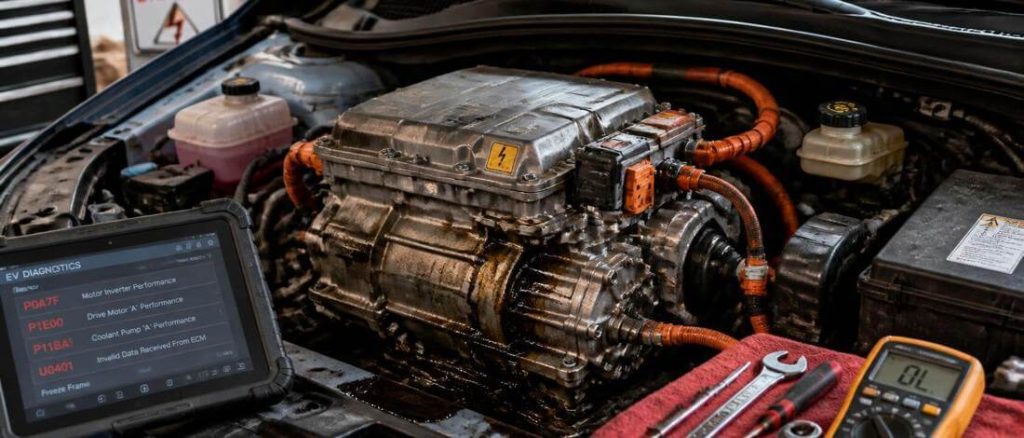
An EV motor problems symptoms that look identical to a half-dozen other faults from the driver’s seat — and the difference between a $500 resolver replacement and a $10,000 drive unit replacement comes down to which specific component has actually failed. Most EV owners, and many technicians trained primarily on ICE vehicles, can’t make that distinction without the right diagnostic framework.
The electric motor in your EV doesn’t fail the way an engine does. It fails through specific electrical and mechanical mechanisms — bearing degradation from inverter-induced discharge currents, winding insulation breakdown from thermal stress, magnet demagnetization from overheating — each producing a distinct symptom fingerprint. Recognizing that fingerprint before authorizing any repair is the highest-value diagnostic step available.
Contents
- 1 EV Motor Problems vs Inverter Problems — The Most Expensive Diagnostic Mistake
- 2 8 Symptoms of EV Motor Problems — What Each One Actually Means
- 2.1 Symptom 1 — Sudden and Complete Loss of Drive Power
- 2.2 Symptom 2 — Gradual Reduction in Acceleration Over Days or Weeks
- 2.3 Symptom 3 — Speed-Dependent Vibration That Changes During Regenerative Braking
- 2.4 Symptom 4 — Grinding, Gravelly, or Rough Sound at Moderate Speeds
- 2.5 Symptom 5 — Cogging or Jerking at Low Speed and During Slow Maneuvering
- 2.6 Symptom 6 — Burning Smell From the Motor or Front/Rear Drive Unit Area
- 2.7 Symptom 7 — Dashboard Motor Fault Warning or Reduced Power Mode
- 2.8 Symptom 8 — Abnormal Regenerative Braking Behavior
- 3 The Derating Cascade — Why EV Motor Problems Often Feel Like Gradual Power Loss
- 4 EDM Bearing Damage — The EV-Specific Failure Mode Most Mechanics Don’t Know About
- 5 Permanent Magnet Demagnetization — When the Motor Loses Its Magnetic Field
- 6 How To Assess an EV Motor Problem Before Calling the Dealer
- 7 OEM-Specific Motor Diagnostic Tools and Apps
- 8 What’s Actually Being Replaced — Motor, Inverter, or Drive Unit?
- 9 EV Motor and Drive System Repair Costs — What the Bill Looks Like
- 10 EV Motor Warranty Coverage — What’s Covered and for How Long
- 11 Can You Drive an EV With Motor Problems?
- 12 FAQs About EV Motor Problems Symptoms
- 13 The Expert Verdict
EV Motor Problems vs Inverter Problems — The Most Expensive Diagnostic Mistake
Before reading the symptom list, understand this: the motor and the inverter produce nearly identical symptoms when either one fails, but they cost dramatically different amounts to repair.
The motor converts electrical energy to mechanical torque — it’s the spinning component with windings, magnets, and bearings. The inverter converts the battery’s DC power to the 3-phase AC the motor requires — it’s the power electronics box mounted to or near the motor. When either one fails, the result from the dashboard is the same: loss of drive power, motor-related warning lights, and reduced or absent acceleration.
The cost difference is significant. On a Tesla Model 3, an inverter replacement runs $3,000 to $5,000 in parts and labor. A motor replacement runs $4,000 to $8,000. A complete drive unit replacement (motor, inverter, and gearbox as a combined assembly, Tesla’s standard approach on many repairs) runs $6,000 to $10,000. Replacing the motor when the inverter was the failed component costs $3,000 to $5,000 more than necessary. On a vehicle where the repair cost approaches its market value, that distinction is the difference between repair and totaling.
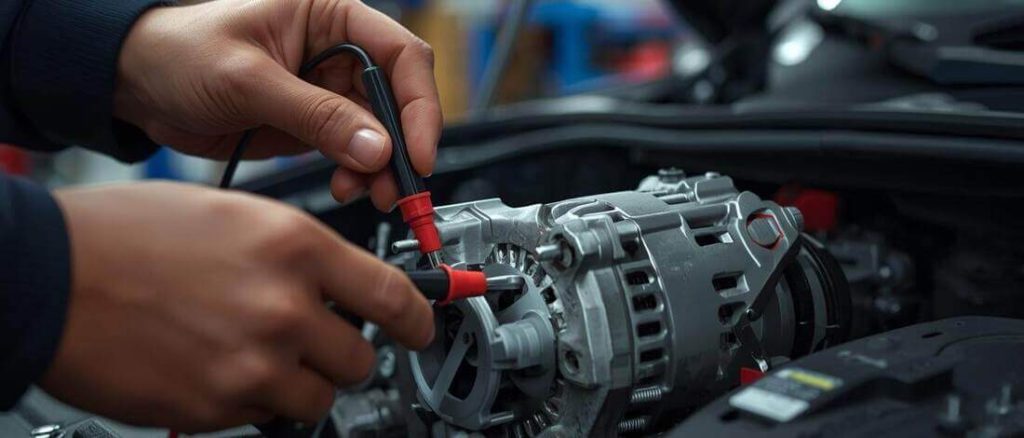
The test that differentiates them: An insulation resistance (megohm) test on the motor phase leads — measuring resistance between each motor phase conductor and the motor housing. A healthy motor with a failed inverter shows normal, high insulation resistance (above 100 MΩ at 500V test voltage). A motor with winding insulation failure shows degraded resistance (below 1 MΩ). This single test, using a megohmmeter ($50–$150), directs the repair to the correct component before a single part is ordered.
Per SAE J3071 high-voltage system safety requirements, EV motors must maintain insulation resistance above 500 Ω/V — which for a 400V system means above 200 kΩ minimum, with healthy motors typically measuring above 100 MΩ. A motor testing significantly below 100 MΩ has compromised insulation. A motor testing above 100 MΩ with a confirmed drive fault has an inverter problem.
Most shops performing EV motor diagnosis include this test. Ask specifically whether it was performed and what the reading was before approving any replacement.
8 Symptoms of EV Motor Problems — What Each One Actually Means
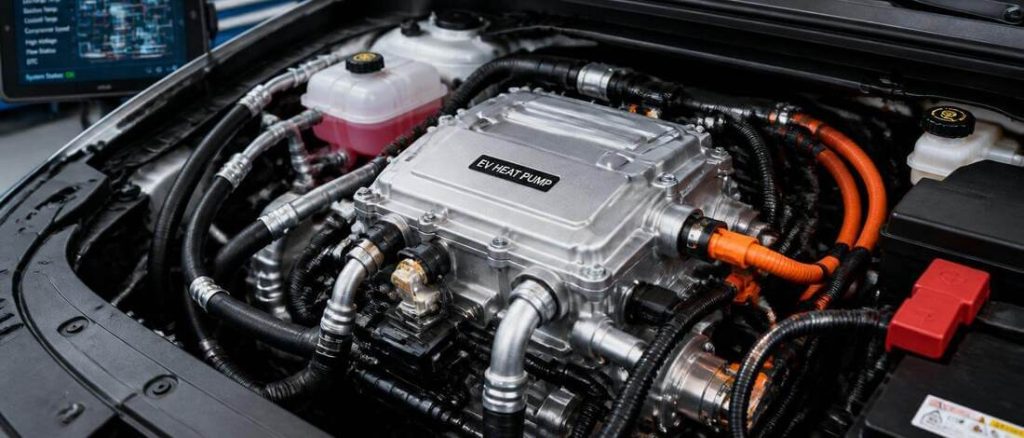
These eight symptoms form the clinical picture of EV motor system failure. Each has a specific mechanism. Several are unique to EVs — they don’t exist in ICE vehicles and require EV-specific diagnostic thinking.
Symptom 1 — Sudden and Complete Loss of Drive Power
The vehicle goes from normal operation to zero drive power without warning — the accelerator pedal produces no response, the vehicle coasts to a stop or maintains a limp-home mode at greatly reduced speed. The most common cause is a motor protection shutdown triggered by the inverter’s fault detection circuit — the inverter detected an out-of-range condition (overcurrent, overtemperature, phase imbalance, insulation fault) and commanded a motor shutdown to prevent damage.
The critical differentiator: does the vehicle allow a re-start after shutting down completely? A thermal-protection shutdown often clears after the motor cools — the driver can pull over, wait 10 to 15 minutes, and resume driving at reduced power. A hardware failure (blown inverter transistor, active winding short) does not recover with cooling time — the fault is permanent until hardware is repaired.
Symptom 2 — Gradual Reduction in Acceleration Over Days or Weeks
The vehicle’s acceleration becomes progressively weaker over a period of days to weeks. Full-throttle response is noticeably reduced from baseline. The symptom doesn’t correlate with battery state of charge — it’s consistent regardless of how charged the battery is. This is the derating cascade in action — covered in detail in the next section — but the two most common causes are motor thermal management failure (insufficient cooling causing winding overtemperature and derating) and partial winding insulation failure (increased resistance in one phase reducing available torque asymmetrically).
Symptom 3 — Speed-Dependent Vibration That Changes During Regenerative Braking
A vibration felt through the floor, seat, or steering wheel that changes character as vehicle speed changes — present at 40 mph, different at 60 mph, possibly absent at 70 mph. Crucially, the vibration changes character when switching between acceleration and regenerative braking.
This symptom combination is the most diagnostic of motor-specific vs. drivetrain-specific faults:
- Vibration that changes under load (worse accelerating, less during coasting): Points to gear bearing or gear mesh issues in the reduction gearbox — the load-dependent change reflects the gear contact forces changing with torque direction.
- Vibration that changes with speed but not with torque direction: Points to rotor imbalance from bearing wear, partial magnet loss (demagnetization), or rotor asymmetry — these are speed-dependent, not load-dependent.
- Vibration that changes during regenerative braking specifically: Points to motor winding asymmetry — a phase imbalance that produces different torque ripple in motoring mode versus generating mode. This is the most diagnostic indicator of a partial winding fault.
Symptom 4 — Grinding, Gravelly, or Rough Sound at Moderate Speeds
A rough, gravelly sound — distinct from a clean metallic grind or a high-pitched whine — that is present at moderate vehicle speeds (15 to 55 mph) and disappears or changes at highway speeds. The sound is relatively consistent regardless of whether the vehicle is accelerating, regenerating, or coasting at a given speed.
This is the acoustic signature of EDM (Electrical Discharge Machining) bearing damage — the EV-specific bearing failure caused by inverter-induced discharge currents through the motor bearings. The speed-dependent, load-independent character distinguishes it from gear noise (load-dependent) and from simple bearing fatigue wear (typically higher-pitched and more consistent across speed ranges). Covered in detail in the dedicated EDM section below.
Symptom 5 — Cogging or Jerking at Low Speed and During Slow Maneuvering
A rhythmic catching, cogging, or jerking sensation during slow-speed maneuvering — parking, low-speed traffic, pulling into a driveway — that isn’t present at highway speeds. The sensation has a rhythmic character correlated with wheel rotation rather than a random jerk.
In a PMSM (permanent magnet synchronous motor), this symptom indicates partial demagnetization of the rotor magnets. When some magnetic poles have lost field strength and others retain normal strength, the motor produces non-uniform torque as each pole pair rotates through the stator field. The variation is most noticeable at low speed where individual pole interactions are more perceptible. At highway speed, the high rotation rate averages the asymmetry into a speed-dependent vibration rather than a distinct cogging.
This symptom is also produced by a failing resolver — the motor position sensor. A resolver that produces erratic angular position data causes the inverter to mis-time its switching relative to the rotor position, producing irregular torque delivery that manifests as cogging or jerking.
Symptom 6 — Burning Smell From the Motor or Front/Rear Drive Unit Area
A distinctive burning smell — either the acrid smell of burning electrical insulation (similar to burning plastic or hot electrical components) or the sharper smell of overheated motor oil — from the area of the front trunk, the rear motor cover, or beneath the vehicle near the drive unit. This symptom is among the most urgent — it indicates active thermal damage to motor winding insulation or motor oil.
Burning insulation smell from the motor indicates the winding insulation is actively degrading — the enamel on the copper conductors is pyrolyzing. Stop driving immediately. Each mile driven with active winding insulation failure extends the fault deeper into the winding, increasing the scope of the required repair.
Burning oil smell from the motor area indicates the motor cooling oil has overheated or leaked onto hot motor surfaces. Motor cooling oil overheats when the cooling circuit fails (blocked oil passage, failed oil pump) or when the motor has been operating at sustained high load beyond the cooling system’s capacity.
Symptom 7 — Dashboard Motor Fault Warning or Reduced Power Mode
A specific warning light, message, or reduced-power indicator related to the motor or drive system. Unlike generic warning lights that could indicate dozens of faults, motor-specific warnings on modern EVs are typically quite specific in the instrument cluster: “Drive System Fault,” “Motor Fault,” “Reduced Power — Service Required,” or on Tesla, a vehicle-shaped icon with an amber or red exclamation point in the drivetrain area.
The warning itself doesn’t diagnose the failure — it requires OEM diagnostic software to retrieve the underlying fault codes. But the combination of warning type and symptom character begins the differential: a warning with no other symptoms (no noise, no vibration, normal acceleration) typically indicates a sensor fault (resolver, temperature sensor, pressure sensor) rather than a mechanical failure. A warning with multiple other symptoms from this list indicates a progressive hardware fault.
Symptom 8 — Abnormal Regenerative Braking Behavior
Regenerative braking that pulsates, feels inconsistent, or fails to decelerate the vehicle at its normal rate. This symptom is uniquely diagnostic for EV motor problems because regenerative braking uses the motor as a generator — the exact reverse of normal motoring operation. Symptoms that appear only during regenerative braking, or that are different during regenerative braking versus acceleration, locate the fault in the motor’s generating capabilities or in the regenerative current path of the inverter.
Specific patterns:
- Pulsating regenerative deceleration at a specific speed: Phase imbalance in the inverter — one of the three drive transistor phases has degraded or failed, causing asymmetric current flow during regeneration.
- Regenerative braking weaker than expected despite normal acceleration: The motor’s generating efficiency has dropped — from partial demagnetization (lower back-EMF) or from high-resistance winding fault (increased copper losses during regeneration).
- Complete absence of regenerative braking: The inverter’s regenerative current path has failed — typically a blown regeneration-specific IGBT or a software fault disabling regeneration as a protective measure.

The Derating Cascade — Why EV Motor Problems Often Feel Like Gradual Power Loss
The derating cascade is the thermal management system’s controlled response to a motor or inverter that’s running too hot — and understanding it explains why EV motor problems frequently present as gradual performance reduction rather than sudden failure.
Every EV motor has winding temperature sensors — typically NTC thermistors embedded in the stator windings — that report temperature to the inverter management system in real time. The inverter management system uses these readings to protect the motor from thermal damage through a cascade of interventions:
First threshold (~120°C): The system begins monitoring more aggressively. No driver-perceptible change yet.
Second threshold (~130°C): Torque output is reduced by 20 to 40 percent. The driver first notices that full-throttle acceleration is weaker than expected. The vehicle still drives normally at moderate throttle.
Third threshold (~140°C): Torque output reduces to minimum safe level — typically 15 to 25 percent of rated maximum. The vehicle can maintain highway speed but cannot accelerate meaningfully. Steep grades may be impassable.
Fourth threshold (~150°C): Motor shutdown. The inverter stops commanding the motor. The vehicle loses drive completely and coasts. A motor fault code is stored.
The critical diagnostic question this framework generates: is the thermal threshold being reached because the motor has a partial winding fault generating excess heat, or because the motor cooling system has failed and the motor is generating normal heat that isn’t being removed?
If the cooling system failed, the motor is actually healthy — it’s just not being cooled. The repair is a cooling system repair (blocked oil passage, failed oil pump, coolant leak from the motor cooling jacket) costing $300 to $1,500 rather than a motor replacement at $4,000 to $8,000.
The diagnostic: monitor motor stator temperature using OEM diagnostic software or a compatible third-party app (Scan My Tesla for Tesla vehicles, OBD11 for VW/Audi EVs, GDS Mobile for Hyundai/Kia) during a controlled acceleration run. A motor that reaches 140°C within 2 minutes of moderate acceleration on a 70°F day has either a cooling system failure or a partial winding fault. A motor that reaches 140°C only after sustained maximum-power acceleration on a 100°F day may be within normal operating parameters for that condition.
EDM Bearing Damage — The EV-Specific Failure Mode Most Mechanics Don’t Know About
Electrical Discharge Machining bearing damage is endemic to inverter-driven motors and essentially unknown in ICE vehicle drivetrains. Understanding it matters because it’s frequently misdiagnosed as wheel bearing failure — a $300 to $600 repair — when the actual cause is motor bearing failure requiring a $4,000 to $8,000 motor replacement.
The mechanism: EV motor inverters operate by switching their output transistors (IGBTs or SiC MOSFETs) at frequencies of 8,000 to 20,000 Hz (8–20 kHz). This high-frequency switching generates a common-mode voltage on the motor shaft — a voltage between the rotating shaft and the motor housing that oscillates at the switching frequency. The motor bearings are the path between the shaft and the housing. When the common-mode voltage exceeds the bearing’s dielectric breakdown threshold (typically 0.5 to 2V across the bearing), current discharges through the bearing in a microscopic arc.
Each individual discharge is invisibly small. But at 10,000 discharges per second over hundreds of operating hours, the bearing races develop a characteristic damage pattern: microscopically pitted, then progressively grooved into a washboard pattern of evenly-spaced ridges — called “frosting” in its early stage and “fluting” in its advanced stage. Under a magnifying glass, EDM-damaged bearing races look like they were finished with fine sandpaper. Under a scanning electron microscope, each groove shows the rounded profile of an electrical discharge pit rather than the sharp-edged profile of mechanical wear.
Per IEEE standards on inverter-driven motor bearing damage, the primary prevention is shaft grounding — a carbon brush or conductive slip ring that provides a low-impedance path between the shaft and housing, diverting discharge current away from the bearing. Many EV motors include shaft grounding in their design. When the grounding brush wears — typically after 60,000 to 100,000 miles — the protection is lost and EDM damage begins accumulating.
The diagnostic test that identifies EDM bearing noise vs. other noises:
Drive the vehicle at 25 mph on a quiet, smooth road. Listen for the rough, gravelly sound. Now accelerate to 45 mph while maintaining a straight line. Note whether the sound changes character. Now apply gentle regenerative braking back to 25 mph. Note whether the character changes during regeneration vs. acceleration.
- Sound changes under load (louder during acceleration, quieter during regeneration, or vice versa): The noise source is load-dependent — gear noise or standard bearing fatigue. These respond to the change in contact forces when torque direction reverses.
- Sound is consistent regardless of whether accelerating, coasting, or regenerating at a given speed: The noise source is speed-dependent, not load-dependent — EDM bearing damage. The microscopic fluting on the bearing race produces the rough sound on each revolution regardless of the load direction.
A mechanic who hears this noise and replaces the wheel bearings will return the vehicle with the same noise — because the source is the motor bearing, not the wheel bearing. The wheel bearings are on the wheel side of the halfshaft. The motor bearings are on the motor side, inside the drive unit. Both produce noise that transmits to the cabin through the chassis, and both are speed-dependent. The load-dependency test is the only way to differentiate them without removing the drive unit.
Permanent Magnet Demagnetization — When the Motor Loses Its Magnetic Field
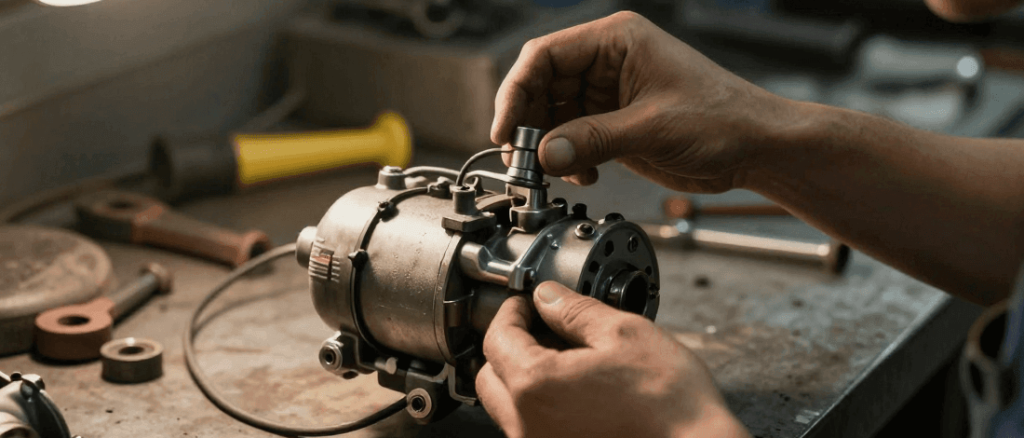
Every permanent magnet synchronous motor in an EV — Tesla, Hyundai, VW, BMW, and most others — uses rare-earth magnets embedded in the rotor. These magnets are what make the motor generate torque: the interaction between the rotor’s permanent magnetic field and the stator’s rotating electromagnetic field. Lose the permanent magnetic field and you lose the motor’s ability to generate torque efficiently.
Demagnetization occurs through three mechanisms:
Thermal demagnetization: Neodymium-iron-boron magnets (NdFeB, the most common EV motor magnet type) begin losing their magnetic field above approximately 180°C (356°F). At the Curie temperature — around 310°C to 370°C for NdFeB depending on the specific alloy — the magnetic domains randomize completely and the magnet loses all field strength. Even brief exposure to temperatures below the Curie temperature but above 180°C causes partial, irreversible demagnetization. Motor cooling system failure — allowing the rotor temperature to spike during high-power operation — is the primary cause of thermal demagnetization in service.
Opposing field demagnetization: Sustained high-current operation generates a strong opposing magnetic field in the stator that partially demagnetizes the rotor magnets. This is most likely during severe motor overloading or during inverter faults that allow sustained overcurrent.
Age and vibration: Long-term vibration and thermal cycling cause gradual magnetic domain reorientation. This is a slow process measurable only over many years but contributes to the permanent performance degradation observed in high-mileage EVs.
The symptoms of partial demagnetization:
When only some magnetic pole pairs have demagnetized — the most common scenario — the motor produces non-uniform torque as the rotor rotates. The poles with reduced magnetic strength generate less torque than the healthy poles, and the transition between them produces a rhythmic cogging sensation at low speed and a speed-dependent vibration at highway speed. The cogging follows the pole pair frequency — a 4-pole-pair motor cogs 4 times per revolution, producing a vibration frequency of 4 times the shaft rotation frequency.
The back-EMF test for demagnetization:
With the motor removed from the vehicle, spin the rotor shaft by hand while measuring AC voltage across each pair of phase terminals with a digital multimeter. A healthy motor produces a clean, sinusoidal back-EMF proportional to rotor speed — the three phases read equal voltage at any given spin speed. A partially demagnetized motor produces asymmetric back-EMF between phases — the phase associated with the demagnetized pole pair reads lower voltage than the healthy phases. This test takes 5 minutes with a DMM and definitively confirms or rules out demagnetization before a motor is removed and replaced.
How To Assess an EV Motor Problem Before Calling the Dealer
The diagnostic divide on EV motor problems is wider than on any other vehicle system. Some assessments take two minutes from the driver’s seat and cost nothing. Others require $200,000 in OEM diagnostic equipment. Knowing which category each check falls into prevents both wasted time and wasted money.
What you can assess yourself:
Assessment 1 — The Acceleration vs. Regeneration Symptom Map
Find a quiet, smooth road with light traffic. Drive at 40 mph in a consistent lane. Apply approximately 50 percent throttle and note any symptom (vibration, noise, power anomaly). Then release the throttle and apply regenerative braking to the same deceleration rate and note the symptom during regeneration. Compare.
A symptom that is identical during both acceleration and regenerative braking indicates a motor mechanical fault (bearing, rotor imbalance, magnet issue) — the mechanical rotation is the same in both modes.
A symptom present only during acceleration or clearly different during regenerative braking indicates either an inverter electronics fault (the motoring and regenerating paths through the inverter are different circuit paths) or a motor winding asymmetry that produces different torque ripple in each mode.
This test requires no tools and no diagnostic equipment — just careful observation. The result significantly narrows the diagnosis before any scan tool is connected.
Assessment 2 — OTA Software Update Check
EV motor control software is updated via OTA on capable platforms, and motor control algorithm changes sometimes address torque anomalies that manifest as motor problems. On Tesla, navigate to Settings → Software. On Rivian, check System → About. On VW, check the infotainment update menu. A motor control software update applied to a vehicle experiencing cogging, torque ripple, or power derating may resolve the symptom without any hardware work — particularly for symptoms that appeared suddenly without any precipitating event.
Assessment 3 — Motor Temperature Monitoring During a Controlled Drive
This is the most diagnostic self-assessment available. Using a compatible third-party app or OEM companion app, monitor motor stator temperature during a sustained acceleration run and note the temperature at which any derating symptoms begin.
- Scan My Tesla: Available for Tesla vehicles; provides motor stator temperature, rotor temperature, inverter temperature, phase current, and motor fault codes in real time.
- OBD11 (VW/Audi EVs): Provides motor temperature, inverter temperature, and motor control fault codes via a compatible Bluetooth adapter.
- GDS Mobile (Hyundai/Kia EVs): Dealer-grade software available via subscription to advanced users; provides full motor and BMS data.
- Torque Pro with EV-specific PIDs: Some EVs expose motor temperature data through extended OBD-II PIDs accessible with Torque Pro and a suitable adapter.
If motor stator temperature exceeds 130°C within 3 to 5 minutes of moderate acceleration at ambient temperatures below 80°F, the motor cooling system warrants investigation before the motor itself is condemned. A motor that reaches 130°C only after 15 to 20 minutes of sustained maximum-power operation on a hot day is likely within normal parameters.
Assessment 4 — 12V Battery and HV Contactor Check
A weak 12V battery can prevent HV system contactors from closing fully, producing partial power delivery that mimics a motor fault. Measure 12V battery voltage at rest — below 12.0V at rest on an EV that’s been parked indicates a weak 12V battery. If the 12V battery is weak, replace it and retest before pursuing motor diagnosis.
What requires a dealer or EV specialist:
- Retrieving motor and inverter fault codes (OEM software or professional-grade bi-directional scanner)
- Megohm insulation resistance testing at motor phase leads
- High-side and low-side DC bus voltage measurement under load
- Phase current balance measurement across all three motor phases
- Back-EMF test for magnet demagnetization (requires motor removal)
- Inverter transistor health assessment (thermal imaging or IGBT gate drive testing)
OEM-Specific Motor Diagnostic Tools and Apps
The diagnostic information gap between EV platforms is substantial. Tesla owners have more consumer-accessible motor diagnostic data than any other platform — the companion app and third-party apps built on its data stream provide real-time motor system parameters that would require a dealer scan tool on any other vehicle.
Tesla (all models):
Scan My Tesla ($4.99/month; iOS and Android) accesses motor stator temperature, rotor temperature, inverter temperature, phase current balance, motor torque commanded vs. actual, and motor fault codes through the vehicle’s native data API. A Tesla owner who arrives at a dealer with a Scan My Tesla data log showing “motor stator temperature reached 148°C in 4 minutes of normal acceleration, inverter logged P0A0A and phase B current 30% below A and C” has provided the equivalent of a paid diagnostic and will receive a faster, more accurate diagnosis.
Hyundai/Kia (Ioniq 5, EV6, Ioniq 6):
The GDS (Global Diagnostic System) software used by Hyundai dealers is available as a subscription product to independent shops and advanced enthusiasts. GDS Mobile provides complete motor and inverter data including winding temperature, phase currents, fault codes, and bi-directional motor control tests. Without GDS, third-party OBD-II scanners read very limited EV-specific data on these platforms.
Volkswagen/Audi (ID.4, ID. Buzz, e-tron):
OBD11 (hardware adapter + subscription software, approximately $150 total) provides substantial motor and inverter data on VW Group EVs, including motor temperature, inverter temperature, motor fault codes, and some bi-directional controls. More accessible than GDS but less comprehensive than Tesla’s API.
BMW (iX, i4, iX3):
BMW ISTA software with an appropriate interface cable provides complete motor diagnostics. Consumer-accessible without dealer visit but requires technical knowledge to interpret. Third-party Bluetooth adapters with BimmerCode or BimmerLink apps provide limited motor temperature data.
Rivian (R1T, R1S):
Rivian’s companion app provides some motor system status but limited raw diagnostic data. Rivian’s dealer network (including Rivian-certified service centers) is required for comprehensive motor fault code retrieval.
What’s Actually Being Replaced — Motor, Inverter, or Drive Unit?
Understanding what the shop is quoting is essential before authorizing any EV motor repair — because the repair scope varies dramatically by OEM approach and by which specific component has failed.
The Tesla drive unit approach:
Tesla has historically replaced the motor, inverter, and single-speed gearbox as a combined drive unit assembly rather than replacing individual components. This approach — driven by Tesla’s service philosophy of rapid repair throughput — is more expensive per failure than component-level repair but faster to execute and more predictable in outcome. A Tesla with an isolated inverter fault that costs $3,000 to $5,000 to repair with component-level inverter replacement may be quoted $6,000 to $10,000 for a drive unit replacement under the traditional Tesla approach.
Tesla’s approach has evolved on newer models and as aftermarket support has developed — some Tesla service centers now offer inverter-only replacement on specific fault codes. Ask specifically: “Are you replacing just the inverter, just the motor, or the complete drive unit?” The answer changes the cost by $3,000 to $6,000.
Hyundai/Kia component-level repair:
Hyundai and Kia’s EV platforms (Ioniq 5, EV6, Ioniq 6) are designed for component-level motor service — the motor, inverter (called the Integrated Charging Control Unit or ICCU on some models), and gearbox are separately serviceable. An isolated inverter fault is repaired with an inverter replacement; an isolated motor fault is repaired with a motor replacement. This approach is generally more cost-effective per fault than a full drive unit replacement.
VW Group (ID. series):
VW’s ID. platform uses a modular e-drive architecture that supports component-level repair at the motor, inverter, and gearbox level. The rear-wheel-drive motor assembly (APP310 motor) has established repair procedures for both motor and inverter separately.
The remanufactured motor market:
A growing number of independent shops now offer remanufactured EV motors at 40 to 60 percent of OEM replacement cost. Quality varies significantly. A legitimate remanufactured motor from a shop that performs winding insulation testing, bearing replacement (with verified shaft grounding brushes), magnet strength verification, and dynamic balancing is a viable alternative to OEM replacement. A remanufactured motor that is simply cleaned, resealed, and shipped is not — you’re buying the same failed motor.
Before purchasing any remanufactured motor, ask the supplier:
- Was insulation resistance tested and to what specification?
- Were bearings replaced with new, and was shaft grounding verified or restored?
- Was the motor dynamically balanced after assembly?
- What is the warranty term and what does it cover?
EV Motor and Drive System Repair Costs — What the Bill Looks Like
All pricing reflects 2026 US market at independent EV specialist shop rates ($120–$210/hr) and OEM dealer rates ($150–$280/hr). Motor system repairs are among the longest-duration automotive repairs — factor in 6 to 12 hours of labor at these rates for motor or drive unit replacement.
Scenario 1 — Resolver / Position Sensor Replacement
| Component | Parts Cost | Labor Hours | Labor Cost | Total Estimate |
|---|---|---|---|---|
| Resolver or encoder (OEM) | $150–$400 | 2–4 hrs | $240–$840 | $390–$1,240 |
Resolver failure is the most cost-effective motor system fault to repair. The resolver is typically accessible without full motor removal on some platforms. If the resolver is confirmed as the fault (resolver-specific fault codes, erratic torque delivery that resolves with resolver replacement, confirmed-good motor insulation), this is the best-case motor system repair outcome.
Scenario 2 — HV Motor Cable / Connector Repair
| Component | Parts Cost | Labor Hours | Labor Cost | Total Estimate |
|---|---|---|---|---|
| HV cable repair kit or replacement | $200–$800 | 2–6 hrs | $240–$1,260 | $440–$2,060 |
HV cable arcing at motor connectors can produce motor fault codes and power loss symptoms without any motor or inverter hardware failure. If fault codes indicate phase voltage anomalies and the insulation resistance test shows normal motor winding health, HV cable and connector inspection is warranted before condemning the motor or inverter.
Scenario 3 — Inverter Replacement
| Component | Parts Cost | Labor Hours | Labor Cost | Total Estimate |
|---|---|---|---|---|
| Motor inverter (OEM) | $2,000–$6,000 | 4–8 hrs | $480–$1,680 | $2,480–$7,680 |
| Inverter (remanufactured, where available) | $1,200–$3,500 | 4–8 hrs | $480–$1,680 | $1,680–$5,180 |
Inverter replacement is indicated when motor insulation resistance tests above 100 MΩ (healthy motor) but motor fault codes and power loss symptoms persist. The inverter’s IGBT transistors, gate drivers, or DC bus capacitors have failed. Confirm with phase current balance measurement — asymmetric phase current with the motor commanded at constant speed indicates a failed inverter phase.
Scenario 4 — Motor Replacement
| Component | Parts Cost | Labor Hours | Labor Cost | Total Estimate |
|---|---|---|---|---|
| Motor (OEM new) | $3,000–$8,000 | 6–12 hrs | $720–$2,520 | $3,720–$10,520 |
| Motor (remanufactured, quality tier) | $1,500–$4,000 | 6–12 hrs | $720–$2,520 | $2,220–$6,520 |
Motor replacement is indicated when insulation resistance tests below 1 MΩ (winding fault confirmed), when bearing noise is confirmed as originating from the motor (EDM pattern), or when back-EMF testing confirms demagnetization. The megohm test result should be documented in the repair record — it’s the evidence that the motor, not the inverter, was the failed component.
Scenario 5 — Complete Drive Unit Replacement (Motor + Inverter + Gearbox Assembly)
| Component | Parts Cost | Labor Hours | Labor Cost | Total Estimate |
|---|---|---|---|---|
| Drive unit (OEM new) | $4,000–$12,000 | 4–8 hrs | $480–$1,680 | $4,480–$13,680 |
| Drive unit (remanufactured) | $2,500–$7,000 | 4–8 hrs | $480–$1,680 | $2,980–$8,680 |
Full drive unit replacement is appropriate when both motor and inverter have failed simultaneously (common after a cooling system failure that overheated both), when the OEM’s repair philosophy requires drive unit replacement for the specific fault, or when the combined cost of separate motor and inverter replacement exceeds the drive unit cost. Request itemization from any shop quoting drive unit replacement — on some platforms, the individual component approach is significantly cheaper.
EV Motor Warranty Coverage — What’s Covered and for How Long
Warranty verification before authorizing any EV motor repair is not optional — it’s the single most important financial step. A motor or inverter replacement that costs $5,000 to $10,000 out of warranty costs $0 within it.
Federal minimum EV powertrain warranty:
Under US federal law, EV manufacturers must warrant the battery and electric motor system for a minimum of 8 years or 100,000 miles, whichever comes first. This covers the traction motor, the inverter, and associated motor control components. Verify your mileage and purchase date against this baseline before any other coverage discussion.
OEM-specific powertrain coverage:
| Manufacturer | Motor/Inverter Coverage | Notes |
|---|---|---|
| Tesla | 4 years / 50,000 miles (basic) + 8 years / 100,000–150,000 miles (battery/drivetrain, varies by model) | Model S/X: 8yr/150k; Model 3/Y: 8yr/100k or 8yr/120k depending on trim |
| Hyundai (Ioniq 5) | 10 years / 100,000 miles | One of the strongest EV powertrain warranties available |
| Kia (EV6, EV9) | 10 years / 100,000 miles | Matches Hyundai coverage |
| Volkswagen (ID.4) | 8 years / 100,000 miles | Federal minimum |
| BMW (iX, i4) | 8 years / 100,000 miles | Federal minimum |
| Rivian | 8 years / 150,000 miles | Above federal minimum |
| GM (Bolt EV/EUV) | 8 years / 100,000 miles | Federal minimum; note Bolt uses different motor architecture |
| Ford (Mustang Mach-E, F-150 Lightning) | 8 years / 100,000 miles | Federal minimum |
| Lucid | 8 years / 100,000 miles | Federal minimum |
The California emissions warranty distinction:
California’s emissions warranty — extended to 14 additional states as of 2024, including New York, Massachusetts, Colorado, Oregon, Washington, and others — covers emissions-related powertrain components for 15 years or 150,000 miles. The electric motor and inverter are classified as emissions-related components. An EV registered and sold in a California-emissions state with a motor fault at 120,000 miles and 12 years of ownership may be entitled to free repair under this extended warranty even if the OEM’s standard powertrain warranty has expired.
Verify your state’s participation and your specific vehicle’s coverage by VIN with the manufacturer before accepting an out-of-warranty repair quote. This warranty provision is underutilized — many EV owners and service advisors don’t know it applies.
Can You Drive an EV With Motor Problems?
The answer depends entirely on which symptom you have.
Drivable to a dealer or specialist (carefully):
- Gradual power reduction with no fault codes, temperature within normal range
- Speed-dependent vibration without power loss or warning lights
- Cogging at low speed without warning lights or fault codes
- Abnormal regenerative braking without total loss of regeneration
Drive at moderate speeds, avoid maximum acceleration, monitor temperature if possible, and get to a service appointment within days — not weeks.
Do not drive — call for a tow:
- Any burning smell from the motor area — stop immediately, ventilate the vehicle
- Complete loss of drive power with active fault codes
- Dashboard warning indicating HV system fault or isolation fault (not just reduced power mode)
- Visible sparking, smoke, or unusual sounds from the drive unit area
- Grinding that has progressed to a hard metallic sound (bearing seizure in progress)
The ground fault risk: A motor with active winding-to-ground insulation failure creates a live high-voltage path to the motor housing. Modern EVs have HV isolation monitoring that trips the HV system contactors if isolation drops below a threshold — but a marginal ground fault may not trip the protection. Until the vehicle has been assessed by a shop with HV isolation testing equipment, avoid contact with any orange cables, motor housing surfaces, or exposed underbody metal near the drive unit.
FAQs About EV Motor Problems Symptoms
How long do EV motors last?
EV traction motors are engineered for the life of the vehicle — the fundamental electromagnetic components (stator windings, rotor magnets) have no mechanical wear in normal operation and can last 500,000 miles or more in the absence of thermal damage or electrical stress. The practical failure modes — bearing wear from EDM damage, winding insulation degradation from thermal cycling, magnet demagnetization from overheating — are all accelerated by specific operating conditions rather than simple mileage accumulation. A well-maintained EV in a temperate climate with good thermal management should not experience motor failure within 200,000 miles. Aggressive use, cooling system neglect, or sustained high-power operation accelerates failure.
Is EV motor failure covered under warranty?
Yes, under the federal 8-year/100,000-mile EV powertrain warranty at minimum. Some OEMs exceed this — Hyundai and Kia cover 10 years/100,000 miles. In California emissions states (14 states plus California itself), emissions-related powertrain components including the motor and inverter are covered for 15 years/150,000 miles. Verify warranty status by VIN before authorizing any repair.
Can an EV motor be repaired rather than replaced?
Depending on the failure mode and the OEM’s repair support. Winding repair (rewinding the stator) is technically feasible but rarely cost-effective compared to motor replacement — the labor to rewind an EV motor stator is comparable to the cost of a replacement motor. Bearing replacement is feasible on motors that support it, but many OEM repair procedures call for full motor replacement rather than bearing-only repair. Magnet replacement after demagnetization is not standard practice — rotor assemblies are replaced rather than re-magnetized in service. Remanufactured motors are the most cost-effective repair option for motors beyond warranty.
What causes EV motors to fail before 100,000 miles?
Most pre-100,000-mile EV motor failures trace to one of three causes: cooling system failure allowing thermal damage to winding insulation or magnets; a manufacturing defect in the motor’s insulation system that propagates to failure under operating stress (often subject to OEM warranty or TSB coverage); or an inverter fault that causes sustained overcurrent through the motor windings. Systematic cooling system maintenance and avoiding sustained maximum-power operation on a degraded cooling system are the primary prevention strategies.
Why does my EV lose power in hot weather?
High ambient temperatures reduce the motor cooling system’s capacity — the temperature differential between the motor windings and the coolant or oil is smaller, reducing heat transfer. The motor reaches its derating threshold (130°C) faster at high ambient temperatures than at moderate temperatures, producing earlier and more pronounced power reduction. This is normal behavior and not a motor fault — it’s the thermal protection system doing its job. Pre-cooling the vehicle (and the motor) before a demanding drive in hot weather, and avoiding maximum-power sustained operation, prevents premature derating.
The Expert Verdict
EV motor problems are rarer than ICE engine problems — but when they occur, the diagnostic mistakes are more expensive. The difference between a $500 resolver replacement and a $10,000 drive unit is a megohm insulation resistance test. The difference between a $400 wheel bearing and a $7,000 motor bearing replacement is an acceleration vs. regeneration symptom mapping test. The difference between a $1,500 cooling system repair and a $6,000 motor replacement is monitoring motor temperature during an aggressive driving test.
None of those tests require a dealer visit. None require specialized equipment beyond a DMM, a megohmmeter, and a compatible diagnostic app. They require knowing which questions to ask and which physical phenomena to observe before anyone touches the repair authorization form.
Know your warranty status before you know anything else. Eight years and 100,000 miles is the floor. Fourteen states give you 15 years and 150,000 miles on emissions components. Get the coverage confirmation in writing before approving anything.