
This article was updated in August 8, 2026 with new products and information by Mark S. Taylor
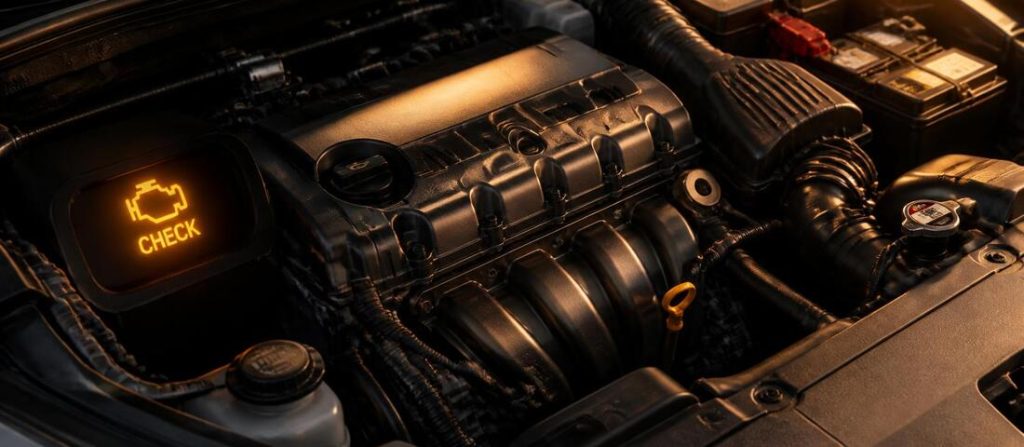
You just finished the satisfying job of swapping out your old car battery for a shiny new one. You turn the key, the engine cranks strong, everything seems perfect… until that yellow Check Engine Light (CEL) glares at you from the dashboard. Don’t panic. Seriously. As a mechanic, I’ve seen this scenario play out thousands of times. While a CEL always warrants attention, after a battery change, it’s often more of a computer hiccup than a catastrophic failure. Your car isn’t broken; it’s probably just confused. We’re going to walk through why this happens, what specific codes you might see, and exactly what to do – and not do – before you even think about calling a tow truck.
Contents
- 1 The Brains of Your Car: How the Computer Reacts to Power Loss
- 2 Common Reasons for a CEL After Battery Replacement
- 3 The Mechanic’s Post-Battery CEL Checklist: Your Action Plan
- 4 Decoding the Codes: Common DTCs After a Battery Swap
- 5 The Drive Cycle: Clearing Readiness Monitors (And Your CEL)
- 6 When to Call a Mechanic (And What to Tell Them)
- 7 FAQs About Check Engine Light After Battery Change?
- 7.1 Q: Can a loose gas cap really cause the Check Engine Light to come on?
- 7.2 Q: I used a “memory saver” when I changed my battery. Why did my CEL still come on?
- 7.3 Q: How long should I expect the CEL to stay on before it clears itself?
- 7.4 Q: My car is idling rough after the battery change, even without a CEL. What’s wrong?
- 7.5 Q: Can my old battery have caused previous CELs that went away, and now the new battery brought them back?
- 7.6 Q: Can a blown fuse cause a CEL after a battery change?
- 8 The Verdict: Don’t Sweat It (Unless You Need To)
The Brains of Your Car: How the Computer Reacts to Power Loss
Your car isn’t just a collection of mechanical parts; it’s a sophisticated network of computers. The main one is the Engine Control Unit (ECU) or Powertrain Control Module (PCM). This brain manages everything from fuel delivery and ignition timing to emissions and transmission shifts. To do this, the ECU constantly “learns” and adapts to your driving style, environmental conditions, and even the natural wear and tear of engine components.
Many of these learned values are stored in what’s called volatile memory. Think of it like your computer’s RAM: when the power is cut (like during a battery change), that volatile memory gets wiped clean. The ECU effectively has amnesia. It “forgets” things like its finely tuned idle speed, optimum fuel-air mixtures (fuel trims), and the status of its readiness monitors for emissions. When you reconnect the new battery, the ECU boots up with default settings, and anything outside its expected parameters can trigger a CEL. It’s not necessarily a problem with a component; it’s a temporary loss of its reference points.
Common Reasons for a CEL After Battery Replacement
So, what exactly is your car’s computer complaining about when you’ve just given it a fresh battery? Here are the most common system disruptions that trigger a CEL in this situation:
- Idle Relearn: This is probably the number one culprit. Your engine’s idle speed is precisely controlled, and the ECU learns the perfect air-fuel mix and throttle position to maintain a smooth idle. When the battery’s disconnected, it loses these learned values. When you start the car, the idle might be rough, too high, too low, or fluctuate significantly, triggering a CEL.
- EVAP System (Evaporative Emission Control System) Issues: The EVAP system prevents fuel vapors from escaping into the atmosphere. It performs self-tests periodically. After a battery change, its readiness monitors are reset, meaning it hasn’t completed its self-test yet. If any component in the EVAP system is even slightly off (like a loose gas cap, which is surprisingly common), the lack of learned values can make it seem like a fault, triggering codes like P0440, P0442, or P0455.
- Oxygen Sensor (O2 Sensor) Calibration: O2 sensors constantly monitor the exhaust gases to ensure the engine is burning fuel efficiently. The ECU uses these readings to adjust fuel trims. When the battery is disconnected, these long-term fuel trim values are reset. It takes some driving for the ECU to re-establish these, and during that relearning phase, it might trigger an O2 sensor-related code if the initial readings are outside default parameters.
- Throttle Body Relearn: Many modern cars use “drive-by-wire” throttle bodies, controlled electronically. The ECU learns the exact positions for the throttle plate. A battery disconnect can erase this, leading to poor throttle response or a CEL until it relearns.
- Loose or Corroded Battery Connections: This one’s simple but often overlooked. If your new battery terminals aren’t perfectly clean and tightly secured, the voltage fluctuations can confuse the ECU and trigger various codes.
- Voltage Spikes/Drops During Installation: Though rare with careful installation, brief power fluctuations during the battery swap can sometimes cause momentary glitches in sensitive electronic modules, leading to a stored code.
The Mechanic’s Post-Battery CEL Checklist: Your Action Plan
Alright, the light’s on. Don’t panic. Here’s my step-by-step action plan to figure out if it’s a benign post-battery glitch or something more serious:
- Check Battery Connections (First and Foremost):
- Turn off the engine.
- Visually inspect both battery terminals. Are they clean? No corrosion?
- Grasp each battery cable firmly. Can you twist or wiggle them? They should be rock solid. If loose, tighten them securely (positive first, then negative).
- Loose connections cause voltage drops that wreak havoc on electronics and can absolutely trigger a CEL.
- Scan for Codes (Get an OBD-II Scanner):
- You can buy a basic OBD-II scanner for $20-$50 at any auto parts store, or many auto parts stores will scan it for free. This is your most important tool.
- Plug the scanner into your car’s OBD-II port (usually under the dash on the driver’s side).
- Write down every single code that appears (e.g., P0420, P0301). Don’t just clear them yet.
- Interpret the Codes (Are They “Battery-Related”?):
- Look up the codes. If you see common post-battery codes like P0420/P0430 (Catalyst Efficiency), P0440/P0442/P0455 (EVAP System), or sometimes P0171/P0174 (Lean Fuel Trim) or P0505 (Idle Control System), there’s a good chance it’s related to the computer resetting.
- Codes indicating an active misfire (P030X where X is cylinder number), sensor circuit issues (P01XX for O2 sensors), or anything related to the engine running very poorly are more concerning.
- Clear the Codes (With Caution):
- If the codes seem related to a general system reset (especially EVAP or fuel trim codes), use your scanner to clear them.
- DO NOT clear codes if the CEL is flashing, or if the car is running very poorly (rough idle, stalling, no power). A flashing CEL indicates a severe misfire that can rapidly damage your catalytic converter.
- Perform an Idle Relearn (If Necessary):
- After clearing codes, if your idle is rough or unstable, perform a basic idle relearn.
- Basic procedure (check your owner’s manual for specific steps): Start the car and let it idle for 5-10 minutes without touching the accelerator, steering wheel, or accessories. Then, drive for 10-15 minutes, including some highway driving and varied speeds. The ECU needs to relearn its parameters.
- For some vehicles, you may need to turn the A/C on high for a few minutes, then off, during the idle relearn to allow the computer to adjust.
- Perform a Drive Cycle (To Reset Readiness Monitors):
- Even if the light clears, the “readiness monitors” for emissions systems might still be incomplete. These need to run through their self-tests. This is especially important if you need to pass an emissions inspection soon.
- This involves specific driving conditions – cold start, idling, city driving, highway driving. We’ll cover this in more detail later.

Decoding the Codes: Common DTCs After a Battery Swap
So you’ve scanned the codes. What do they mean in the context of a recent battery change? Not all codes point to a broken part, especially after a power loss. Here are some of the most common Diagnostic Trouble Codes (DTCs) you might encounter and what they usually mean in your situation:
- P0420 / P0430 (Catalyst System Efficiency Below Threshold): These codes typically indicate an issue with your catalytic converter. However, after a battery reset, it often means the computer hasn’t finished running its diagnostic test on the catalytic converter yet. If no other performance issues are present, it’s usually just a monitor that needs to complete its cycle.
- P0440 / P0442 / P0455 (EVAP System Malfunction): These are common codes for your Evaporative Emission Control System. The EVAP system is highly sensitive to changes and requires specific conditions (a “drive cycle”) to run its self-tests. After a battery disconnect, its learned values are gone, and it often takes a few drive cycles for these monitors to reset. Sometimes, a loose gas cap can also trigger these.
- P0171 / P0174 (System Too Lean): These codes mean your engine’s computer thinks there’s too much air or not enough fuel for proper combustion. After a battery reset, the ECU loses its learned “fuel trims” – the fine adjustments it makes to fuel delivery. It needs to relearn these, and during this process, it might temporarily run lean, especially if there’s a minor vacuum leak or an aging mass airflow sensor.
- P030X (Engine Misfire Detected – ‘X’ is Cylinder Number): While a misfire can indicate a serious problem (spark plug, coil, injector), sometimes after a battery change, an engine’s initial cold start or rough idle due to relearning can trigger a brief misfire code. If the misfire doesn’t persist, and the engine smooths out, it might just be a temporary hiccup. A flashing P030X, however, means an active, damaging misfire and requires immediate attention.
- P050X (Idle Air Control System Malfunction): This directly relates to your car’s idle speed. If the ECU’s idle relearn process isn’t going smoothly, or if there’s any carbon buildup in the throttle body, this code can appear as the computer struggles to maintain a stable idle.
- P013X / P014X / P015X (O2 Sensor Circuit Malfunction): Oxygen sensors are critical for fuel trim adjustments. If the sensor itself is getting old or there was a momentary voltage issue during the battery swap, the computer might flag it. Often, if the car is running fine, this can clear up after a proper drive cycle and the fuel trims are relearned.
A P04XX code immediately after a battery change often means the EVAP system hasn’t completed its readiness monitor, not that a part is actually broken.
The Drive Cycle: Clearing Readiness Monitors (And Your CEL)
Even if you clear the CEL with a scanner and the light stays off, your car might not be ready for an emissions test. This is because its readiness monitors need to complete their self-tests. These monitors are built into the OBD-II system to verify all emissions-related components are working correctly. After a battery disconnect, they all revert to “not ready.”
There isn’t one universal drive cycle that works for every car. Each manufacturer has specific criteria. However, a general drive cycle will usually involve:
- Cold Start: Start the engine after it’s sat overnight and has completely cooled down. Let it idle for 2-3 minutes.
- Varied Speed Driving: Drive for at least 10-15 minutes, trying to incorporate different speeds.
- Steady Highway Cruise: Maintain a steady speed (e.g., 55-60 mph) for 5-10 minutes.
- City Driving: Include some acceleration, deceleration, and stop-and-go driving.
- Idle Periods: Let the car idle for short periods (30-60 seconds) during your drive.
- Low Fuel Level Avoidance: For the EVAP monitor specifically, some vehicles require the fuel tank to be between 1/4 and 3/4 full.
- Repeat if Necessary: Some monitors are particularly stubborn and may require several drive cycles over a few days to reset.
You can use your OBD-II scanner to check the status of your readiness monitors. Once they all show “ready” or “complete” (except for maybe the EVAP monitor, which can be the slowest), your car’s computer has relearned its parameters and satisfied its self-tests. There isn’t one universal drive cycle; some cars are pickier, but a varied driving pattern is key.
When to Call a Mechanic (And What to Tell Them)
While many post-battery CELs are temporary glitches, there are clear signs you need professional help:
- Flashing Check Engine Light: This is not a suggestion; it’s an urgent warning. A flashing CEL almost always indicates a severe engine misfire. This means unburnt fuel is entering your catalytic converter, rapidly damaging it. Stop driving immediately and call for a tow. Driving with a flashing CEL is the fastest way to turn a spark plug issue into a $1,000+ catalytic converter replacement.
- Persistent CEL with Poor Running Conditions: If the CEL remains on after you’ve checked connections, cleared codes, and completed a drive cycle, and your car is running rough, stalling, has significantly reduced power, or you hear unusual noises.
- CEL After Emissions-Related Repairs: If you’re getting a CEL after you’ve had a known issue (like a bad O2 sensor) repaired, it could indicate the new part is faulty or the installation wasn’t correct.
- Specific Codes Indicate a Hard Fault: Some codes, even after a battery reset, point directly to a component failure that won’t resolve itself. If the scanner shows a constant code for a specific sensor (e.g., a known faulty mass airflow sensor), it’s time for a professional diagnosis.
- No Codes (But CEL is On): Very rarely, the CEL can illuminate but your scanner shows no codes. This is typically a deeper electrical issue or a problem with the ECU itself, requiring advanced diagnostics.
When you call the mechanic, be precise: “I changed my battery on [date], and the Check Engine Light came on immediately. I scanned it and got codes [list codes]. I checked the battery connections and they are tight. I also tried [mention idle relearn/drive cycle].” This helps them narrow down the issue quickly.
FAQs About Check Engine Light After Battery Change?
Q: Can a loose gas cap really cause the Check Engine Light to come on?
A: Yes, absolutely! The gas cap is part of your EVAP system. If it’s not sealed correctly, fuel vapors can escape, and the EVAP system’s self-test will fail, triggering a CEL. After a battery change, if you have an EVAP code (like P0442), always check that gas cap first.
Q: I used a “memory saver” when I changed my battery. Why did my CEL still come on?
A: Memory savers are designed to maintain power to the ECU’s volatile memory, theoretically preventing the loss of learned values. However, they aren’t foolproof. Sometimes, a brief disconnect can still occur, or the memory saver might not have enough power to maintain all systems, especially in older cars. It helps, but it doesn’t guarantee a completely seamless transition.
Q: How long should I expect the CEL to stay on before it clears itself?
A: If it’s a “soft” code related to a readiness monitor that needs to run, it could take anywhere from a few miles to a few hundred miles of varied driving, or several complete drive cycles, for the CEL to turn off on its own. If it persists for more than a week of regular driving, it’s less likely to be a temporary post-battery glitch.
Q: My car is idling rough after the battery change, even without a CEL. What’s wrong?
A: This is a classic symptom of the ECU losing its idle learned values. Without the precise instructions it had before, it might struggle to maintain a smooth idle. Performing the idle relearn procedure mentioned earlier should typically resolve this. If it persists, a dirty throttle body might be exacerbating the issue, and a cleaning might be needed.
Q: Can my old battery have caused previous CELs that went away, and now the new battery brought them back?
A: Yes, indirectly. A failing battery can cause low voltage issues throughout the vehicle’s electrical system, which can confuse sensors and trigger intermittent CELs. When you replace it, the new, strong battery provides consistent power, but if a sensor was actually faulty (not just voltage sensitive), the ECU will now properly detect its failure without the mask of weak voltage, potentially bringing back an old, underlying problem.
Q: Can a blown fuse cause a CEL after a battery change?
A: Yes, if a fuse related to an emissions sensor or engine control system blew during the battery swap (perhaps from a momentary short), it could definitely trigger a CEL. Always check relevant fuses if you suspect an electrical issue after working on the battery.
The Verdict: Don’t Sweat It (Unless You Need To)
The Check Engine Light after changing a car battery is a rite of passage for many DIYers. While it’s jarring to see that familiar yellow light after a successful repair, remember: it’s usually your car’s computer just re-calibrating and re-learning its operating parameters. Most times, with a quick check of your battery terminals, a code scan, and a proper drive cycle, that light will extinguish itself. But never ignore it. Get it scanned, understand the codes, and if the light flashes or your car runs poorly, that’s your cue to get it to a professional. Most post-battery CELs are a computer hiccup, not a broken part, but always verify with a code reader to avoid bigger headaches.