
This article was updated in November 24, 2026 with new products and information by Mark S. Taylor
When a fuel gauge stays stuck on empty, full, or jumps erratically, the cause is usually a worn fuel-level sending unit, a wiring or ground fault, a failing instrument cluster, or vehicle refueling logic. Log gallons added and odometer miles conservatively, and test the circuit before replacing the fuel pump.
You fill the tank until the pump clicks off, yet the needle stays pinned at half. Or the gauge suddenly plunges from three-quarters to empty while your distance-to-empty readout swings wildly.


An unreliable fuel gauge is frustrating, and guessing at parts gets expensive fast because the level sender often sits inside the gas tank. Track your mileage conservatively first, then use the gauge’s behavior to narrow down whether the fault lives in the tank, the wiring, or the dashboard.
Contents
Fuel Gauge Pattern-to-Fault Diagnostic Triage Table
Watch how the needle and digital range readout behave before booking a repair. Each pattern points a technician toward a different part of the circuit.
| What the Fuel Gauge Is Doing | Most Likely Cause Area | Safe First Check |
| Stuck on Empty (or Full) right after a fill-up | Open or shorted sender circuit, stuck float arm, or failed cluster stepper motor | Check whether the Distance-to-Empty (DTE) readout agrees with the needle |
| Stuck at Half Tank or drops straight from Half to Empty | Failed secondary sender in a dual-sender saddle tank, or a worn resistor track | Log exact gallons added at fill-up against your tank capacity |
| Jumps up and down over bumps or turns | Worn sender resistor wiper, loose harness ground, or sulfur deposits on sender contacts | Note whether jumps match bumps and turns or happen while parked at idle |
| Fails to update right after adding gas | Refueling with ignition ON or engine running, small top-off, or OEM refueling logic | Switch the ignition completely OFF before refueling and check after a full tank |
| Needle reads wrong, but OBD2 live data reads right | Faulty instrument cluster gauge or stepper motor (sender is healthy) | Ask a shop to compare live OBD2 Fuel Level Input % against the dash needle |
5 Common Causes of an Inaccurate Fuel Gauge
Fuel-level systems vary across makes and model years, so one symptom never proves a single failed part. These five categories cover the vast majority of inaccurate gauge complaints.
1. A Worn or Sticking Fuel-Level Sending Unit
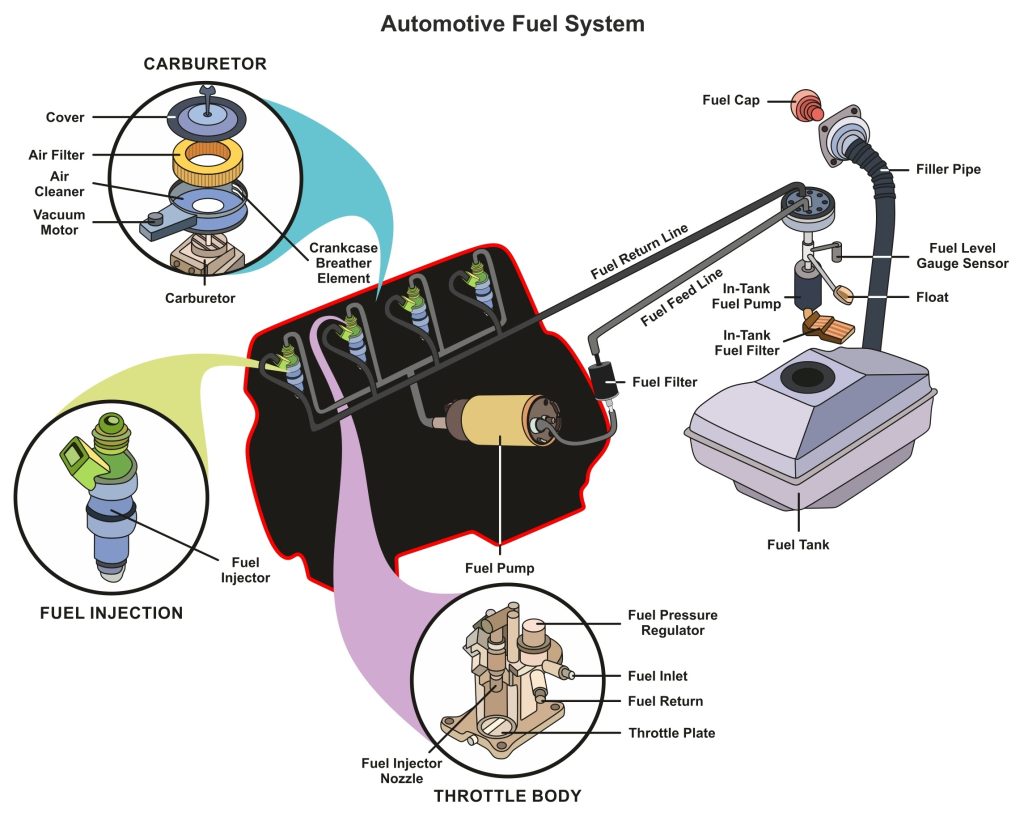
Inside your fuel tank, a float attached to a metal arm rises and falls with the gasoline level. That arm sweeps across a variable resistor card, sending an electrical signal that tells the vehicle computer how much fuel remains.
Over years of driving, the wiper contacts wear down or collect sulfur deposits from lower-detergent fuel, creating dead spots where the needle drops out. Sticking to TOP TIER detergent fuel standards
helps limit fuel-system deposits, though mechanical wear still happens with age.
Many AWD crossovers, SUVs, and rear-wheel-drive vehicles use a saddle-shaped tank straddling the driveshaft with two separate level senders. When the secondary sender fails, the gauge frequently freezes near half a tank or drops straight from half to empty.
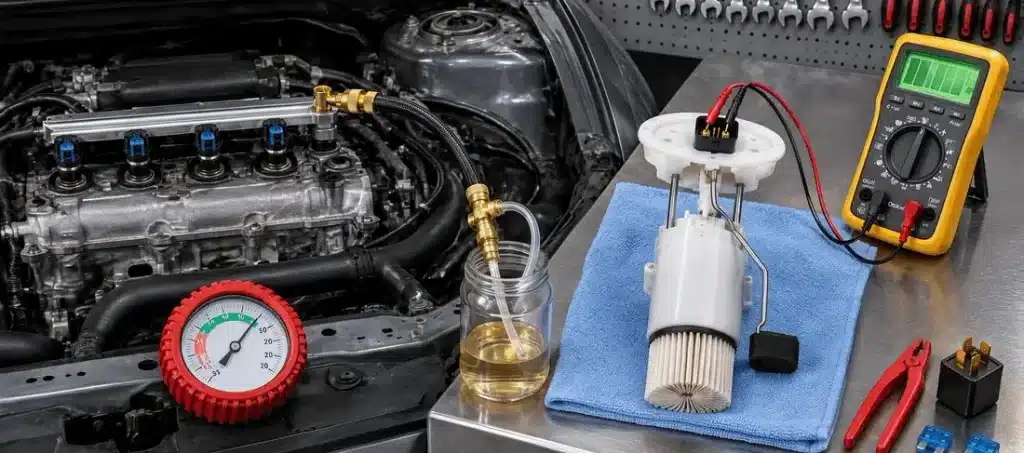
Do not assume a bad gauge means your fuel pump is failing. Although the sender and pump motor often share one in-tank module, they do completely different jobs. If the engine starts and accelerates cleanly with no stalling, you do not need to jump straight into how to test a fuel pump for pressure, volume, and voltage
2. Wiring, Connector, or Ground Faults
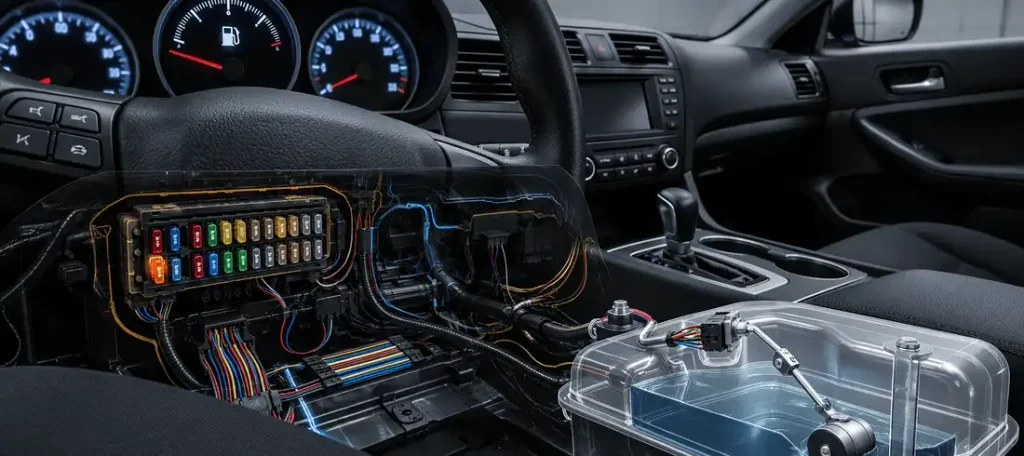
The fuel-level signal travels through underbody wiring harnesses exposed to road salt, moisture, and vibration. Corroded connector pins at the top of the fuel tank, chafed wires, or a poor chassis ground can make the needle bounce erratically or pin itself at either end of the dial.
Because an open circuit reads Full on some vehicles and Empty on others, never apply a generic resistance chart from the internet. A technician must test the circuit using your vehicle’s exact wiring diagram.
3. A Failing Instrument Cluster or Stepper Motor
Sometimes the tank sender and wiring work fine, while the dashboard gauge itself fails. Small electric stepper motors behind the instrument panel can stick, slip, or lose calibration over time.
A live-data OBD2 scanner splits this fault in two minutes. If the scan tool’s live Fuel Level Input % PID matches the actual fuel in your tank while the dashboard needle sits on Empty, the fault is inside the instrument cluster rather than the gas tank.
4. Vehicle Refueling Logic or Ignition-On Fill-Ups
Modern vehicles do not wire the float straight to the needle. Instead, the engine or body control module filters out normal fuel slosh during braking and turns, and uses programmed refueling logic to detect when you add gas.
One common non-mechanical mistake is leaving the engine running or the ignition switched to ACC/ON while pumping gas. Many control modules ignore fuel additions made with the key on, or ignore tiny top-offs of only a couple of gallons, leaving the gauge unchanged until the next full key-off refuel.
Software logic can also be model-specific. For example, a 2026 Mercedes-Benz Sprinter XENTRY Tips document
hosted by NHTSA notes that specific Model 907 Sprinters may fail to update the gauge after refueling due to fuel-supply control logic or mechanical float interference, instructing shops not to replace pumps without following the factory diagnostic steps. Similarly, Mazda service bulletin SA-013-25 addresses rapid fuel-level drops and inaccurate range readouts on select 2024–2025 CX-90 and 2025 CX-70 models. These cases apply only to the listed vehicles and should never be treated as a universal fix.
5. Mechanical Interference Inside the Fuel Tank
After a recent fuel-pump replacement or tank repair, an improperly routed internal hose or wiring pigtail can snag the float arm and prevent it from moving freely. A dented metal tank or distorted plastic tank wall can also bind the float at a fixed height.
Safe Checks You Can Do Without Opening the Fuel Tank
You can gather useful diagnostic facts and keep yourself from running dry without touching fuel lines or lifting the car.
- Record the exact symptom pattern. Write down whether the needle sticks at Empty, Full, or Half, jumps over bumps, or refuses to move after a key-off fill-up.
- Track gallons added and odometer miles. Reset your trip odometer at every full tank and write down how many gallons the pump puts in. You can also estimate your trip fuel usage with our fuel cost calculator to plan conservative refueling stops well before the tank runs low.
- Check your owner’s manual. Confirm your exact fuel tank capacity and check whether the automaker lists any model-specific refueling notes. Ignore generic online “fuel gauge reset” tricks unless your manual specifically instructs them.
- Run a VIN recall check. Enter your VIN in the NHTSA recall lookup tool to see whether a safety recall covers your fuel-level sender. For instance, NHTSA Recall 10V074000 covered specific older Nissan Titan, Armada, and Infiniti QX56 models where faulty senders could read falsely high and cause unexpected stalling.
What a Technician Should Test
Safety Warning: Never drop a fuel tank, open an in-tank fuel pump access hatch, or probe fuel-sender wiring near open fuel vapors at home without proper ventilation, fire-safety equipment, and factory service procedures. Gasoline vapors ignite easily from a single static spark.
A qualified repair shop isolates the fault step by step before recommending expensive tank work. As outlined in Delphi’s fuel sending unit diagnostic overview
, proper testing typically follows this order:
- Scan the engine and body modules for stored fuel-level circuit trouble codes (such as P0460 through P0464)
- Compare live OBD2
Fuel Level Input %data against the physical needle on the dashboard - Inspect underbody connectors, grounds, and harness routing for corrosion or rodent damage
- Test sender circuit voltage and resistance against factory specifications for your exact VIN
- Check for applicable automaker software updates or Technical Service Bulletins before pulling the tank
Is It Safe to Drive With a Broken Fuel Gauge?
Your car can still drive normally with a faulty gauge, yet running out of gas unexpectedly on a highway or busy intersection creates a real safety hazard. A gauge that reads falsely high is riskier than one stuck on Empty, because it tricks you into thinking you have plenty of range left.
Do not rely on your dashboard’s Distance-to-Empty (DTE) readout either. That estimate pulls its numbers straight from the same faulty fuel-level signal. Refill conservatively based on your trip odometer until a shop repairs the circuit.
FAQs About Fuel Gauge Not Working?
Why is my fuel gauge stuck on empty when the tank is full?
A gauge stuck on empty after a fill-up usually points to a failed fuel-level sending unit, an open or shorted circuit in the tank harness, a faulty instrument cluster, or vehicle refueling logic. A technician should check live OBD2 fuel-level data before replacing the tank module.
Why does my fuel gauge stay stuck on full?
A sticking float arm, damaged wiring circuit, or faulty dashboard stepper motor can hold the needle pinned at full. Because open circuits cause a full reading on some vehicles and an empty reading on others, the circuit must be tested against your exact wiring diagram.
Why does my fuel gauge jump while driving?
Small, slow needle shifts on steep hills are normal, though most cars filter out slosh. Sudden jumps over bumps or turns usually indicate a worn resistor wiper on the sending unit or a loose ground connection in the fuel-level harness.
Why did my fuel gauge not move after refueling?
Leaving the engine running or the ignition switched on at the pump often stops modern fuel-level logic from recognizing a fill-up. If the needle still refuses to update after a full, key-off refuel, suspect a sticking float, wiring fault, or vehicle-specific software issue.
Does a bad fuel gauge mean my fuel pump is bad?
No. Even though the fuel-level sender and electric fuel pump often share one in-tank assembly, a broken gauge does not mean the pump motor is failing. Always test the level circuit and cluster display before paying for a full fuel-pump assembly.
Can I reset my fuel gauge myself?
There is no universal reset procedure for car fuel gauges. Some vehicles update automatically after a full key-off refuel, while others require a scan-tool reset or software update from a shop. Check your owner’s manual rather than disconnecting the battery blindly.
Record your odometer miles and gallons added at every stop, verify you are refueling with the ignition completely off, and have a technician compare live OBD2 fuel-level data against your dash needle before pulling the tank. Isolating a wiring or cluster fault early saves you from buying an in-tank assembly you do not need. For more fuel-delivery troubleshooting, explore our fuel system diagnostic guides
.