
This article was updated in November 22, 2026 with new products and information by Mark S. Taylor
A musty or dirty-sock smell from your car’s A/C usually comes from moisture and microbial buildup on the evaporator core, a damp cabin air filter, or water trapped by a clogged condensate drain. Check your cabin filter, passenger floorboard, and windshield cowl before paying for chemical evaporator cleaning.


You turn on the air conditioner on a warm afternoon and get hit with a blast of damp, stale air. It smells like wet gym socks or a basement, often strongest during the first thirty seconds before fading away.
A musty odor narrows down where moisture is trapped, but it does not identify the exact part on its own. Checking a few accessible spots first keeps you from paying for an evaporator cleaning when the real culprit is a soggy cabin filter or a wet floor mat.
Contents
- 1 5 Common Causes of a Musty Car AC Smell
- 2 Fresh-Air vs Recirculation Mode Isolation Test
- 3 Make Sure It Is Actually a Musty Smell
- 4 Safe Checks You Can Do Before Visiting a Shop
- 5 What Not to Spray or Disassemble
- 6 When to Schedule Professional HVAC Cleaning
- 7 How to Keep the Smell From Returning
- 8 FAQs About Car AC Smells Musty: Causes, Safe Checks
- 8.1 Why does my car AC smell like dirty socks?
- 8.2 Does a musty AC smell always mean mold?
- 8.3 Can changing the cabin air filter fix a musty AC smell?
- 8.4 Why does the musty smell disappear after a few minutes?
- 8.5 Should I spray Lysol or disinfectant into my car vents?
- 8.6 Is a musty car AC smell dangerous to breathe?
5 Common Causes of a Musty Car AC Smell
Your heating, ventilation, and air conditioning (HVAC) system pulls humid air through dark, enclosed ductwork. Any place where moisture lingers alongside dust or organic debris can start to smell.
1. Moisture Buildup on the Evaporator Core
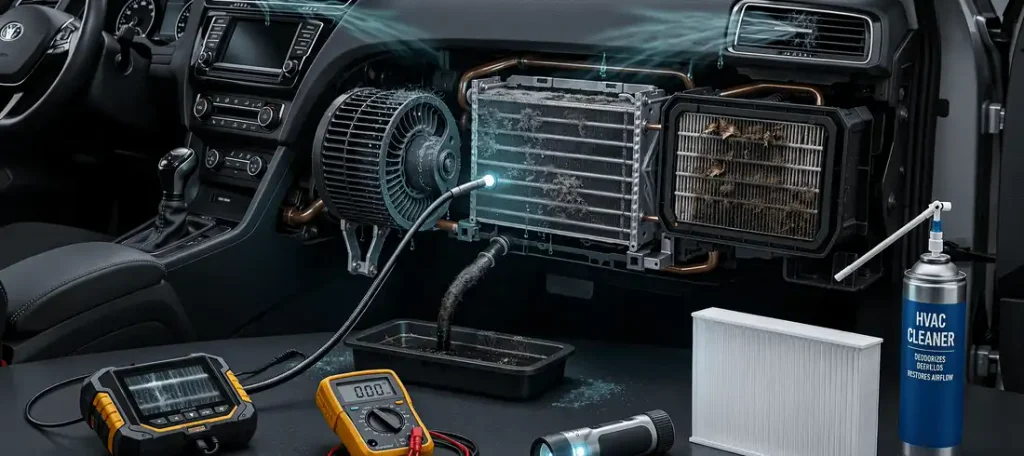
The evaporator core sits inside a sealed plastic box behind your dashboard. As warm air blows across its cold metal fins, moisture condenses out of the air and drains out beneath the car.
Over time, fine dust and pollen slip past the filter and cling to those wet fins. In warm weather, microbes grow on that damp film and release a sour, musty smell whenever the blower starts.
Automakers document this exact pattern in factory service bulletins. For example, GM technical service bulletin 99-01-37-009C (covering specified 2000–2002 Saturn S-Series models) and BMW Service Information SI B64 04 03 both describe evaporator microbial odors and direct technicians to inspect filters and drains before applying model-specific cleaners. Those procedures are specific to the listed vehicles and should not be treated as a universal DIY formula.
2. A Damp or Clogged Cabin Air Filter
Your cabin air filter traps leaves, road dust, and pollen before air reaches the blower fan. If water gets into the intake or humidity sits in the housing, a dirty paper filter holds moisture like a sponge.
Swapping a damp, heavily loaded filter often improves airflow and cuts the odor right away. If the smell returns a few days after installing a fresh filter, the moisture source sits deeper in the housing or inside the cabin.
3. Wet Leaves in the Windshield Cowl
Most vehicles pull fresh outside air through vents located at the base of the windshield, right under the wipers. Fallen leaves, pine needles, and dirt collect in that cowl trough and rot whenever it rains.
When you run the fan in fresh-air mode, air sweeps straight across that wet debris and carries the earthy, mildewed smell through your dash vents.
4. A Clogged A/C Condensate Drain
Water condensing off the evaporator exits through a small rubber drain tube under the car. Road grime, insect nests, or slime buildup can plug that tube and trap standing water inside the HVAC box.
Watch for these signs of a restricted drain:
- Damp carpet or pooled water in the passenger footwell
- A sloshing sound behind the dashboard when turning corners
- A musty smell that lingers even when the A/C compressor is off
- Foggy interior windows right after startup
Seeing a puddle of clear, thin, odorless water dripping near the passenger firewall after running the A/C is normal condensate. If the liquid feels slightly slick, smells sweet, or shows color (green, orange, pink, or blue), suspect a coolant leak instead of normal A/C drainage.
5. Hidden Cabin Water Leaks
Sometimes the HVAC vents simply circulate an odor that starts elsewhere in the car. Worn door seals, leaking windshield gaskets, clogged sunroof drains, or blocked plenum drains can soak the carpet padding underneath your floor mats.
As outlined in a Volkswagen HVAC odor inspection bulletin hosted by NHTSA, technicians are instructed to check evaporator drains, plenum drains, pollen filters, and interior water intrusion before blaming the evaporator core. Carpet padding can hold trapped water for weeks even when the top surface feels dry to the touch.
Fresh-Air vs Recirculation Mode Isolation Test
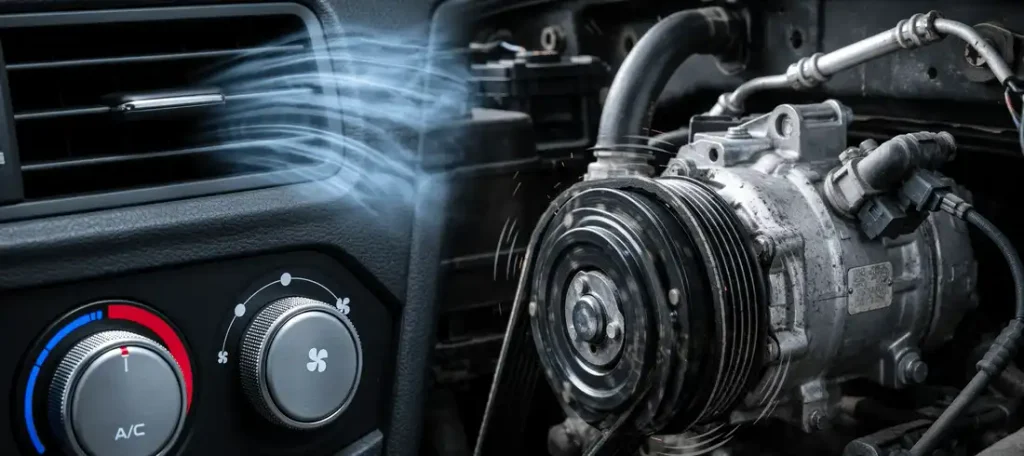
Pay attention to when the odor hits before opening the hood or buying supplies. Switching between fresh-air mode and recirculation mode gives you a fast clue.
| When the Smell Appears | Most Likely Zone | First Physical Check |
| Only in Fresh-Air mode (fades on Recirculation) | Windshield cowl or exterior air intake | Check the base of the windshield for rotting leaves or pine needles |
| First 15–60 seconds of startup, then fades | Evaporator core or damp cabin air filter | Pull and inspect the cabin air filter and verify airflow arrow direction |
| Constant in both modes, or even with blower OFF | Wet carpet padding, clogged drain, or cabin leak | Press firmly on passenger footwell carpet and lift floor mats |
Write down whether the odor worsens after heavy rain, a car wash, or overnight parking. Sharing that pattern with a shop prevents guesswork.
Make Sure It Is Actually a Musty Smell
Different vehicle odors point to completely different systems. Never try to mask or clean away a chemical, fuel, or exhaust smell with an A/C freshener.
| Odor Type | Possible Source | Immediate Action |
| Musty, damp, or dirty socks | Evaporator moisture, damp filter, or cabin water | Check cabin filter, cowl, and floorboard carpet |
| Sweet or syrupy | Coolant leak or failing heater core | Schedule an inspection; check coolant level only when the engine is cold |
| Burning plastic or sharp electrical | Overheating blower motor, resistor, or wiring | Turn the HVAC fan off immediately and pull over if the smell persists |
| Raw gasoline | Fuel line, injector, or vapor leak | Stop safely, keep ignition sources away, and arrange professional service |
| Rotten eggs or sharp exhaust | Exhaust leak or sulfur exhaust compounds | Open windows, exit if anyone feels dizzy, and review sulfur or exhaust-like car odors |
Safe Checks You Can Do Before Visiting a Shop
You can check the most common culprits in ten minutes without special tools or dashboard disassembly.
- Inspect the cabin air filter. Check your owner’s manual for the filter location, which is usually behind the glovebox. Pull it out and check for dampness, dark spots, mouse debris, or heavy clogging. If you replace it, match the airflow arrow printed on the side of the new filter.
- Clear visible cowl debris. Lift any loose leaves or pine needles off the exterior vents at the base of the windshield by hand. Avoid prying off plastic cowl trim or removing wiper arms unless you are following your vehicle’s service procedure.
- Press the passenger carpet. Lift the passenger floor mat and press your palm firmly into the carpet, especially up near the center console and firewall. Moisture wicking up through your fingers points to a clogged condensate drain or water leak.
- Check under the car after running the A/C. On a humid day, look for clear water dripping beneath the passenger side after running the A/C for several minutes. Lack of a puddle alone does not prove a clog in dry weather, so pair this observation with your carpet check.
What Not to Spray or Disassemble
Taking shortcuts inside an HVAC system can damage electronics or create breathing hazards inside a closed cabin.
- Do not spray household disinfectants, bleach, ammonia, or aerosol air fresheners into your dashboard vents or cowl intake. Harsh chemicals can corrode aluminum evaporator fins, damage blower resistors, and blow irritating fumes into your face.
- Do not shove coat hangers, stiff wire, or high-pressure compressed air blindly up the condensate drain tube. You can puncture the evaporator core or pop the drain hose off its fitting inside the cabin.
- Do not rely on an ozone generator as a substitute for drying wet carpet padding or clearing a plugged drain. Ozone masks smells temporarily while the underlying water source stays wet.
When to Schedule Professional HVAC Cleaning
Have a qualified shop inspect the system if any of these apply:
- The musty odor returns within days of installing a dry, clean cabin air filter
- You find wet carpet padding, standing water, or sloshing behind the dash
- Reaching the evaporator or drain tube requires removing trim panels or lifting the vehicle
- A factory technical service bulletin applies to your specific model year and VIN
A technician can clear the condensate drain safely, verify there are no hidden body leaks, and apply an OEM-approved evaporator cleaner directly to the coil fins where surface sprays cannot reach.
How to Keep the Smell From Returning
Stopping the odor permanently means keeping the evaporator housing and cabin dry.
- Turn the A/C compressor button off while leaving the blower fan running on medium-high for the last 2 to 3 minutes of your drive. Moving ambient air across the cold fins dries surface condensation before you park in a warm garage.
- Check whether your vehicle includes an automatic afterblow or evaporator-drying setting in the infotainment menu or dealer scan tool, as availability varies by make and model.
- Replace your cabin air filter on the schedule listed in your owner’s manual, or more often if you park under trees.
- Keep the windshield cowl clear of wet leaves every fall and spring.
- Fix door, window, or sunroof leaks promptly so interior padding never stays damp.
FAQs About Car AC Smells Musty: Causes, Safe Checks
Why does my car AC smell like dirty socks?
A dirty-sock smell usually happens when moisture condenses on the cold evaporator core and mixes with trapped dust and pollen. Microbes grow on that damp film while the car sits parked, releasing a sour odor the next time the blower fan switches on.
Does a musty AC smell always mean mold?
Not necessarily. While microbial buildup on the evaporator core is common, a damp cabin air filter, rotting leaves in the windshield cowl, or wet carpet padding from a clogged drain can produce the exact same musty odor.
Can changing the cabin air filter fix a musty AC smell?
It can fix the smell if the old filter itself is damp, dirty, or contaminated. If the odor comes from the evaporator core, a plugged condensate drain, or a cabin water leak, replacing the filter alone will only help briefly.
Why does the musty smell disappear after a few minutes?
Stale, humid air sits trapped inside the dark HVAC housing while your car is parked. Once the blower starts, the initial burst pushes that concentrated odor out of the vents, and continuous airflow dilutes it within a minute or two.
Should I spray Lysol or disinfectant into my car vents?
No. Household disinfectants are not formulated for automotive HVAC plastics, aluminum coils, or blower electronics. They can leave chemical residue inside the ducts and fail to fix the root cause if a drain is clogged or the cabin filter is soaked.
Is a musty car AC smell dangerous to breathe?
A brief musty odor is not usually an emergency, though persistent dampness and microbial buildup can irritate allergies or sensitive airways. If anyone feels lightheaded or you smell burning plastic, fuel, or exhaust instead of mildew, shut off the system, open the windows, and have the vehicle inspected.
Start with the simple checks first: pull your cabin air filter, clear leaves from the windshield cowl, and feel the passenger floorboard for trapped moisture. Isolating the source before paying for evaporator treatments saves money and keeps the smell from coming right back. For more troubleshooting guides, browse our car problems and symptoms archive and seasonal vehicle maintenance guides.