
This article was updated in November 24, 2026 with new products and information by Mark S. Taylor
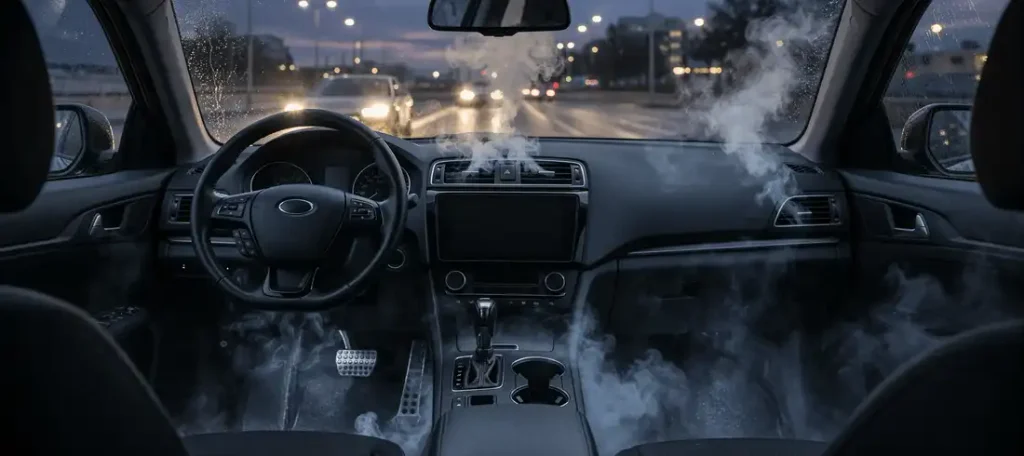
If you smell exhaust fumes inside your car, pull over safely, shut off the engine, and get everyone into fresh air immediately. Vehicle exhaust contains colorless, odorless carbon monoxide (CO), so smell strength never proves cabin air is safe. Seek medical help for dizziness or headaches, and tow the vehicle if uncertain.
Smelling exhaust inside the passenger compartment is always an urgent safety issue. Even a brief whiff at a stoplight or while warming up the car signals that combustion gases may be entering the cabin.
Never treat rolled-down windows or air fresheners as a workaround. Get everyone out of the car first, check for physical symptoms, and have the exhaust and body seals inspected before driving normally again.
Contents
- 1 Immediate Steps If Exhaust Fumes Enter Your Car
- 2 Why Carbon Monoxide Is Not the Smell You Detect
- 3 Warning Signs of Carbon Monoxide Exposure
- 4 4 Ways Exhaust Fumes Enter the Cabin
- 5 Condition-to-Entry-Path Diagnostic Triage Table
- 6 Can You Drive With Exhaust Fumes Inside the Car?
- 7 What a Repair Shop Should Inspect
- 8 FAQs About Exhaust Fumes Inside Car?
- 8.1 Is an exhaust smell inside a car dangerous?
- 8.2 Does carbon monoxide smell like exhaust?
- 8.3 Why do I smell exhaust only when the car is stopped at idle?
- 8.4 Can exhaust fumes enter through the air conditioner?
- 8.5 Should I open the windows if I smell exhaust while driving?
- 8.6 Can I drive to a repair shop with the windows open?
Immediate Steps If Exhaust Fumes Enter Your Car
Follow these steps as soon as you notice exhaust inside the cabin:
- Pull over safely. Move out of traffic as soon as you can do so without creating another hazard.
- Shut off the engine. Never leave the engine idling while you look for the source of the smell.
- Get everyone into fresh air. Exit the vehicle and move well away from the tailpipe and any enclosed garage or covered carport.
- Check every passenger for symptoms. Watch closely for headaches, dizziness, nausea, confusion, weakness, or unusual sleepiness, especially in children and older passengers.
- Call emergency services if anyone feels unwell. Never drive yourself to a clinic or hospital if you feel dizzy, confused, weak, or short of breath.
- Arrange a tow or immediate inspection. Wait until a qualified technician confirms and fixes the entry path before putting the car back into regular service.
If you live in a cold climate, never warm up a vehicle inside an attached garage, even with the garage door open. During winter storms, always clear deep snow away from the tailpipe before starting the engine, because a snow-blocked exhaust pipe forces gases directly beneath the passenger floor pan.
Why Carbon Monoxide Is Not the Smell You Detect
Carbon monoxide (CO) is the most dangerous gas in vehicle exhaust, yet CO itself has no odor, color, or taste. The sharp smell you notice comes from other combustion byproducts, unburned fuel, or sulfur compounds entering the cabin alongside it.
A strong odor never tells you the exact CO level inside the car. A faint smell, or no smell at all, never proves the cabin air is safe. That is why waiting for the odor to fade with the windows cracked is an unreliable and dangerous habit.
Warning Signs of Carbon Monoxide Exposure
According to the Mayo Clinic carbon monoxide poisoning symptoms
guide and the CPSC Carbon Monoxide Fact Sheet
, CO exposure can cause:
- Dull headache
- Dizziness or lightheadedness
- Weakness or sudden fatigue
- Nausea or vomiting
- Shortness of breath
- Confusion or blurred vision
- Chest pain
- Unusual drowsiness or loss of consciousness
Symptoms vary depending on exposure length and each person’s health. Get into fresh air and seek medical care right away if you suspect exposure. Call 911 immediately if anyone collapses, cannot be awakened, has chest pain, or struggles to breathe.
4 Ways Exhaust Fumes Enter the Cabin
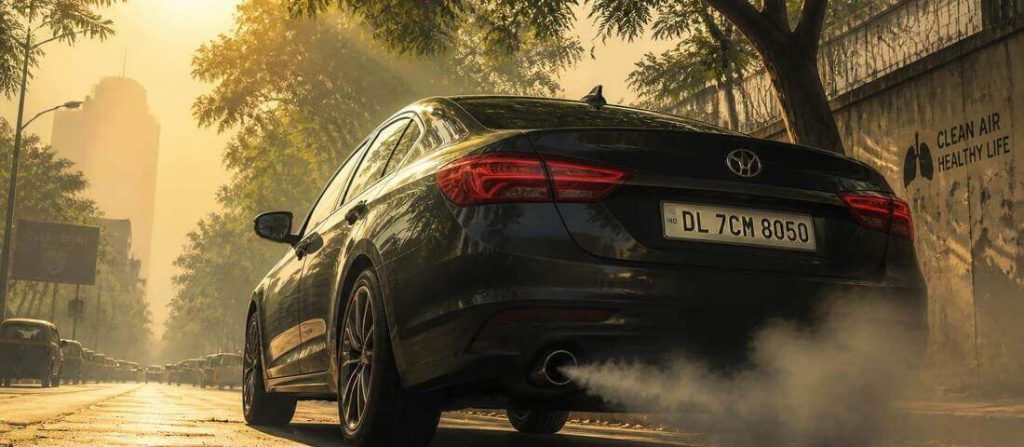
Exhaust gases reach the interior through mechanical leaks, ventilation paths, or damaged body seals. Smell alone never confirms which part failed.
1. An Underhood or Underbody Exhaust Leak
A cracked exhaust manifold, blown flange gasket, rusted muffler, or torn flex pipe allows hot gases to escape before reaching the tailpipe. Leaks near the engine bay or directly beneath the front seats often enter the cabin much faster than a pinhole near the rear bumper.
Never crawl under the vehicle or touch exhaust pipes to check for a leak. Exhaust hardware stays hot enough to cause severe burns, and an improperly supported car can slip.
2. The HVAC Fresh-Air Intake
Your heating and air conditioning system pulls fresh outside air through vents at the base of the windshield. If an underhood exhaust leak rises into that cowl area, the blower fan pulls fumes straight through your dashboard vents.
Switching between fresh-air and recirculation modes can change how strong the odor feels, which gives your mechanic a helpful clue. Keep in mind that if your vents smell damp or mildewed instead of sharp like exhaust, you are likely dealing with HVAC moisture rather than an exhaust leak, as covered in our guide on when a car AC smells musty
3. Damaged Body Seals, Floor Plugs, or Trunk Gaskets
Cars rely on rubber weatherstripping, firewall grommets, and underbody drain plugs to seal the passenger compartment from outside air. Torn trunk or liftgate weatherstripping, rusted floor pans, missing rubber plugs, or poorly repaired rear collision damage can open a direct path for exhaust to seep inside.
4. Open Rear Hatches, Liftgates, or Rear Windows
Flat-backed SUVs, vans, and hatchbacks create a low-pressure wake behind the vehicle as they move forward. That aerodynamic vacuum can pull tailpipe gases directly back inside when a liftgate, rear hatch, or rear glass window is left open.
As documented in NHTSA vehicle exhaust hazard documentation
, driving with a liftgate open can draw exhaust fumes into the passenger compartment. Never drive with the rear hatch open unless your specific owner’s manual provides an approved configuration and ventilation procedure.

Condition-to-Entry-Path Diagnostic Triage Table
Notice when the exhaust smell appears so you can give the repair shop clear facts without risking extra exposure.
| When You Notice the Exhaust Smell | Most Likely Entry Path | What to Tell the Shop |
| Strongest at idle or stoplights, fades at highway speed | Front exhaust leak (manifold, flex pipe, or gasket) rising into the windshield cowl HVAC intake | Note whether switching from Fresh Air to Recirculation changes the smell |
| Appears when the rear window, hatch, or SUV liftgate is open | Aerodynamic rear-vacuum effect pulling tailpipe exhaust forward into the cabin | Report any damaged liftgate weatherstripping, rear body damage, or loose drain plugs |
| Strongest under hard acceleration or climbing hills | Cracked exhaust manifold, blown gasket, or a rich-running engine producing excess exhaust fumes | Mention any new ticking or roaring exhaust noise, or an active Check Engine Light |
| Smell hits inside an attached garage or parked snowbank | Trapped ambient exhaust or snow-blocked tailpipe forcing fumes under the floor pan | Clear snow around the tailpipe before starting; never idle inside a garage |
If the odor smells distinctly like rotten eggs rather than standard exhaust, fuel sulfur or emissions faults may also be involved. Review our breakdown of sulfur or rotten-egg exhaust odors
while keeping cabin safety your first priority.
Can You Drive With Exhaust Fumes Inside the Car?
The safest choice is to stop driving and have the vehicle towed to a repair shop.
Automaker manuals handle this conservatively, though exact instructions differ by brand. For example, Mazda’s CX-5 owner’s manual
instructs drivers not to drive if exhaust gas is smelled inside and to contact a dealer immediately. Kia’s owner’s manual
warns that carbon monoxide is odorless and requires immediate inspection.
Always follow the exact guidance in your own vehicle’s manual. Never use a windows-open instruction as permission to finish errands or commute, and never drive if anyone inside feels unwell.

What a Repair Shop Should Inspect
A qualified technician should trace the exact leak and cabin entry point instead of guessing at parts. A thorough shop inspection typically includes:
- Inspecting the full exhaust system from the engine manifold to the tailpipe on a lift
- Running a cold smoke test or listening for leaks at gaskets, clamps, welds, and flex pipes
- Checking the windshield cowl intake and firewall grommets for gaps
- Inspecting trunk, liftgate, and door weatherstripping along with underbody floor plugs
- Reviewing recent underbody scrapes or rear collision repairs
- Measuring cabin air with a calibrated carbon monoxide meter when a leak only appears under specific driving loads
FAQs About Exhaust Fumes Inside Car?
Is an exhaust smell inside a car dangerous?
Yes. Vehicle exhaust contains carbon monoxide, a colorless and odorless gas that can cause serious illness or death in enclosed spaces. Pull over safely, move everyone into fresh air, and have the vehicle inspected rather than judging risk by how mild the odor seems.
Does carbon monoxide smell like exhaust?
No. Carbon monoxide has no smell, color, or taste. The fumes you smell come from other exhaust gases, which means you can never estimate carbon monoxide levels by sniffing the air.
Why do I smell exhaust only when the car is stopped at idle?
When you sit at a stoplight or idle in a driveway, there is no airflow moving underneath the car to blow fumes away. Exhaust leaking from a front manifold, gasket, or flex pipe can rise straight into the windshield air intake until you start moving again.
Can exhaust fumes enter through the air conditioner?
Yes. If exhaust gases escape near the engine bay or surround the car in heavy traffic, the HVAC fresh-air intake near the base of the windshield can pull those fumes through the dashboard vents.
Should I open the windows if I smell exhaust while driving?
Opening the windows helps bring in fresh air while you pull over safely, yet it is never a fix or a safe way to continue a trip. Stop the car, turn off the engine, exit into fresh air, and arrange an inspection.
Can I drive to a repair shop with the windows open?
Do not assume driving with the windows open is safe. Some automakers specifically tell drivers not to drive the vehicle at all if exhaust enters the cabin. Check your owner’s manual, never drive if anyone has symptoms, and call a tow truck whenever you are unsure.
Treat any exhaust odor inside your car as a carbon monoxide hazard first and a mechanical repair second. Pull over safely, get everyone into fresh air, seek medical help for any symptoms, and have a technician trace both the exhaust system and body seals before driving normally again. For more diagnostic walkthroughs, explore our engine and exhaust troubleshooting guides
.
Editor’s Note Before Publishing: A live check of thecarbuzz.com showed that your planned “Symptoms of an Exhaust Leak” article is not yet indexed in Google. Once you verify its exact live 200 OK URL in WordPress, add a contextual link to it inside the What a Repair Shop Should Inspect section.