
This article was updated in November 26, 2026 with new products and information by Mark S. Taylor
When a car door won’t open, the cause is usually an engaged rear child lock, a disconnected handle cable, a failed lock actuator, frozen weatherstripping, or a jammed latch. Check whether the door opens from the inside, outside, or neither before forcing the handle, and call 911 immediately if anyone is trapped.
You pull the door handle and feel no release, or the door stays shut even after you hear the locks click. Pulling harder or wedging a pry tool into the gap usually snaps plastic handles and bends weatherstripping without freeing the latch.
Start by noting which side of the door fails to open. If a child, pet, or passenger is trapped inside a vehicle and cannot exit safely, especially in hot weather, treat it as an immediate emergency and call 911.
Contents
- 1 Door-Opening Pattern Diagnostic Triage Table
- 2 6 Common Reasons a Car Door Won’t Open
- 2.1 1. The Rear Child Safety Lock Is Engaged
- 2.2 2. A Broken Handle, Cable, or Linkage Clip
- 2.3 3. A Failed Door-Lock Actuator or Wiring Fault
- 2.4 4. A Jammed, Corroded, or Misaligned Door Latch
- 2.5 5. Frozen Weatherstripping, Latches, or Frameless Glass
- 2.6 6. Electronic Door-Release or 12-Volt Battery Trouble
- 3 Safe Checks You Can Do Without Tools
- 4 When to Call a Technician or Emergency Services
- 5 FAQs About Car Door Won’t Open?
Door-Opening Pattern Diagnostic Triage Table
Use this pattern table to narrow down the fault area before paying for a handle, actuator, or latch assembly.
| What Happens When You Try the Door | Most Likely Cause Group | Safe First Check |
| Opens from the outside, will not open from the inside | Rear child safety lock, broken interior handle, or detached inside cable | If it is a rear door, open it from outside and check the child-lock switch on the door edge |
| Opens from the inside, will not open from the outside | Broken exterior handle, disconnected outer rod or cable, or frozen exterior handle | Confirm the door is fully unlocked and compare handle tension against another door |
| Will not open from either the inside or outside | Jammed latch, failed lock actuator, frozen weatherstripping, or misaligned striker | Watch whether the interior lock knob moves when pressing Unlock; do not yank the handle |
| Multiple doors refuse to unlock or open at once | Discharged 12-volt battery, central locking fault, or key-fob issue | Check dome lights, horn, and mechanical key entry before blaming individual door latches |
6 Common Reasons a Car Door Won’t Open
Door hardware varies across makes and model years, so one symptom never proves a specific failed part on its own. These six categories cover the most common causes.
1. The Rear Child Safety Lock Is Engaged
If a rear passenger door opens cleanly from the outside yet refuses to budge from the inside, check the child safety lock first. Under Federal Motor Vehicle Safety Standard 206 (49 CFR 571.206), rear side doors include locking provisions designed to prevent passengers from accidentally opening the door from inside.
Open the door from the outside and look along the metal rear edge of the door near the latch for a small lever or key-slotted dial. Check your owner’s manual for the exact unlocked position, as the switch direction varies by vehicle.
2. A Broken Handle, Cable, or Linkage Clip
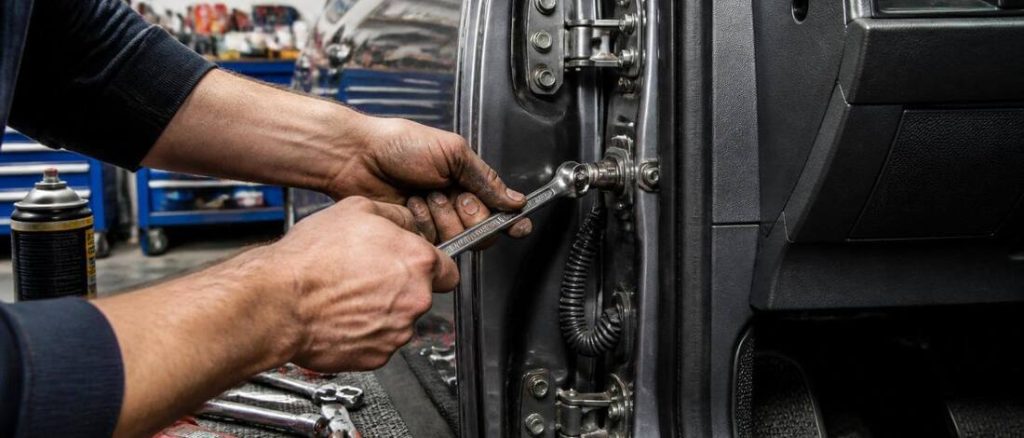
Interior and exterior handles connect to the door latch through braided cables, metal rods, and small plastic retention clips. If a plastic clip snaps or a cable stretches out of its bracket, the handle moves loosely with almost no resistance and never trips the latch.
If one handle works normally while the opposite side feels completely slack, a technician usually needs to remove the interior door trim panel to inspect the handle linkage. Never try to pry an interior door panel off while the door is latched shut, because mounting screws and clips are blocked by the dashboard and door frame.
3. A Failed Door-Lock Actuator or Wiring Fault
Power locks rely on small electric motors called actuators inside each door to slide the lock mechanism open and shut. When an actuator weakens or a wire breaks inside the flexible rubber door-jamb boot, the door can stay locked even while the other three doors unlock.
Watch the interior lock post or flip-switch closely while pressing the door unlock button. If that knob twitches weakly or fails to move at all, the actuator or its wiring is a strong diagnostic lead. If the problem involves the remote itself rather than a single door latch, start by troubleshooting a key fob that will not unlock the car.
4. A Jammed, Corroded, or Misaligned Door Latch
The metal latch inside the door edge clamps around a steel striker loop bolted to the body pillar. Years of road grime, internal spring wear, rust, or a sagging door hinge can bind the latch jaws so neither handle can release them.
A door that required extra force to shut for weeks before sticking closed often points to latch wear or alignment shift after a minor impact. Continuing to yank on the exterior handle risks snapping the handle off while the latch stays locked.
5. Frozen Weatherstripping, Latches, or Frameless Glass
In freezing rain or overnight frost, moisture trapped along the door perimeter freezes the rubber weatherstripping directly to the painted body frame. If the handle pulls normally and clicks yet the door feels glued shut, press gently inward along the outer edge of the door to break the thin ice seal instead of yanking backward on the handle.
Moisture inside the latch mechanism itself can also freeze in sub-zero weather. For instance, Nissan service bulletin NTB16-022 addressed a specific cold-weather latch condition on 2016 Maxima models where doors would not open or latch after extended freezing temperatures. That bulletin covers only the listed 2016 Maxima condition, so a shop still needs to verify whether your vehicle has frozen seals or an internal latch fault.
On coupes, convertibles, and some EVs with frameless windows, the glass must drop slightly when you touch the handle to clear the roof trim. If ice locks the glass along the bottom rubber strip, the door will resist opening even when the latch releases; clear surface ice gently with automotive de-icer rather than boiling water, which can crack cold glass and refreeze inside the latch. If the glass itself refuses to move after thawing, review checking a stuck power window or frozen window track.
6. Electronic Door-Release or 12-Volt Battery Trouble
Many newer vehicles and EVs replace mechanical handles with electronic push-button latches powered by the 12-volt battery. If the 12-volt battery discharges, exterior electronic handles may stop responding even when the high-voltage drive battery still has charge.
For example, NHTSA Recall 25V404 (Ford campaign 25S65) covered nearly 200,000 2021–2025 Mustang Mach-E vehicles where a discharged 12-volt battery could leave electronic door latches locked and risk trapping rear-seat occupants, addressed with a software update keeping 12V support active for 12 minutes after key-off. If multiple electronic doors quit alongside dim cabin lights, check for signs of a discharged 12-volt car battery, consult your owner’s manual for your vehicle’s exact mechanical emergency release, and check your VIN on the NHTSA VIN recall lookup.

Safe Checks You Can Do Without Tools
Run through these non-invasive checks before booking a repair:
- Press the interior power unlock switch and watch whether the stuck door’s lock knob moves.
- Test the mechanical key blade in the driver’s exterior lock cylinder if your vehicle is equipped with one.
- Compare handle resistance on the stuck door against a working door on the same vehicle.
- If a rear door opens from outside, check the child-lock lever along the door edge.
- Note whether the failure began right after freezing weather, a car wash, a dead battery, or a minor bump.
- Enter your 17-digit VIN in the NHTSA VIN recall lookup to verify whether an open door-latch safety recall applies.
Never use screwdrivers, slim-jims, or wedges to pry a closed door open. Modern doors house side-impact airbag sensors and delicate wiring harnesses right behind the latch area, and prying can bend the door frame or shatter tempered side glass.
When to Call a Technician or Emergency Services
Call 911 immediately if a child, pet, or passenger is trapped inside the car and cannot get out.
Schedule a qualified mechanic or body technician if:
- Neither the inside nor outside handle releases the door after confirming it is unlocked
- The door opens once but refuses to latch securely when closed (do not drive with an unsecured door)
- The door sits visibly crooked or scrapes against the fender or striker
- Multiple doors stop unlocking together due to a central locking or electrical fault
- Your vehicle uses electronic latches and the manual backup procedure in your owner’s manual does not work
FAQs About Car Door Won’t Open?
Why does my car door open from the outside but not the inside?
On a rear door, the most common reason is an engaged child safety lock along the rear door edge. If the child lock is off—or if it is a front door—the fault usually involves a detached interior handle cable, broken plastic clip, or worn inside handle.
Why won’t my car door open from either side?
A door that ignores both handles usually has a jammed internal latch, a failed lock actuator holding the mechanism locked, frozen rubber weatherstripping, or severe door-hinge misalignment. Watch whether the lock knob moves when unlocking, and avoid yanking the handle.
Can a dead car battery stop a car door from opening?
Yes. On vehicles with power locks or electronic push-button door latches, a dead 12-volt battery can stop exterior handles and remote unlocks from working. Check your owner’s manual for the hidden mechanical key cylinder and interior manual release location.
Should I pour hot water on a frozen car door?
No. Boiling or hot water can crack freezing window glass, damage paint clearcoat, and run down into the door latch where it refreezes even harder minutes later. Use a commercial automotive de-icer spray or wait for the vehicle to warm safely.
How do I check if my car has a door-latch safety recall?
Enter your 17-digit VIN into the official NHTSA recall lookup tool at NHTSA.gov/recalls. Recalls apply to specific production ranges and model years, so a VIN check confirms whether your exact vehicle qualifies for a free dealer repair.
Check which side of the door is failing, rule out rear child locks and frozen rubber seals first, and watch whether the interior lock knob responds before calling a shop. Avoiding pry tools and forced handles keeps a simple cable clip or actuator repair from turning into expensive body and trim damage. For more troubleshooting walkthroughs, browse our car problem and symptom troubleshooting guides.