
This article was updated in June 9, 2026 with new products and information by Mark S. Taylor
You press the brake and the pedal keeps going. Past the point where it normally stops. Down toward the floorboard. Your stomach drops with it.
This is the most terrifying feeling a driver can have, and it happens more often than you’d think. But not every “pedal to the floor” scenario is the same emergency. Some mean you need a tow immediately. Others mean you can drive carefully to the shop. The difference is whether the pedal dropped suddenly or sank gradually — and knowing which one you’re dealing with could save you a tow bill or save your life.
Here’s how to tell what’s wrong brake pedal goes to floor, what it’ll cost, and whether you can drive it.

Contents
- 1 How Your Brakes Work (The 30-Second Version)
- 2 Sudden Floor-Drop vs. Gradual Sink: Know the Difference
- 3 The Real Causes, Ranked by How Bad They Are
- 4 How to Diagnose It Yourself (The Pedal Hold Test)
- 5 Can You Drive It? The Drive-or-Tow Decision
- 6 What to Do If It Happens While You’re Driving
- 7 What It Costs to Fix
- 8 DIY vs. Mechanic: What You Can Actually Handle
- 9 Prevention: How to Avoid This Entirely
- 10 FAQs About Brake Pedal Goes to Floor?
- 10.1 Why does my brake pedal go to the floor but there are no leaks?
- 10.2 Can air in the brake lines cause the pedal to go to the floor?
- 10.3 I replaced the master cylinder and the pedal still sinks. Why?
- 10.4 Is a sinking brake pedal always dangerous?
- 10.5 Can I drive with a soft brake pedal?
- 10.6 The Bottom Line
How Your Brakes Work (The 30-Second Version)
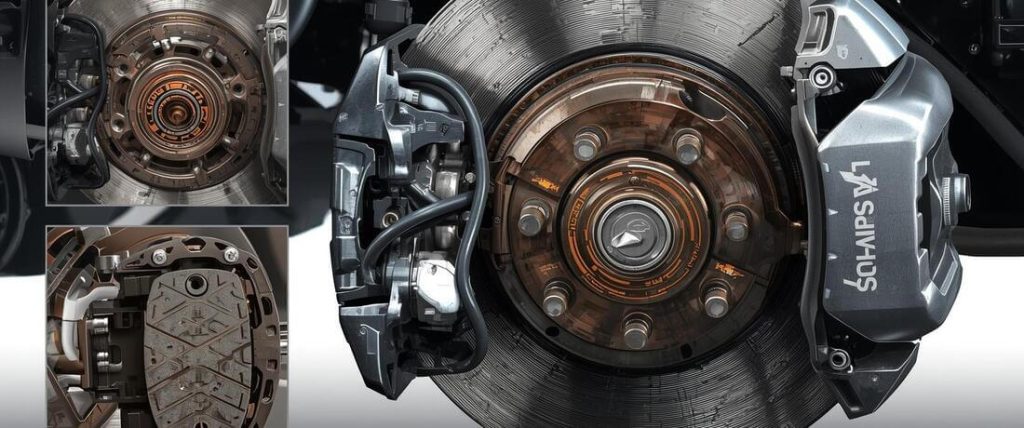
When you press the brake pedal, you’re pushing a piston inside the master cylinder. That piston pressurizes brake fluid — a liquid that doesn’t compress — and sends that pressure through steel lines and rubber hoses to the calipers at each wheel. The calipers squeeze the pads against the rotors, and you stop.
The whole system depends on the fluid staying pressurized. If fluid escapes or air gets in, the pedal goes soft because air compresses and fluid doesn’t. If the master cylinder’s internal seals fail, fluid bypasses the piston instead of going to the wheels — and the pedal sinks toward the floor even though no fluid is leaking out.
Sudden Floor-Drop vs. Gradual Sink: Know the Difference
This is the most important distinction no article tells you. The way your pedal fails tells you exactly what’s broken.
Table
| Symptom | What It Means | Can You Drive It? |
|---|---|---|
| Pedal drops suddenly with little resistance | Major fluid leak — ruptured line, blown caliper seal, or failed hose | No — tow immediately |
| Pedal sinks slowly under steady pressure | Internal master cylinder leak or ABS HCU leak | Maybe — 1–2 miles carefully |
| Pedal is spongy but doesn’t sink | Air in lines or contaminated fluid | Yes — drive to shop with caution |
| Pedal is low but firm once it engages | Worn pads, out-of-adjustment drums, or pushrod issue | Yes — schedule service soon |
The rule: if the pedal dropped like a stone and you have little or no braking power, stop driving now. If it sinks slowly when you hold it at a stoplight, you likely have an internal leak — serious, but not immediately catastrophic.
The Real Causes, Ranked by How Bad They Are
1. Major brake fluid leak (ruptured line or hose) — Most dangerous A rusted steel brake line or cracked rubber hose can rupture under pressure, dumping fluid instantly. The pedal drops to the floor with almost no resistance. You may see fluid pooling under the car or spraying from a wheel. This is a complete hydraulic failure on that circuit.
2. Internal master cylinder leak — Most common The master cylinder has rubber seals around its pistons. When those seals wear out, fluid bypasses the piston internally instead of pressurizing the lines. The pedal sinks slowly under steady pressure. No fluid leaks out — it just circulates inside the cylinder. This is the classic “pedal goes to floor but I don’t see any leaks” scenario.
3. Air in the brake lines — Common after brake work Air compresses. Fluid doesn’t. Even a small bubble in a line makes the pedal feel spongy and increases travel. This usually happens after brake work if the system wasn’t bled properly, or if the fluid reservoir ran dry.
4. ABS hydraulic control unit (HCU) internal leak — The hidden cause Here’s what stumps mechanics. The ABS module has solenoid valves that can develop internal leaks, especially if the brake fluid is old and contaminated. Fluid bypasses the valves, the pedal sinks, and there’s no external leak. Forum threads are full of people who replaced the master cylinder twice and still had the problem — the ABS HCU was the real culprit.
5. Worn brake pads or out-of-adjustment drum brakes — Mechanical, not hydraulic As pads wear thin, the caliper piston extends farther, increasing pedal travel. With drum brakes, a stuck self-adjuster leaves excess shoe-to-drum clearance. The pedal feels low but firm once it engages — it doesn’t sink.
6. Contaminated brake fluid — The slow killer Brake fluid absorbs moisture from the atmosphere. Over time, the water content rises and the boiling point drops. Under hard braking, the fluid can boil, creating vapor bubbles that compress like air. The pedal goes soft or sinks. Brake fluid should be flushed every 2–3 years.
7. Collapsed brake hose — Sneaky The inner liner of a rubber brake hose can delaminate and act as a one-way valve. Pressure builds when you press the pedal, but fluid can’t return when you release it. This can cause dragging brakes, but it can also create erratic pedal feel.
8. Brake booster issue — Often misdiagnosed A failed brake booster makes the pedal hard to press, not soft. If the booster has a vacuum leak, you might notice the pedal dropping slightly when the engine starts — that’s normal assist engagement. A bad booster does not cause a sinking pedal.
How to Diagnose It Yourself (The Pedal Hold Test)
You can narrow this down in your driveway with one simple test. Do this with the car parked.
Step 1: With the engine off, pump the brake pedal slowly five times. This depletes any stored vacuum in the booster.
Step 2: Press and hold the brake pedal with firm, steady pressure.
Step 3: Watch what happens over 10 seconds.
- Pedal holds steady: The master cylinder is sealing. Look for air in the lines, pad wear, or mechanical issues.
- Pedal sinks slowly toward the floor: Internal master cylinder leak. The seals are bypassing fluid.
- Pedal drops immediately with no resistance: Major fluid loss or complete master cylinder failure.
Step 4: Check the brake fluid reservoir. If it’s empty or very low, you have an external leak. If it’s full but the pedal sinks, you have an internal leak.
Step 5: Look under the car. Check behind each wheel, along the frame rails, and at the master cylinder where it meets the booster. Wet spots or drips mean external leak. Dry means internal.

Can You Drive It? The Drive-or-Tow Decision
Table
| Scenario | Drive or Tow? | Why |
|---|---|---|
| Pedal dropped suddenly, little braking power | Tow | Complete hydraulic failure — one more stop might be your last |
| Pedal sinks slowly, some braking power remains | Drive 1–2 miles max | Internal leak — you have reserve pressure but it’s degrading |
| Pedal spongy but stops the car normally | Drive to shop | Air or contamination — brakes work but feel wrong |
| Pedal low but firm once engaged | Drive to shop | Mechanical issue — pads or adjustment needed |
If you drive with a sinking pedal, keep your speed under 25 mph, leave triple the normal following distance, and test your brakes before every intersection. Use engine braking by downshifting. If the pedal gets worse, pull over and call a tow.
What to Do If It Happens While You’re Driving
If your brake pedal drops to the floor at 45 mph, here’s what you do:
1. Don’t panic and don’t shut off the engine. Turning the key off kills power steering and vacuum assist. You’ll lose control and make the car harder to stop.
2. Pump the brake pedal rapidly. If you have a small internal leak or air pocket, pumping can build enough pressure for one or two stops.
3. Downshift immediately. In an automatic, shift to 3, 2, or L. In a manual, work down through the gears. Engine braking slows the car without relying on the hydraulic system.
4. Apply the parking brake gently. Pull up slowly or press the pedal gradually. Yanking it hard locks the rear wheels and sends you spinning. Apply steady, moderate pressure.
5. Steer to the safest escape route. Look for an uphill road, an empty shoulder, a parking lot, or even a soft ditch. Use your horn and hazard lights.
6. Once stopped, do not drive again. Even if pumping restored some pressure, the failure is still there. Call a tow.
What It Costs to Fix
Table
| Repair | Parts | Labor | Total |
|---|---|---|---|
| Master cylinder replacement | $50–$150 | $100–$250 | $150–$400 |
| Brake line replacement (per line) | $30–$80 | $100–$200 | $150–$300 |
| Brake hose replacement (per hose) | $20–$60 | $50–$100 | $80–$160 |
| ABS HCU replacement/rebuild | $300–$800 | $200–$400 | $600–$1,200 |
| Brake fluid flush | $15–$30 | $80–$150 | $100–$180 |
| Caliper replacement (per caliper) | $50–$150 | $100–$200 | $150–$350 |
| Tow truck (5–10 miles) | — | — | $75–$150 |
The hidden cost trap: Shops may quote you calipers, lines, and a full brake job when you only need a $100 master cylinder. Always ask them to show you the leak or do the pedal hold test yourself before authorizing major work.

DIY vs. Mechanic: What You Can Actually Handle
You can probably do yourself:
- Check fluid level and look for leaks
- Perform the pedal hold test
- Replace brake hoses (basic hand tools)
- Replace the master cylinder — but only if you bench bleed it first
Pay a shop for:
- Brake line replacement (requires flaring tools and bending skills)
- ABS HCU diagnosis and replacement (requires scan tool and pressure testing)
- Complete system flush if contamination is suspected
The #1 DIY mistake: Installing a new master cylinder without bench bleeding it. The cylinder arrives dry. If you bolt it on and try to bleed the lines, air trapped in the master cylinder bore will never escape. You’ll have a sinking pedal forever. Bench bleed it on a vise with the included fittings, or buy a pre-bled unit.
Prevention: How to Avoid This Entirely
- Flush brake fluid every 2–3 years. Moisture absorption is gradual and invisible until it isn’t.
- Inspect steel lines annually. Look for rust bubbling under the paint on frame rails and near the master cylinder.
- Check rubber hoses for swelling or cracking. Have a helper press the pedal while you watch — a bulging hose is a rupture waiting to happen.
- Don’t let the reservoir run dry. Ever. If you do, you’ll introduce air and potentially damage the master cylinder seals.
- Replace pads before they’re metal-to-metal. Excess piston travel stresses the entire hydraulic system.
FAQs About Brake Pedal Goes to Floor?
Why does my brake pedal go to the floor but there are no leaks?
Internal master cylinder leak. The fluid is bypassing the piston inside the cylinder instead of going to the wheels. No fluid leaves the system — it just circulates internally. The ABS HCU can also cause this if its solenoid valves leak internally.
Can air in the brake lines cause the pedal to go to the floor?
Air makes the pedal spongy and increases travel, but it usually doesn’t cause a continuous sink under pressure. If the pedal drops steadily while you hold it, that’s a leak — either internal or external — not just air.
I replaced the master cylinder and the pedal still sinks. Why?
You didn’t bench bleed it. Air trapped in the master cylinder bore can’t be pushed out through the brake lines. Remove it, bench bleed it properly, reinstall, and bleed the lines again. Or the ABS HCU is the real problem.
Is a sinking brake pedal always dangerous?
Yes, but not always immediately life-threatening. A gradual sink from an internal leak gives you degraded but functional brakes. A sudden drop from a ruptured line means you may have no brakes at all. Treat both as urgent, but the sudden drop is an emergency.
Can I drive with a soft brake pedal?
Only if it’s spongy but holds steady under pressure, and only to the nearest shop at low speed. If it sinks, drops, or requires pumping to stop, tow it.
The Bottom Line
If your brake pedal goes to the floor, the first question isn’t “what’s broken?” — it’s “how did it fail?” A sudden drop means fluid is escaping and you need a tow. A slow sink means fluid is bypassing internally and you might make it to the shop.
Do the pedal hold test. Check for leaks. Know that a master cylinder is a $150–$400 fix, not a $1,000 brake overhaul. And if you replace the master cylinder yourself, bench bleed it — or you’ll be reading this article again next weekend.