
This article was updated in April 6, 2026 with new products and information by Mark S. Taylor
Your car is idling rough, the check engine light is on, and you hear a faint hissing under the hood. You may have a vacuum leak. Recognizing the symptoms of a vacuum leak early can save you from expensive engine damage. We have seen this issue confuse many drivers, but the signs are clear if you know where to look. This guide covers every symptom, the common causes, how to test for a leak at home, and what the repair bills look like. Let’s get your engine running smooth again.

Contents
- 1 What Is a Vacuum Leak? (Quick Explainer)
- 2 8 Common Symptoms of a Vacuum Leak
- 3 Symptom Severity Guide — How Urgent Is Each One?
- 4 What Causes a Vacuum Leak?
- 5 OBD Codes Linked to Vacuum Leaks
- 6 Vacuum Leak vs. Bad MAF Sensor — How to Tell the Difference
- 7 How to Find a Vacuum Leak at Home (Step-by-Step)
- 8 How Much Does Vacuum Leak Repair Cost? (US Estimates)
- 9 Can You Drive With a Vacuum Leak?
- 10 FAQs About Symptoms of a Vacuum Leak
- 11 Bottom Line
What Is a Vacuum Leak? (Quick Explainer)
A vacuum leak is an unwanted gap in the engine’s air intake system. It lets extra air sneak into the engine without being measured by the sensors.
Your engine acts like a big air pump. It needs a perfect mix of air and fuel to run. The computer (ECU) uses the Mass Air Flow (MAF) sensor to count the air coming in. A vacuum leak lets “unmetered” air enter after the sensor. This confuses the computer. The engine runs “lean,” which means too much air and not enough fuel. These leaks happen in rubber hoses, gaskets, or valves.
8 Common Symptoms of a Vacuum Leak
1. Rough or Unstable Idle
This is the most common sign. The engine will shake or bounce up and down when the car is stopped.
You see the RPM needle moving on the dashboard. It does not stay steady. The engine might feel like it wants to die. This happens because the “lean” fuel mixture burns too fast or unevenly. The engine struggles to maintain a smooth pace.
2. High Idle RPM
You might notice the engine racing for no reason. The car revs high while you sit in park or at a stoplight.
Unmetered air adds more oxygen to the mix. The computer tries to fix this by adding more fuel. This increases the engine speed. If your car idles at 1,500 RPM instead of the usual 800 RPM, check for a leak.
3. Engine Stalls — Especially at Stop Lights
Stalling is a scary experience. The engine dies unexpectedly when you take your foot off the gas pedal.
The idle control valve tries to manage the air flow. If the leak is too big, the valve cannot keep up. The engine suffocates and shuts off. This is dangerous in traffic. It often happens when the air conditioner is running.
4. Hissing or Whistling Sound Under the Hood
This is the clearest audio clue. You will hear a high-pitched whistle or hiss coming from the engine bay.
Air rushing through a tiny gap makes this sound. It gets louder when you rev the engine. Open the hood and listen. If the sound stops when you wiggle a hose, you found the problem.
5. Check Engine Light On (P0171 / P0174)
The car’s computer knows something is wrong. The Check Engine Light (CEL) will turn on to warn you.
The system detects the fuel mixture is too lean. It stores codes like P0171 or P0174. If you see these codes on a scanner, a vacuum leak is a top suspect. You can read more about these warnings in our guide on check engine light diagnosis.
6. Engine Hesitation or Stumble During Acceleration
The car might feel sluggish. You press the gas pedal, but the car hesitates before speeding up.
The engine needs more fuel when you accelerate. The leak messes up the air-fuel ratio. The engine starves for power. It feels like a “surge” or a stumble. You might feel the car jerking.
7. Poor Fuel Economy
Your gas mileage will drop. The engine burns more fuel to try and fix the lean mixture.
The computer adds extra fuel to protect the engine from the excess air. This wastes gas. If you find yourself at the pump more often, check for leaks.
8. Soft or Hard Brake Pedal
This is a critical safety issue. A leak in the brake booster hose changes how the brake pedal feels.
The brake booster uses engine vacuum to help you stop. If that vacuum leaks, the pedal might feel hard and stiff. Or it might feel soft and spongy. If your brakes feel different, stop driving immediately.
Symptom Severity Guide — How Urgent Is Each One?
Not every symptom requires a tow truck. Use this guide to decide how fast you need to act.
| Symptom | Urgency | Safe to Drive? |
|---|---|---|
| Rough idle only | 🟡 Moderate | Yes — book shop soon. |
| High RPM at idle | 🟡 Moderate | Yes — book shop soon. |
| Hissing sound | 🟡 Moderate | Yes — inspect ASAP. |
| CEL on (P0171/P0174) | 🟡 Moderate | Yes — diagnose this week. |
| Hesitation/stalling | 🔴 High | Limit driving; see mechanic. |
| Soft/hard brake pedal | 🔴 Urgent | Stop — safety risk; tow it. |
What Causes a Vacuum Leak?
Engines use many rubber and plastic parts that wear out. These are the most common sources of a leak.
1. Cracked or Disconnected Vacuum Hoses
Rubber hoses get hot and brittle. Age and heat cause the rubber to crack, split, or fall off.
This is the most common cause. Look for small black tubes running around the engine. If they feel hard or look broken, they need replacing.
2. Failed Intake Manifold Gasket
The intake manifold sits on top of the engine. The gasket seals the manifold to the engine block.
These gaskets can shrink or crack. This lets air sneak in right at the engine’s heart. It is harder to spot visually.
3. Damaged Brake Booster Diaphragm
The brake booster is a big round canister. If the diaphragm inside fails, it leaks vacuum.
This directly affects your braking power. It is a major safety hazard.
4. Faulty EGR Valve or PCV Valve
These valves control emissions and pressure. If they get stuck open or crack, they let air in.
The PCV (Positive Crankcase Ventilation) valve is a common failure point. It is usually cheap and easy to fix.
5. Throttle Body or Intake Boot Seal Failure
The throttle body controls air flow. The seals around it can rot away over time.
The rubber intake boot can also tear. This creates a massive leak right after the MAF sensor.
OBD Codes Linked to Vacuum Leaks
Scanning your car is the best way to confirm a leak. These codes strongly suggest a vacuum leak is present.
| Code | What It Means | Vacuum Leak Likely? |
|---|---|---|
| P0171 | System Too Lean — Bank 1 | ✅ Yes — #1 cause. |
| P0174 | System Too Lean — Bank 2 | ✅ Yes — widespread leak. |
| P0171 + P0174 | Both banks lean | ✅ Strong sign of central leak. |
| P0505 | Idle Control System Malfunction | ✅ Possible. |
| P0300–P030X | Random/Cylinder Misfires | ✅ Possible — lean misfire. |
If you see P0171 and P0174 together, the leak is likely before the engine splits into two banks (like the intake plenum).
Vacuum Leak vs. Bad MAF Sensor — How to Tell the Difference
These two problems have similar symptoms. Use this table to tell them apart.
| Sign | Vacuum Leak | Bad MAF Sensor |
|---|---|---|
| Hissing sound | ✅ Yes | ❌ No |
| Symptoms at idle | ✅ Often | ❌ All speeds |
| Carb cleaner test | ✅ Changes RPM | ❌ No change |
| MAF-specific code | ❌ No | ✅ Yes (P0100–P0104) |
| Smoke test | ✅ Shows leak | ❌ No |
A dirty MAF sensor can mimic a vacuum leak. Try cleaning the MAF sensor first. If that does not help, look for a leak.
How to Find a Vacuum Leak at Home (Step-by-Step)
You can find a leak in your driveway. Follow these steps to pinpoint the problem.
Step 1 — Listen for the Hiss at Idle
Start the engine. Open the hood and listen carefully for a whistling noise.
A mechanic’s stethoscope helps, but a piece of hose works too. Put one end to your ear and move the other end around the engine.
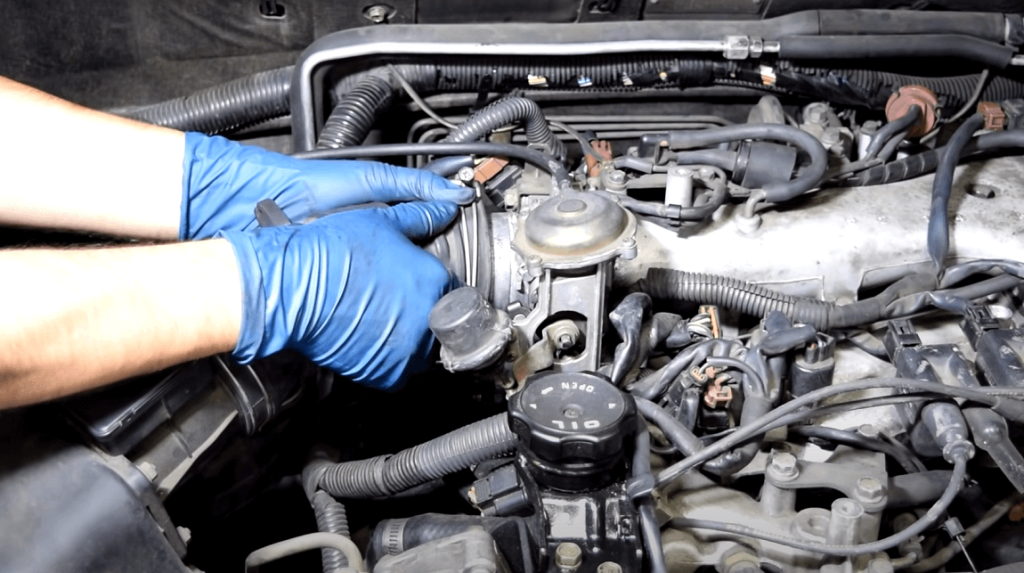
Step 2 — Visual Inspection of All Hoses
Look closely at the rubber. Check every hose for cracks, breaks, or loose connections.
Run your hand along the hoses. If a hose feels mushy or rock hard, replace it.
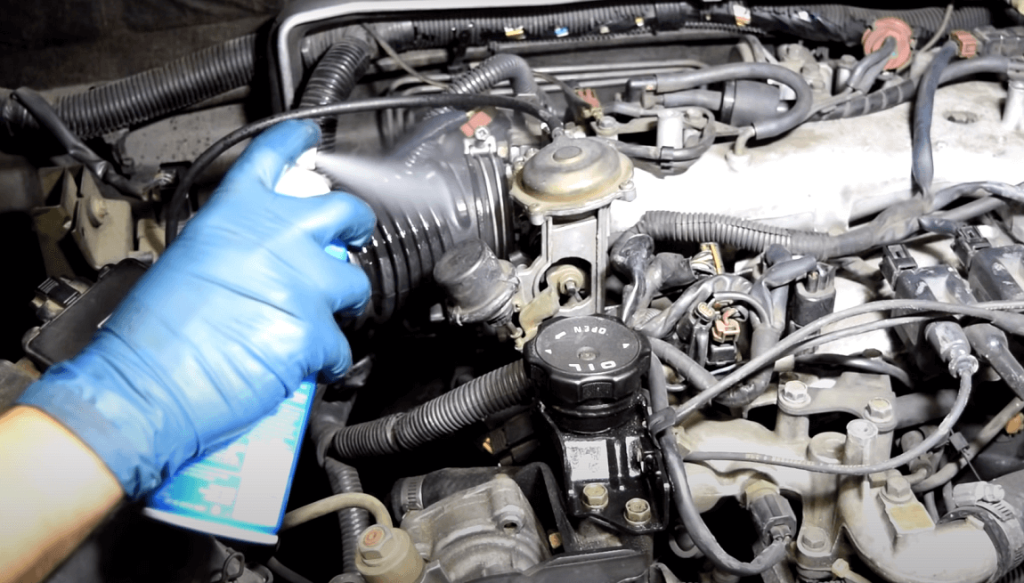
Step 3 — The Carb Cleaner Spray Test
This is an old mechanic trick. Spray carb cleaner around the intake and hoses while the engine runs.
Use flammable carburetor cleaner. Spray small bursts near the gaskets and seams. If the engine RPM suddenly changes or smoothes out, you found the leak. The cleaner seals the gap for a second. Be very careful; do not spray on hot exhaust parts. The NFPA warns that aerosols are flammable near hot engines.
Step 4 — The Smoke Test
This is the most reliable method. A smoke machine fills the intake with smoke; the smoke exits at the leak.
Shops use this. You can make a homemade version with a cigar or smoke pencil, but pro tools work best. It shows leaks instantly.
Step 5 — Read OBD Codes
Plug in a scanner. Confirm the car shows lean codes (P0171).
This tells you for sure that the engine is running lean. It narrows the search to the intake system.
Step 6 — Check the Brake Booster Line
Find the brake booster hose. Pinch the hose with pliers while the engine idles.
If the RPM drops significantly, the booster or the hose is the leak. Do not drive if this is the case. Learn more about this system in our article on brake system maintenance.
How Much Does Vacuum Leak Repair Cost? (US Estimates)
The price depends on the broken part. Here is a look at typical US repair costs.
| Repair | DIY? | Average US Cost |
|---|---|---|
| Vacuum hose replacement | ✅ Yes | $50 – $150 |
| PCV valve replacement | ✅ Yes | $20 – $80 |
| EGR valve replacement | ⚠️ Intermediate | $150 – $400 |
| Throttle body gasket/seal | ⚠️ Intermediate | $100 – $300 |
| Intake manifold gasket | ❌ No | $300 – $900 |
| Brake booster replacement | ❌ No | $300 – $800 |
| Smoke test diagnosis (shop) | ❌ Shop | $80 – $150 |
Labor is the biggest cost for manifold gaskets. Parts are cheap, but the mechanic has to take the top of the engine apart.
Can You Drive With a Vacuum Leak?
It depends on the severity. Driving with a small leak is usually safe for a short time.
If you just have a rough idle, you can drive to the shop. However, do not ignore it. A lean engine runs hotter. This can damage pistons or valves. If the car stalls or the brakes feel weird, do not drive. Tow it to a mechanic. It is not worth the risk of an accident.
FAQs About Symptoms of a Vacuum Leak
How can you tell if you got a vacuum leak?
The best way is to look for a rough idle and a hissing sound. You will also see a Check Engine Light with lean codes like P0171.
How expensive is it to fix a vacuum leak in a car?
It can be very cheap. A simple hose repair costs under $50, but an intake manifold gasket can cost over $600.
Can I drive if I have a vacuum leak?
Yes, if the symptoms are mild. Limit your driving and get it fixed soon to avoid engine damage.
What is the most common cause of a vacuum leak?
Rubber hoses are the most common cause. They crack and break due to the heat of the engine.
What OBD codes does a vacuum leak throw?
The most common codes are P0171 and P0174. These codes mean the engine is running too lean.
Bottom Line
A vacuum leak is a common problem that is easy to fix if caught early. Look for the signs: a hissing sound, rough idle, or high RPMs. Use the carb cleaner spray test or a smoke test to find the leak. Most fixes are cheap, involving a simple hose or gasket swap. Do not ignore the Check Engine Light. Fixing a small leak today prevents engine damage and keeps you safe on the road. For more help, check out our guides on TheCarBuzz.com.
Quick Summary
- A vacuum leak lets unmetered air into the engine.
- Rough idle and high RPMs are the top symptoms.
- Listen for a hissing or whistling sound under the hood.
- Check for OBD codes P0171 and P0174.
- Rubber hoses are the most common failure point.
- Carb cleaner helps find the exact leak spot.
- Repair costs range from $50 for hoses to $900 for gaskets.