
This article was updated in May 5, 2026 with new products and information by Mark S. Taylor
Car battery problems are one of the most frequent reasons drivers find themselves stranded. A failing or dead battery can turn a normal day into a major inconvenience, with symptoms ranging from slow cranking to complete no-start conditions. This comprehensive pillar guide covers everything you need to know about common battery problems — their causes, early warning signs, practical solutions, costs, and proven prevention strategies.
By understanding and addressing battery issues proactively, you can avoid unexpected breakdowns, extend battery life, save money on repairs, and keep your vehicle reliable year-round.

Contents
- 1 What Is a Car Battery and Why Does It Matter?
- 2 Common Car Battery Problem Symptoms and Signs
- 3 What Causes Car Battery Problems?
- 4 Safety and Risks- What You Need to Know Before Touching a Battery
- 5 How to Diagnose Battery Problems — Step-by-Step Guide
- 6 Battery Fix Costs and Difficulty Levels
- 7 Common Mistakes People Make ⭐
- 8 Pro Tips from Real Experience ⭐
- 9 FAQs About — Car Battery Problems
- 9.1 Q: How do I know if it’s the battery or the alternator causing the problem?
- 9.2 Q: Can a completely dead battery be recharged, or does it need replacing?
- 9.3 Q: How long does it take to charge a flat car battery?
- 9.4 Q: Why does my car battery keep dying even after I replace it?
- 9.5 Q: What is the correct way to disconnect and reconnect a car battery?
- 9.6 Conclusion
- 9.7 Quick Summary
Quick Answer
Car battery problems usually stem from old age, corroded terminals, or a failing alternator. You might notice slow engine cranking, clicking sounds, or dim headlights. Fixing these issues often requires cleaning the terminals or replacing the battery.
You are running late. You turn the key. Nothing happens. Not even a click. That helpless feeling of a dead battery is something almost every driver knows. Car battery problems are the number one cause of roadside breakdowns worldwide. Most of the battery failures I have seen were 100% preventable. The car gave warnings weeks earlier. The driver just did not know what to look for. In this guide, you will learn what battery problems look like and why they happen. I will show you how to test and fix them yourself. Read this before you buy a new battery. You might not need one.
What Is a Car Battery and Why Does It Matter?
The car battery provides the burst of electricity needed to start the engine and powers all electronics when the engine is off.
The battery does three main jobs. It cranks the engine to start the car. It powers your radio, lights, and windows when the engine is off. It also stabilizes the voltage to keep your electronics safe.
It works closely with the alternator. The battery starts the car. Then, the alternator takes over. The alternator powers the car and recharges the battery while you drive.
Without a battery, your car cannot start. You lose power steering assist. Your electronics go dead.
The average lifespan of a battery is three to five years. Most people never replace it until it fails on a cold morning.
Common Car Battery Problem Symptoms and Signs
The most common signs of a battery problem are slow engine cranking, dim lights, a clicking sound when starting, and electronics behaving strangely.
Your car gives you clues before the battery dies completely. You just need to recognize them.
Slow or Sluggish Engine Crank
The engine turns over slowly. It takes longer than usual to fire up.
This is often the first warning sign. People ignore it. They say, “It has been a bit slow to start on cold mornings.” Three weeks later, the battery is completely dead.
Clicking Sound When Turning the Key
A rapid clicking sound means your battery lacks the current to engage the starter. A single click means the battery has some charge, but not enough for a sustained crank.
This is the most common symptom people Google at 7 AM in a dark car park.
Dim Headlights and Interior Lights
Your lights look noticeably dimmer than usual. This is especially obvious at idle.
If your lights dim when you turn on the AC or radio, the battery is struggling to hold voltage.
Battery Warning Light on Dashboard
A red battery icon means the charging system has a problem. This can indicate a failing battery, a bad alternator, or a loose connection.
Do not ignore this light. It will not go away on its own.
Swollen or Bloated Battery Case
If the plastic case looks swollen, you have internal damage. This happens from overcharging or extreme heat.
A swollen battery is a safety hazard. You must replace it immediately.
Electrical Gremlins and Erratic Electronics
You might notice random issues. Your radio resets itself. Your power windows move slowly. Your dashboard flickers.
These glitches happen because a weak battery delivers inconsistent voltage to sensitive electronics.
Frequent Need for Jump Starts
Needing more than one jump start in a month is a major red flag. The battery is no longer holding a charge.
This is not a temporary problem. The chemical process inside is permanently degraded.
Rotten Egg or Sulphur Smell
A leaking or overcharging battery vents hydrogen sulphide gas. It smells like rotten eggs.
This is a serious warning sign. The battery needs immediate replacement. You must ventilate the area.

What Causes Car Battery Problems?
The most common causes are age, corrosion, parasitic drain, extreme temperatures, and a failing alternator — most of which are preventable.
Batteries do not fail without a reason. Understanding the cause helps you prevent it.
Age and Natural Degradation
Every battery has a finite number of charge cycles. After three to five years, the lead plates inside degrade.
The battery can no longer hold a full charge. Age is the most common cause. It is also the one most drivers ignore until it is too late.
Extreme Temperatures
Cold weather slows down the chemical reaction inside the battery. It reduces cranking power by up to 35 percent at zero degrees.
Hot weather accelerates internal corrosion and evaporates the fluid inside. Batteries often die in winter because the previous summer’s heat already weakened them.
Corrosion on Battery Terminals
You might see white, blue, or greenish crust around the battery posts. This corrosion acts as a resistor.
It blocks current from reaching the starter and the charging system. This is one of the cheapest problems to fix. It is also one of the most commonly overlooked.
Parasitic Battery Drain
A parasitic drain happens when an electrical component draws power with the car switched off. Common culprits include a boot light that stays on, a faulty relay, or an aftermarket alarm.
Even a small drain of 50 milliamps can flatten a battery overnight.
Short Trips and Infrequent Driving
Starting the car draws a massive amount of power. A short trip does not give the alternator enough time to recharge the battery.
Driving for less than 20 minutes regularly prevents a full recharge. Cars left unused for weeks lose charge through natural self-discharge.
Failing Alternator
If the alternator fails, the car runs entirely on battery power. The battery will drain completely within 20 to 40 minutes of driving.
Replacing the battery without fixing the alternator guarantees the new battery will die too.
Overcharging
A faulty voltage regulator can push too much voltage into the battery. Overcharging boils the battery fluid.
It causes the plastic case to swell. It permanently damages the internal cells. Warning signs include a hot battery, a swollen case, and a rotten egg smell.
Manufacturing Defect or Poor Quality Battery
A small percentage of batteries fail early due to factory defects. Budget batteries often use thinner lead plates.
These plates degrade faster under normal use. Always buy reputable brands and keep your receipt for the warranty.
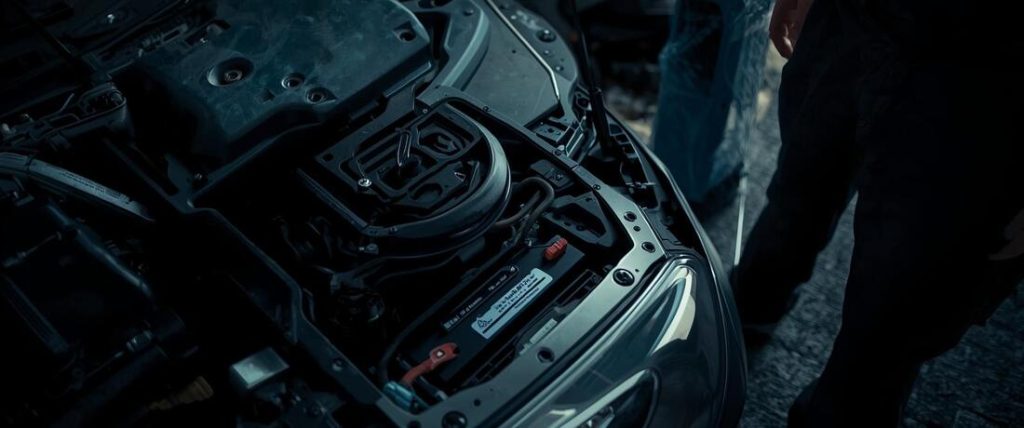
Safety and Risks- What You Need to Know Before Touching a Battery
Car batteries contain sulphuric acid and produce explosive hydrogen gas — always follow safety steps before handling them.
Batteries are safe if you respect them. They are dangerous if you make a mistake.
Risk of Electrical Shock and Short Circuit
Twelve volts will not electrocute you. However, a dead short across the terminals produces massive current.
If a metal ring or watch touches both terminals, it can cause severe burns and sparks. Remove all jewelry from your hands and wrists before working near a battery.
Hydrogen Gas Explosion Risk
Charging or jump-starting a battery produces hydrogen gas. One single spark near the battery vents can ignite this gas.
Never smoke near a battery. Always connect and disconnect jump leads in the correct order to avoid sparks.
Sulphuric Acid Hazard
Battery acid causes severe chemical burns. It can cause permanent eye damage.
Always wear safety glasses and gloves when handling a battery. If acid contacts your skin, flush it with water for 15 minutes. Seek medical advice immediately.
Disposing of Old Batteries Correctly
Car batteries are hazardous waste. You cannot throw them in the general rubbish.
Most auto parts stores and garages accept old batteries for free. Many retailers also give you a core charge refund when you return an old battery.
How to Diagnose Battery Problems — Step-by-Step Guide
Most battery problems can be diagnosed in under 10 minutes with a multimeter — no mechanic needed.
You do not need advanced tools. Follow these steps to find the problem fast.
Step 1: Safety First Park on a flat surface. Apply the handbrake. Turn the engine off. Remove the keys from the ignition. Put on safety glasses and gloves before you open the bonnet.
Step 2: Visual Inspection Look for visible corrosion on the terminals. Check for white, blue, or green crust. Inspect the plastic case for cracks, swelling, or leaking fluid. Make sure the battery hold-down bracket is tight. Vibration damages internal plates. If you see a swollen case or leaking acid, stop. Replace the battery immediately.
Step 3: Test Battery Voltage with a Multimeter Set your multimeter to DC voltage. Use the 20V range. Connect the red probe to the positive terminal. Connect the black probe to the negative terminal.
Read the engine off readings:
- 12.6V or above = fully charged and healthy
- 12.4V = 75% charged, recharge before testing further
- 12.0V or below = critically low, needs charging or replacement
Read the engine running readings:
- 13.7V to 14.7V = alternator charging correctly
- Below 13.7V = alternator may be undercharging
- Above 14.8V = possible overcharging, check voltage regulator
Step 4: Load Test the Battery A simple voltage test only shows the charge level. It does not show if the battery can deliver power under a heavy load. Use a battery load tester. You can also take the battery to an auto parts store for free testing. A load test applies a controlled drain and measures the voltage drop. A healthy battery stays above 9.6V under load for 15 seconds.
Step 5: Check for Parasitic Drain Disconnect the negative battery cable. Connect your multimeter in series between the cable and the negative terminal. Set the meter to milliamps (mA). Normal draw is under 50mA after 10 minutes with everything off. A reading above 100mA means you have a parasitic drain. Pull fuses one at a time while watching the meter. When the reading drops, you found the bad circuit.
Step 6: Clean the Terminals (If Corroded) Disconnect the negative cable first. Then disconnect the positive cable. Mix one tablespoon of baking soda with one cup of warm water. Apply the mixture to the terminals with an old toothbrush. Scrub until the crust dissolves. Rinse with clean water. Dry completely. Reconnect the positive cable first, then the negative. Apply a thin coat of petroleum jelly to prevent future corrosion.
Step 7: Recharge or Replace If the battery reads below 12.4V, charge it with a smart battery charger. Do not use an old trickle charger overnight. If the battery fails the load test, replace it. If voltage and load tests pass but problems persist, investigate the alternator issues and parasitic drain.

Battery Fix Costs and Difficulty Levels
You must match the exact problem to the correct repair method to save money and time.
Use this table to understand your options and costs.
| Problem | DIY Possible? | Cost | Difficulty |
|---|---|---|---|
| Clean corroded terminals | Yes | Free–$10 | Very easy |
| Recharge a flat battery | Yes | $20–$50 (charger) | Very easy |
| Jump-start a dead battery | Yes | Free (with cables) | Easy |
| Replace battery | Yes | $100–$250 (parts) | Easy |
| Test for parasitic drain | Yes (with multimeter) | $10–$15 (tool) | Moderate |
| Alternator replacement | No (specialist) | $300–$700 | Hard |
| Voltage regulator replacement | No (specialist) | $150–$400 | Moderate–Hard |
| Wiring fault / BCM repair | No (specialist) | $200–$900+ | Specialist only |
Common Mistakes People Make ⭐
Experience shows that replacing a battery without testing the alternator and ignoring warning signs are the fastest ways to waste money.
I see these mistakes every week in the shop. Do not let them happen to you.
Replacing the Battery Without Testing the Alternator
A healthy new battery will go flat in 30 to 40 minutes if the alternator is not charging.
Always test the charging voltage before you buy a new battery.
Jump-Starting and Assuming the Problem Is Solved
A jump-start gets you moving. It does not fix the underlying fault.
If you need a jump, get the battery and charging system tested that same day.
Buying the Cheapest Battery Available
Cheap batteries use thinner lead plates. They typically last one to two years instead of four to five. They often fail without warning.
Always match or exceed the original battery’s Cold Cranking Amps (CCA) rating.
Connecting Jump Leads in the Wrong Order
Incorrect jump lead connections can damage sensitive electronics or cause sparks.
Connect red to dead positive, then red to good positive. Connect black to good negative, then black to unpainted metal on the dead car. Never connect the last black lead directly to the dead battery.
Ignoring the Warning Signs for Months
Slow cranking and dim lights appear weeks before complete failure. Most drivers notice these symptoms and assume the car just does that.
A $120 battery replacement is far cheaper than a tow truck and missed work.
Leaving the Car Unused Without a Maintenance Charger
A battery loses about one percent of its charge per day through self-discharge. A car left for four weeks will have a battery too flat to start.
A smart maintenance charger costs $20 to $40. It keeps the battery at full charge indefinitely.

Pro Tips from Real Experience ⭐
You can easily avoid battery failures by testing your battery every autumn and using a smart charger for parked cars.
These tips come from years of hands-on work. They will save you from stressful mornings.
Test Your Battery Every Autumn — Before You Need It
Cold weather is when weak batteries fail. It always happens at the worst possible moment.
Get a free battery test at any auto parts store every September or October. If the battery is over three years old and shows any weakness, replace it before winter.
Record the Battery Installation Date
Write the date on the battery case with a permanent marker when you install it.
When it reaches four years old, start monitoring it closely. Budget for a replacement soon.
Keep Jump Leads or a Portable Jump Starter in the Car
A lithium portable jump starter costs $40 to $80. It is the size of a thick wallet.
It can jump-start most cars 15 to 20 times on a single charge. This is far more practical than traditional jump leads that require another car.
Match the Battery Spec Exactly
Your car is designed for a specific battery size, CCA, and Amp-hour rating. Using a battery with lower CCA can cause slow cranking and premature failure.
Find the correct spec in your owner’s manual or on the old battery label.
Use a Smart Charger — Not a Basic Trickle Charger
A smart charger monitors the battery and adjusts the charging rate automatically. It prevents overcharging. It can even recover mildly sulphated batteries.
Investing $30 to $60 in a smart charger can extend battery life by a year or more. For more car maintenance tips and guides, visit The Car Buzz.
FAQs About — Car Battery Problems
Q: How do I know if it’s the battery or the alternator causing the problem?
A: Test the battery voltage with the engine off. A healthy battery reads 12.6V or above. Start the engine and test again. If the voltage rises to 13.7–14.7V, the alternator is charging correctly, and the battery is the suspect. If the voltage stays at 12.6V or below while running, the alternator is not charging. Replace the alternator first.
Q: Can a completely dead battery be recharged, or does it need replacing?
A: It depends on why it went flat. A battery drained by leaving the lights on can usually be recharged and will work normally. A battery that is old or deeply discharged multiple times will not recover. If it fails a load test after a full charge, you must replace it.
Q: How long does it take to charge a flat car battery?
A: A standard smart charger on a 4 to 10 amp setting takes 4 to 12 hours to fully charge a flat battery. A fast charger can do it in 1 to 2 hours, but it generates more heat. Driving the car for 30 minutes after a jump-start only provides a partial recharge.
Q: Why does my car battery keep dying even after I replace it?
A: A new battery that keeps dying almost always points to two problems. You either have a parasitic drain drawing power when the car is off, or a failing alternator not charging the battery while driving. Replacing the battery again will not solve either issue. Have the system tested.
Q: What is the correct way to disconnect and reconnect a car battery?
A: When disconnecting, always remove the negative terminal first, then the positive. This prevents short circuits. When reconnecting, always connect the positive terminal first, then the negative. Remember this rule: “negative off first, positive on first.”
Conclusion
Car battery problems are common and frustrating. But they are almost always avoidable with basic awareness. Most failures start as small, affordable warning signs weeks before the battery dies completely. With a $10 multimeter and this guide, you now know how to test, diagnose, and fix the most common battery problems yourself. Check your battery voltage this week. If it is over three years old, book a free load test at your nearest auto parts store. Always remember to disconnect the negative terminal first, wear gloves and eye protection, and never smoke near a battery.
Quick Summary
- Car battery problems are the leading cause of breakdowns — and almost all of them are preventable.
- Key warning signs include slow cranking, clicking sounds, dim lights, and a swollen battery case.
- The most common causes are old age, corrosion, parasitic drain, and a failing alternator.
- Always test the alternator before replacing a battery — a bad alternator kills a new battery fast.
- Clean corroded terminals first. It takes 10 minutes and solves the problem more often than expected.
- Replace batteries proactively after 4 years. Do not wait for a roadside failure.
- Keep a portable jump starter in your car and use a smart charger if the car sits unused.