
This article was updated in May 1, 2026 with new products and information by Mark S. Taylor
You’re driving at 60 mph and suddenly your brakes lock up. The car skids. Your heart races. It’s one of the scariest things that can happen on the road — and it’s more common than most drivers think.
Brake lockup doesn’t always mean your brakes have failed completely. But it does mean something is wrong, and ignoring it puts your life at risk.
In this guide, you’ll learn the exact causes of brakes locking up while driving, how to spot warning signs early, and what to do about each cause — including repair costs. Let’s get straight into it.
Contents
- 1 What Does It Mean When Brakes Lock Up?
- 2 Top Causes of Brakes Locking Up While Driving
- 3 Each Cause Explained in Detail
- 4 Warning Signs to Watch For
- 5 Step-by-Step: What to Do When Brakes Lock Up
- 6 Repair Cost & Difficulty at a Glance
- 7 Common Mistakes Drivers Make
- 8 Pro Tips From the Workshop
- 9 FAQs About Causes of Brakes Locking Up While Driving
- 9.1 Can brakes lock up without pressing the brake pedal?
- 9.2 Why do my brakes lock up only in the rain?
- 9.3 Is it safe to drive with brakes that occasionally lock up?
- 9.4 How do I know if my ABS is causing the lockup?
- 9.5 Can overheating cause permanent brake damage?
- 9.6 Does a newer car still lock up if the ABS fails?
- 10 Conclusion
Quick Answer
Brakes can lock up while driving due to stuck brake calipers, a faulty ABS module, worn brake pads, a seized parking brake, low brake fluid, or overheated rotors. The most common cause is a stuck caliper that keeps constant pressure on the rotor. Prompt inspection and repair are essential to restore safe braking.
What Does It Mean When Brakes Lock Up?
Brake lockup happens when one or more wheels stop rotating while the car is still moving. Instead of rolling to a stop, the wheel drags across the pavement — causing a skid and loss of steering control.
Modern vehicles with ABS (Anti-lock Braking System) are designed to prevent this. But even with ABS, certain faults can override the system and cause lockup. Without ABS, the risk is even higher.
Safety Note: If your brakes lock up at highway speed, do NOT panic-brake harder. Release pressure slightly, steer in the direction you want to go, and pull over safely. Get the car inspected before driving again.
Top Causes of Brakes Locking Up While Driving
Here are the seven most common causes — ranked from most to least frequent based on real repair shop data.
Cause 01: Stuck Brake Caliper
The caliper stays clamped on the rotor even after you release the brake pedal.
Cause 02: Faulty ABS Module
A failed ABS controller can’t modulate brake pressure, triggering wheel lockup.
Cause 03: Worn or Glazed Pads
Hardened pad surfaces create uneven friction that can grab and lock suddenly.
Cause 04: Seized Parking Brake
A stuck e-brake cable applies constant rear-wheel pressure, especially in cold weather.
Cause 05: Low Brake Fluid
Air bubbles in the hydraulic line reduce pressure consistency, causing grabbing.
Cause 06: Overheated Rotors
Brake fade from overheating can lead to sudden, uncontrolled lockup on the next stop.
Cause 07: Broken ABS Sensor
A faulty wheel speed sensor sends bad data, causing incorrect brake force distribution.

Each Cause Explained in Detail
1. Stuck Brake Caliper
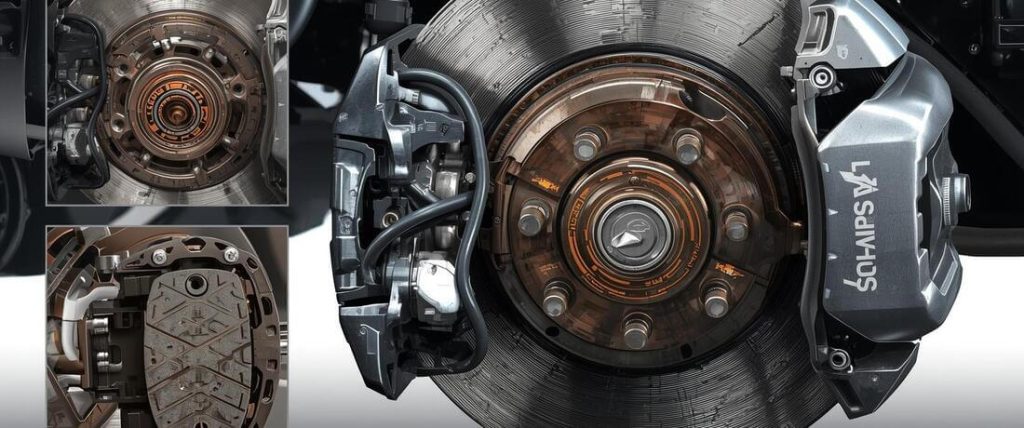
This is the number one cause. The caliper’s piston can seize due to corrosion, dirt buildup, or a damaged rubber boot. When the piston sticks, the brake pad never fully releases from the rotor.
You’ll notice one wheel running hotter than the others, a burning smell, or the car pulling to one side. Leave it too long and you’ll hear grinding too.
2. Faulty ABS Module or Control Unit
The ABS module reads wheel speed sensors and pumps the brakes rapidly to prevent lockup. If the module fails or a sensor sends bad data, the whole system can malfunction — sometimes causing the exact problem it was meant to prevent.
Your ABS warning light will usually come on first. Don’t ignore it.
3. Worn or Glazed Brake Pads
Brake pads that are down to the metal or glazed from overheating don’t provide smooth friction. They can snag and grab erratically, especially in wet conditions or under hard braking.
Squealing, grinding, or a vibrating pedal are your early warning signs here.
4. Seized Parking Brake Cable
In cold or wet climates, the parking brake cable can freeze or rust in the applied position. This is especially common on rear drum brakes. If you notice drag on the rear wheels or the car feels sluggish to accelerate, check the e-brake cable first.
5. Low Brake Fluid or Air in the Lines
Brake fluid transfers hydraulic pressure to the calipers. When fluid is low or contaminated with moisture, air bubbles form. This makes brake pressure inconsistent — sometimes too high, sometimes too low — which can cause one wheel to lock before others.
6. Overheated Brakes (Brake Fade)
Long downhill drives or repeated hard stops can superheat your rotors and pads. Once they cool, the surface can harden or warp. The next time you brake, that deformed surface grabs unevenly — and lockup follows.
This is common in mountain driving or towing situations. Experienced mechanics call it “thermal fade.”
7. Broken Wheel Speed Sensor
Each wheel has a speed sensor that feeds real-time data to the ABS computer. A cracked or dirty sensor sends inaccurate readings, causing the ABS to apply incorrect brake pressure. The result? One or more wheels lock up unexpectedly.

Warning Signs to Watch For
- ABS or brake warning light on the dashboard
- Car pulling hard to one side when braking
- Burning smell after normal driving
- Grinding or metal-on-metal scraping sound
- Vibrating or pulsating brake pedal
- One wheel visibly hotter than the others after a drive
- Rear wheels dragging or car feeling sluggish off the line
Step-by-Step: What to Do When Brakes Lock Up
- Stay calm and don’t stomp the brakes harder.More pressure makes the lockup worse. Ease off slightly to restore wheel rotation.
- Steer in your intended direction.Keep your eyes where you want to go, not at the obstacle. Your hands will follow.
- Pull over safely.Hazard lights on. Get fully off the road.
- Check for an obvious cause.Is the parking brake still partially engaged? Is there a burning smell? Is one wheel noticeably hot?
- Do not drive the car furtheruntil it has been inspected. A locked-up brake that releases may lock again seconds later.
- Call a mechanic or tow the vehicle.This is a safety-critical repair — not a “I’ll do it next weekend” job.
- Describe the symptoms clearly.Which wheel? What conditions? Did the ABS light come on? The more detail, the faster the diagnosis
Repair Cost & Difficulty at a Glance
| Cause | Avg. Repair Cost | DIY Difficulty | Urgency |
|---|---|---|---|
| Stuck caliper | $150–$400 per side | Moderate | Immediate |
| ABS module | $300–$1,200 | Hard | Immediate |
| Brake pads | $80–$200 per axle | Easy | Soon |
| Parking brake cable | $100–$300 | Easy–Moderate | Soon |
| Brake fluid flush | $80–$150 | Easy | Scheduled |
| Rotor replacement | $200–$500 per axle | Moderate | Soon |
| Wheel speed sensor | $150–$400 | Moderate | Immediate |
Common Mistakes Drivers Make
Ignoring the ABS warning light for weeks. That light is your first warning — by the time brakes lock up, you’ve already passed three chances to fix it cheaply.
Using the parking brake on a vehicle left stationary in winter without disengaging it first. The cable can freeze overnight and stay engaged.
Riding the brakes on long downhill stretches. Continuous light pressure generates enormous heat and leads to brake fade or glaze.
Replacing only the pads without inspecting the calipers. A sticky caliper will destroy new pads within weeks.

Pro Tips From the Workshop
After replacing brake pads, always “bed them in” — do 8–10 moderate stops from 30 mph. This creates an even friction layer on the rotor and prevents glazing from the start.
Flush your brake fluid every 2 years regardless of mileage. Moisture absorption causes the boiling point to drop and sets the stage for brake fade and locking.
If towing or driving mountain roads, use engine braking in a lower gear to reduce heat buildup. Shift down before the descent — not halfway through it.
When diagnosing a hot wheel after a drive, use an infrared thermometer. A caliper-side temp 40°F+ above the others almost always means a stuck piston.
FAQs About Causes of Brakes Locking Up While Driving
Can brakes lock up without pressing the brake pedal?
Yes. A stuck caliper can keep constant pressure on the rotor even with no pedal input. The parking brake cable can also freeze in the applied position. In both cases, the wheel locks without any driver action.
Why do my brakes lock up only in the rain?
Wet rotors reduce friction and can cause uneven braking force across wheels. A faulty ABS sensor may also perform differently when wet. Start by checking the ABS sensors and rotor condition for scoring or warping.
Is it safe to drive with brakes that occasionally lock up?
No. A brake that locks up once will do it again — often at the worst possible moment. Pull over and have the vehicle inspected or towed. This is a critical safety issue, not a minor inconvenience.
How do I know if my ABS is causing the lockup?
If your ABS warning light is on and you feel unusual pulsing or no pulsing during hard braking, the ABS system is likely compromised. A mechanic can scan the ABS fault codes with a diagnostic tool in minutes.
Can overheating cause permanent brake damage?
Yes. Extreme heat can warp rotors, glaze pads, boil brake fluid, and crack caliper seals. Always replace warped rotors — trying to resurface a severely warped rotor rarely gives satisfactory results and only delays the inevitable.
Does a newer car still lock up if the ABS fails?
Yes. ABS failure on a modern car returns braking behavior to pre-ABS levels. Under hard braking without ABS modulation, wheels can lock easily — especially on slippery surfaces. Treat an ABS failure as an urgent repair.
Conclusion
Brakes locking up while driving is never random. There’s always a root cause — and the good news is that every cause on this list is fixable.
Act early. Check your ABS light. Inspect your calipers. Flush your fluid every two years. Don’t ride the brakes downhill. These simple habits prevent most lockup situations before they ever happen.
Your brakes are the most important safety system on your vehicle. Treat them like it.
Quick Summary
- The most common cause of brakes locking up is a stuck brake caliper
- A faulty ABS module or wheel speed sensor can trigger unexpected lockup
- Worn, glazed, or overheated pads create unpredictable friction and grab
- Seized parking brake cables are a frequent cause — especially in cold climates
- Low or contaminated brake fluid causes inconsistent hydraulic pressure
- Never ignore the ABS warning light — it’s your early-warning system
- Any brake lockup event requires immediate professional inspection — do not keep driving