
This article was updated in May 20, 2026 with new products and information by Mark S. Taylor
That clunking noise your car makes over bumps isn’t something to ignore. It means something underneath your car is loose, worn, or broken — and in some cases, it’s a safety issue.
The tricky part is that dozens of components could be responsible. Sway bar links, struts, ball joints, bushings — they all live in the same area and can produce nearly identical sounds. Getting the diagnosis right matters, because replacing the wrong part wastes money and leaves the real problem unfixed.
This guide walks you through the nine most common causes, ranked by how often they occur. For each one, you’ll get a plain-English explanation, an urgency rating, and a realistic repair cost. There’s also a simple driveway diagnosis section so you can narrow things down before you call a mechanic.

Contents
- 1 Clunk, Rattle, or Thud — Does the Noise Type Matter?
- 2 The 9 Most Common Causes of Clunking Noise Over Bumps
- 2.1 1. Worn Sway Bar End Links
- 2.2 2. Bad Struts or Shock Absorbers
- 2.3 3. Worn Ball Joints
- 2.4 4. Damaged Control Arm Bushings
- 2.5 5. Faulty Strut Mount or Bearing Plate
- 2.6 6. Worn Tie Rod Ends
- 2.7 7. CV Axle Joint Clunking
- 2.8 8. Loose or Broken Heat Shield
- 2.9 9. Worn Subframe or Rear Suspension Bushings
- 3 Front Clunk vs Rear Clunk — How to Narrow It Down
- 4 How to Diagnose a Clunking Noise in Your Driveway
- 5 Is It Safe to Drive With a Clunking Noise Over Bumps?
- 6 Clunking Noise Over Bumps — Repair Cost Summary
- 7 FAQs About What Causes Clunking Noise Over Bumps
- 7.1 What is the most common cause of clunking noise over bumps?
- 7.2 Can a clunking noise over bumps be dangerous?
- 7.3 Why does the clunking noise get worse in cold weather?
- 7.4 How do I know which corner the clunk is coming from?
- 7.5 Can a loose spare tire cause a clunking noise?
- 7.6 How long can I drive with a clunking noise over bumps?
- 7.7 The Bottom Line
Clunk, Rattle, or Thud — Does the Noise Type Matter?
Yes. The type of noise gives you your first clue.
| Noise Type | What It Usually Means |
|---|---|
| Clunk | Something is loose and making hard contact — metal on metal or metal on rubber |
| Rattle | A loose component vibrating — often a heat shield or exhaust bracket |
| Thud | Something bottoming out or collapsing under load — often a worn strut or shock |
| Single knock | One loose joint — often a sway bar link or ball joint |
| Double knock | Two-sided wear or a component with play in both directions |
| Knock only on one side | Isolates the problem to one corner of the car |
If your noise sounds more like a rattle than a clunk, a loose heat shield or exhaust bracket is a likely culprit. If it’s a deep thud, focus on struts and shocks first. A sharp, single clunk points toward a worn joint.
The 9 Most Common Causes of Clunking Noise Over Bumps
1. Worn Sway Bar End Links
This is the most common cause. Sway bar end links are small rods that connect the sway bar (stabilizer bar) to the suspension on each corner. They contain rubber bushings and ball-type joints that wear over time.
When they wear out, they develop play — and every time you hit a bump, the sway bar moves freely and clunks against the end link.
What it sounds like: A sharp, hollow clunk — often from the front. Usually louder over sharp bumps or when rocking the car side to side in a parking lot.
Urgency: Medium. Your car becomes slightly less stable in fast cornering, but it’s generally safe to drive short-term.
Repair cost: $80–$200 per side (parts and labor)
2. Bad Struts or Shock Absorbers
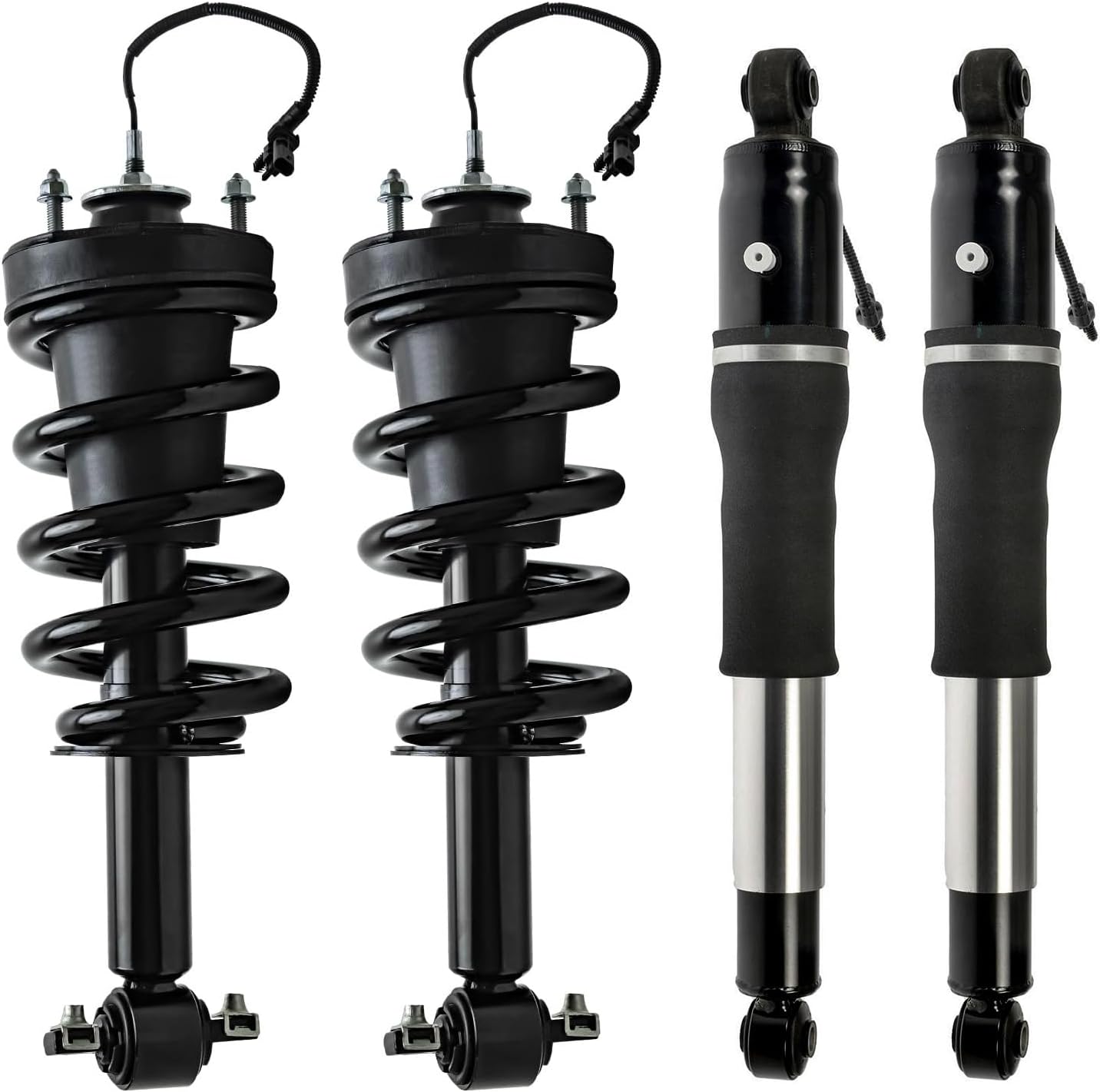
Struts and shocks are the primary suspension dampers. They control how much your suspension bounces after hitting a bump. When the internal valving wears out or the body develops a leak, they lose their ability to dampen movement — and the suspension starts bottoming out or bouncing excessively.
What it sounds like: A thudding or deep clunking noise — especially over larger bumps or dips. The car may also bounce noticeably after hitting a bump instead of settling quickly.
Urgency: High. Worn struts significantly increase stopping distances and reduce handling stability. Don’t put this off.
Repair cost: $300–$900 per axle (struts typically replaced in pairs)
3. Worn Ball Joints
Ball joints are the pivot points connecting the control arms to the steering knuckle. They allow the wheel to move up and down with the suspension while also pivoting for steering. They’re under constant load and wear over time — faster on rough roads.
What it sounds like: A clunking or knocking from the front suspension — often worse when hitting bumps and when turning. Some drivers describe it as feeling the clunk through the steering wheel.
Urgency: Very high. A failed ball joint can cause the wheel to separate from the suspension entirely. This is a catastrophic failure with no warning. If ball joints are suspected, stop driving and get an inspection.
Repair cost: $200–$500 per ball joint (parts and labor)
4. Damaged Control Arm Bushings
Control arms connect the wheel hub to the vehicle’s frame. Each arm uses rubber bushings at its mounting points to absorb vibration and allow controlled movement. These bushings crack, harden, and deteriorate over time — especially in cold climates where rubber ages faster.
What it sounds like: A knocking or clunking from the front — often described as coming from deep inside the wheel well. Cold weather often makes this worse. Some drivers notice it mainly on the first few bumps after starting the car in winter.
Urgency: Medium-high. Worn bushings cause imprecise handling and accelerate tire wear. Not immediately dangerous but needs attention within a few months.
Repair cost: $200–$500 per control arm (bushing replacement or full arm replacement)
5. Faulty Strut Mount or Bearing Plate
The strut mount sits at the top of the strut, inside the engine bay (front) or trunk area (rear). It connects the strut to the chassis and contains a rubber isolator and a bearing that allows the strut to rotate when you steer. When the bearing wears or the rubber isolator collapses, you get noise.
What it sounds like: A clunking or creaking from the top of the suspension — often described as coming from the dashboard area or the top of the wheel arch. May also cause a grinding sensation when turning the steering wheel slowly.
Urgency: Medium. Worn strut mounts don’t cause immediate danger but affect handling precision and accelerate strut wear.
Repair cost: $150–$400 per side (often replaced with struts)
6. Worn Tie Rod Ends
Tie rod ends connect the steering rack to the steering knuckle. They have a ball-and-socket joint that wears over time. When worn, they develop play — and that play creates a clunk every time the suspension loads and unloads over bumps.
What it sounds like: A clunking from the front — similar to ball joint noise. Often accompanied by vague steering feel or the car pulling to one side.
Urgency: High. Worn tie rod ends affect steering precision and can eventually cause loss of steering control. Get them inspected promptly.
Repair cost: $100–$300 per side (alignment required after replacement)
7. CV Axle Joint Clunking
CV (constant velocity) axles transfer power from the transmission to the front wheels. Each axle has inner and outer CV joints protected by rubber boots. When a boot cracks, grease escapes and the joint wears rapidly.
What it sounds like: CV joint clunking often appears when accelerating over bumps or when turning sharply. It’s different from suspension clunking — it tends to be louder under acceleration and may click rather than clunk when turning at low speed.
Urgency: Medium-high. A failing CV joint will eventually fail completely, leaving you unable to drive. Catch it while the boot is torn and replacement is cheaper.
Repair cost: $200–$600 per axle shaft
8. Loose or Broken Heat Shield
Heat shields are thin metal covers that protect nearby components from exhaust heat. They’re attached with small bolts that corrode over time — especially in areas with road salt. A loose heat shield rattles and clangs over every bump.
What it sounds like: A metallic rattling or tinny clunking — often continuous over rough roads. Easier to identify because it sounds shallow and metallic rather than deep. Sometimes appears suddenly after driving through deep puddles.
Urgency: Low. A loose heat shield isn’t a safety issue in the short term, but it should be secured or removed before it comes loose completely and contacts the road.
Repair cost: $50–$150 (often just tightened or removed)
9. Worn Subframe or Rear Suspension Bushings
The subframe is the structural member that the engine, transmission, and front suspension mount to. It connects to the body through large rubber bushings. In the rear, similar bushings are used on trailing arms, control arms, and the rear subframe. These bushings wear slowly but surely — especially on high-mileage vehicles.
What it sounds like: A deep, low clunk from underneath the car — often felt as much as heard. Rear bushing noise tends to be a thudding sound over larger bumps rather than a sharp knock.
Urgency: Medium. Worn subframe bushings affect handling and alignment stability. They should be addressed but aren’t typically an emergency unless severely deteriorated.
Repair cost: $300–$800 depending on location and vehicle

Front Clunk vs Rear Clunk — How to Narrow It Down
Knowing which end of the car the noise comes from cuts your diagnosis in half.
| Clunk Location | Most Likely Causes |
|---|---|
| Front left or front right | Sway bar link, strut, ball joint, tie rod end, strut mount |
| Front center | Subframe bushing, engine mount, steering rack |
| Rear left or rear right | Rear shock, rear sway bar link, trailing arm bushing |
| Rear center | Rear subframe bushing, spare tire loose underneath |
| Both front corners | Both sway bar links worn, struts worn across the axle |
| Worse when turning | Ball joint, tie rod end, CV axle, strut mount bearing |
| Worse when braking | Strut mount, control arm bushing, brake caliper bracket |
Quick tip: Have a passenger sit inside while you drive slowly over a speed bump. Ask them to point to where the noise seems loudest — front or rear, left or right. That narrows it down to one corner immediately.
How to Diagnose a Clunking Noise in Your Driveway
You don’t need a lift to start diagnosing this. Here’s what you can do at home:
- Do the bounce test. Push down hard on each corner of the car and release. If the car bounces more than once or twice, the strut or shock on that corner is likely worn.
- Grab and shake the wheel. With the car parked and engine off, grab the front tire at the 12 o’clock and 6 o’clock positions and try to rock it. Any movement indicates a worn ball joint or wheel bearing. Then grab at 9 and 3 o’clock and rock — movement here points to a tie rod end.
- Look underneath with a flashlight. Check the sway bar end links — they’re the small vertical rods connecting the sway bar to the lower control arm. Look for cracked rubber, missing bushings, or obvious looseness.
- Have someone watch while you drive slowly over a bump. A helper watching from outside can often pinpoint exactly which corner moves excessively.
- Check for cracked rubber bushings. Grab a flashlight and look at the control arm mounting points where they attach to the frame. Cracked, shredded, or missing rubber is a clear sign.
- Check the heat shields. Run your hand along the exhaust heat shields under the car (engine cold). Loose ones will rattle when tapped.

Is It Safe to Drive With a Clunking Noise Over Bumps?
It depends entirely on the cause.
| Cause | Safe to Drive? | Action Required |
|---|---|---|
| Loose heat shield | Yes (short term) | Fix within a few weeks |
| Worn sway bar end links | Yes (short term) | Fix within 1–2 months |
| Worn control arm bushings | Caution | Fix within 1 month |
| Worn strut mount | Caution | Fix within 1 month |
| Worn struts / shocks | No — affects braking | Fix as soon as possible |
| Worn tie rod ends | No — affects steering | Fix immediately |
| Worn ball joints | No — catastrophic risk | Stop driving, inspect now |
| CV axle clunking | Caution | Fix within 2–4 weeks |
The honest answer: Any clunking noise over bumps deserves a professional inspection. Some causes are low urgency. Others — specifically ball joints and tie rod ends — can lead to sudden loss of control with no additional warning. Don’t assume it’s minor just because the car still drives normally.
Clunking Noise Over Bumps — Repair Cost Summary
| Repair | DIY Friendly? | Average Cost |
|---|---|---|
| Sway bar end link replacement | Yes | $80–$200 per side |
| Strut / shock replacement | Intermediate | $300–$900 per axle |
| Ball joint replacement | Mechanic recommended | $200–$500 per joint |
| Control arm bushing replacement | Mechanic recommended | $200–$500 per arm |
| Strut mount replacement | Mechanic recommended | $150–$400 per side |
| Tie rod end replacement + alignment | Intermediate | $175–$450 per side |
| CV axle replacement | Intermediate | $200–$600 per axle |
| Heat shield repair | Yes | $50–$150 |
| Subframe bushing replacement | Mechanic only | $300–$800 |
FAQs About What Causes Clunking Noise Over Bumps
What is the most common cause of clunking noise over bumps?
Worn sway bar end links are the most frequent culprit. They’re inexpensive, wear out regularly, and produce a sharp clunk over bumps that’s easy to mistake for something more serious.
Can a clunking noise over bumps be dangerous?
Yes — depending on the cause. Worn ball joints and tie rod ends are the most serious. A failed ball joint can cause a wheel to separate from the car entirely. If you suspect either of these, stop driving and get an inspection immediately.
Why does the clunking noise get worse in cold weather?
Rubber bushings harden and shrink in cold temperatures. This temporarily increases the gap between components and makes clunking louder. If your noise is significantly worse in winter mornings and improves as the car warms up, control arm bushings or sway bar bushings are likely the cause.
How do I know which corner the clunk is coming from?
Drive slowly over a speed bump and pay attention to which side and end of the car the noise comes from. You can also have a passenger inside pointing to the noise location while you drive, or have someone watch from outside as you go over a bump slowly.
Can a loose spare tire cause a clunking noise?
Yes. Many SUVs and trucks carry a spare tire mounted underneath the vehicle. If the cable or bracket holding it loosens, the spare swings and clunks over every bump — and sounds exactly like suspension noise. Always check this first on trucks and SUVs.
How long can I drive with a clunking noise over bumps?
It depends on the cause. A loose heat shield or worn sway bar link gives you some time. A worn ball joint or tie rod end does not. When in doubt, have it inspected before driving any significant distance.
The Bottom Line
A clunking noise over bumps is your car’s early warning system. Most of the time it’s something relatively inexpensive — a sway bar link, a bushing, a heat shield. But occasionally it points to something that genuinely shouldn’t be ignored, like a ball joint or a failing strut.
The smartest move is to diagnose it quickly, understand the urgency, and fix it before the problem gets worse. A $120 sway bar link left unattended doesn’t turn into a $1,200 problem. But a $400 ball joint ignored long enough can cause an accident.
Quick Summary:
- The 9 most common causes are sway bar links, struts, ball joints, control arm bushings, strut mounts, tie rod ends, CV axles, heat shields, and subframe bushings
- Sway bar end links are the single most common cause — and the cheapest fix
- Ball joints and tie rod ends are the most dangerous — stop driving if these are suspected
- Cold weather makes bushing-related clunks significantly worse
- The bounce test, wheel shake test, and visual inspection can narrow things down at home
- Always get a professional inspection when in doubt — a diagnosis fee is far cheaper than ignoring a safety issue
Next step: Try the bounce test and wheel shake test in your driveway today. If anything feels loose or the car bounces more than twice, book a suspension inspection before your next long drive.