
This article was updated in June 4, 2026 with new products and information by Mark S. Taylor
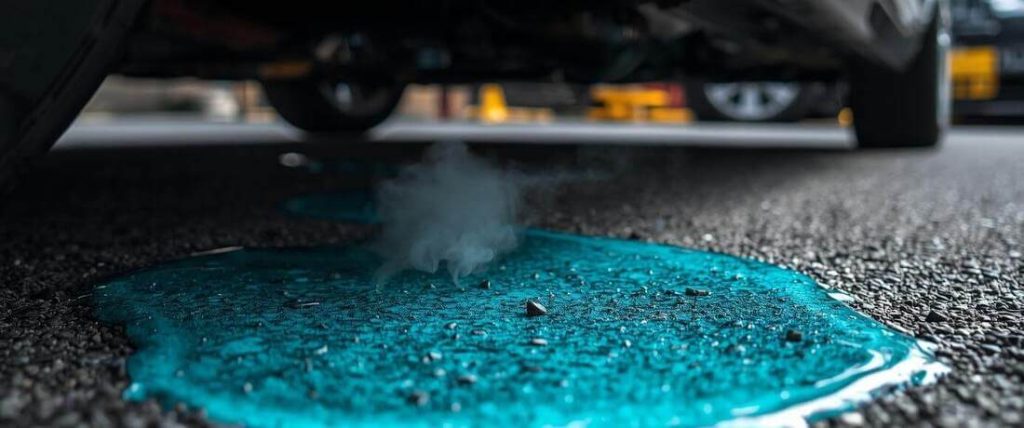
A coolant leak under the passenger side almost always comes from one of three places: the water pump (front passenger side puddle), the heater core (wet passenger floorboard), or a heater hose/radiator hose connecting them. The good news: most of these leaks are external and fixable for under $300. The bad news: if you keep driving with low coolant, you’ll turn a $100 hose repair into a $3,000 engine rebuild.
I’ve been turning wrenches for 20 years, and I can trace a coolant leak by following the drips before I even open the hood. The passenger side is actually easier to diagnose than most people think because the components are clustered in predictable spots. Let me show you how to read the puddle.
Contents
- 1 What “Passenger Side” Actually Means
- 2 How to Identify Coolant (The Sweet Smell Test)
- 3 Common Causes by Location
- 3.1 1. Water Pump Weep Hole (Front Passenger Side Puddle — Most Common)
- 3.2 2. Heater Core (Wet Passenger Floorboard — Cabin Leak)
- 3.3 3. Heater Hose or Radiator Hose (Front Passenger Side Puddle)
- 3.4 4. Thermostat Housing (Front Passenger Side — Many Engines)
- 3.5 5. Coolant Reservoir / Expansion Tank (Front Passenger Side)
- 3.6 6. Radiator (Front Passenger Side — Side Tank Leak)
- 4 How to Diagnose It (The Cardboard Test + Pressure Test)
- 5 Can You Drive With It?
- 6 The Heater Core Bypass (Emergency $5 Fix)
- 7 Repair Cost Breakdown
- 8 DIY vs. Mechanic: Should You Fix It Yourself?
- 9 Prevention Tips
- 10 FAQs About Coolant Leak Under Passenger Side
- 11 The Bottom Line
What “Passenger Side” Actually Means
Before you chase parts, you need to pinpoint exactly where the leak is showing up. “Passenger side” means two very different things:
Table
| Location | What You See | Likely Source |
|---|---|---|
| Front passenger side — puddle under the engine, near the tire | Green/orange/pink fluid on the ground | Water pump, heater hose, thermostat housing, or coolant reservoir |
| Cabin passenger side — wet carpet, damp floorboard, foggy windows | Fluid inside the car, sweet smell strong when heat is on | Heater core (mini-radiator behind the dashboard) |
If you see a puddle on the ground, the leak is in the engine bay. If your passenger floor is wet and the windows fog up with a sweet smell, the leak is inside the car. Two completely different problems. Two completely different fixes.
How to Identify Coolant (The Sweet Smell Test)
Before you chase a leak, make sure it’s actually coolant. Your nose is the fastest diagnostic tool you have:
- Coolant: Sweet, syrupy smell — like maple syrup or cotton candy. Colors: green, orange, pink, blue, or purple depending on your car.
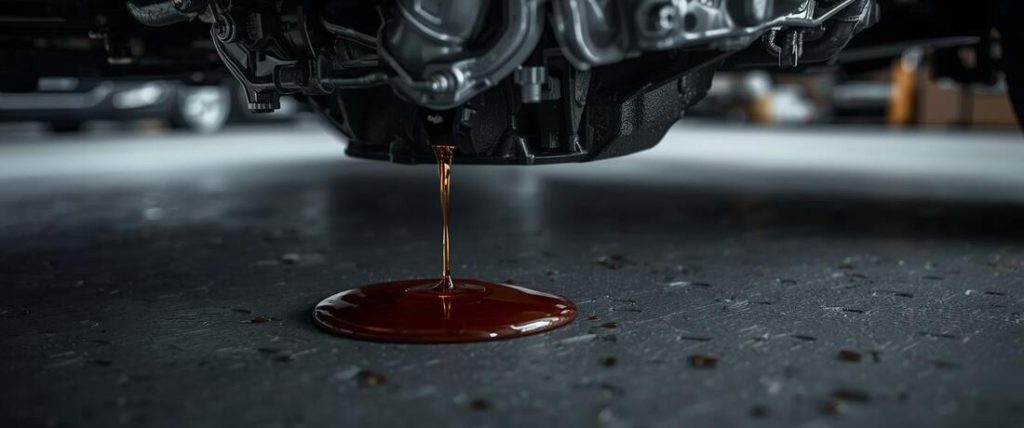
- Engine oil: Brown or black, slippery, smells like petroleum. No sweetness.
- Transmission fluid: Red or brown, slick, smells like burnt oil.
- Water: Clear, no smell, no residue. Could be AC condensation (normal) or rainwater.
The cardboard test: Slide a large piece of cardboard under your car where you park. In the morning, check the color and location of any drips. This tells you exactly where the leak is coming from and how fast it’s leaking. A few drops = slow leak. A soaked spot = fast leak.

Common Causes by Location
1. Water Pump Weep Hole (Front Passenger Side Puddle — Most Common)
The water pump sits on the side of the engine and is driven by the serpentine belt. It has a small hole called the “weep hole” designed to leak when the internal seal fails. This hole is almost always on the passenger side of the engine.
Symptom: Steady drip or small puddle under the front passenger side. May hear a whining or grinding noise that changes with engine speed. Coolant level drops slowly over days or weeks.
Test: Look at the water pump from underneath the car. You’ll see a small hole on the bottom or side of the pump housing. If there’s a trail of dried coolant or a wet spot below that hole, the pump seal is failing.
Fix: Replace the water pump and gasket. Most shops replace the thermostat at the same time since they’re already in there. Cost: $300–$800 (parts + labor). DIY: $100–$200.
2. Heater Core (Wet Passenger Floorboard — Cabin Leak)
The heater core is a small radiator behind your dashboard that uses hot coolant to heat the cabin. When it leaks, coolant drips into the HVAC box and onto the passenger floor.
Symptom: Wet carpet on the passenger side. Sweet smell inside the car, especially when the heat is on. Foggy windows that won’t clear. Coolant level drops steadily.
Test: Feel the passenger carpet — is it wet? Is it sticky or does it smell sweet? Turn the heat on full blast. If the smell intensifies, it’s the heater core.
Fix: Replace the heater core. This is a dash-removal job on most cars — 4 to 8 hours of labor. Cost: $500–$1,500 (mostly labor). DIY: $100–$300 in parts but 6+ hours of work.
Emergency bypass: If you need to get home and the heater core is leaking, you can bypass it. Disconnect the two heater hoses at the firewall, connect them together with a 5/8-inch hose and two hose clamps. No heat, but no leak — and you can drive safely. Cost: $5.
3. Heater Hose or Radiator Hose (Front Passenger Side Puddle)
Rubber hoses carry coolant from the engine to the heater core and back. They crack, split, or leak at the clamps — especially at the firewall connections.
Symptom: Puddle under the passenger side, often near the firewall. May see wet spots on the hose itself or dried coolant around the clamps.
Test: Trace the two 5/8-inch hoses from the engine to the firewall. Look for cracks, bulges, or wet spots. Squeeze the hoses — they should be firm, not mushy or cracked.
Fix: Replace the leaking hose and clamps. Cost: $50–$200. DIY: $20–$50.
4. Thermostat Housing (Front Passenger Side — Many Engines)
The thermostat housing sits where the upper radiator hose meets the engine. On many transverse engines (common in FWD cars), this is on the passenger side.
Symptom: Leak near the upper radiator hose connection. May see coolant seeping from the housing gasket or cracks in the plastic housing.
Test: Look where the upper hose connects to the engine. Is there coolant pooled below? Is the housing plastic cracked?
Fix: Replace the thermostat housing gasket or the entire housing if cracked. Cost: $150–$400. DIY: $50–$100.
5. Coolant Reservoir / Expansion Tank (Front Passenger Side)
The plastic coolant reservoir sits on the passenger side in many cars. It cracks from heat cycling, especially at the seam or the cap neck.
Symptom: Puddle near the reservoir. May see a crack line or coolant staining down the side. Cap may not seal properly.
Test: Visually inspect the reservoir for cracks. Remove the cap and check the neck for chips or damage. Pressurize the system and watch for leaks from the reservoir.
Fix: Replace the reservoir and cap. Cost: $50–$150. DIY: $30–$80.
6. Radiator (Front Passenger Side — Side Tank Leak)
Many radiators have plastic side tanks. The passenger-side tank can crack or leak at the seam where it meets the aluminum core.
Symptom: Puddle under the front passenger corner. May see coolant on the radiator fins or side tank.
Test: Look at the radiator from above and below. Check for wet spots on the passenger-side tank or between the tank and core.
Fix: Replace the radiator. Some radiators can be repaired, but replacement is usually more reliable. Cost: $300–$800. DIY: $150–$400.
How to Diagnose It (The Cardboard Test + Pressure Test)
The Cardboard Test (Free, 5 Minutes)
- Park your car on a clean, dry surface — or slide a large piece of cardboard under the engine bay.
- Leave it overnight.
- In the morning, note the color, location, and amount of any fluid.
- Measure from the front tires: is the puddle directly under the passenger seat area (heater core/hose), under the front passenger tire (water pump/radiator), or under the center (multiple possibilities)?
The Pressure Test (Free Loaner at Parts Stores)
- Go to AutoZone, O’Reilly, or Advance Auto Parts. Ask to borrow a cooling system pressure tester (free with deposit).
- Make sure the engine is cold. Remove the radiator cap.
- Attach the pressure tester to the radiator or reservoir neck.
- Pump it to the pressure listed on your radiator cap (usually 13–16 PSI).
- Watch for leaks. The pressure will force coolant out of any weak spot — hose, pump, housing, or radiator.
- If you see coolant dripping from the weep hole, it’s the water pump. If it’s seeping from a hose clamp, tighten or replace it. If it’s coming from behind the firewall, it’s the heater core.
Can You Drive With It?
Here’s my traffic-light system for coolant leaks:
Table
| Condition | Drive or Tow? | Action |
|---|---|---|
| Slow drip, coolant reservoir still has fluid, no overheating | GREEN — Drive Carefully | Top off coolant, drive to shop within a few days. Check level daily. |
| Steady leak, coolant level near minimum, temp gauge normal | YELLOW — Drive to Shop | Top off, drive directly to shop. No highway speeds. Watch temp gauge. |
| Fast leak, steam from under hood, temp gauge climbing | RED — Stop | Pull over, shut off engine. Do not drive. Tow to shop. |
| Wet passenger floor, sweet smell inside, windows fogging | YELLOW — Drive to Shop | Heater core leak. Bypass if needed. Drive with windows open for ventilation. |
| Coolant mixed with oil (milky dipstick) or white exhaust smoke | RED — Stop | Head gasket or internal engine leak. Tow immediately. |
If you’re driving and the temperature gauge climbs toward the red, pull over immediately. Every second of overheating risks warping the cylinder head or blowing the head gasket. A $100 hose repair becomes a $2,000+ engine job in about 5 minutes of overheating.
The Heater Core Bypass (Emergency $5 Fix)
If your heater core is leaking and you need to get home or to a shop without flooding your interior, here’s the bypass:
What you need: A 5/8-inch diameter hose, about 6 inches long, and two hose clamps. Total cost: $5 at any auto parts store.
How to do it:
- Open the hood and find the two heater hoses going into the firewall on the passenger side.
- Loosen the clamps and pull both hoses off the firewall fittings.
- Slide the 5/8-inch hose onto both hose ends, bridging them together.
- Tighten the clamps.
- Top off the coolant.
What this does: Coolant now circulates from the engine, through the bypass hose, and back to the engine — skipping the heater core entirely. You’ll have no heat, but you’ll have no leak either. This is a temporary fix to get you home safely. Replace the heater core as soon as possible.
Repair Cost Breakdown
Here’s what you’re actually looking at, based on 2026 national averages:
Table
| Repair | Cost Range | When It’s Needed |
|---|---|---|
| Hose replacement + clamps | $50–$200 | Cracked or leaking heater hose, radiator hose |
| Water pump replacement | $300–$800 | Leaking from weep hole, bearing noise |
| Thermostat housing/gasket | $150–$400 | Leaking at upper hose connection |
| Coolant reservoir replacement | $50–$150 | Cracked plastic reservoir or bad cap |
| Radiator replacement | $300–$800 | Cracked side tank, core leak |
| Heater core replacement | $500–$1,500 | Leaking into cabin, wet floorboard |
| Heater core bypass (temporary) | $5 | Emergency only — no heat, stops leak |
| Cooling system pressure test | Free (loaner) – $100 shop | Diagnosis confirmation |
The reality: 70% of passenger-side coolant leaks are fixed for under $200. The expensive mistake is ignoring a slow drip until the engine overheats.

DIY vs. Mechanic: Should You Fix It Yourself?
Table
| Task | DIY? | Skill Level | Tools Needed |
|---|---|---|---|
| Cardboard test / visual inspection | Yes | Beginner | Cardboard, flashlight |
| Pressure test with loaner tool | Yes | Beginner | Pressure tester (free loaner) |
| Hose clamp tightening | Yes | Beginner | Screwdriver or socket |
| Hose replacement | Yes | Beginner | Socket set, drain pan, new hose |
| Heater core bypass | Yes | Beginner | 5/8 hose, two clamps |
| Water pump replacement | Maybe | Intermediate | Socket set, gasket scraper, torque wrench |
| Thermostat housing replacement | Yes | Intermediate | Socket set, new gasket |
| Heater core replacement | No | Advanced | Dash removal, extensive disassembly |
| Radiator replacement | Maybe | Intermediate | Socket set, patience |
If you can change your oil, you can replace a hose, tighten clamps, and do a pressure test. Heater core replacement is the one job that usually needs a shop because it requires removing the dashboard.
Prevention Tips
The best coolant leak is the one that never happens:
- Change your coolant every 30,000–50,000 miles. Old coolant loses its corrosion inhibitors. Metal corrodes, plastic gets brittle, and leaks start.
- Inspect hoses every oil change. Squeeze them. Look for cracks, bulges, or soft spots. Replace hoses that are 5+ years old before they leak.
- Check your coolant level monthly. It takes 30 seconds. If the level drops consistently, you have a leak — find it before it finds you.
- Replace the radiator cap every 3 years. A weak cap can’t maintain pressure, which lowers the boiling point and causes the system to work harder.
- Fix small leaks immediately. A $10 hose clamp today prevents a $3,000 head gasket tomorrow.
- Watch your temperature gauge. If it climbs above normal, pull over. Overheating is the fastest way to turn a minor leak into a major engine rebuild.
FAQs About Coolant Leak Under Passenger Side
Q: Can I use stop-leak to fix a coolant leak temporarily?
A: For a small external leak — like a pinhole in a hose or a minor radiator seep — stop-leak can work temporarily. But I don’t recommend it for a heater core leak (it can clog the core and your engine’s cooling passages) or a head gasket leak (it rarely works and causes more problems). Stop-leak is a band-aid, not a repair. Fix the real problem as soon as possible.
Q: Is a coolant leak dangerous to drive with?
A: It depends on the leak rate. A slow drip with a full coolant reservoir is manageable for a short drive to a shop. A fast leak or any leak accompanied by rising temperature is dangerous — pull over immediately. Every minute of overheating risks catastrophic engine damage.
Q: Why is my coolant leaking only when the engine is hot?
A: Heat expands metal and rubber, and pressure builds in the cooling system. Small cracks that are sealed when cold open up under pressure and heat. This is common with plastic thermostat housings, radiator side tanks, and reservoir caps. The leak may seem intermittent, but it’s getting worse.
Q: Can a bad radiator cap cause a coolant leak?
A: Yes. A weak cap can’t hold pressure, which causes coolant to boil at a lower temperature and escape as steam or overflow. It can also allow coolant to seep past weak points in the system. A new cap costs $10–$20 and should be replaced every 3 years.
Q: How do I know if my heater core is leaking vs. a hose?
A: Location is everything. A hose leak shows up as a puddle under the front of the car. A heater core leak shows up as wet carpet inside the car, foggy windows, and a strong sweet smell when the heat is on. If your floor is dry and you see a puddle outside, it’s not the heater core.
The Bottom Line
A coolant leak under the passenger side is your car telling you exactly where to look. Front puddle = engine bay components (water pump, hose, thermostat, reservoir, radiator). Wet floorboard = heater core. Your nose, a piece of cardboard, and a free pressure tester loan will diagnose it before you spend a dime at a shop.
The first thing I do when a customer rolls in with a passenger-side coolant leak? I ask two questions: “Is your floor wet?” and “Do you smell maple syrup inside the car?” Those two answers tell me whether I’m looking at a $50 hose or a $1,000 heater core job before I even pop the hood. Follow the puddle, trust your nose, fix it fast, and your engine will stay cool for years to come.